Seacroft may never have enjoyed the fame of Butlins or some of the larger Pontins resorts, nor did it experience quite the same dramatic succession of closures and reinventions as many other camps. Yet for nearly 90 years it remained a remarkably enduring part of Hemsby’s holiday trade. In many ways, that longevity is what makes its story interesting: Seacroft grew from six simple chalets into a substantial full-board holiday camp, yet retained much of its traditional character almost to the end.
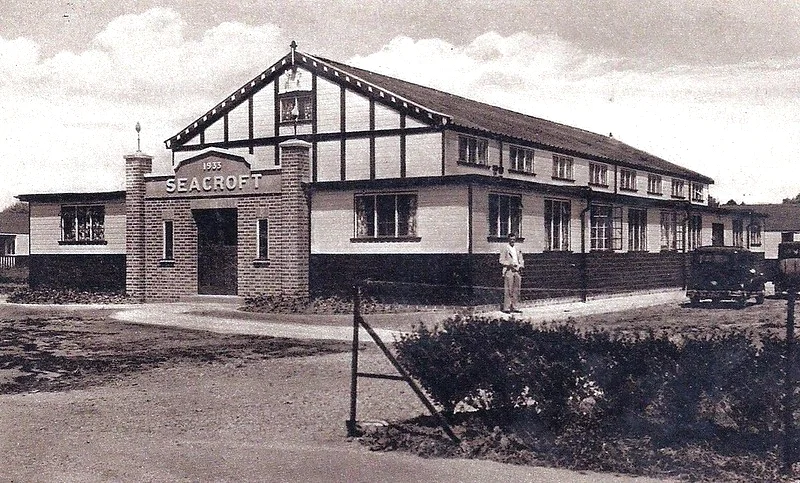
The story began in 1930 with 19-year-old Jack Bishop. His family ran W. I. Bishop & Sons, a Great Yarmouth butchers, and the young Bishop regularly delivered meat to the nearby Maddieson’s Holiday Camp. Seeing the growing popularity of these new-style seaside holidays, he evidently decided there was room for another camp at Hemsby. Together with his father, William, he acquired land across the road and opened a tiny “bungalow camp” consisting of just six chalets, which they named Seacroft.
From these modest beginnings, Seacroft grew steadily rather than spectacularly. Jack Bishop remained closely involved in its day-to-day operation, while his father served as chairman until his death in 1966. Over the following decades more land was acquired, new chalets appeared and increasingly elaborate communal facilities were provided. Eventually the camp covered around 30 acres and could accommodate around 600 holidaymakers. His wife Nora, whom he had first met when she won the Miss Seacroft competition while holidaying at the camp in 1936, had herself played an important part in running the business.
Like most coastal holiday camps, Seacroft’s development was interrupted by the Second World War. The camp was requisitioned by the military and did not reopen to holidaymakers until 1946. A surviving wartime pillbox remains associated with the site, while archaeological research has found that some of Seacroft’s pre-war holiday structures were actually removed during the military occupation.
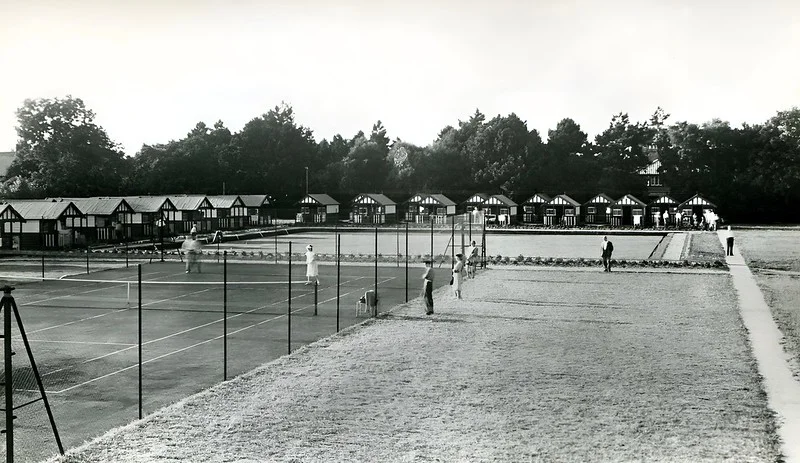
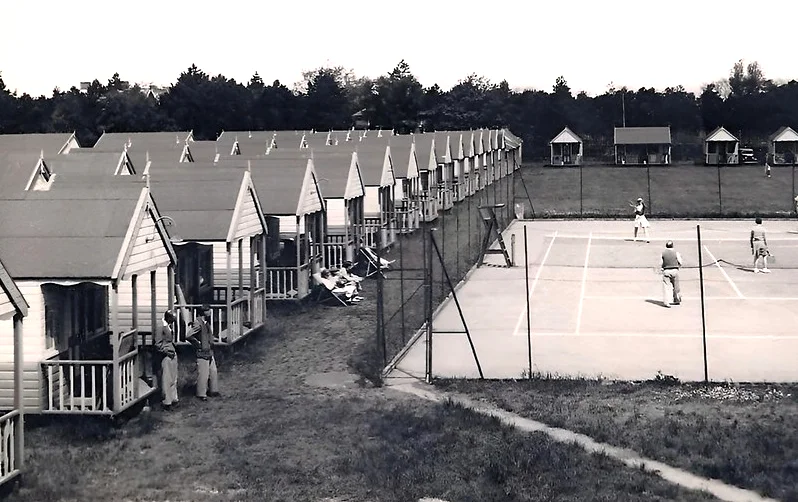
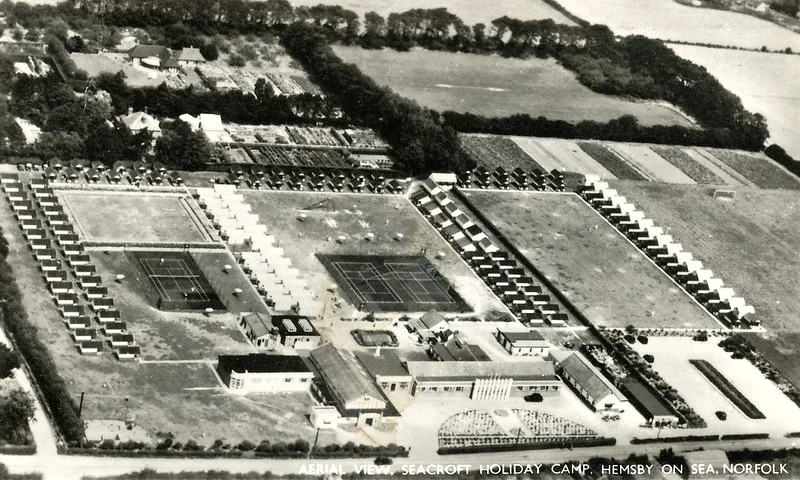
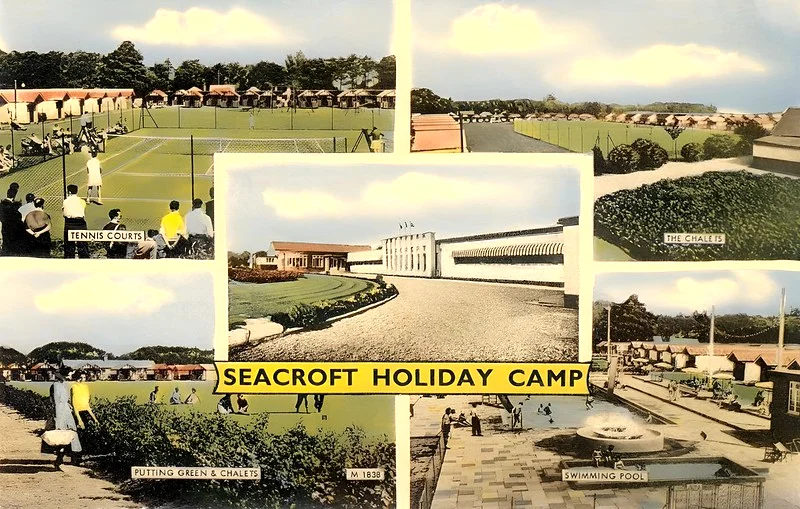
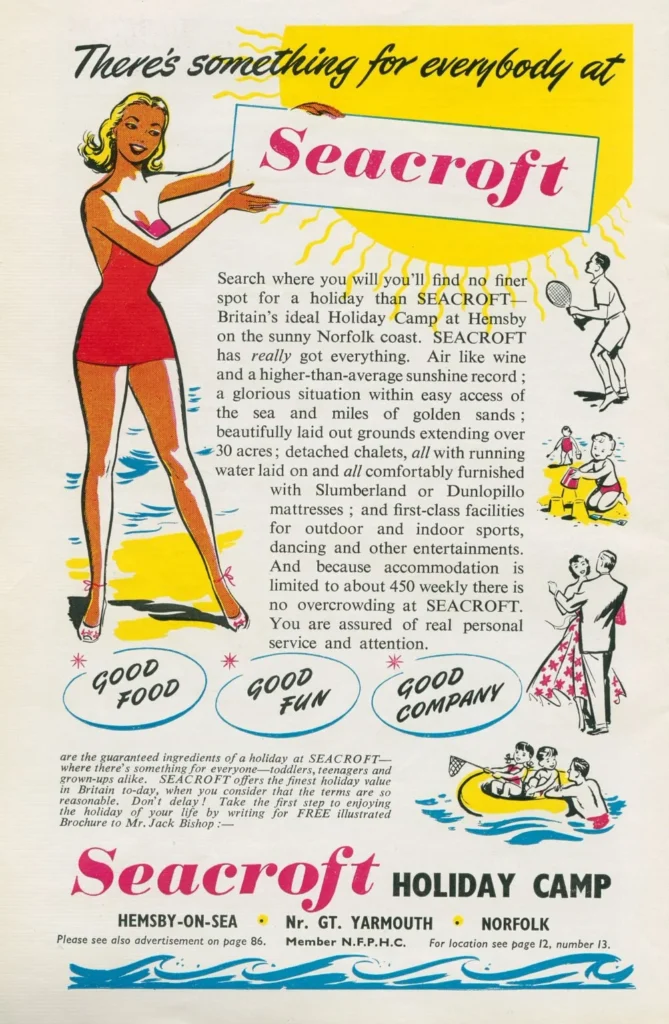
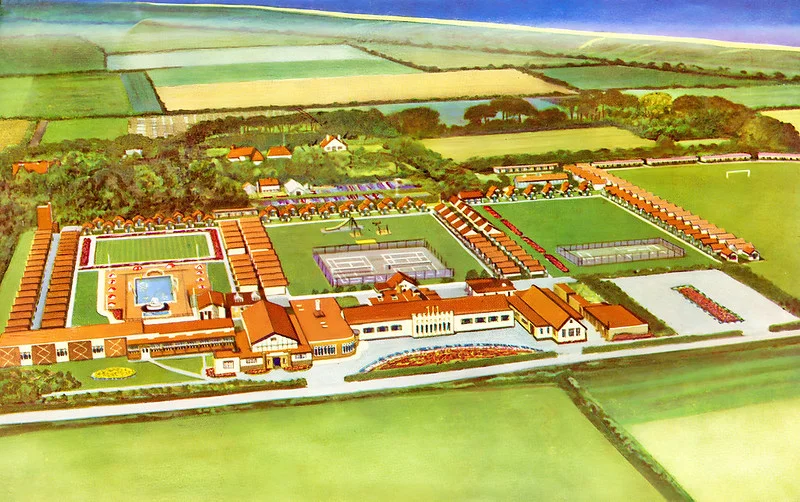
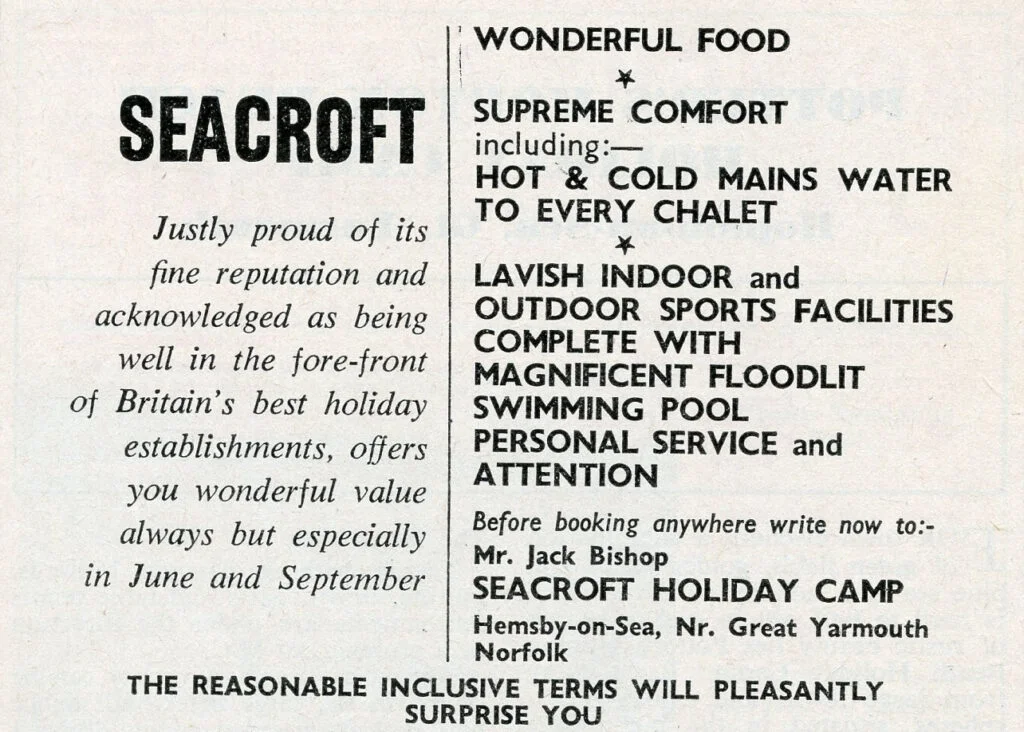
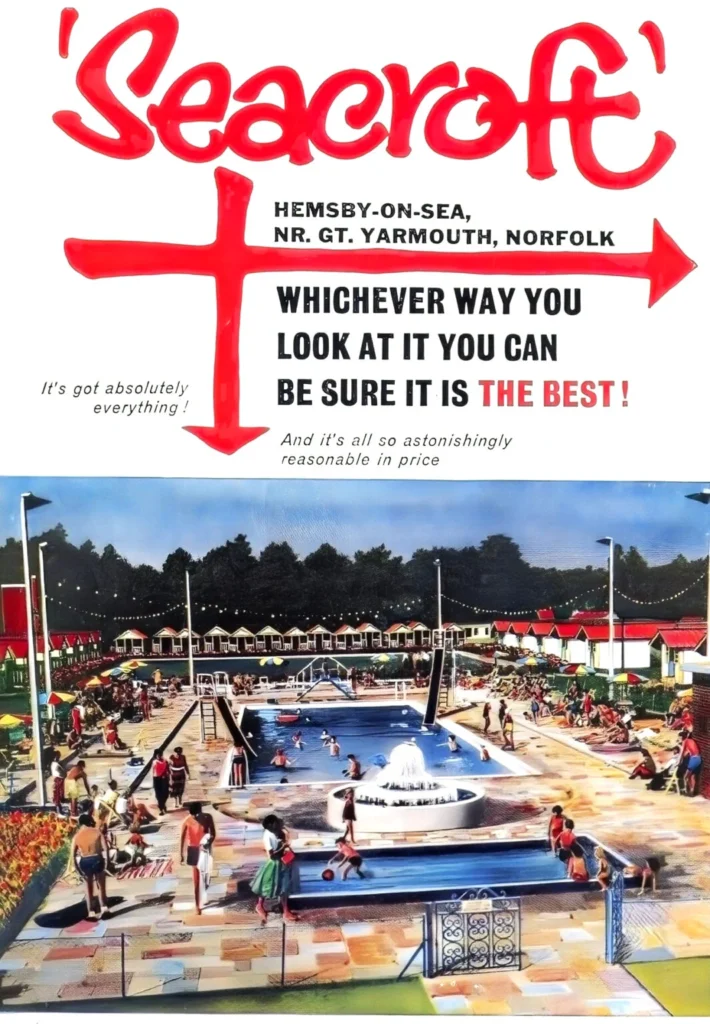
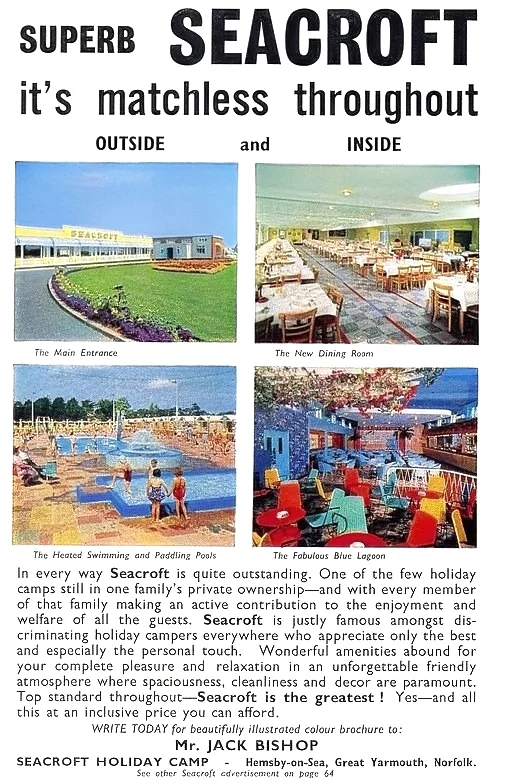
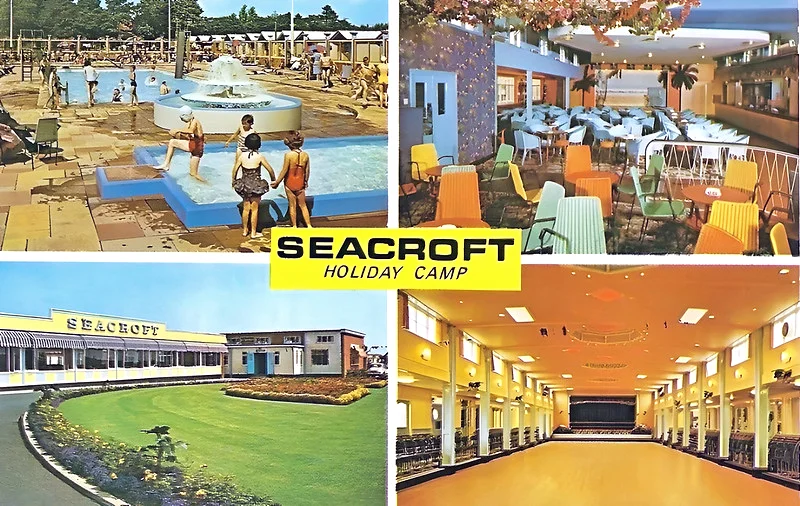
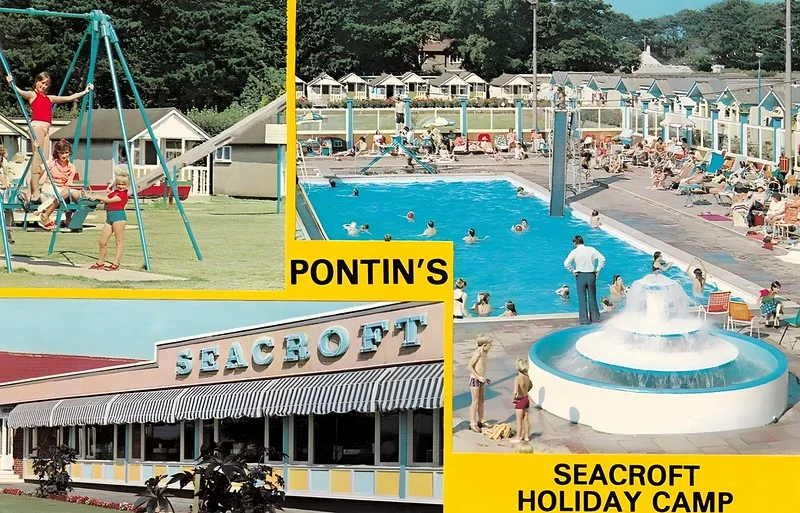
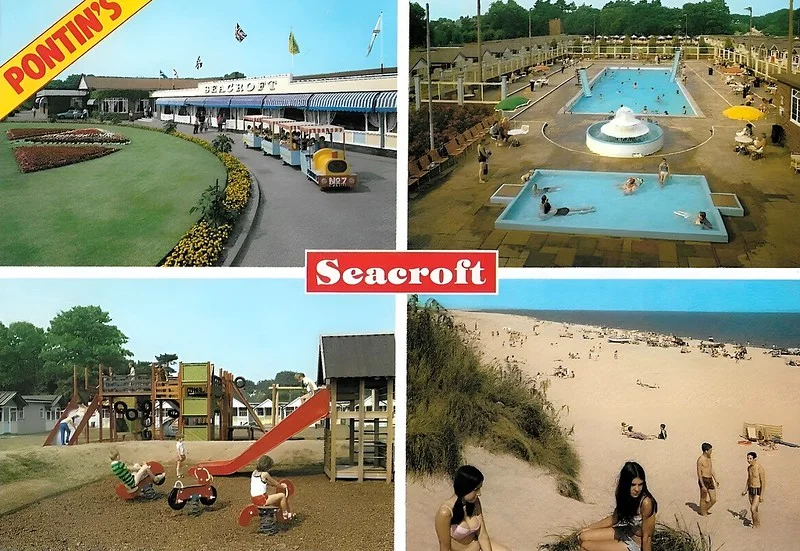
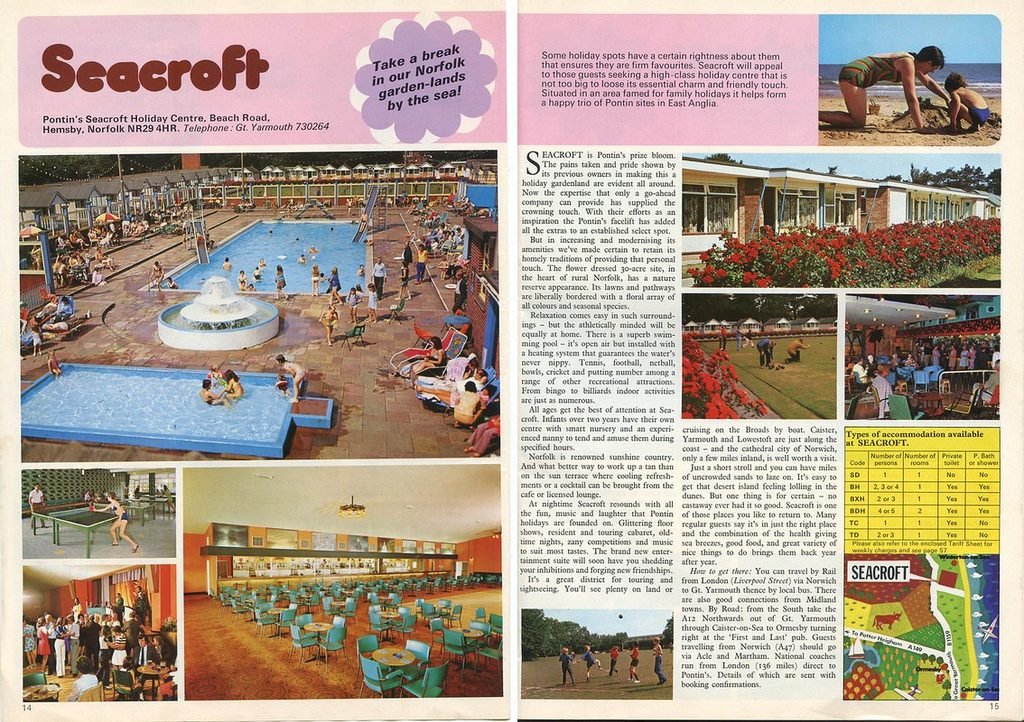
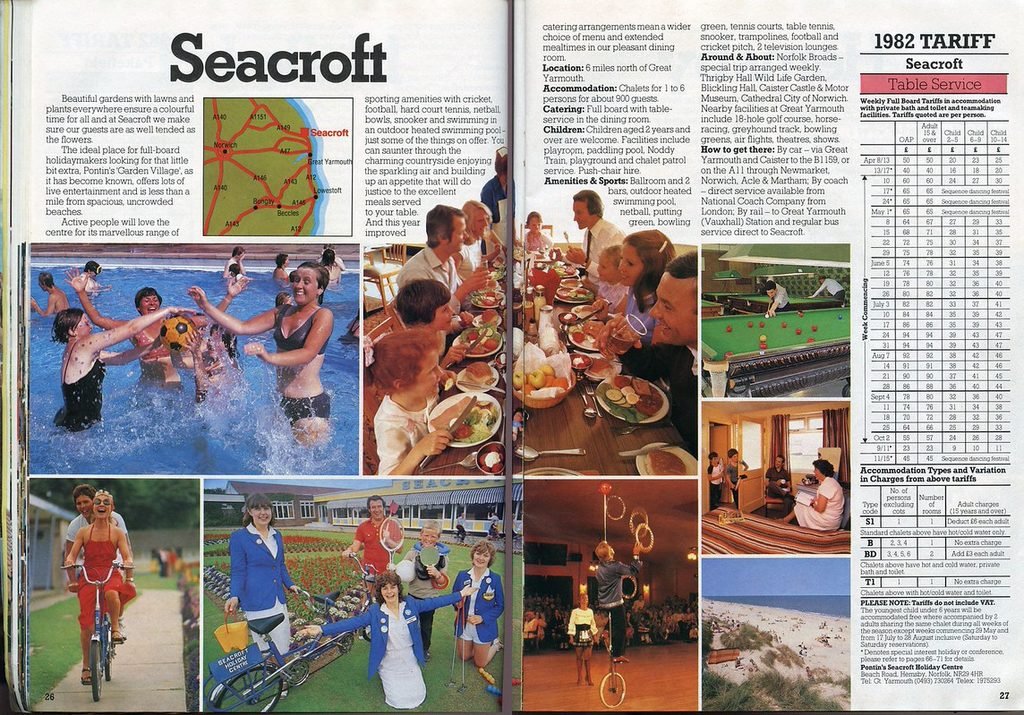
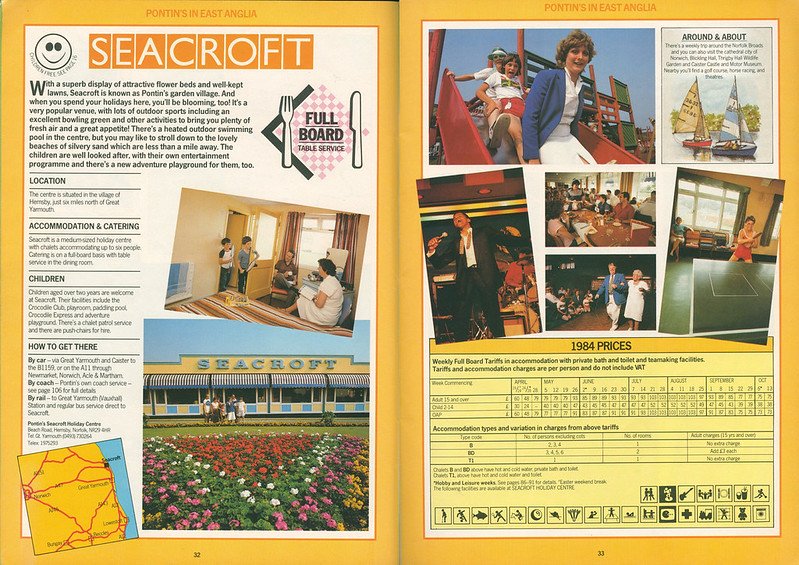
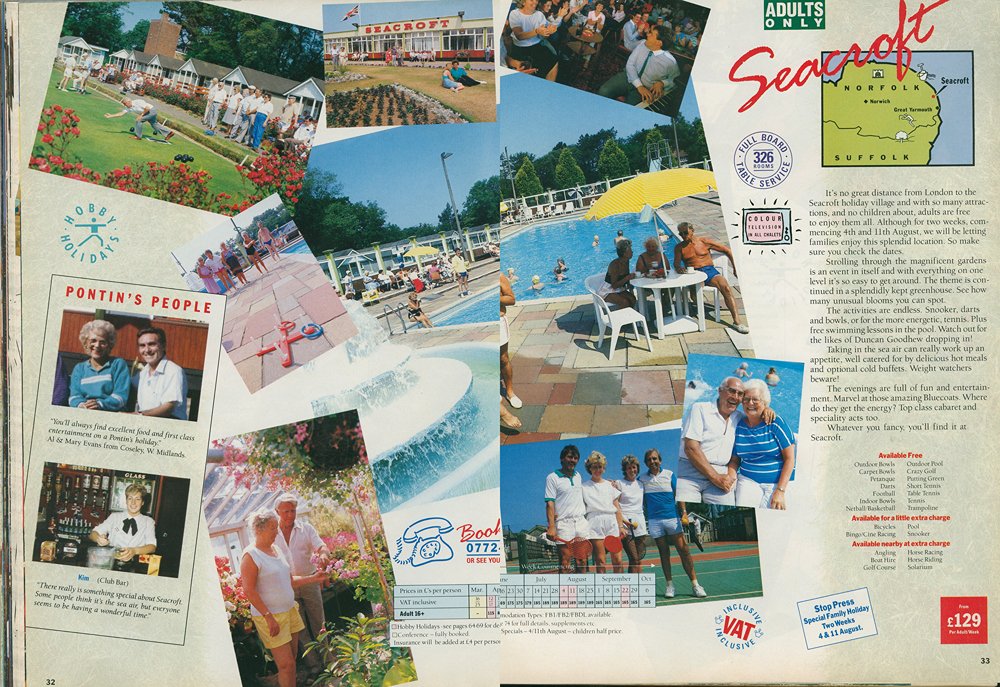
The post-war years brought Seacroft’s greatest period of expansion. By the early 1960s it was advertising itself as a rather more comfortable alternative to the basic holiday camps of earlier years. An advertisement from 1963 described 30 acres of grounds and well-spaced chalets with hot and cold running water. There were three hard tennis courts, bowling and putting greens, football and cricket pitches, children’s playgrounds and an open-air floodlit swimming pool enclosed by glass.
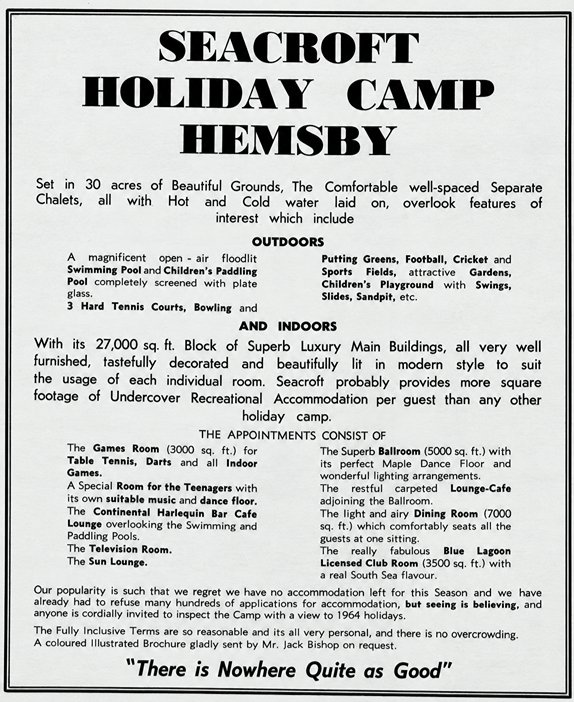
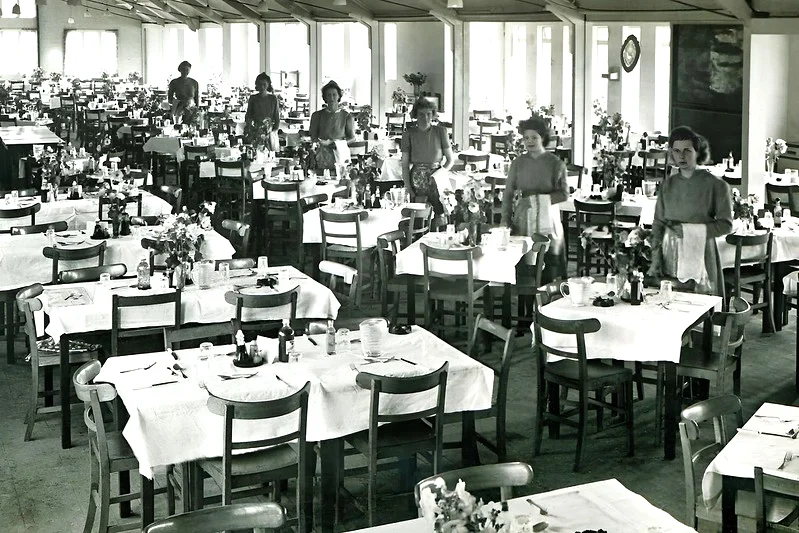
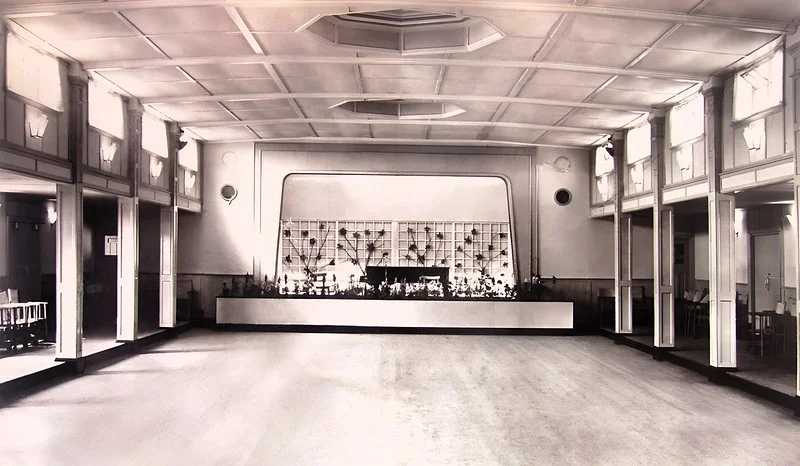
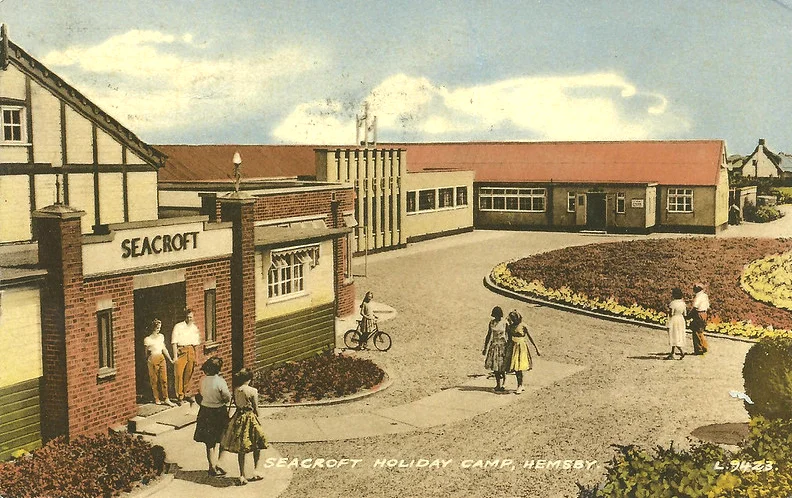
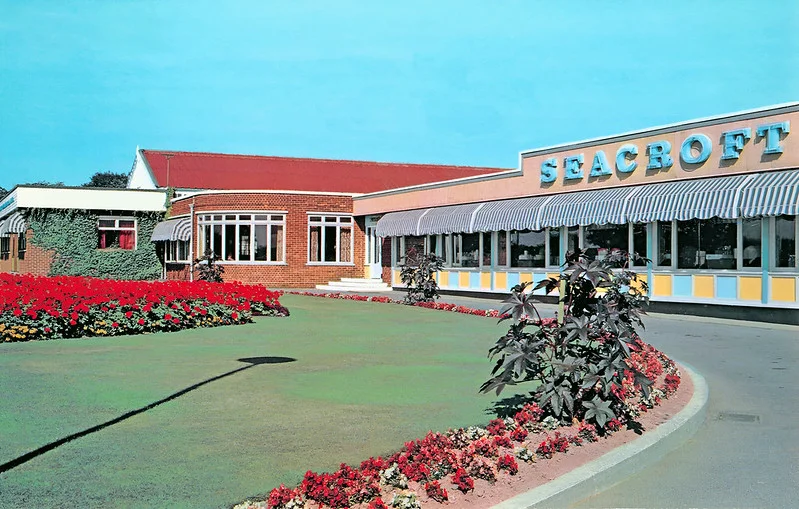
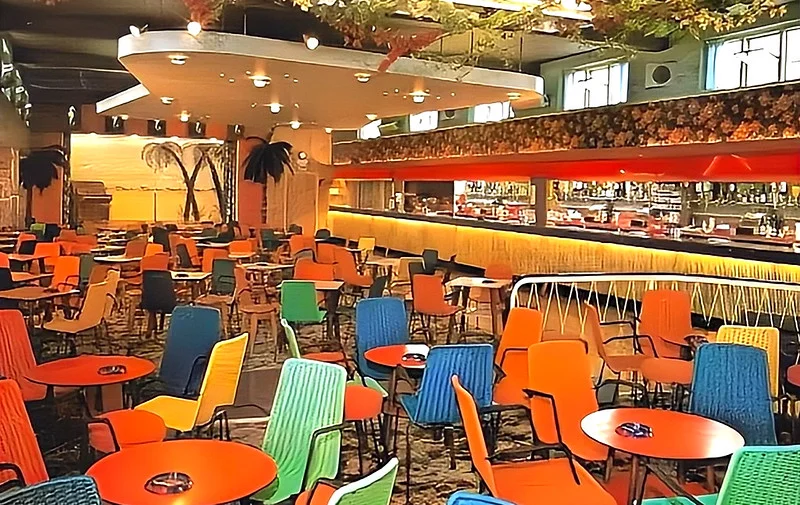
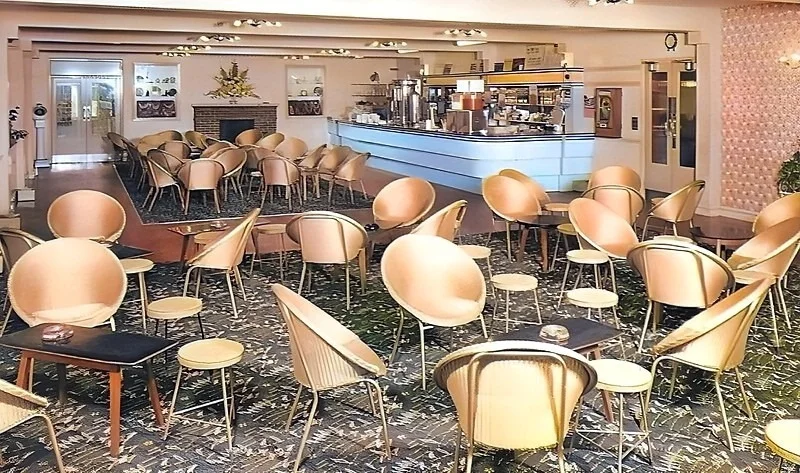
Indoors, the main complex provided some 27,000 square feet of recreational space. There was a 5,000-square-foot ballroom with a maple dance floor, a 7,000-square-foot dining room large enough to seat every guest at once, games and television rooms, a teenage club, sun lounge and the wonderfully named Blue Lagoon licensed club room. The advertisement even boasted that Seacroft provided more undercover recreational space per guest than almost any other holiday camp. By 1963 it was apparently doing sufficiently well to announce that the entire season was already fully booked.
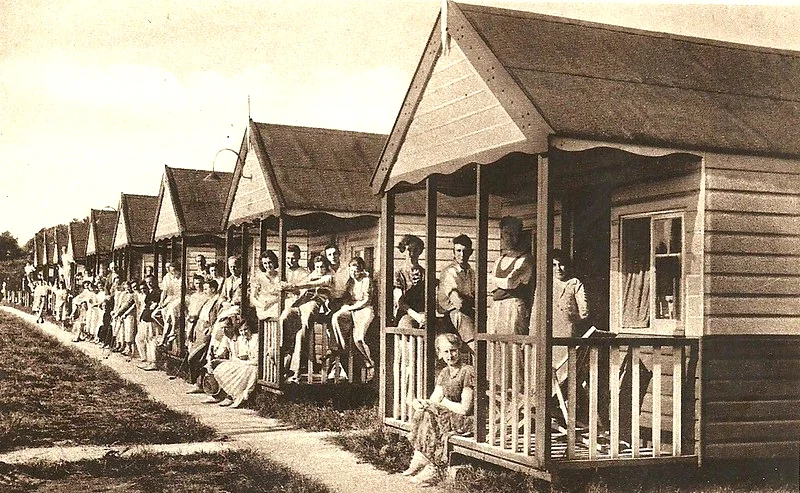
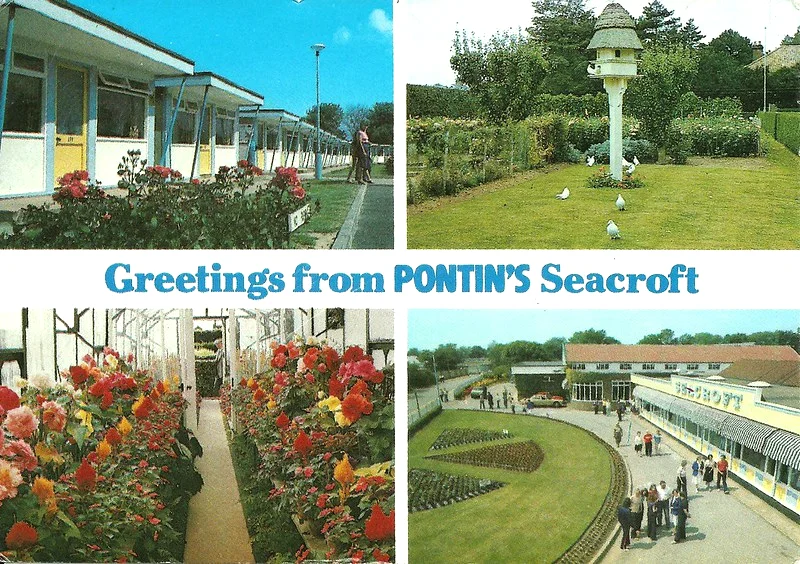
The accommodation became something of a mixture. Some of the newer chalets dating from the 1960s had their own bathrooms, while older wooden chalets remained much more basic, with little more than beds, a washbasin and toilet. Heating came from electric heaters operated by coin meters – another once-familiar feature of British holiday camps. Improvements were made gradually and by the mid-1980s all the guest accommodation had been provided with private bathrooms.
Pontins takes over
After more than forty years at the helm, Jack Bishop sold Seacroft to Pontins in 1971, although he remained involved as a director for several years afterwards. His association with the wider area also continued: in 1974 he became Mayor of Great Yarmouth. Bishop died in 1985.
Under Pontins, Seacroft was rather unusual. Many older camps acquired by the company were substantially rebuilt, their original chalets swept away and replaced with the familiar two-storey accommodation blocks that appeared across the Pontins estate. Seacroft largely escaped this treatment and retained over 300 chalets, some of which dated back to the 1950s and 1960s. New accommodation and improvements were added, but much of the existing camp survived, giving it a noticeably different character from the much larger Pontins Hemsby Holiday Centre across the street, previously the old Maddiesons camp.
In 1980 the camp was forced to close for a week following a serious outbreak of salmonella poisoning. Around 200 guests and staff became ill and two people died. The infection was eventually traced to cold meat served at lunchtime.
Pontins finally disposed of Seacroft during the company’s retreat from older full-board resorts in the late 1990s. Richardson’s, which already owned the adjoining Hemsby Beach Holiday Village, acquired Seacroft in March 1998. Rather than immediately redeveloping it, the company refurbished the existing camp and continued operating it in much the same traditional fashion.
For another two decades, Seacroft survived as something of a throwback. While holiday parks elsewhere filled with privately owned static caravans and modern lodges, guests could still come to Hemsby, stay in a chalet, eat their meals communally and enjoy evening entertainment in retro surroundings recognisably descended from the traditional British holiday camp.
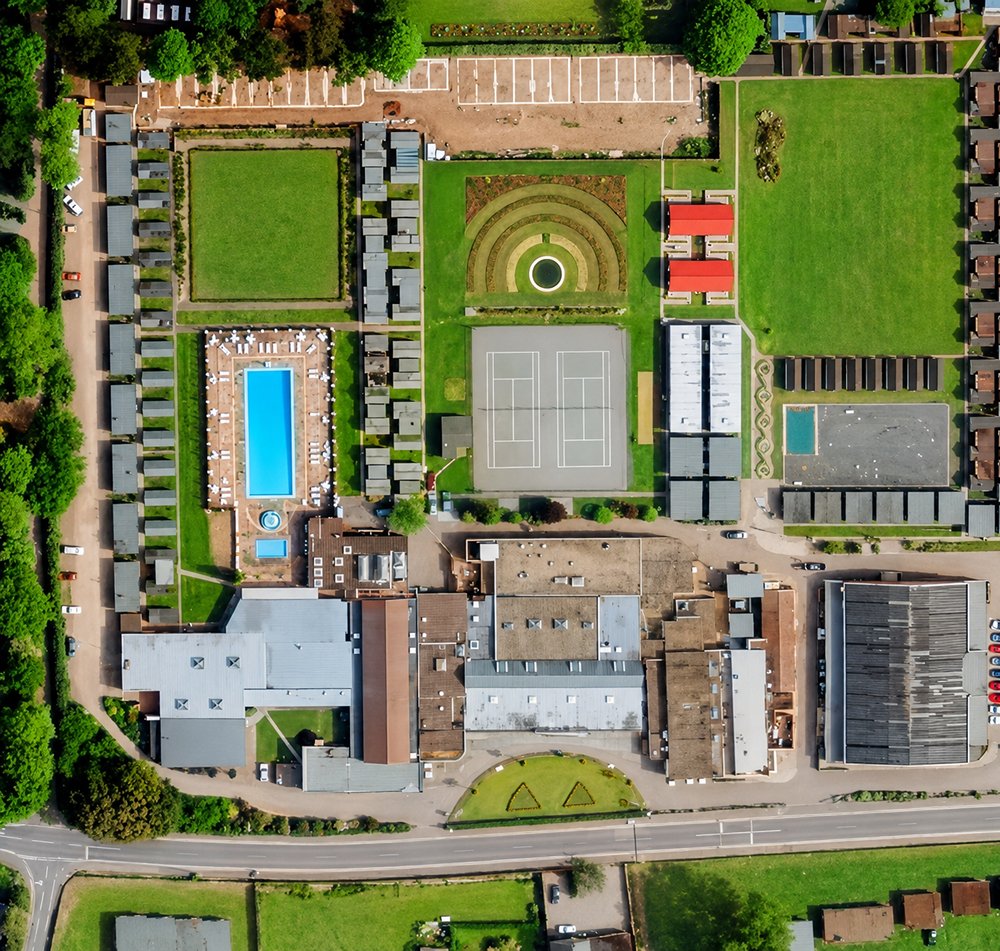
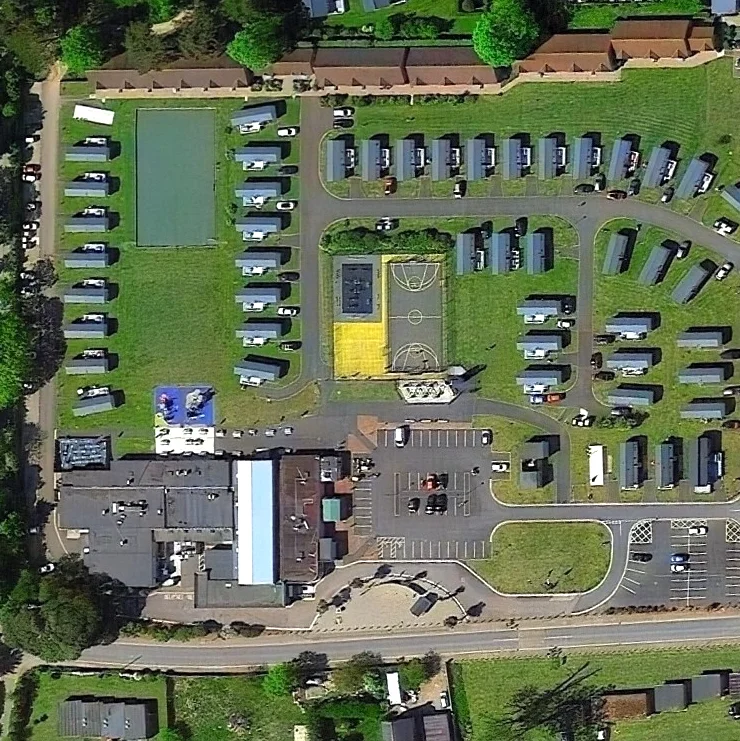
That finally changed during the winter of 2017–18. Richardson’s combined Seacroft with its neighbouring Hemsby Beach site as part of a major redevelopment, with more than £10 million invested at Hemsby from 2016 onwards. Much of the old Seacroft accommodation was demolished and replaced by modern static caravans. The old swimming pool was filled in, although some of the former communal buildings did survive. The two previously separate resorts then became a single operation under the name Hemsby Beach Holiday Park.
It brought to an end a remarkably long continuity. What Jack Bishop had begun as six modest chalets in 1930 had survived the Depression, military requisition during the Second World War, the great post-war holiday-camp boom, the arrival of cheap foreign package holidays and the long decline of the traditional full-board camp. Seacroft may never have been one of Britain’s biggest or most famous holiday camps, but perhaps that is precisely why its story is worth preserving: for almost nine decades it quietly adapted while retaining something of the character of the seaside holiday camp from which it had grown.
Hi i was only 16 and my friend 17 left ireland to work in your holiday camp it was agreat place to work i have wonderful memories. I am 70 years old now and still look back on the lovely people we meet.and the kindness we were giving.Sea Croft amazing place.
Great family holidays late 60ies n 70ies.
I remember the entertainment guy was Ricky. My sister and l sang on stage (sisters) by the Beverly Sisters .