Tucked away on Jersey’s rugged north coast, Plemont Bay has long been a popular place to visit. Surrounded by spectacular coastal scenery and towering cliffs, the bay looks out across the open waters of the English Channel. Beneath the cliffs lies one of the island’s most dramatic and secluded beaches, reached by a steep path leading down from above. Those prepared to make the descent were rewarded with a beautiful stretch of sand surrounded by rocky outcrops, caves and sheer cliffs, with Atlantic waves breaking against the shore.
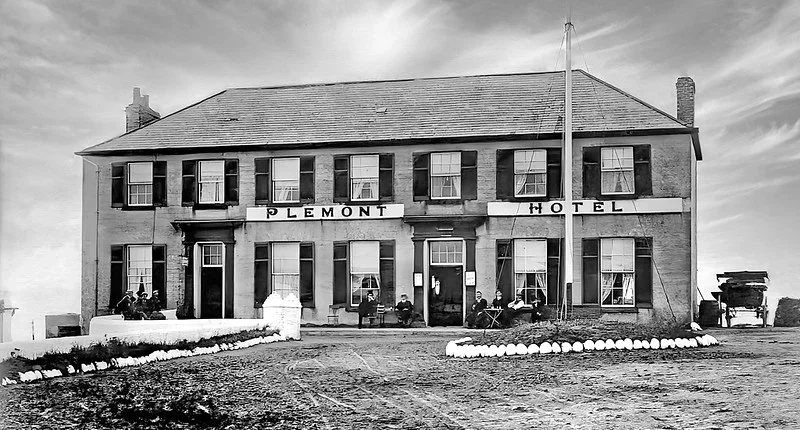
The Plemont Hotel opened here in 1874 and quickly became a popular seaside retreat. The hotel also had its share of mysterious events. In 1926, guests discovered a 26-year-old woman, drenched in seawater and disoriented, standing on the cliffs. She was later identified as a Londoner who had been holidaying in Yorkshire and had no idea how she ended up in Jersey.
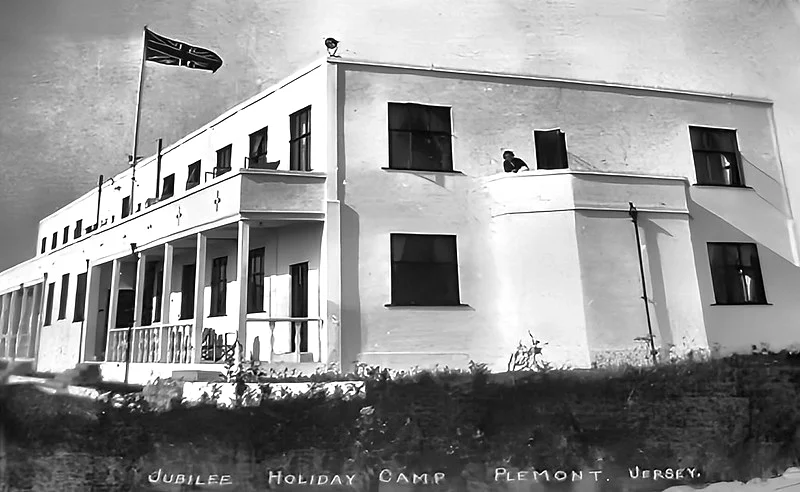
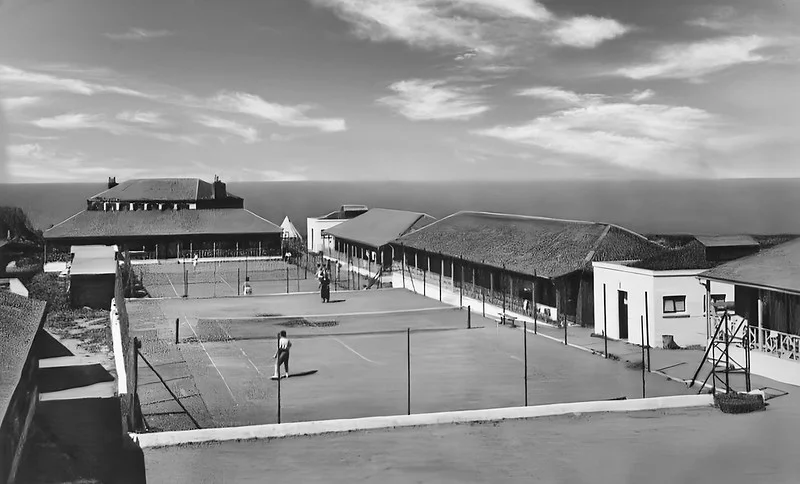
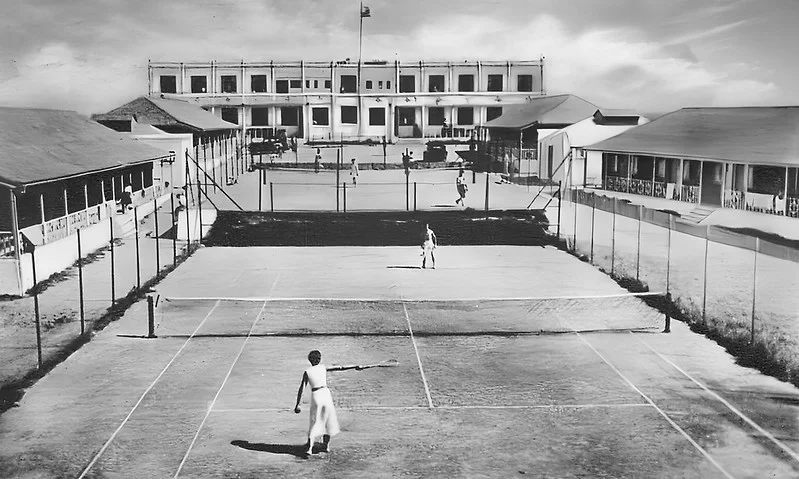
In 1934, construction began on the Jubilee Holiday Camp, a 350-capacity site adjacent to the Plemont Hotel. In 1937, a major fire destroyed 40 chalets, forcing guests to seek refuge in the ballroom.
The outbreak of the Second World War brought tourism to an abrupt halt. Following the German occupation of Jersey in 1940, the holiday camp was taken over by German forces. Plemont’s commanding position overlooking the sea also made it strategically important, and the Germans constructed coastal defences, bunkers and other fortifications around the bay and surrounding cliffs.
Parkins Holiday Camp
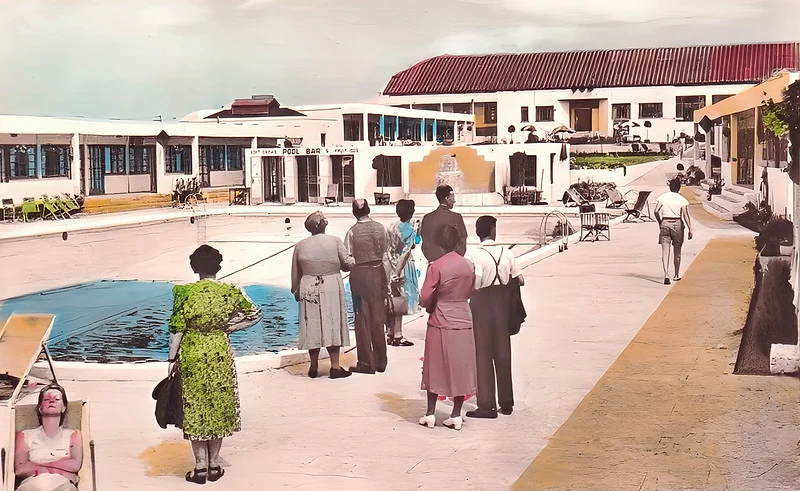
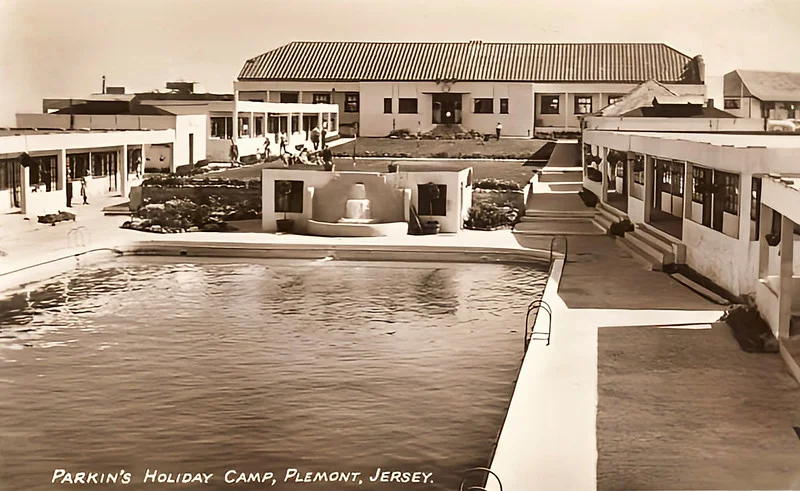
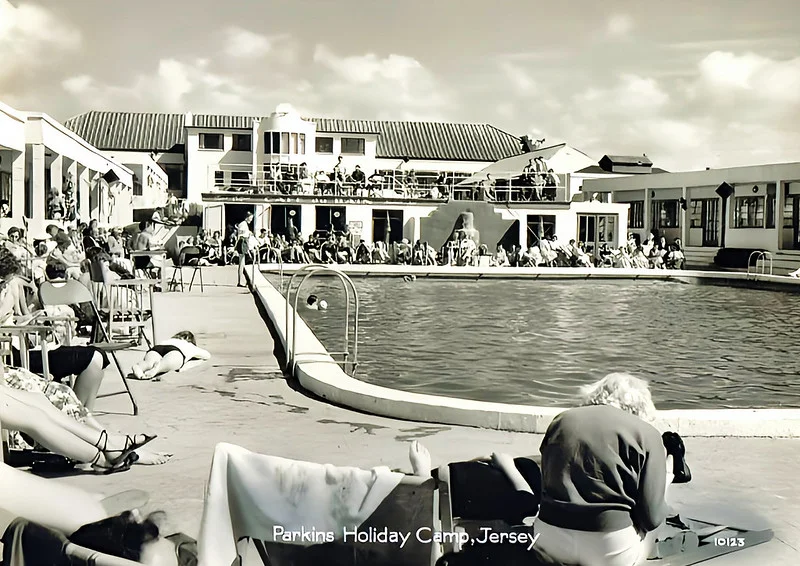
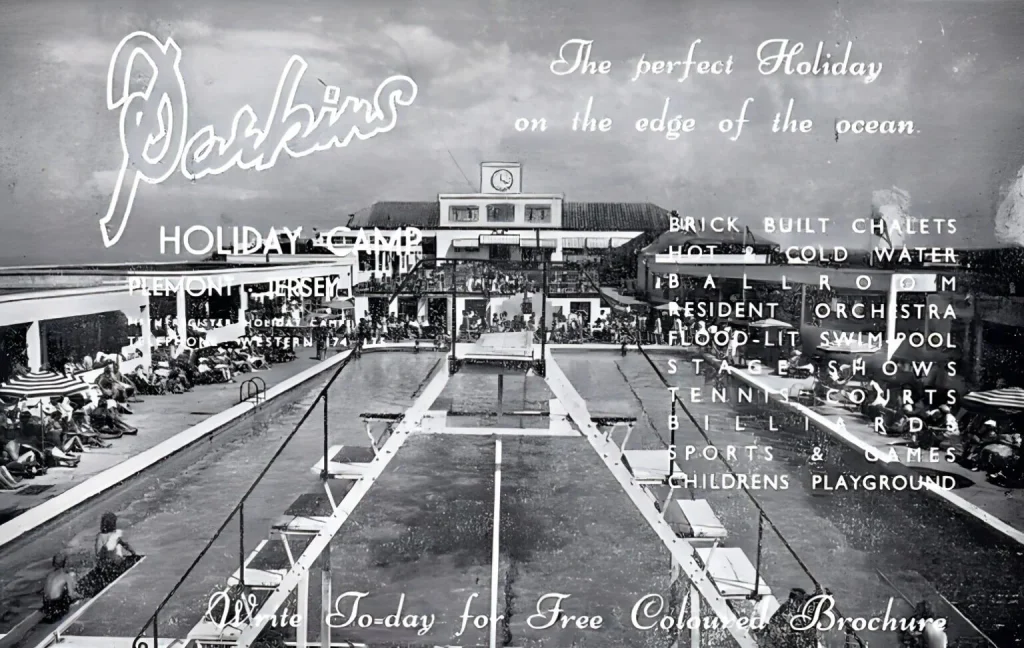
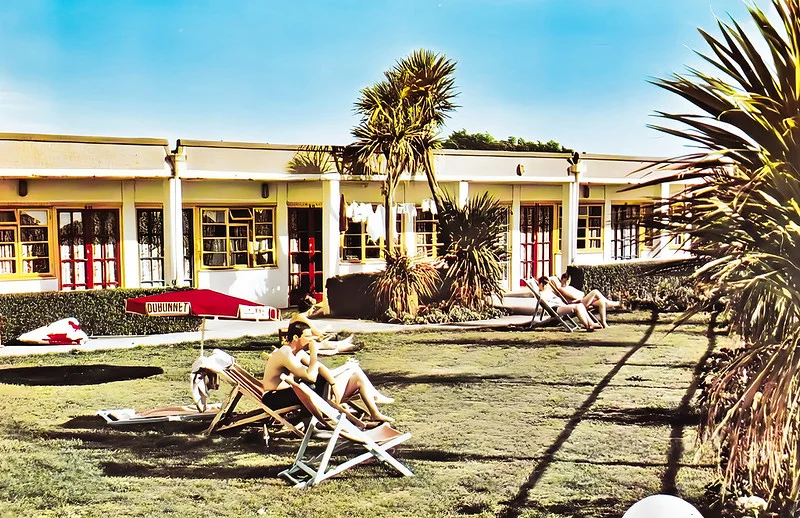
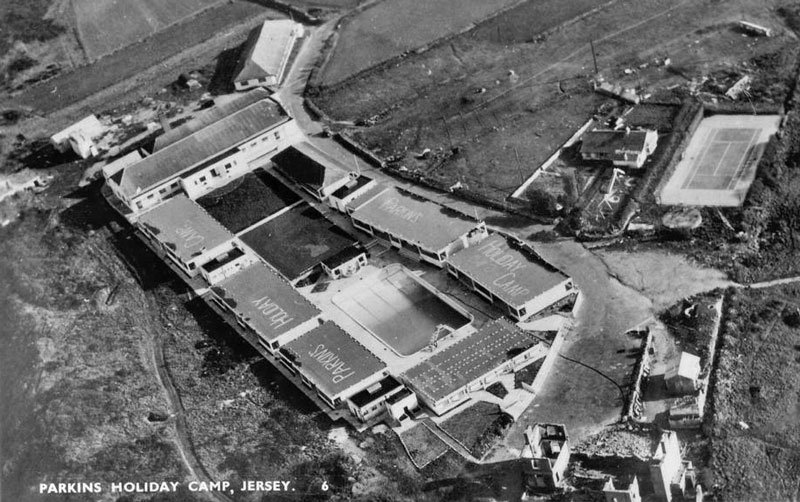
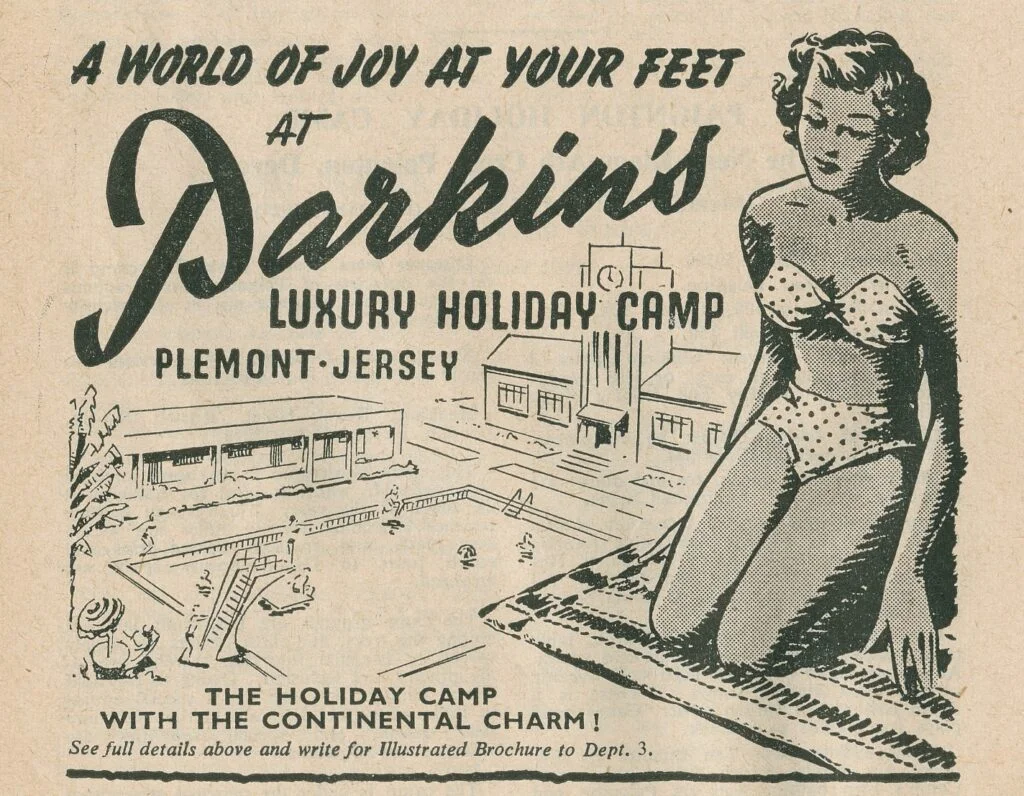
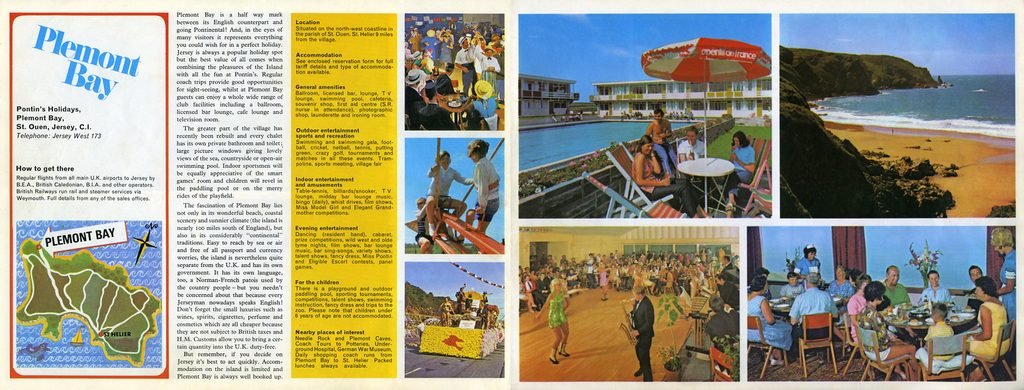
The 11-acre camp suffered badly during the war and in 1946 the damaged remains were purchased by circus impresario Stanley Parkin, who rebuilt it and renamed it Parkins Holiday Camp. It could accommodate 460 guests and was advertised as “The holiday camp with the continental charm.” As with all holiday camps of the period, it was a full-board facility with all meals provided and taken in the communal dining hall. Chalets had sinks with hot and cold water, but no private bathrooms. Shortly afterwards the island parliament voted to ban construction of any new holiday camp on the island.
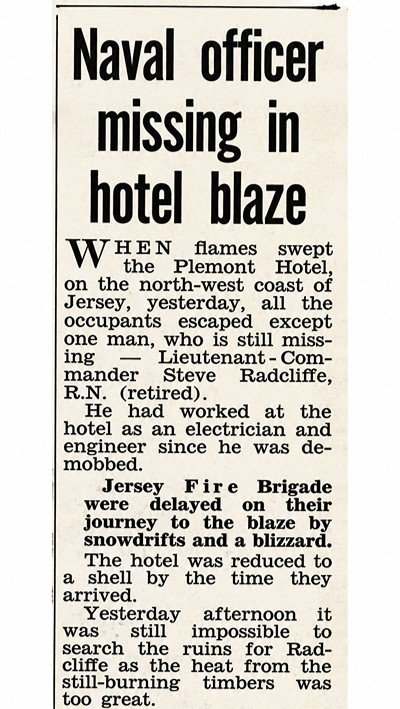
The Plemont Hotel remained in use but was tragically destroyed by fire in February 1948. The blaze claimed the life of 36-year-old naval officer Steve Radcliffe, although his body was never found.
Pontins takes over
In February 1961, Fred Pontin acquired the camp in a share-swap deal valued at £375,000, with Parkin remaining involved as a member of the board. Pontins also purchased additional land around the existing site, giving the company room for future expansion.
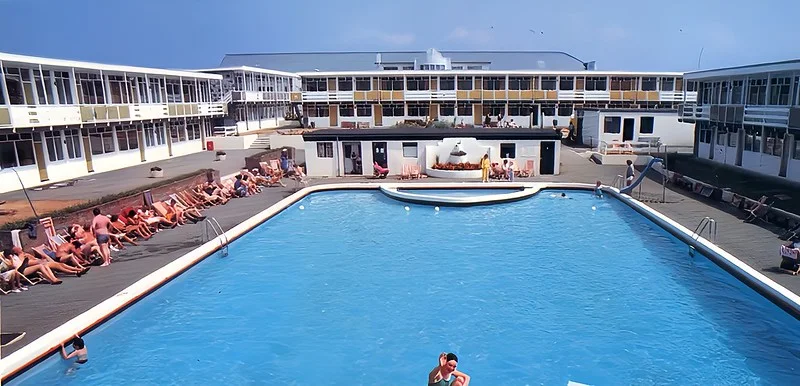
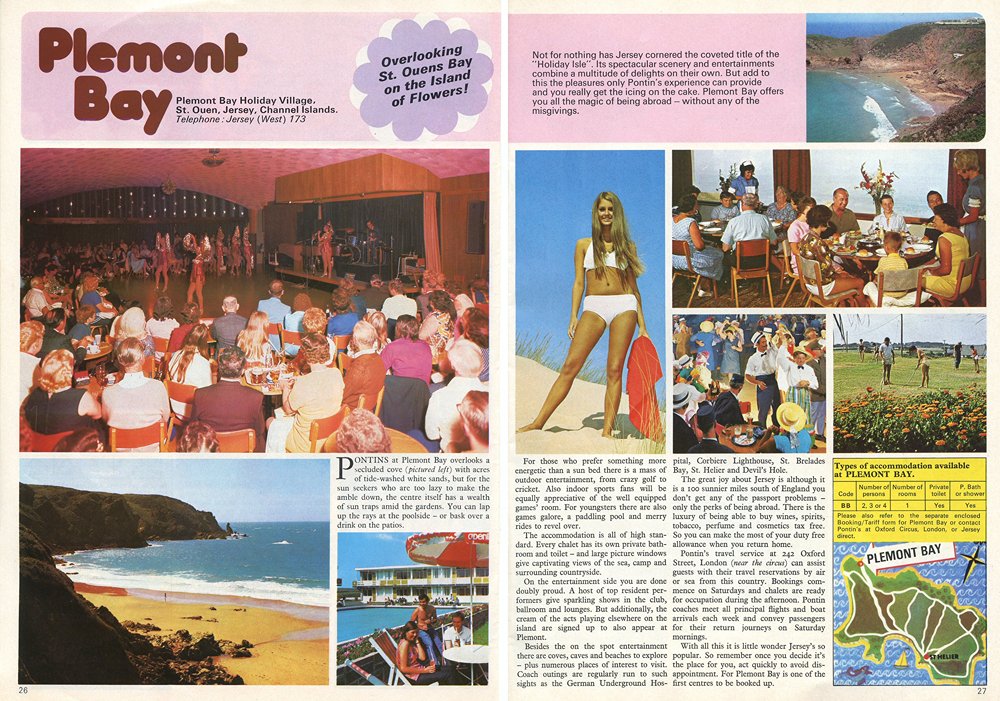
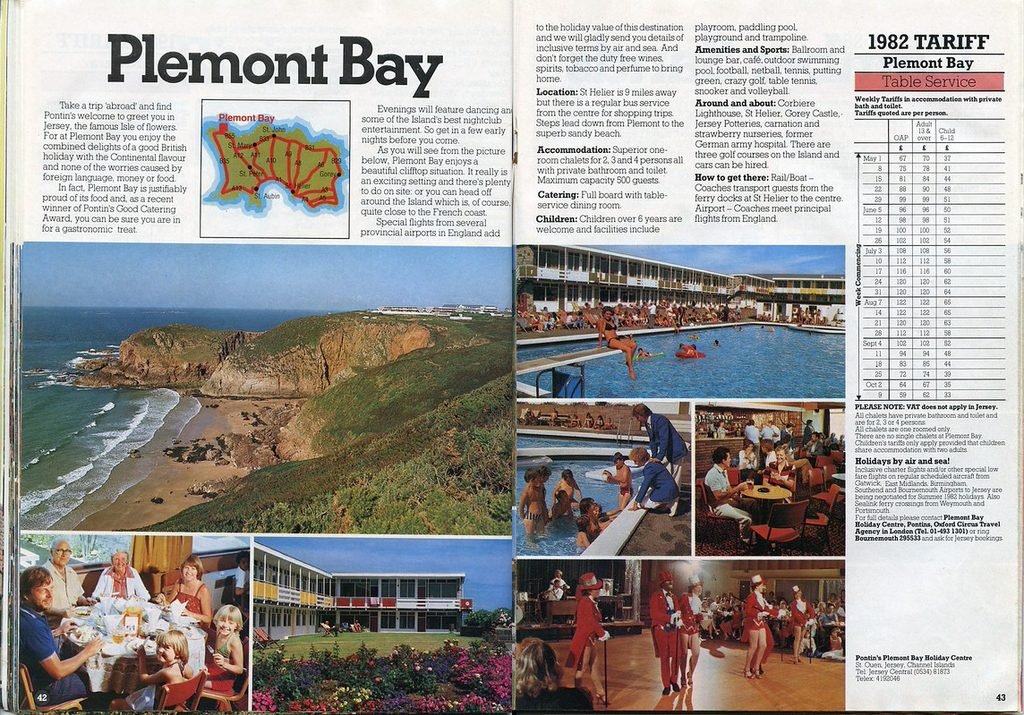
A major redevelopment followed during the late 1960s. The swimming pool and principal entertainment buildings were retained, but the original chalets were swept away and replaced by modern two-storey accommodation blocks. Unlike many later Pontins sites, Plemont remained a traditional full-board camp, with all meals included in the price and served communally in the large dining hall. As a result, the 200 new chalets were essentially hotel-style rooms, providing little more than a bed and bathroom.
Despite lying just 14 miles from the coast of Normandy, Jersey was a British Crown Dependency. Although not part of the United Kingdom, the island owed allegiance to the British Crown and used pounds and pence, making it feel reassuringly familiar to British visitors. Travelling there was also easy, as British citizens could visit without a passport.
During the 1970s, more than a million British tourists were travelling to Jersey each year. Its beaches, mild climate and slightly exotic atmosphere were certainly part of the appeal, but there was another powerful draw: shopping. With no VAT and generous duty-free allowances, visitors could stock up on cheap alcohol, cigarettes, perfume and cameras before returning home.
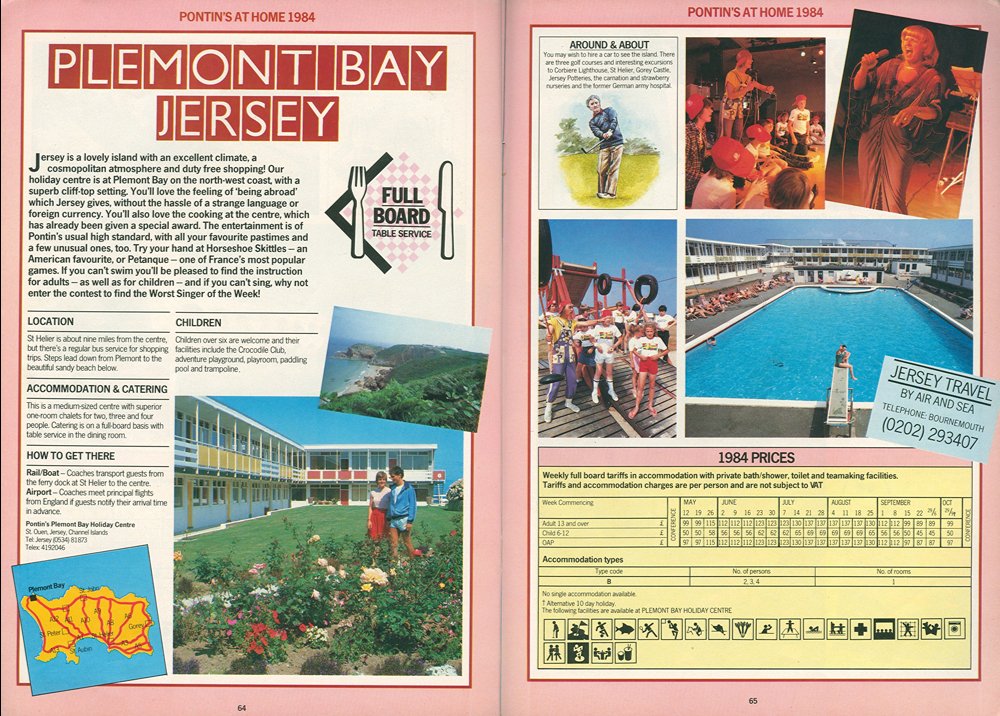
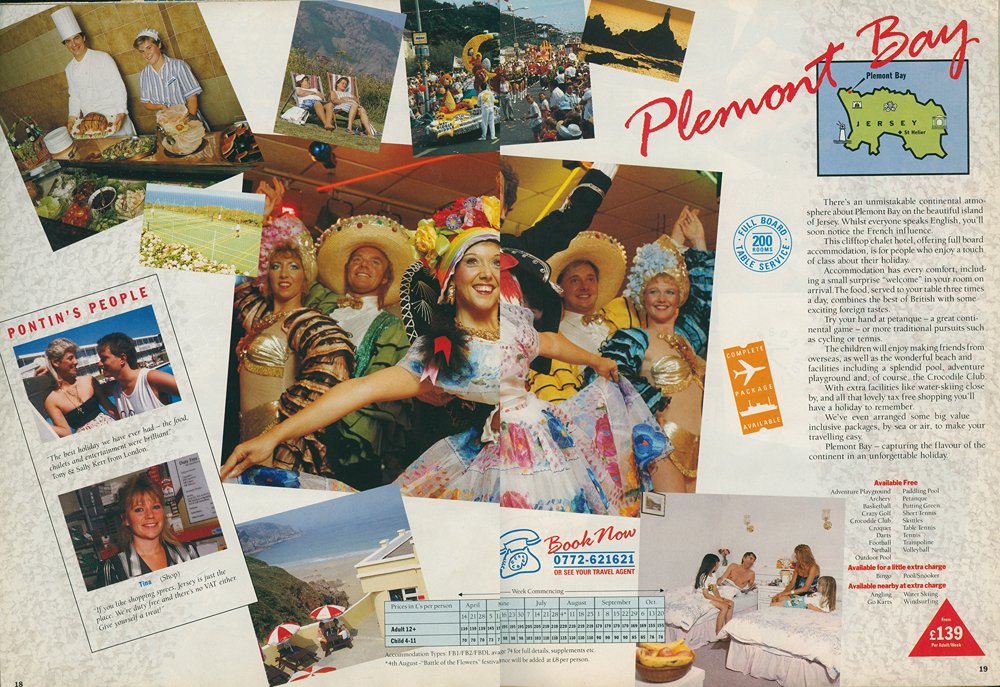
From the 1980s onwards, Butlins and Pontins followed very different paths. Butlins treated its resorts as long-term assets worth improving. Considerable sums were invested in replacing outdated accommodation, demolishing obsolete buildings and adding new leisure facilities, with the aim of extending their useful life well into the future. As standards improved, prices could be raised.
Pontins, on the other hand, was run by a property developer who saw their long term future not as holiday camps but as housing estates. For this reason, no large scale demolition or rebuilding took place, and just enough money was spent to keep the camps somewhat serviceable. Instead of raising their prices, Pontins lowered them. In effect, Butlins was investing in its camps as businesses with a future; Pontins was more about patching up an ageing estate until individual sites could be sold.
It was obvious that Pontins saw the future of Plemont Bay as housing, and maintenance had been scaled back to a bare minimum. By the early 1990s it had become increasingly rundown.. In 1998, plans were announced to redevelop the site with 117 houses, but the proposal was rejected. The camp closed at the end of 2000.
What followed next appears to have been the familiar pattern seen at several other former Pontins sites: Close the camp and apply for planning permission to redevelop it for housing; if permission is refused, leave the buildings empty and neglected and allow vandalism and decay to take their toll. After a few years local residents will grow tired of the troublesome eyesore and agree to redevelopment.
And this is essentially what happened at Plemont Bay. The camp remained abandoned and increasingly derelict for the next 12 years
Video showing the camp after closure
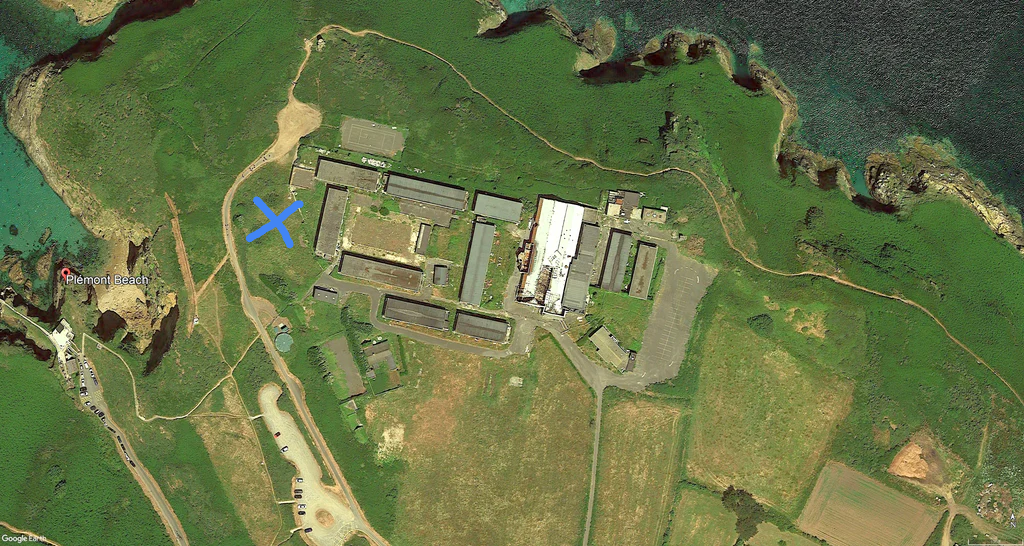
Planning permission was finally granted in November 2012 for the construction of 28 homes. Before redevelopment could begin, however, the National Trust for Jersey stepped in and acquired the site in July 2014 for £7.15 million.
The remaining camp buildings were demolished in 2015 and the land was returned to its natural state. The restoration included extensive landscaping, the creation of two ponds and a children’s discovery area, repairs to medieval dry-stone walls, and the planting of around 2,000 trees and shrubs. Today there is virtually nothing left to suggest that a large and once-busy holiday camp ever occupied the site.
