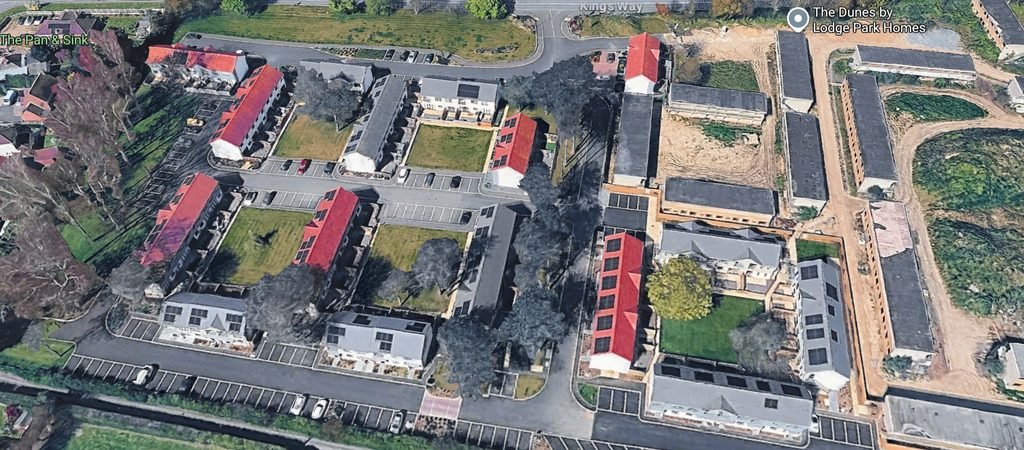
Pontins Hemsby began life as the nine-acre Hemsby Holiday Camp, opened in 1920 by Herbert Potter. Potter had been inspired by a visit to the nearby Caister Holiday Camp and, after winning £500 in a writing competition, used the prize money to establish a camp of his own at Hemsby.
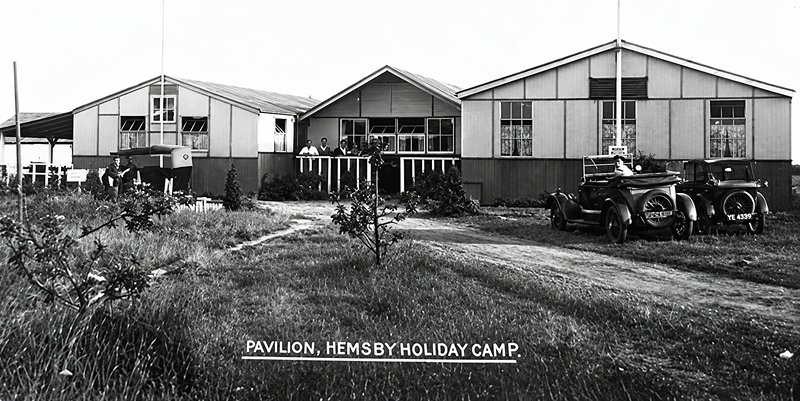
At the time, Caister still relied largely on tents for both accommodation and many of its facilities, Potter took a more permanent approach, building wooden chalets and purpose-built communal buildings. Although Caister is generally recognised as Britain’s first holiday camp, Hemsby is given the distinction of being the country’s first permanent holiday camp because of the more substantial nature of its accommodation and facilities. Potter was later joined in the business by his brother Albert.
After only four years, the Potter brothers sold the camp to Harry Maddieson for £8,000. Herbert later went on to establish the famous Potters Resort at Hopton, which continues to operate today. Albert moved to Cornwall, where he purchased the Duporth estate and established another holiday camp.
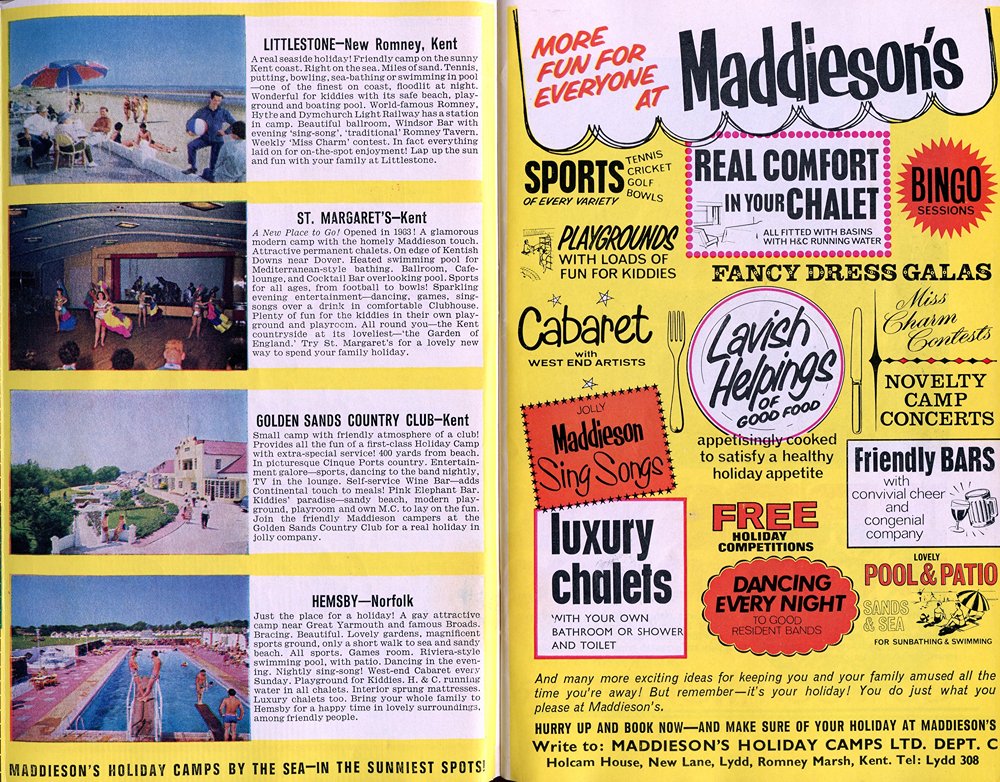
For the next 46 years, the Maddieson family steadily developed and expanded the site. Guests stayed on a full-board basis, with all meals served in a large communal dining hall. Accommodation was initially very basic, with chalets often containing little more than a bed and sink. Communal toilet blocks were dotted around the grounds. A 100ft x 30ft swimming pool was added in the 1950s.
Standards gradually improved, particularly during the 1960s, when many of the older chalets were upgraded.
The Maddieson family also expanded their holiday interests elsewhere. A second camp opened at Littlestone in 1930, followed by Camber Sands in 1958, while two further sites in Kent were later added to the family’s growing holiday business.
In 1930, another holiday camp opened across the road under the name Seacroft. It had been established by the Bishop family, who were inspired to enter the holiday camp business after supplying meat from their butcher’s shop to the Maddieson camp.
In January 1950, a large fire destroyed the main entertainment building. The names and addresses of 10,000 people who had booked to stay at the camp were lost. Fortunately, a new, larger structure was completed in time for the summer season.

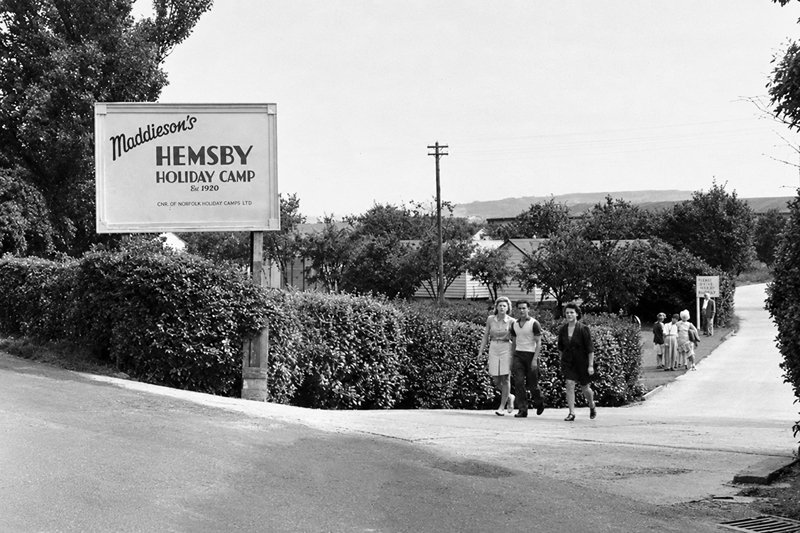
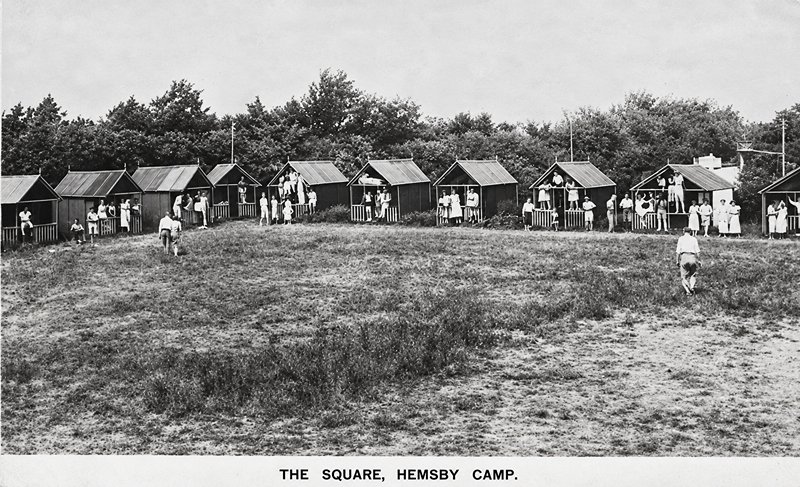

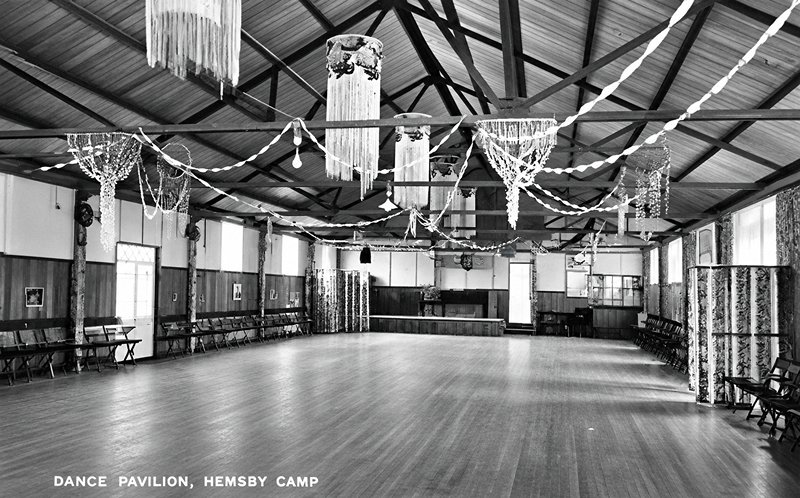
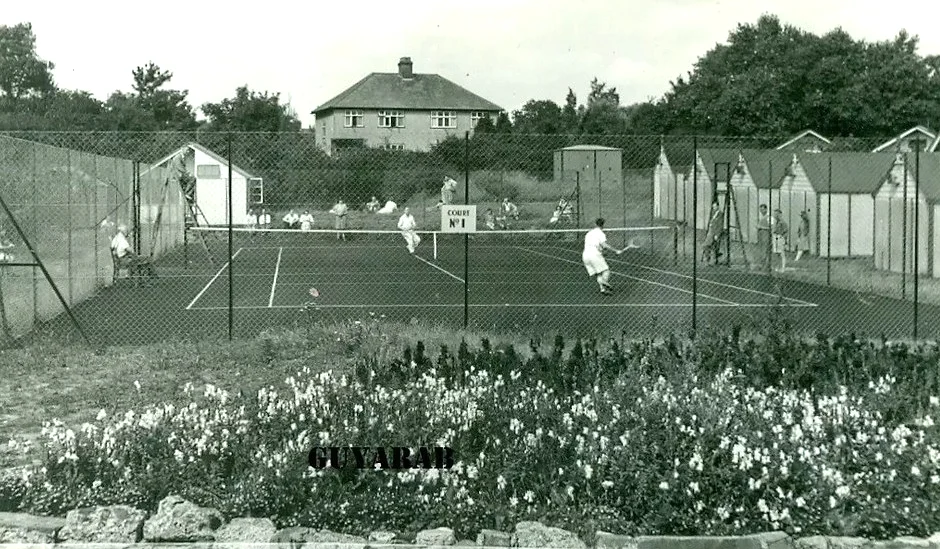


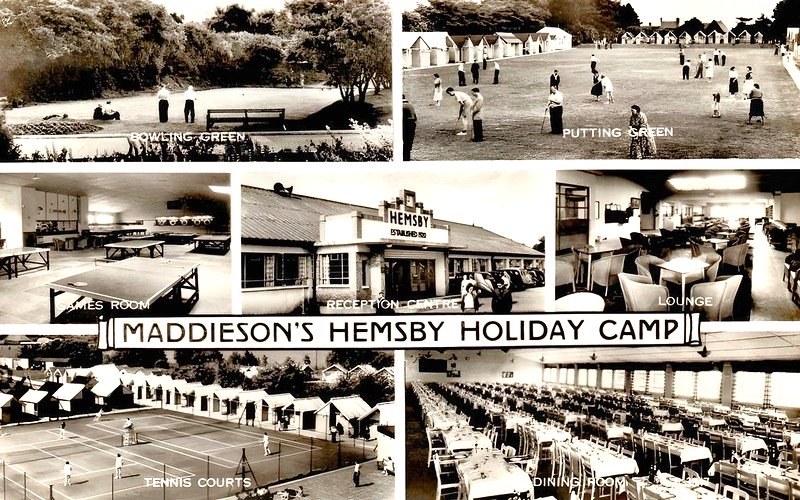
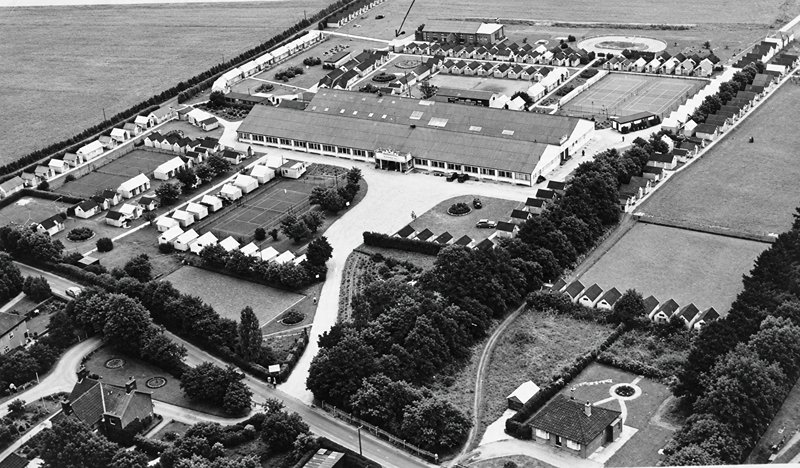
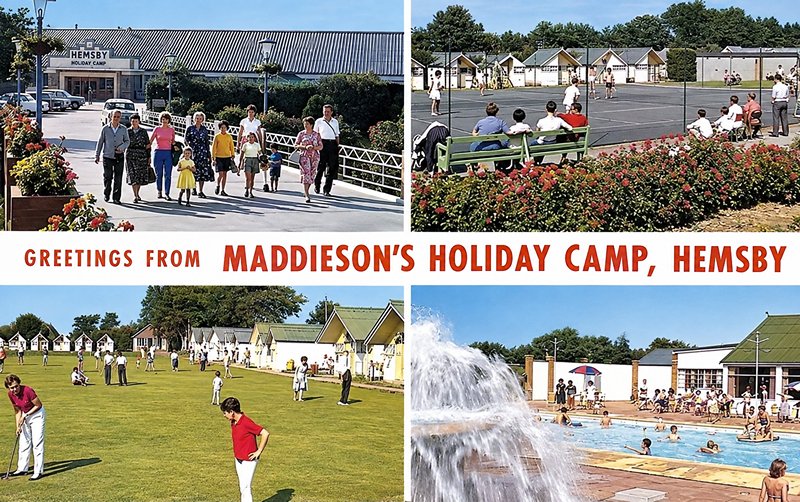
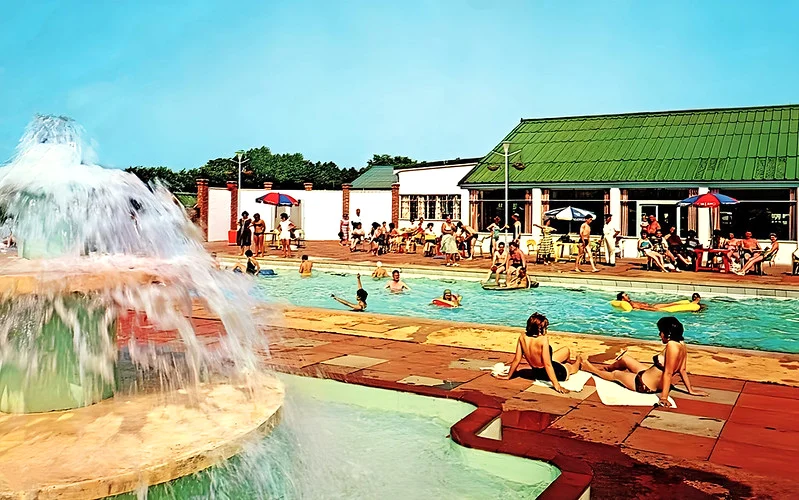
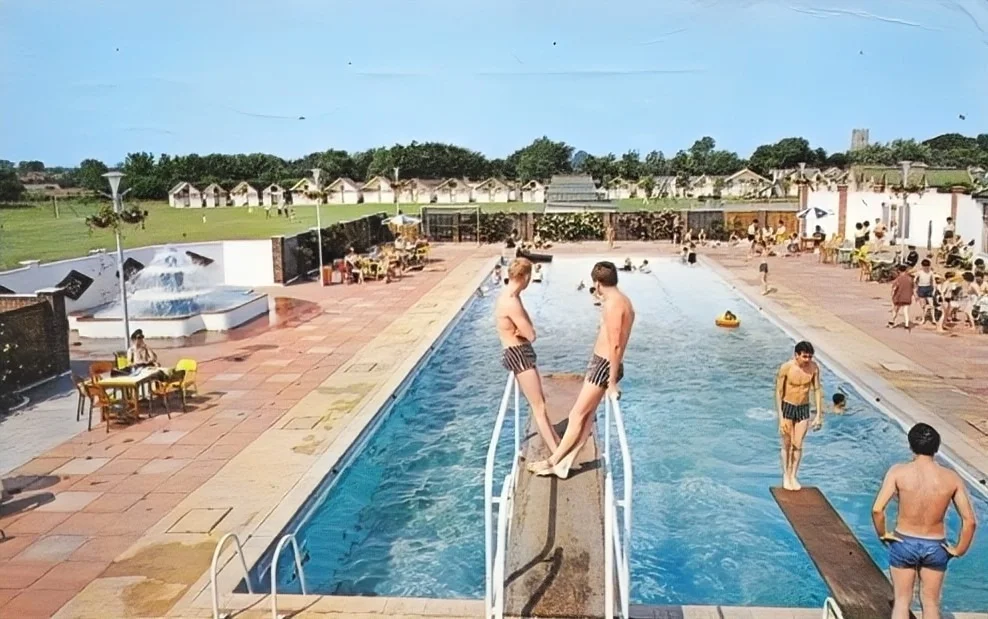
Hemsby closed as a holiday camp at the end of the 1967 season and reopened in 1968 as the Norfolk International Study Holiday Centre, catering primarily for young people from Britain and overseas. The change followed a study by Maddieson’s into the habits, likes and dislikes of its guests.
“We have four camps, and we have come to the conclusion that in a broad age spectrum it is not easy to fit in young people with older people, and we have decided to convert one camp so as to provide especially for young people,” explained director Beryl Maddieson. “It will make special provision for groups of young people from 16 to 26, though in the early part of the season school groups from 11 upwards will be accepted.”
At the end of its first season the experiment was declared a great success, although some local traders were considerably less enthusiastic. The licensee of the nearby Bell pub complained: “I think the village has lost a lot on the deal. From a business angle it was a proper flop.”
Pontins Hemsby

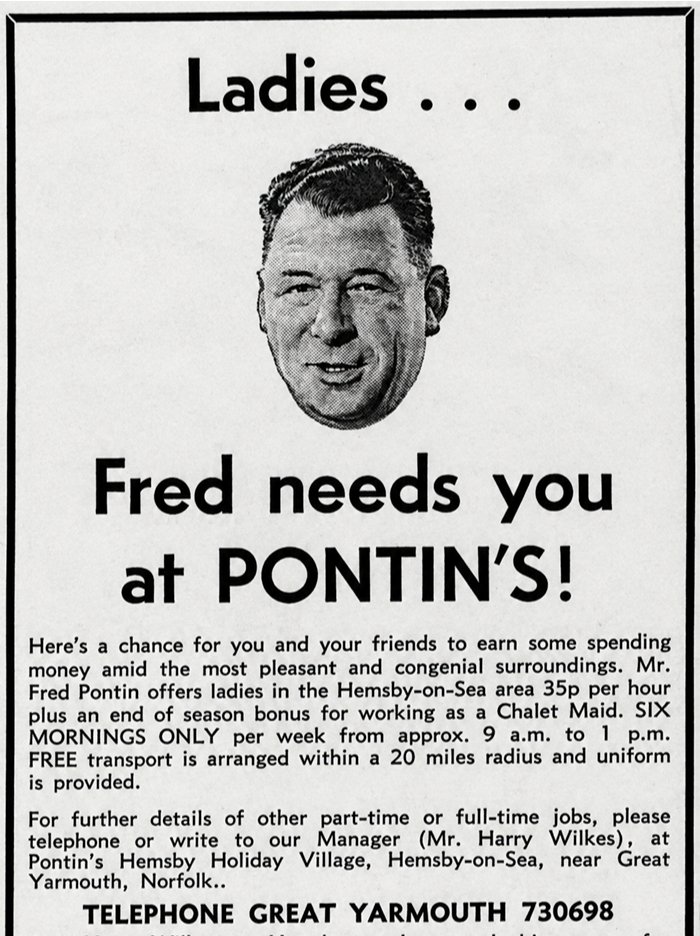
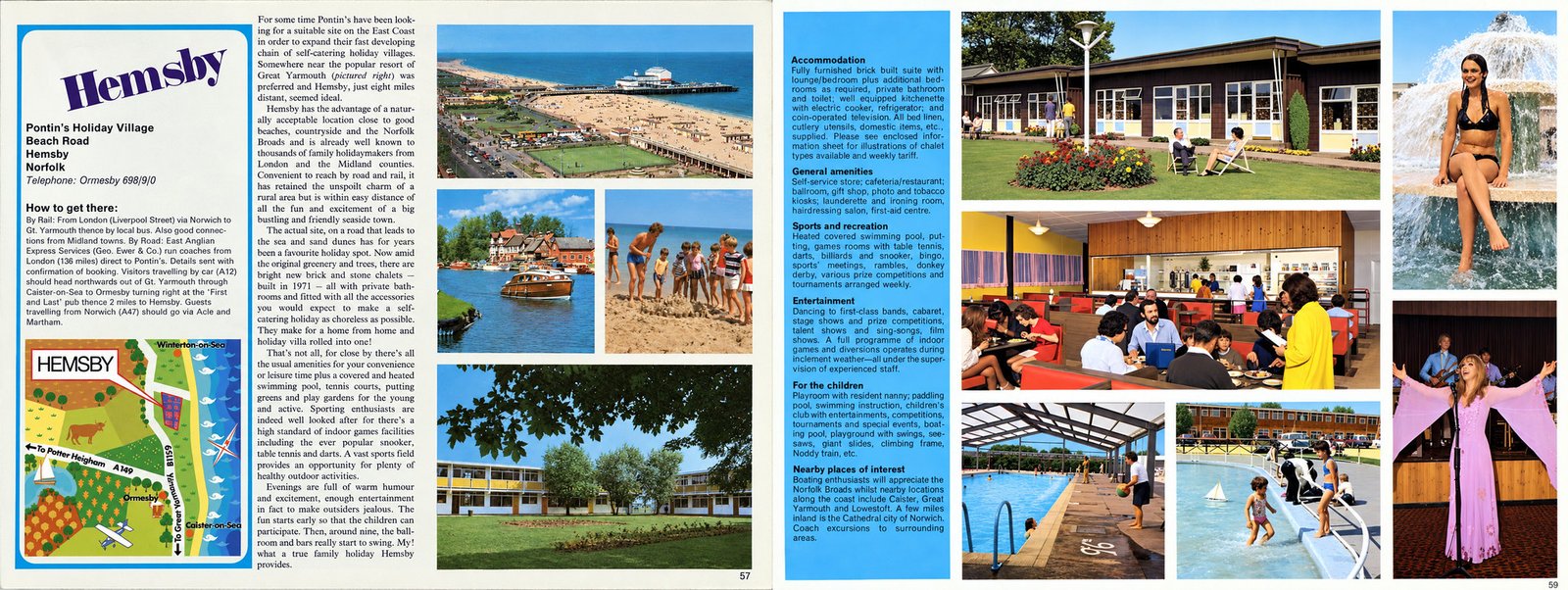
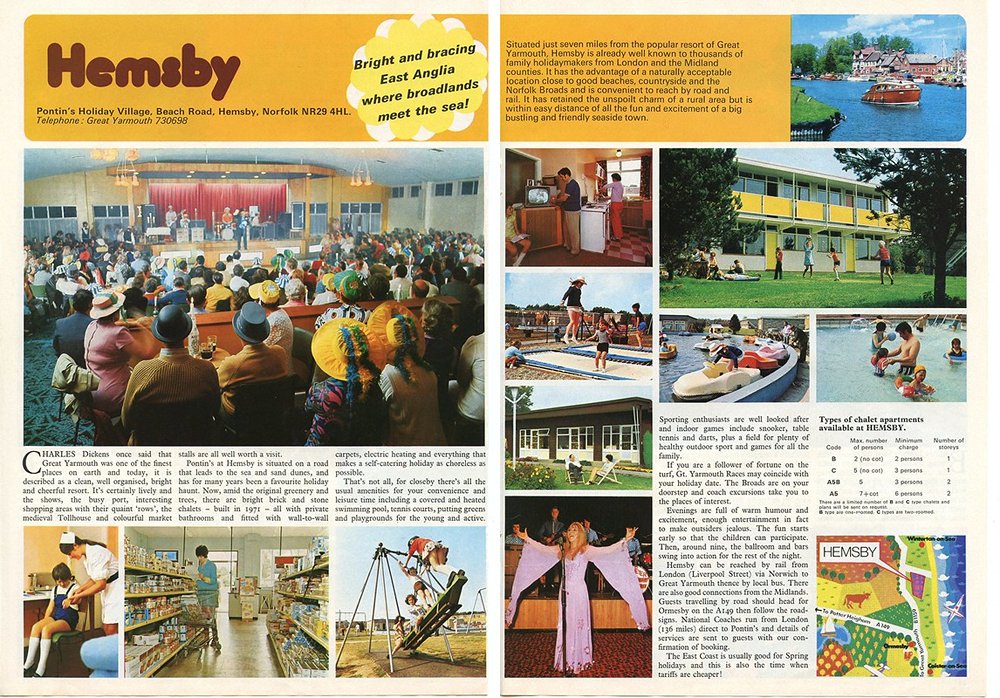
After operating for three seasons as a youth centre, the camp was sold to Fred Pontin at the end of the 1970 season. He immediately announced an ambitious redevelopment programme. Additional land was acquired to the south, expanding the site to 22 acres, and plans were announced to rebuild the site as a large self-catering holiday village.
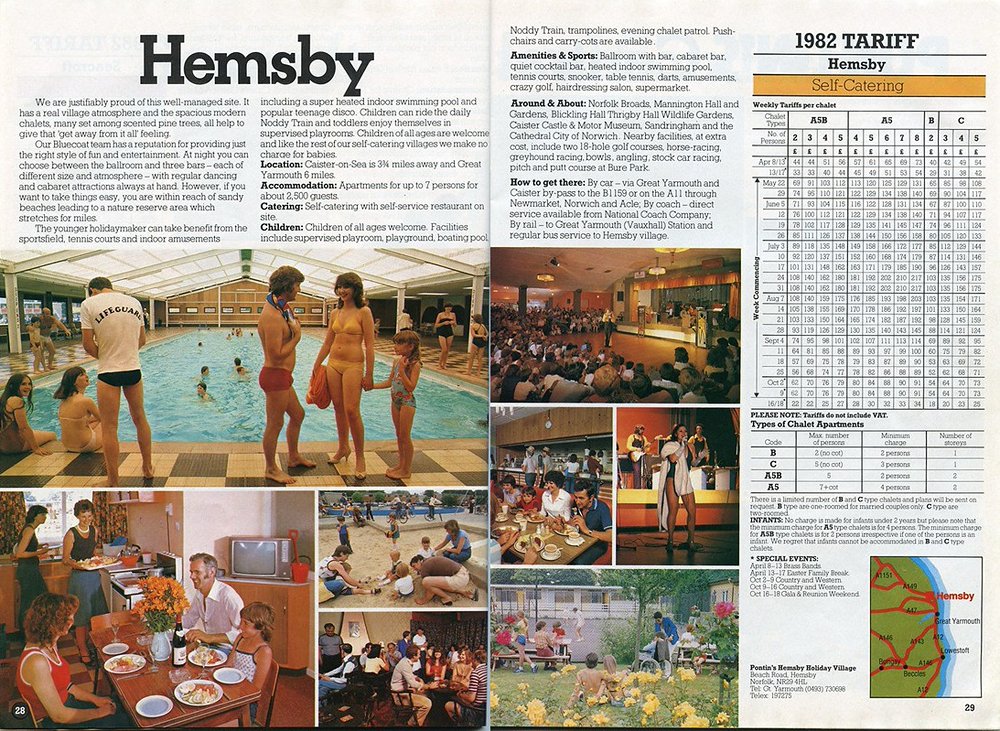
Most of the main communal buildings were retained, together with the tennis courts and sports field, while some of the newer chalets dating from the 1960s were converted into staff accommodation. The outdoor swimming pool was enclosed and transformed into an indoor heated pool.
The biggest change was in the accommodation. The old system of communal dining and fixed mealtimes was swept away and replaced by modern self-catering facilities which Pontins called ‘Rent-a-chalet’. Instead of paying per person, the new system was charged per chalet, which could offer considerable savings for larger families.
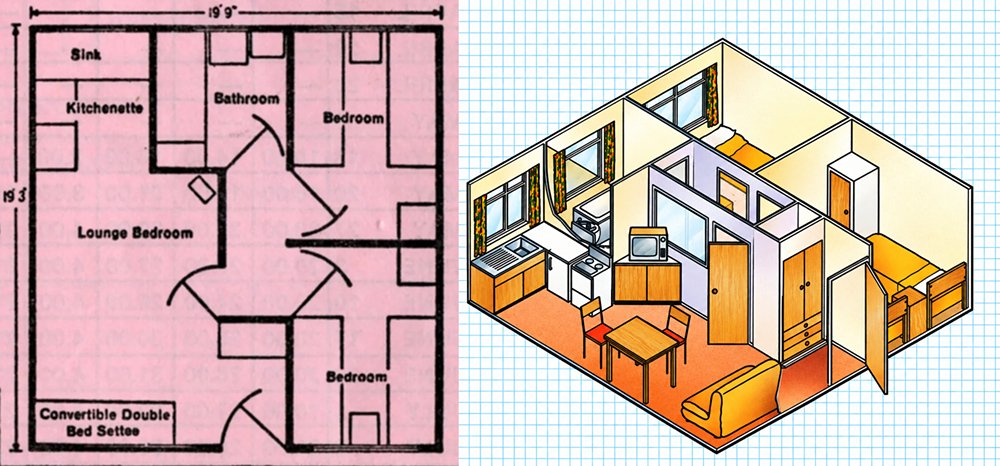
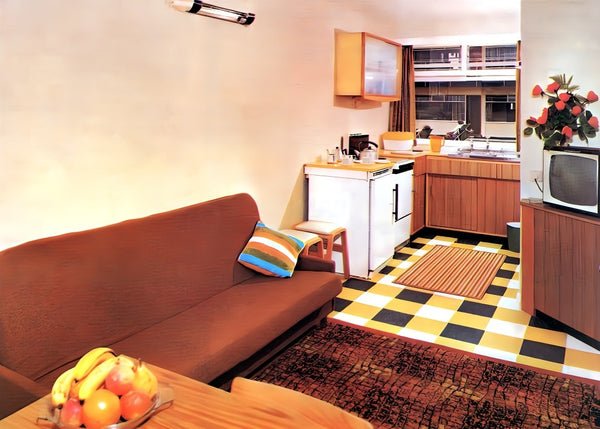
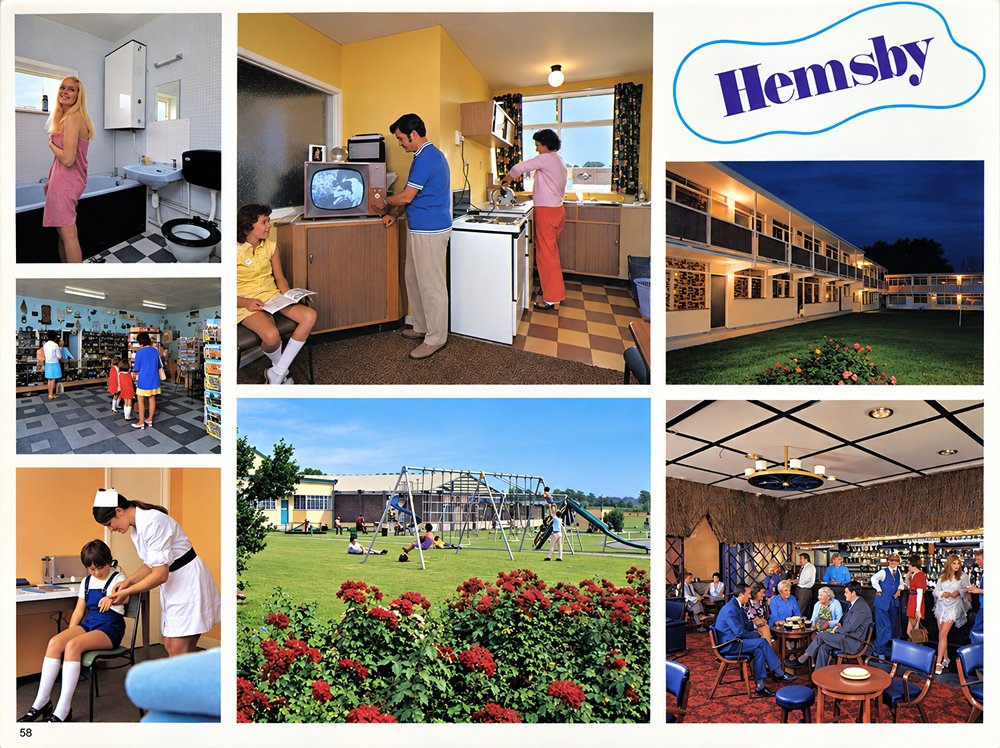
Most of the 512 new chalets followed Pontins’ standard A5 design, a 20ft by 20ft (6m x 6m) layout that could sleep up to six people. Each included a kitchen, lounge, bathroom, and two bedrooms, while a sofa bed in the lounge provided two more sleeping spaces. A smaller number of one-bedroom chalets were also available. Electricity and heating was supplied via a coin meter, and even the early TVs required a coin to operate. The showers had a button that had to be pressed every few seconds to keep the water flowing.
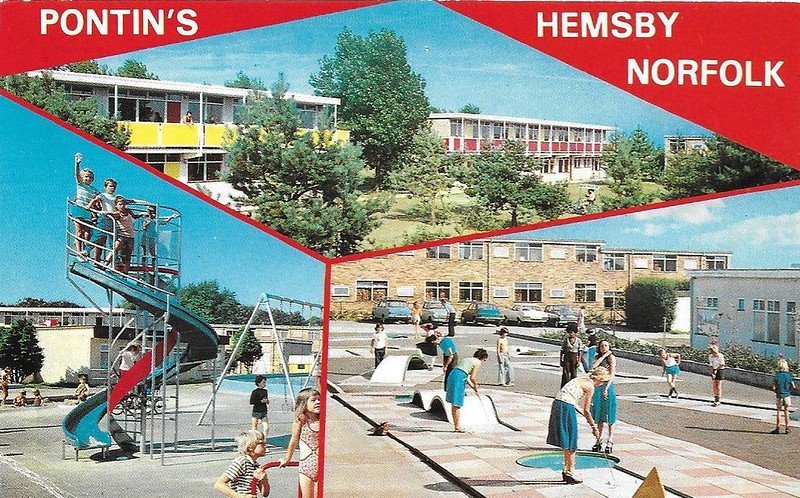
All of these chalets were housed in two-storey blocks with exterior walkways. Although the redevelopment gave the site a much more modern appearance, it also stripped away much of its original charm and character, with some now comparing its appearance to a council estate,
Facilities at the camp included a boating lake, road train, ballroom, several bars, an outdoor playground, a children’s nursery with a resident nanny, games room, launderette, hairdresser, and a first aid surgery staffed by a registered nurse.
The redeveloped camp reopened on 17 July 1971, although construction was still far from complete. Frustrated by the unfinished facilities, some guests walked out and demanded refunds, and these problems persisted throughout the first season. The official opening did not take place until May 1972, once all building work had been completed. Later that year thieves stole £5700 from the camp safe.
Also in 1971 Pontins bought the Seacroft holiday camp across the street. Unlike their new camp, Pontins announced that Seacroft would not be rebuilt and would remain much the same and retain its full board status.
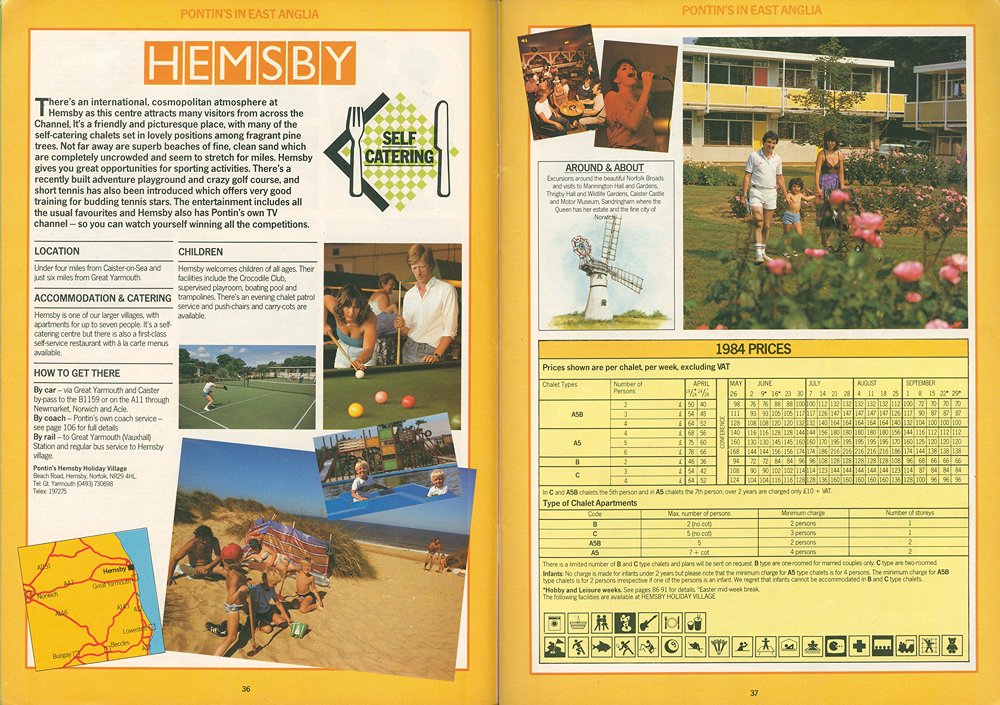
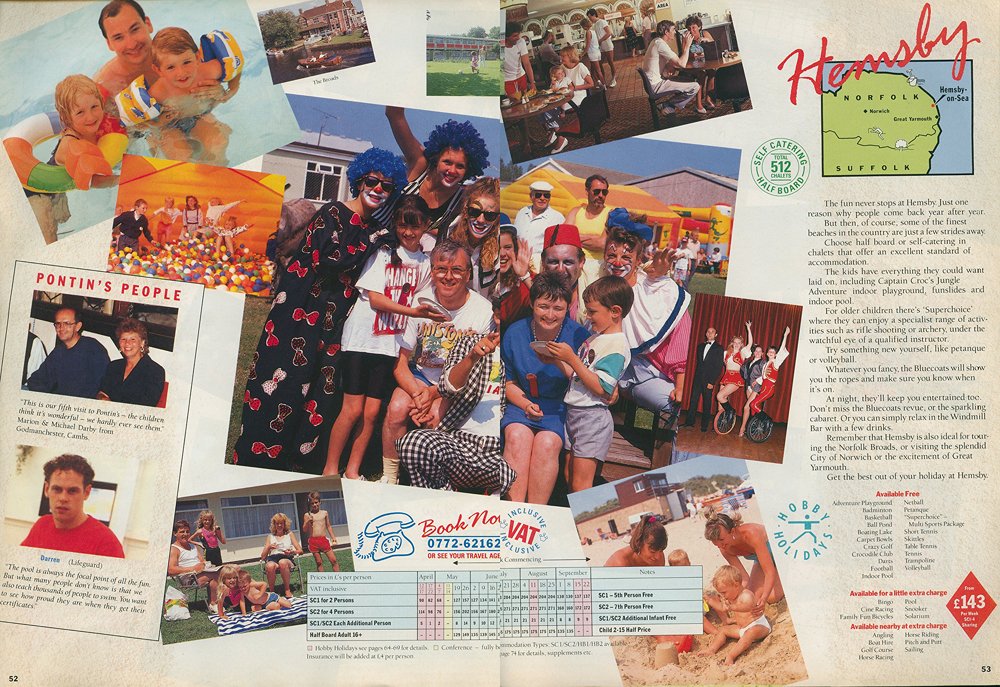
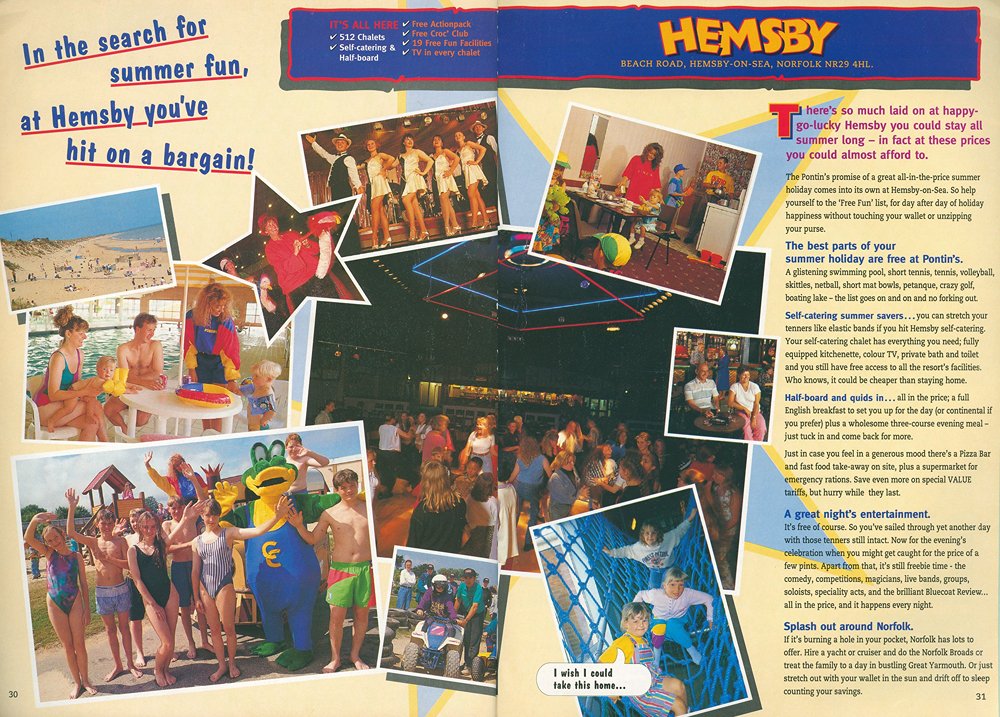


From the 1980s onwards, Butlins and Pontins followed very different paths. Butlins treated its resorts as long-term assets worth improving. Considerable sums were invested in replacing outdated accommodation, demolishing obsolete buildings and adding new leisure facilities, with the aim of extending their useful life well into the future. As standards improved, prices could be raised.
Pontins, on the other hand, was run by a property developer who saw their long term future not as holiday camps but as housing estates. For this reason, no large scale demolition or rebuilding took place, and just enough money was spent to keep the camps somewhat serviceable. Instead of raising their prices, Pontins lowered them. In effect, Butlins was investing in its camps as businesses with a future; Pontins was more about patching up an ageing estate until individual sites could be sold.
By the mid-1990s, Hemsby was looking increasingly rundown. Pontins had already disposed of 18 camps, leaving just eight in operation, most of them sites with little prospect of lucrative redevelopment. With those remaining camps now needing to be kept viable for the longer term, the company announced an ambitious £55 million refurbishment programme in 1996. The figure sounded impressive, but it had to be spread across all eight remaining resorts.
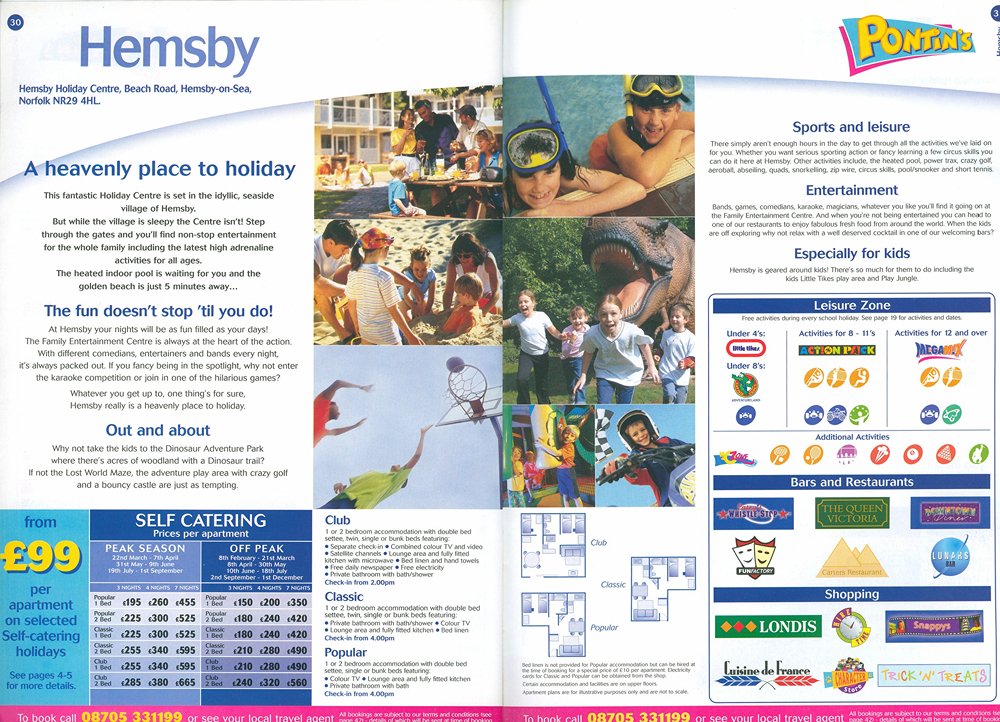
Most of chalets were refurbished with new bathrooms, with some also getting new windows and furniture. These were listed as Club apartments and attracted a premium price – they also featured free electricity, satellite TV, a microwave oven, free towels and early check-in. The older chalets were listed as either Classic or Basic and still featured push button showers and meters for electricity.
In 2008 Pontins was sold to a company called Ocean Parcs. Even though eight camps remained in the Pontins empire, the deal only included five of them. These were all the sites that had zero prospect of being redeveloped. The other three — Blackpool, Hemsby and Wall Park — were not included. The new owners were permitted to continue operating these camps under the Pontins name, but only on a year by year basis.
The camp is closed
The new arrangement didn’t last long. In January 2009, it was announced that Hemsby would close with immediate effect. What followed next appears to have been the familiar pattern seen at several other former Pontins sites: Close the camp and apply for planning permission to redevelop it for housing; if permission is refused, leave the buildings empty and neglected and allow vandalism and decay to take their toll. After a few years local residents will grow tired of the troublesome eyesore and agree to redevelopment.
And this is essentially what happened at Hemsby. The camp remained abandoned and increasingly derelict for the next 11 years. In 2018, a huge fire destroyed the main entertainment building, which dated back to the Maddieson era of the 1950s.
In February 2019, the site was sold for £4 million and new redevelopment plans were announced. The old communal buildings would be demolished but most of the old chalet blocks would be retained and converted into residential houses and apartments.
Work began by stripping the chalets back to their bare brick shells. Interiors were ripped out, internal walls removed and pitched roofs added The indoor swimming pool was retained, with plans to incorporate it into a new leisure centre, while the wider redevelopment was also to include several new holiday lodges and a selection of shops.
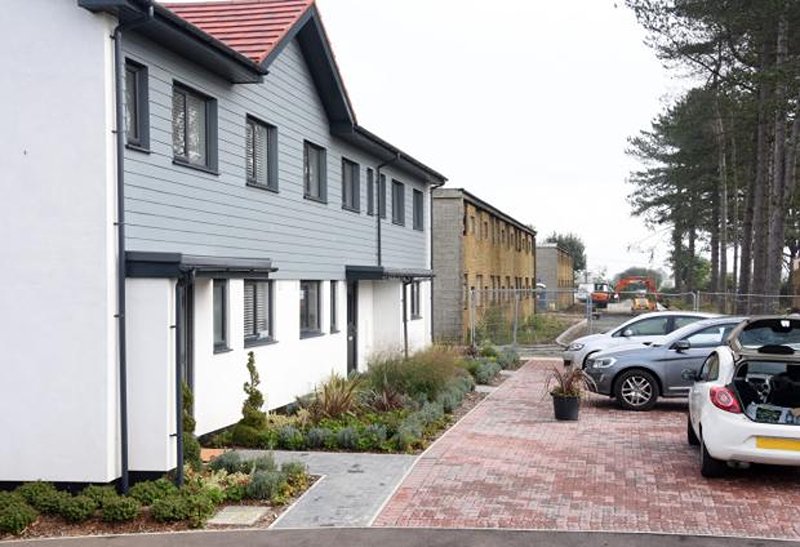


However, after work had begun, the developers collapsed into administration and the redevelopment ground to a halt. In July 2022, the site was sold to new owners who initially announced that they intended to continue with the existing scheme.
They subsequently concluded that the previous plans were no longer viable. Proposals for the leisure centre, holiday lodges and shops were abandoned, although work continued on converting the old chalet blocks. At the time of writing, the swimming pool is still standing but the long term plans are unknown.