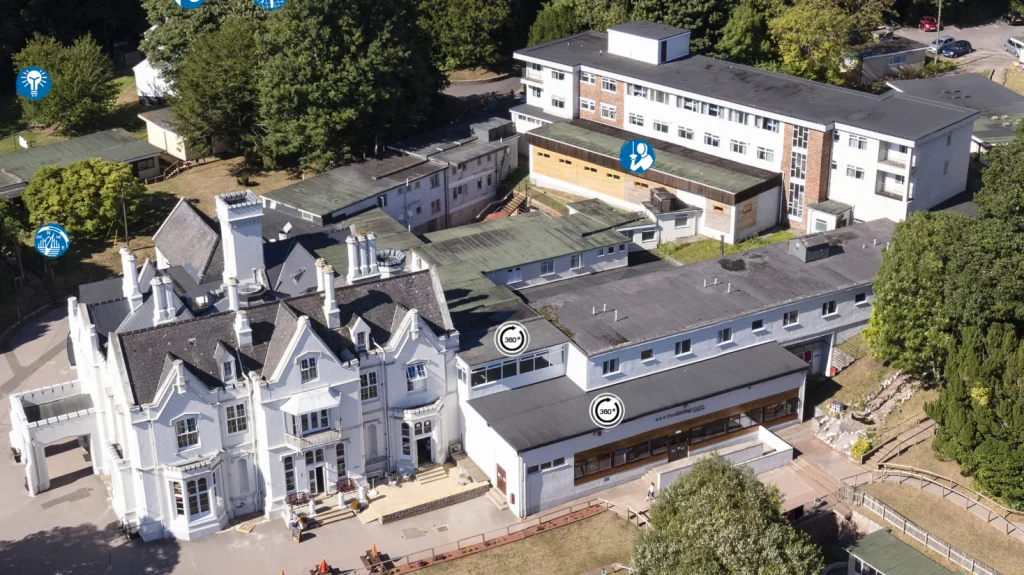
Barton Hall, a handsome Tudor-style mansion on the outskirts of Torquay, was originally built during the 1830s. The house was largely destroyed by fire in 1862 but was subsequently rebuilt, eventually becoming the home of prominent local councillor Captain ‘Squire’ Brown and his family.
Following Brown’s death in 1936, the estate was placed in trust for his son. By 1940, however, its future had become uncertain. In June of that year, the entire contents of Barton Hall were dispersed at auction, and just three months later the house and estate were placed on the market.
The sale particulars give some idea of the scale and grandeur of the property. Barton Hall was described as containing “four reception rooms, billiards room, eight bedrooms, three bathrooms, ample domestic offices, two garages and outbuildings; gardens; cottage, chauffeur’s house, glasshouses; walled kitchen garden; tennis lawn; finely timbered grounds and woodlands extending to 36 acres.”
It was this combination of a substantial country house and extensive grounds that would eventually make Barton Hall particularly well suited to an entirely different purpose – its transformation into a holiday centre.
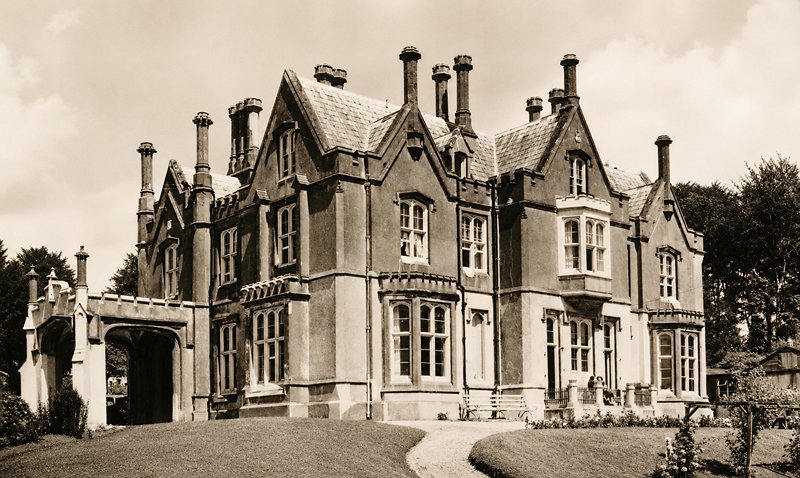
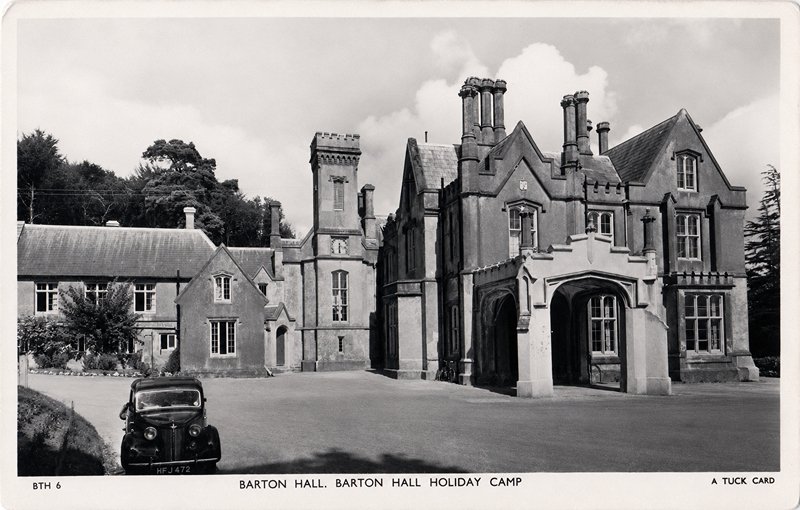
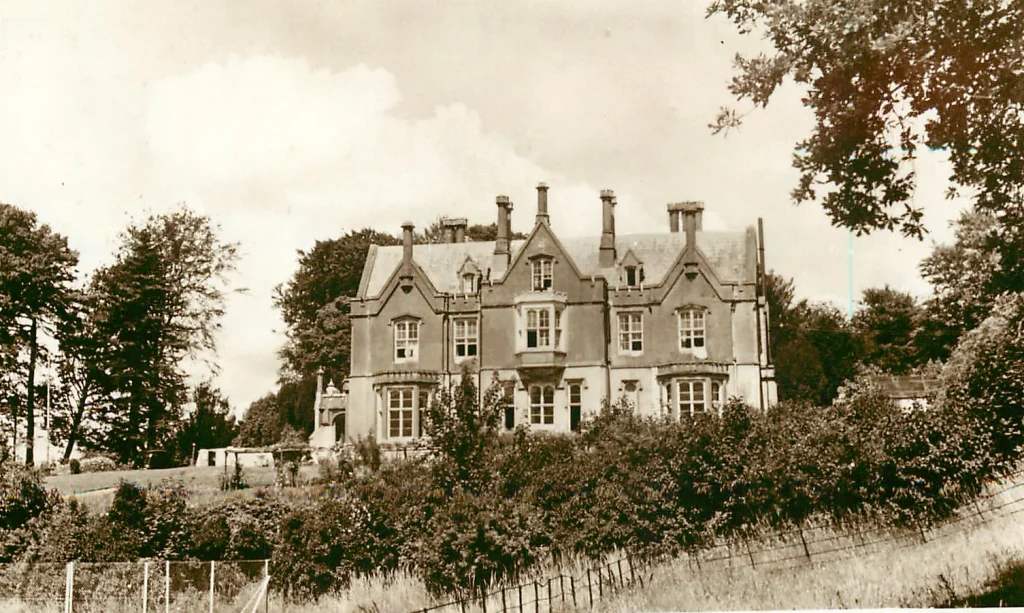
During the Second World War, Barton Hall was requisitioned for the war effort and at one stage became the base for an ARP Mobile Relief and Rescue Column – a specialist Civil Defence unit intended to respond to major air raids when local Air Raid Precautions services had been overwhelmed. The estate was subsequently occupied by the Prudential Assurance Company before passing into the hands of the National Fire Service, which used Barton Hall as its principal residential training centre for the South West. Attendees were housed in wooden huts dotted around the grounds.
With the National Fire Service being wound down after the war, Barton Hall was then used for the resettlement of displaced Polish people. In 1946, the estate was purchased by local builder John Lloyd, who had ambitions to turn the property into a holiday camp.
Those plans finally came to fruition at Easter 1951. Fortunately, much of the infrastructure needed to establish the new camp was already in place. The hall itself provided space for dining rooms, kitchens, recreation rooms and bedrooms, while the former National Fire Service huts were adapted to accommodate holidaymakers. The old stable block became a games room. These were supplemented by a large caravan site.
From the outset, considerable effort was made to preserve the character of the estate. Rather than arranging the caravans in regimented rows, they were divided between three wooded areas and positioned amongst the existing vegetation. Standing some 375 feet above sea level in undulating parkland, Barton Hall was also rather different from the typical seaside holiday camp. Although marketed as a Torquay resort, it stood around three and a half miles from the town and was essentially a country-estate holiday camp overlooking the surrounding Devon countryside.
Lloyd had ambitious plans for his new venture. Proposed facilities included a swimming pool, miniature golf course, tennis courts, children’s playground, bowling greens and even a resident dance band, although not everything was expected to be ready for the first season. Initially operating from Easter until the end of September, the camp was expected to provide seasonal employment for local people and had already begun attracting booking enquiries before it opened.
The local authorities also appear to have regarded Barton Hall as something of an experiment. The development was subject to close planning and public-health supervision, with one council official stating that the intention was to make it “a model of its type.” Permission was initially limited, with the holiday camp authorised until 1955 and the caravan site until 1953. Despite this seemingly tentative beginning, Barton Hall would ultimately prove considerably more enduring than anyone could have imagined in 1951
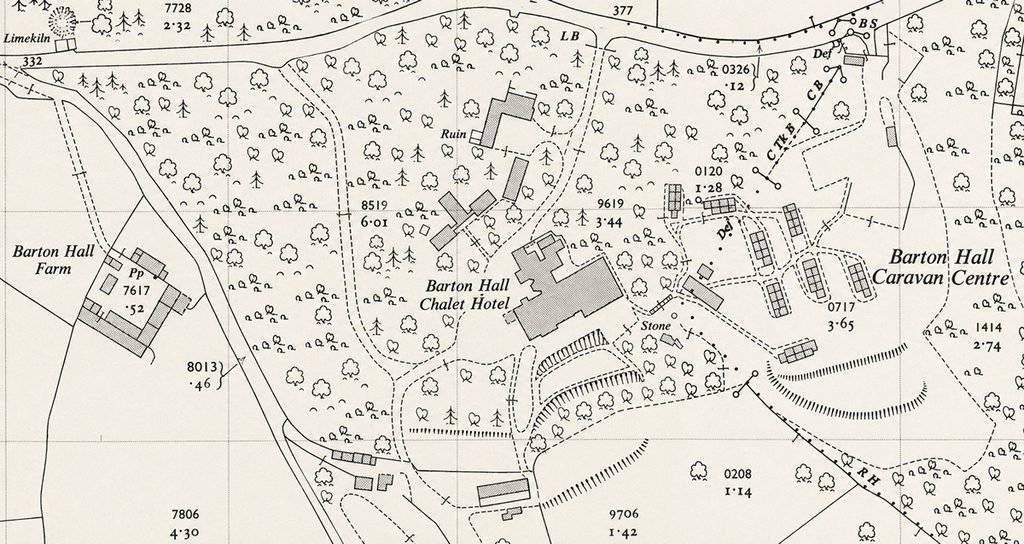
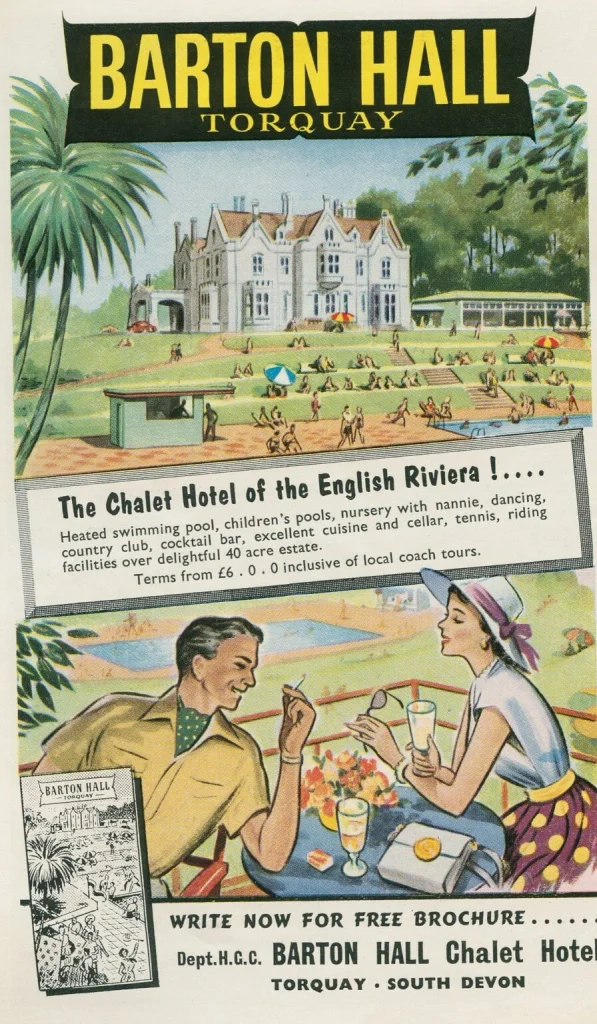
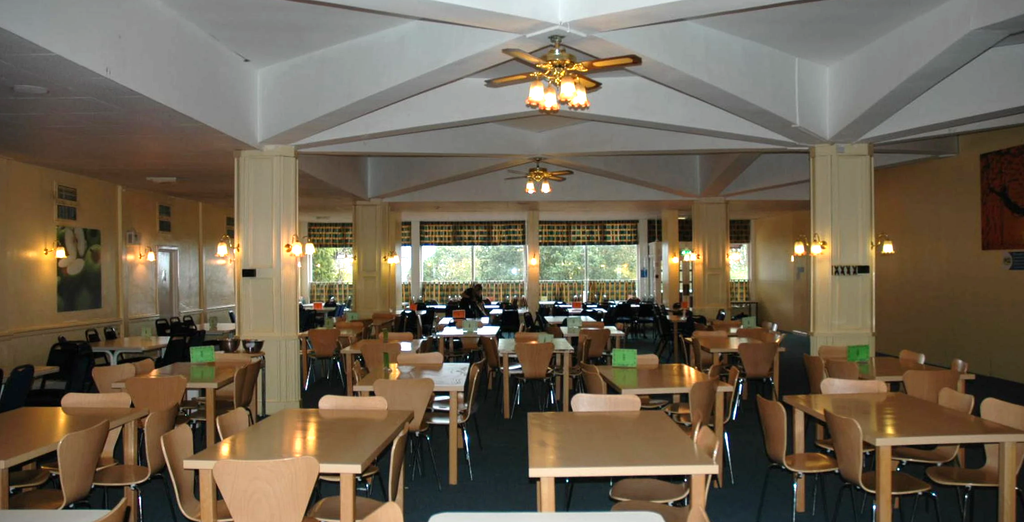
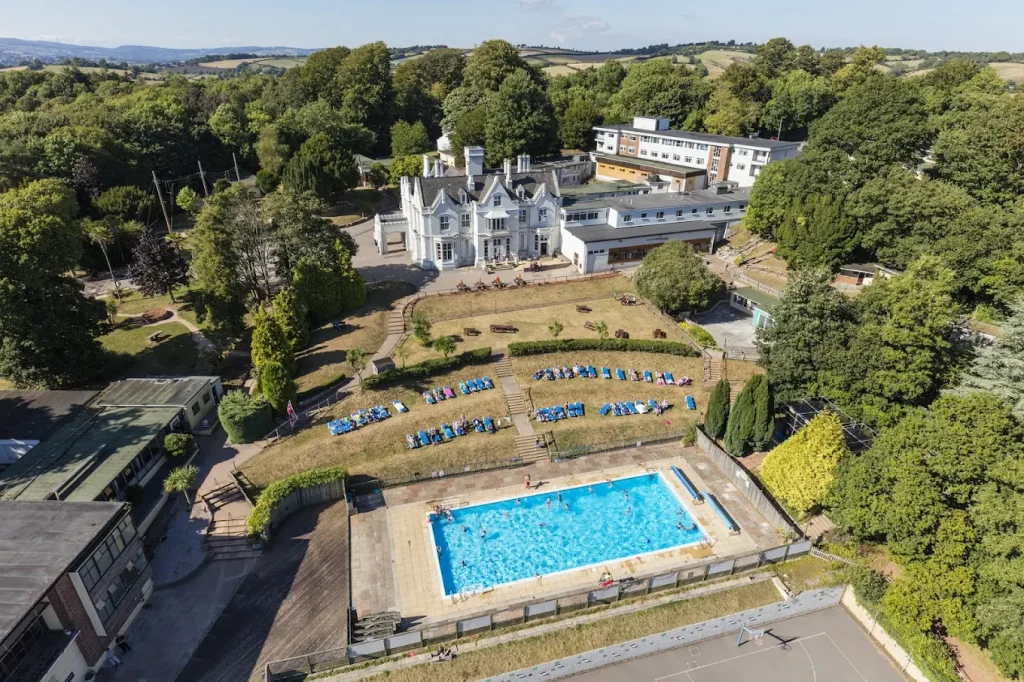
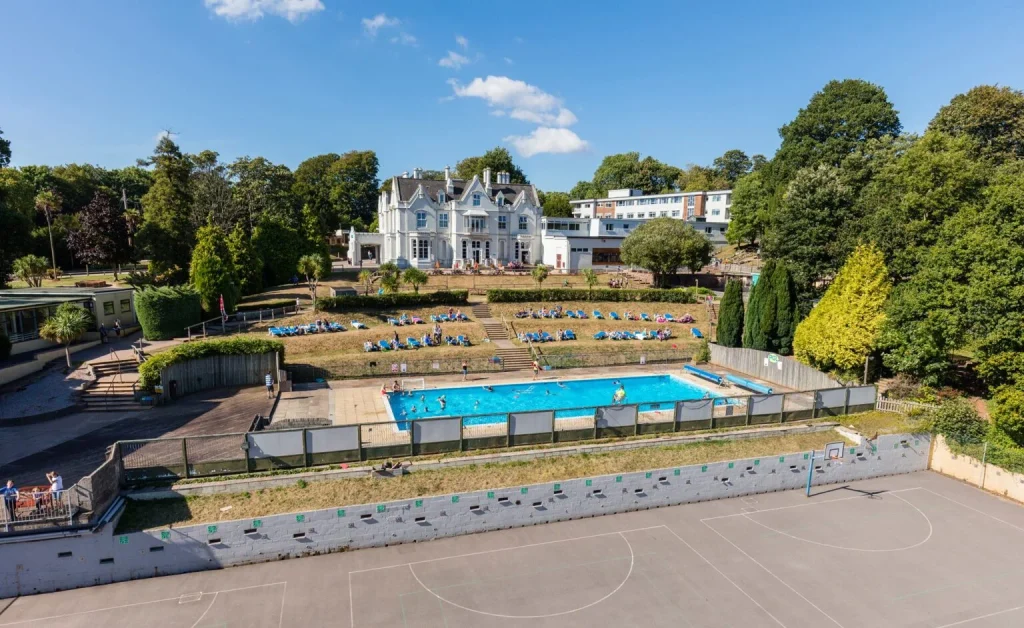
Barton Hall expanded rapidly during the early 1950s as John Lloyd set about transforming his former country estate into a fully fledged holiday camp, the first in the Torquay area. A 500-seat dining hall, ballroom and cinema were added, together with an outdoor swimming pool claimed to be the largest heated pool in South-West England. A public house, The Squire’s Retreat, was also opened and was accessible to both holidaymakers and the general public.
Fred Pontin arrives at Barton Hall
Fred Pontin acquired Barton Hall in 1956 for £60,000, although ownership was not formally transferred to Pontins Ltd until a few years later. As elsewhere in his rapidly expanding holiday empire, Pontin soon began investing in the property, constructing new brick chalet blocks, some of which adjoined the old mansion.
The driving force behind Barton Hall, however, was Fred’s sister and fellow Pontins board member, Elsie Brown. It was Elsie who had persuaded her brother to buy the estate, and she was subsequently appointed manager after spending the previous decade running Pontins’ South Devon camp at Paignton.
Elsie had never been particularly fond of the traditional holiday-camp formula and was determined that Barton Hall should be something different. Rather than concentrating on organised fun and basic mass catering, she placed particular emphasis on comfort, service and, above all, good food. Under her management, Barton Hall soon developed a reputation as one of the most refined holiday camps in Britain.
Interestingly, Barton Hall would soon acquire a counterpart in the rival Warner organisation. In May 1958, Portsmouth builder Albert Figgins opened Sinah Warren on Hayling Island, another holiday centre built around a substantial former country house. Warner acquired the property the following year and, like Pontins at Barton Hall, deliberately developed it as one of the more prestigious resorts in its portfolio.
Whether Pontins’ earlier acquisition and success at Barton Hall influenced Warner’s decision to buy Sinah Warren is unknown, but the similarities are striking. Both companies now possessed a flagship country-house resort that stood apart from their more conventional holiday camps. Both retained the familiar full-board formula, but combined it with grand surroundings, better dining and a greater emphasis on comfort and exclusivity. Significantly, both companies chose to describe their properties as “chalet hotels” rather than holiday camps. In effect, both Pontins and Warner had found a way of taking the traditional British holiday-camp formula distinctly upmarket.
Barton Hall was always a full-board resort with all meals provided and taken in the communal dining hall. Dinner, however, was turned into something of an occasion. Guests were served four course meals on crisp white tablecloths, while tuxedo-clad wine waiters attended the tables as soft piano music played in the background. It became the sort of place where guests actually dressed for dinner – a world away from the canteen-style dining associated with many pf its competitors..
The accommodation reflected the same attempt to move upmarket. Several rooms within Barton Hall itself were transformed into luxurious Imperial Suites, offering a level of comfort considerably above the standard chalet. The resort also began opening over Christmas, something relatively unusual among holiday camps at the time. Demand for the festive holidays became so intense that Elsie jokingly remarked that the only way to get onto the Christmas waiting list was “if someone died.”
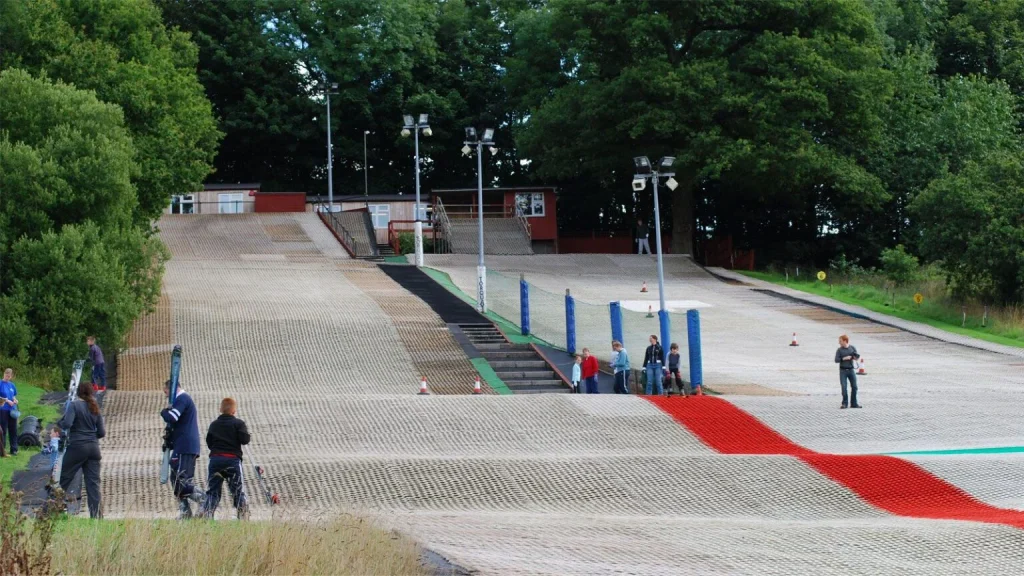
Barton Hall also became home to an unusual sporting attraction. In October 1963, Britain’s first outdoor artificial dry ski slope opened in the grounds. Costing £4,000, it was operated and maintained by the Wessex Ski Association. The original slope was a fairly modest affair, measuring just 200 feet long and 16 feet wide, but it proved sufficiently successful to be enlarged and improved in subsequent years.
A new caravan park was later built adjoining Barton Hall and became known as Beeson’s Holiday Camp. This was a separate business and was not part of Pontin’s. It’s still open today as Torquay Holiday Park and owned by Parkdean
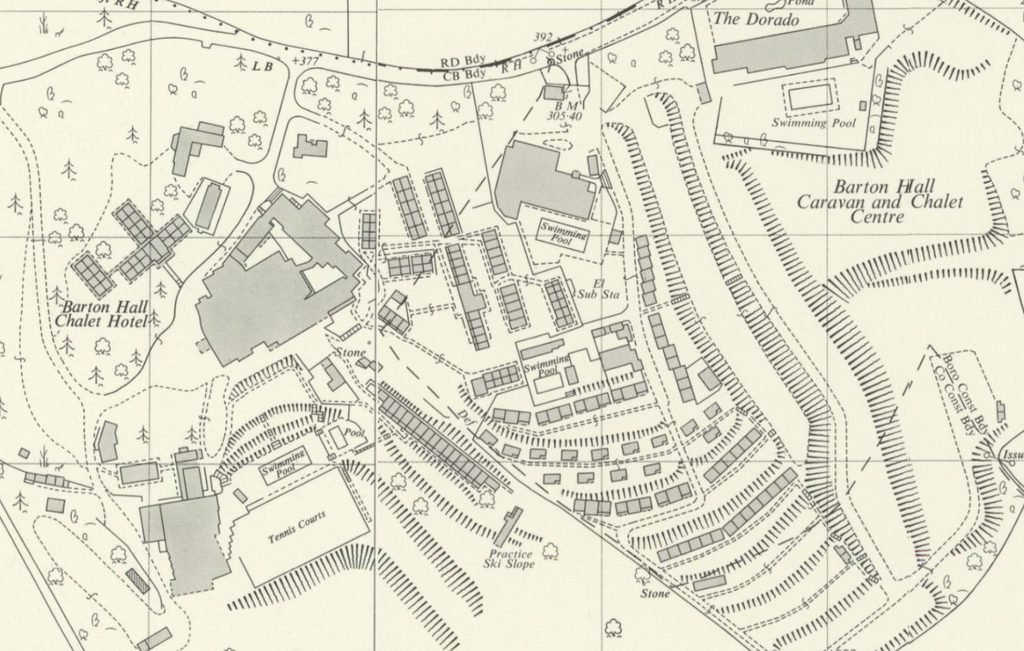
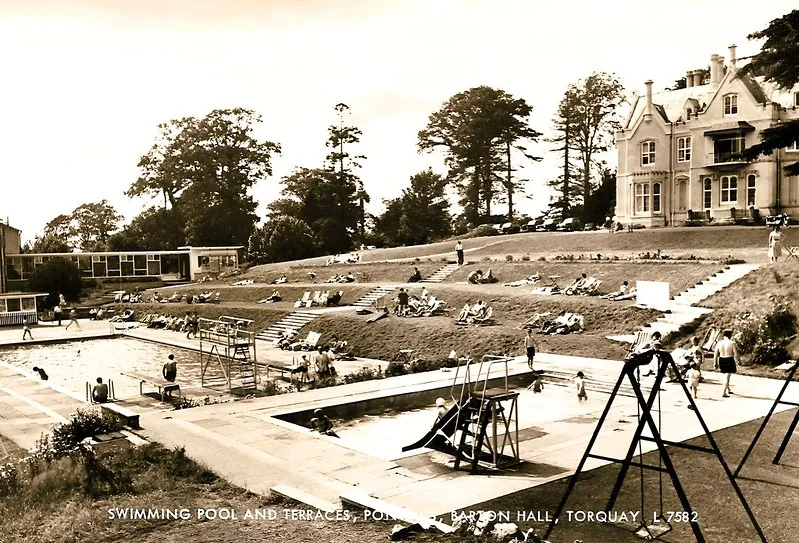
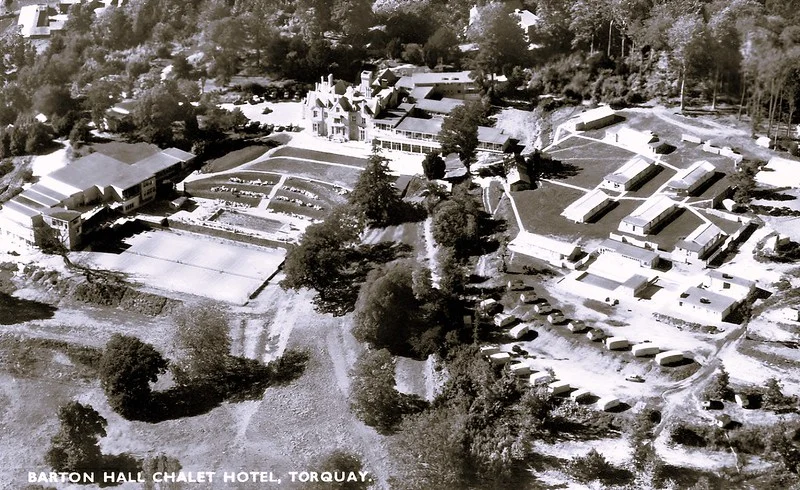
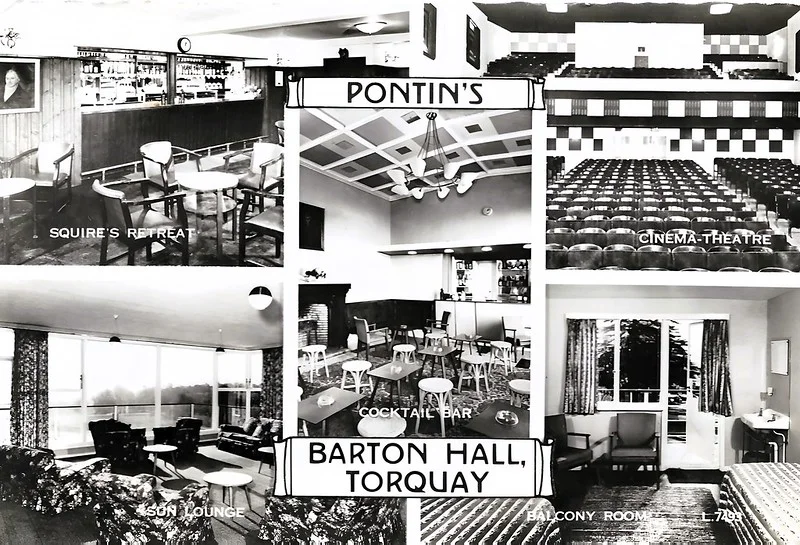
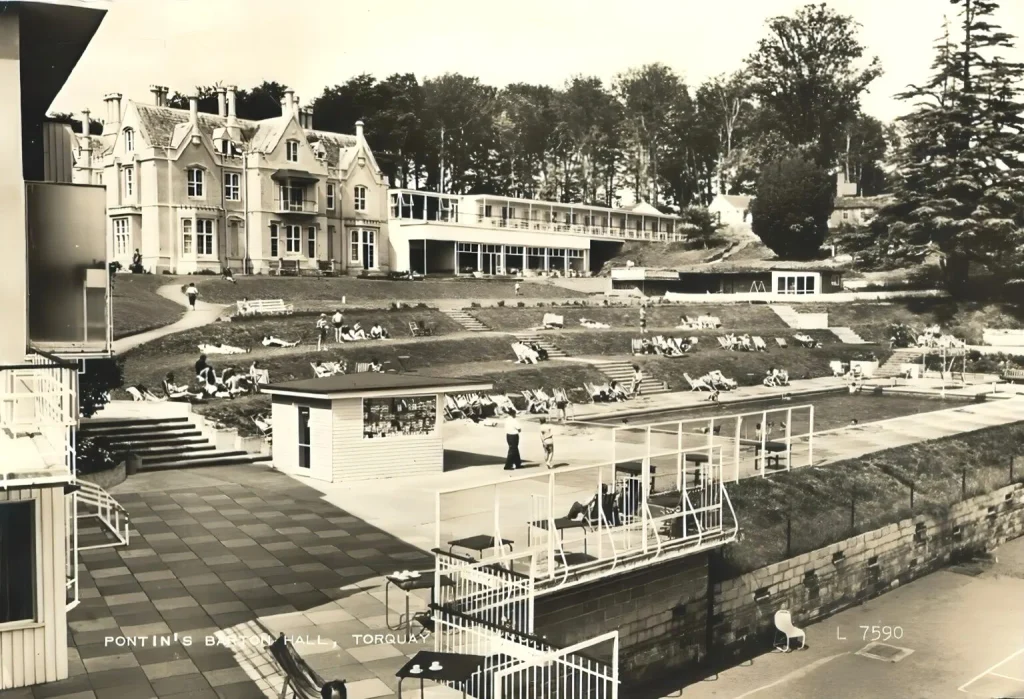
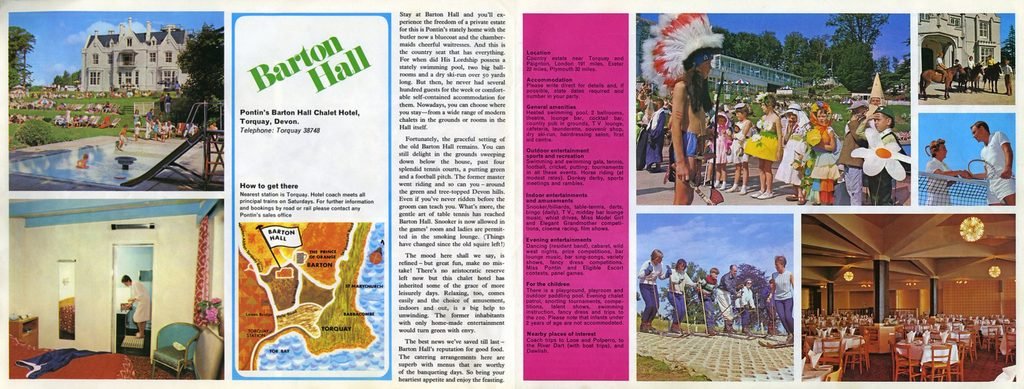
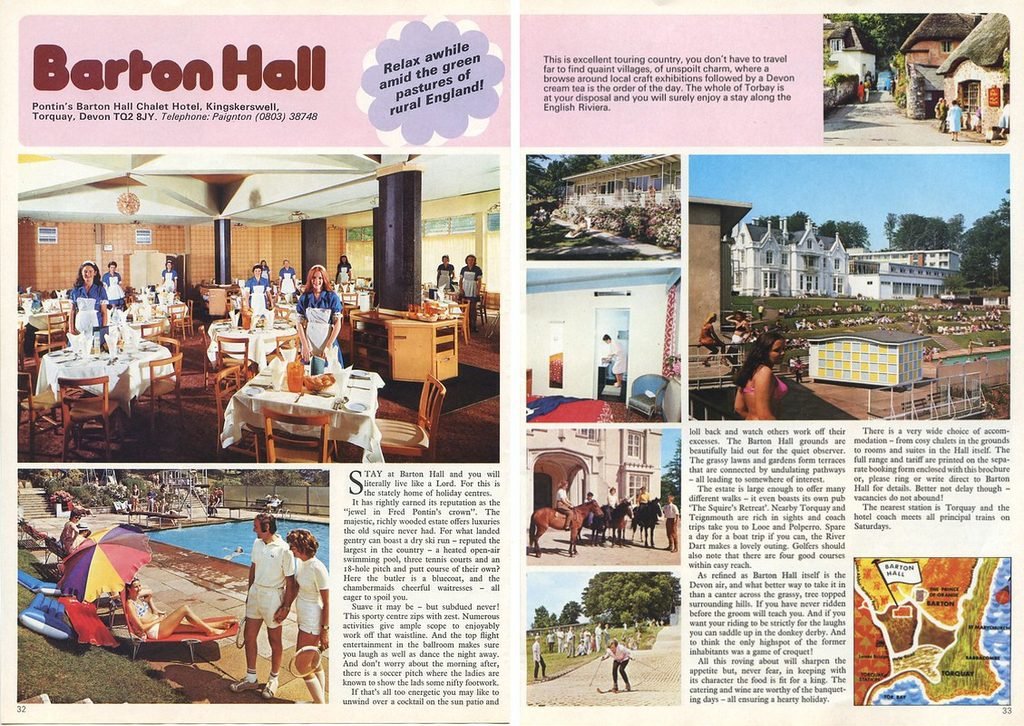
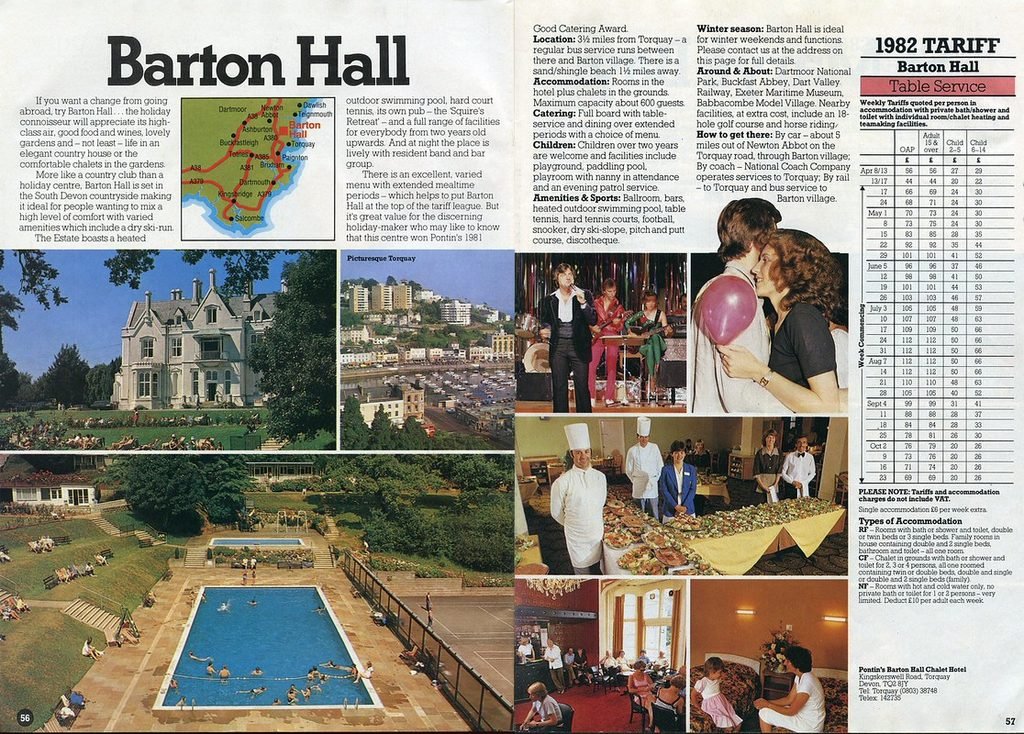
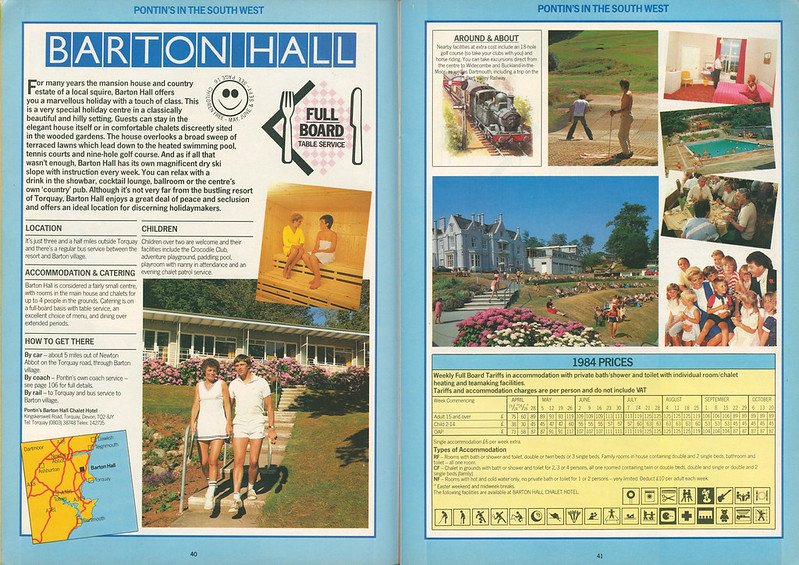
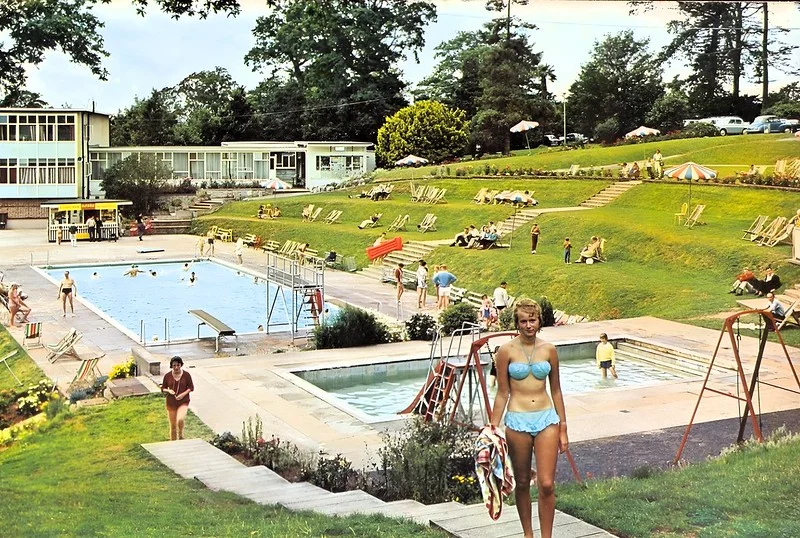
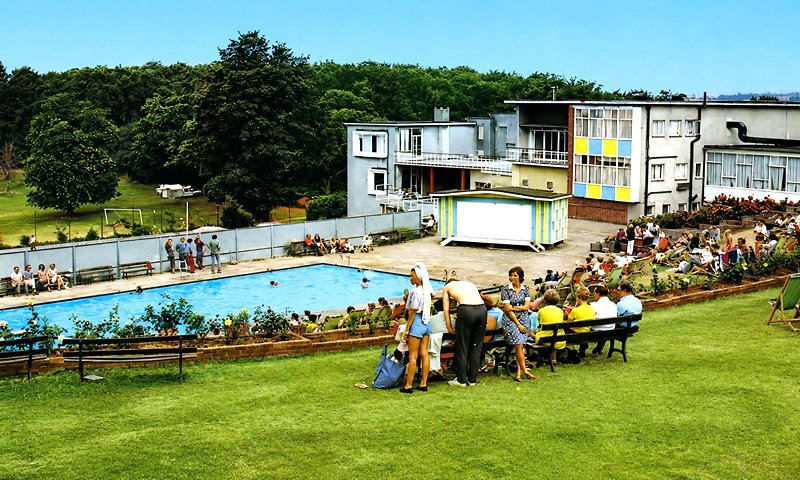
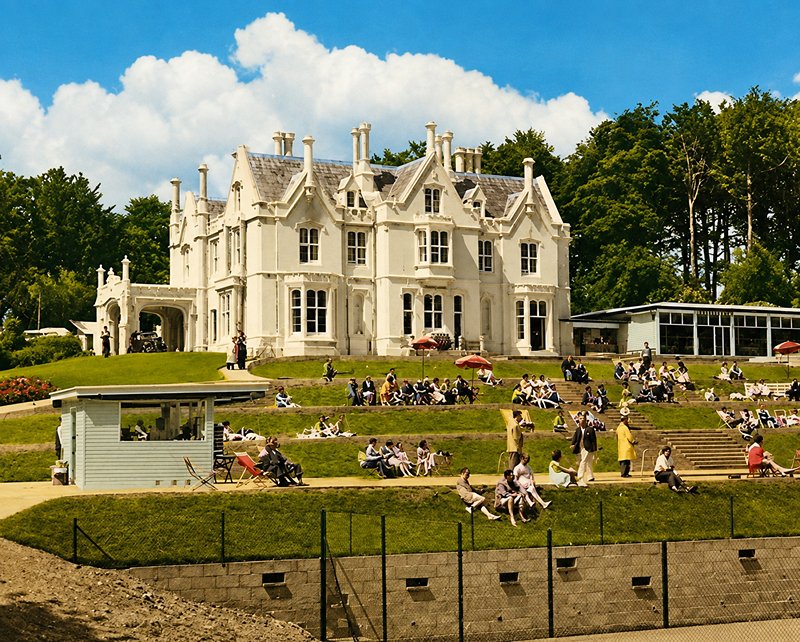
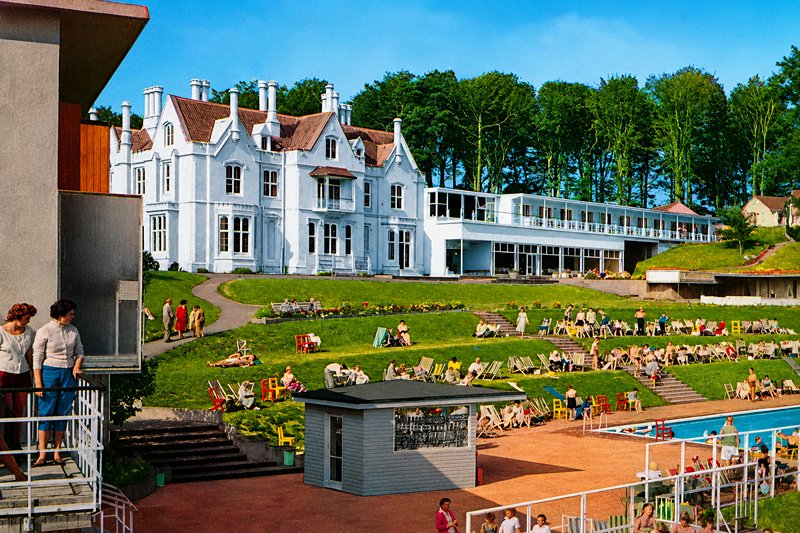
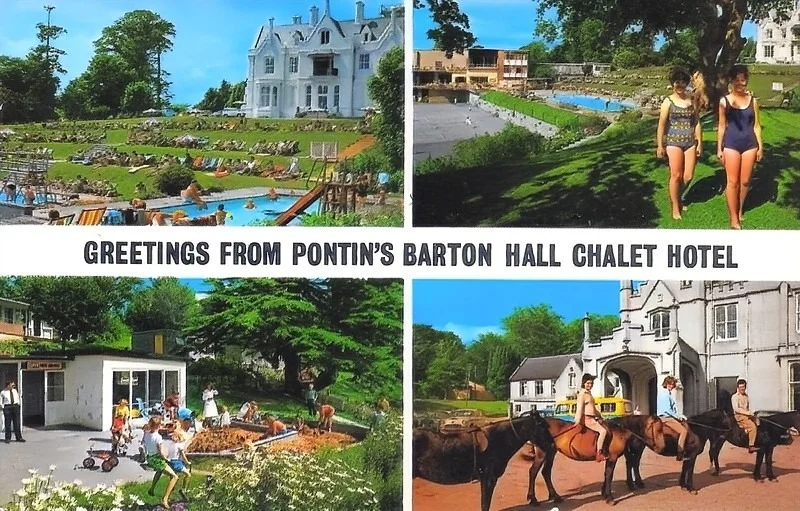
Throughout the 1960s and 1970s, Barton Hall remained one of the jewels in the Pontins crown, retaining more of the atmosphere of an exclusive country club. Guests could spend their days dancing in one of two ballrooms, watching films in the cinema, or enjoying an unusually wide range of outdoor pursuits, including horse riding, four tennis courts, an 18-hole putting green and a football field. Indoors there were dedicated rooms for snooker and table tennis, while the extensive grounds and old mansion continued to give Barton Hall a character quite unlike most other Pontins resorts.
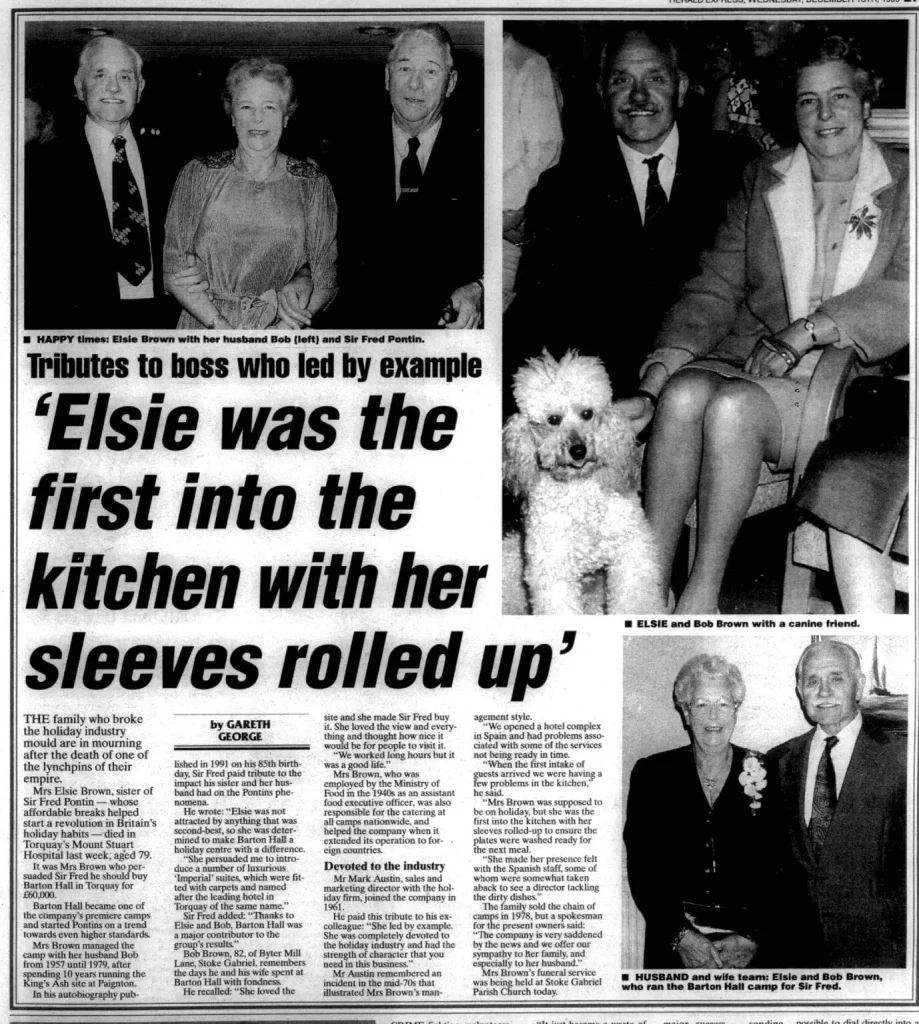
Much of that character was attributed to Elsie Brown. She and her husband Bob lived at Barton Hall from 1957 until her retirement in 1979. Elsie was far from an absentee manager. Former colleagues remembered her as someone who led from the front and was prepared to tackle whatever needed doing. When Elsie retired in 1979, part of the magic seemed to retire with her.
Throughout the 1980s and 1990s Barton Hall remained one of Pontins’ more prestigious resorts and was still around 20% more expensive than the company’s conventional camps, but gradually the old sense of occasion began to fade. The elaborate meals and formal service slowly gave way to more familiar Pontins fare, while the once-exclusive Imperial Suites were converted into regular family rooms. But Barton Hall still remained different, and was still regarded as the flagship Pontins site.
Considerable investment continued. Beginning in 1988, Barton Hall underwent a major two-year refurbishment. The chalets were gutted and completely redecorated, while the public buildings were extensively overhauled, giving the ageing resort a much-needed facelift as it entered the 1990s.
Elsie Brown died at Torquay’s Mount Stuart Hospital in December 1995, aged 79. Tributes from former colleagues portrayed her as one of the largely unsung figures behind the growth of the Pontins empire.
A new beginning
Barton Hall closed as a traditional holiday camp at the end of the 2000 season, bringing almost half a century of Pontins holidays to an end. By this time, several former Pontins camps had been sold for redevelopment, their increasingly valuable land disappearing beneath new housing estates. At Barton Hall, however, this was never really an option, as local planning restrictions made this type of development almost impossible. Instead, the site was sold largely intact, allowing its buildings and facilities to be adapted for an entirely new purpose.
The following year it reopened under the Superchoice name as a residential children’s activity centre, loosely modelled on the American summer-camp concept. Barton Hall joined two other former Pontins camps, Little Canada on the Isle of Wight and Osmington Bay in Dorset, which had already undergone a similar transformation. At the time, both Pontins and Superchoice were owned by Scottish & Newcastle, making the conversion a relatively straightforward transfer. Superchoice was subsequently renamed 3D Education and became a subsidiary of Centre Parcs, another S&N company.
In 2004 3D Education, along with its three former Pontins camps, was acquired by rival children’s activity-holiday operator PGL for £12 million.
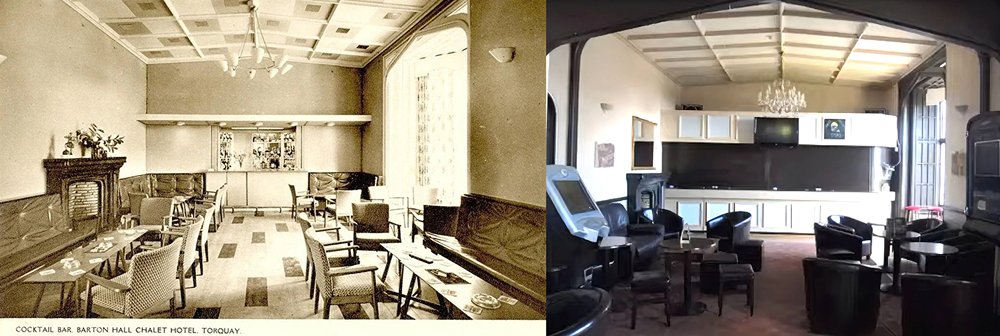
Today, Barton Hall remains in use as a PGL activity centre and has been extensively modernised, yet remarkably much of the old holiday camp is still instantly recognisable. Rather than sweeping away the past, successive owners have adapted many of its buildings and facilities for new purposes.
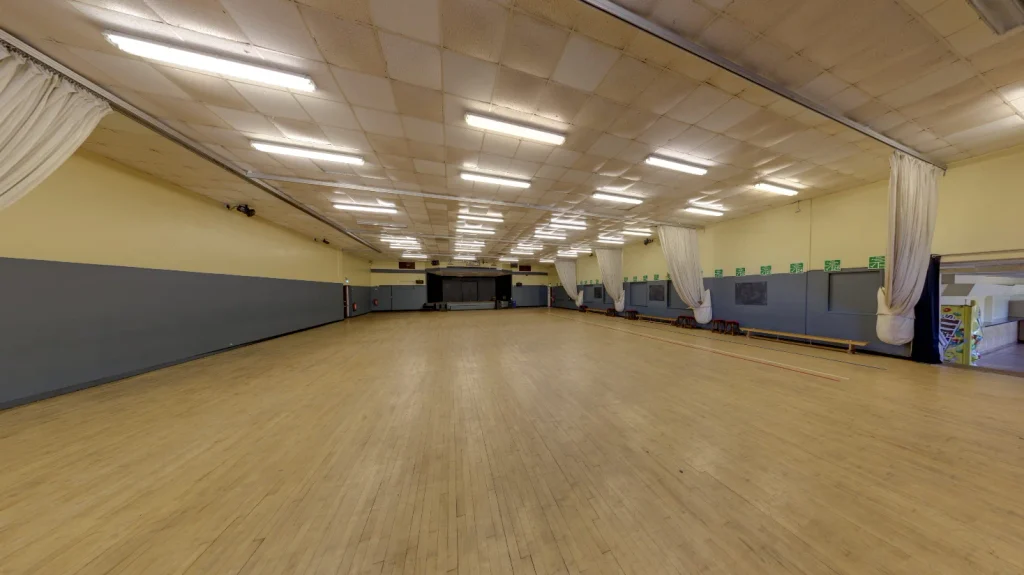
The transformation is perhaps most striking inside the old mansion. The once-elegant Imperial Suites, originally created to offer some of Pontins’ most luxurious accommodation, are now dormitories filled with bunk beds. The main entertainment building has also found a new role as an activity and teaching space, complete with an indoor abseiling wall and archery facilities.
Elsewhere, the continuity is even more apparent. Meals are still served in the former Pontins dining hall, while the swimming pool and the dry ski slope remain in regular use. Even many of the 1960s brick chalets survive, smartly refurbished and adapted for today’s young visitors.
Stayed her as Pontins in 1980. Dreadful food and an untidy place. Me and a mate suffered it for about 4 days and then they transferred us to Brixham may have been the Dolphin? I am off to the caravan site next door soon so may pop back in here for a look at how it is now, if they let me.