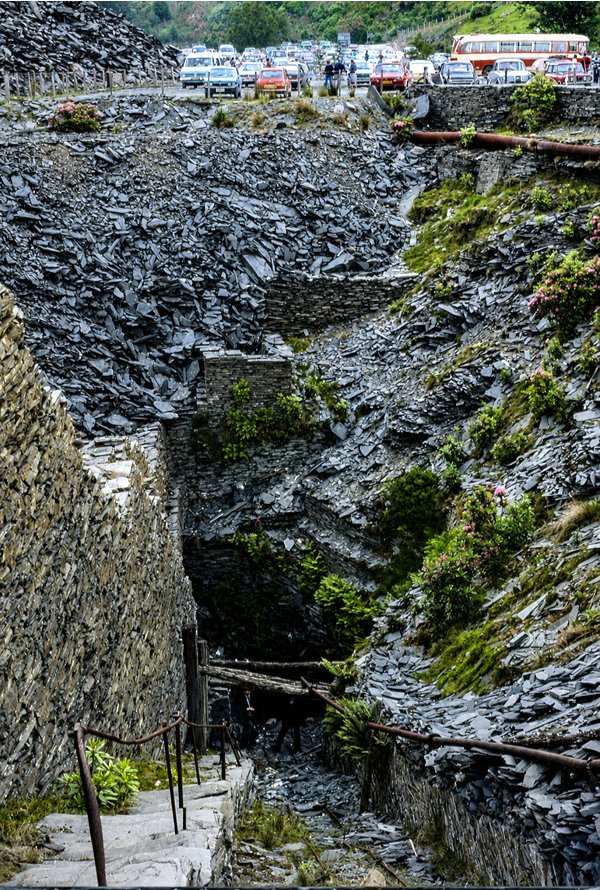
During the Victorian slate boom, Llechwedd developed into one of Snowdonia’s most productive quarries, exploiting a vast seam beneath the hills above Blaenau Ffestiniog. Water power, inclines, and an intricate system of underground chambers allowed slate to be extracted on a remarkable scale, feeding both domestic and overseas markets. The landscape around Blaenau Ffestiniog was transformed by the industry, with waste tips, tramways and quarry workings spreading across the surrounding mountainsides, while beneath the surface generations of quarrymen carved enormous chambers out of the rock.
By the mid-20th century, however, shifting demand and competition brought the industry into long decline, leaving Llechwedd with a host of disused workings. Though still being used to produce their famous blue-grey roofing slates, much of the site was an extraordinary industrial landscape for which there appeared to be little practical use. Tourism, however, offered an unexpected second life.
The Miners Tramway
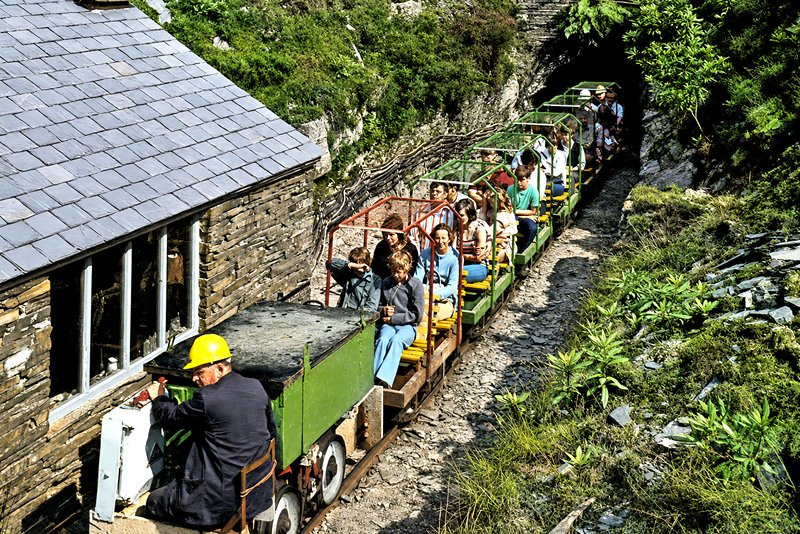
In 1972, a consortium of 24 investors and local people, including the quarry owners, came together to form a company called Quarry Tours. Their ambitious plan was to open Britain’s first public underground mine ride, transforming part of the quarry into an unlikely tourist attraction and beginning a new chapter in Llechwedd’s history. At a time when industrial heritage tourism was still very much in its infancy, the idea of deliberately taking holidaymakers underground into an old slate mine was remarkably novel.
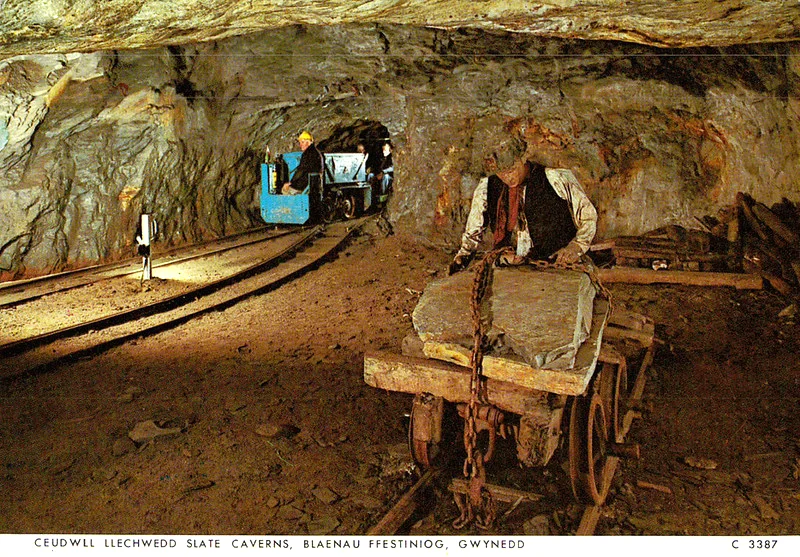
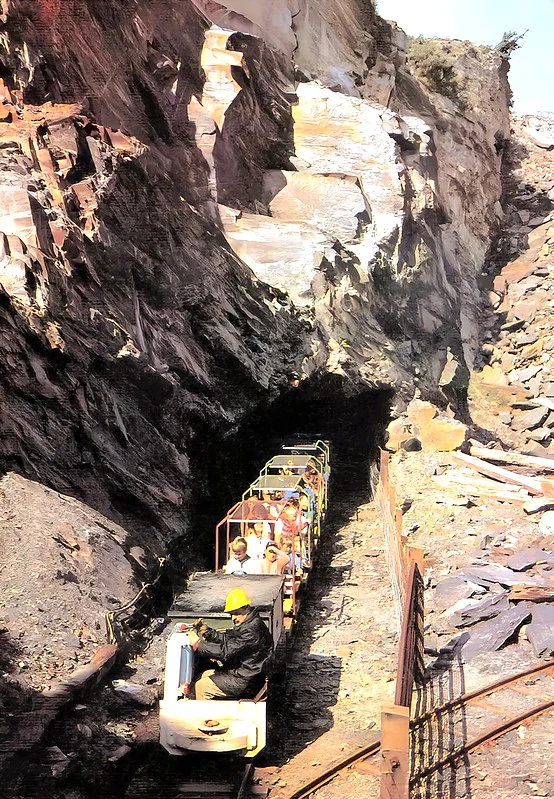
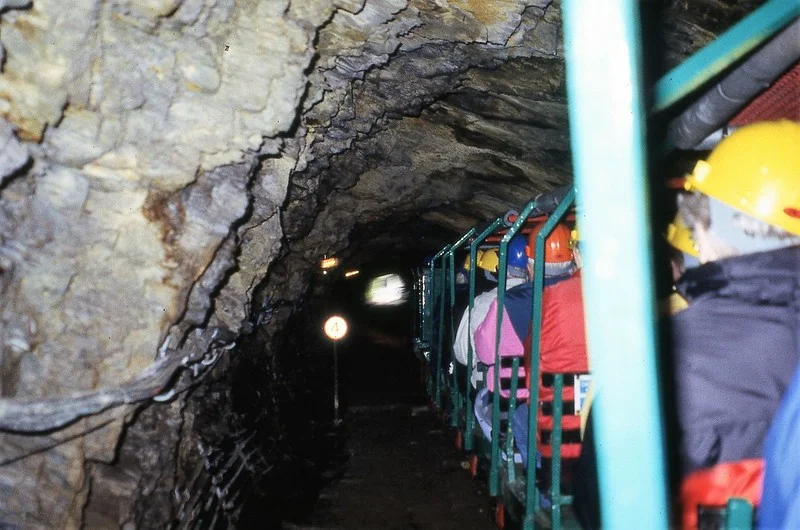
The Ffestiniog Railway was contracted to lay the 500 yards of 2ft gauge track inside the mine, and to construct the passenger carriages, which were built on old skip frames. Motive power came from three battery-electric locomotives acquired second-hand from the mining industry. The result was deliberately functional rather than polished. Instead of a conventional theme park railway, visitors traveled on rough-and-ready equipment closely related to the machinery that had actually been used in mines and quarries. The simple open carriages had no suspension and rattled and bounced over the uneven track, adding considerably to the sense of adventure.
After a journey lasting just 2½ minutes, the train stopped underground and everyone climbed out. Former slate miners then gave a demonstration, explaining how the rock had been extracted and describing the difficult and often dangerous conditions endured by the men who had once worked underground. Once the demonstration was over, everyone reboarded the train for the return journey to the surface. The entire experience lasted around 20 minutes. Admission was 25p for adults and 10p for children.
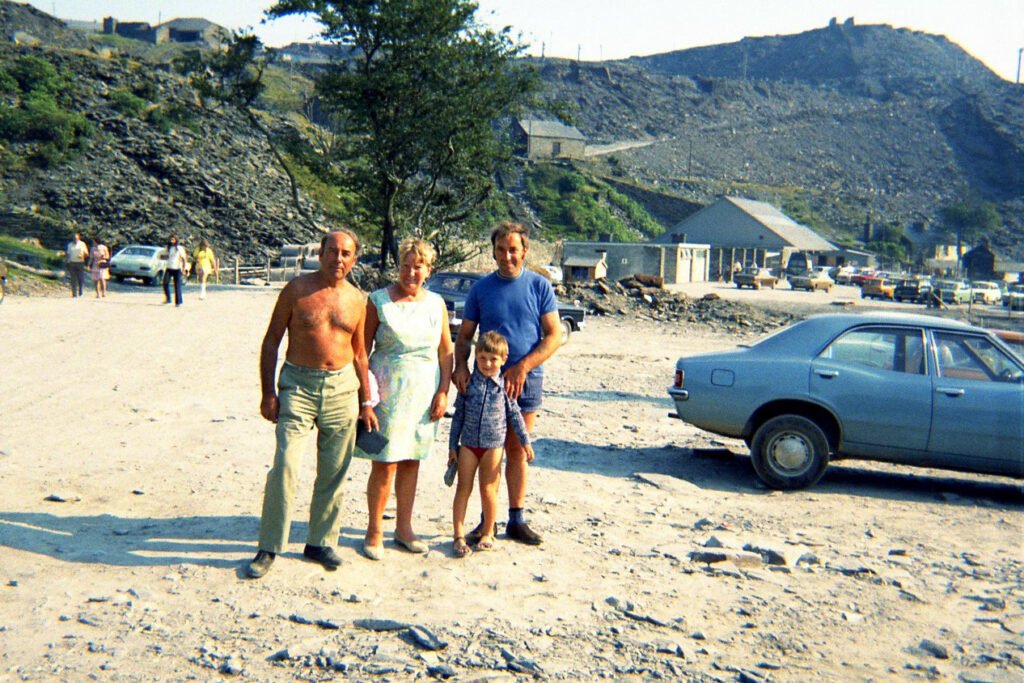
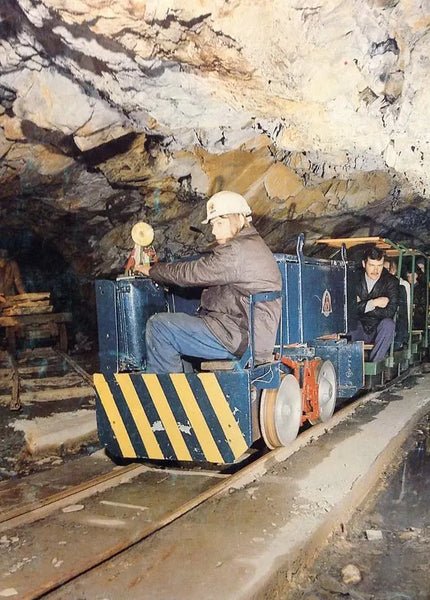
The developers had anticipated around 20,000 visitors in the first season, but the attraction proved an unexpected sensation, drawing an astonishing 110,000 guests. The following year it won the British Tourist Authority’s top award – The Come to Britain trophy – for “Most Outstanding Tourist Enterprise.” The company admitted they were somewhat overwhelmed by their own success, having been unprepared for the sheer size of the crowds.
What had started as a relatively modest attempt to make use of part of the quarry had suddenly become one of the most successful new tourist attractions in Wales.
Expansion
The unexpectedly large visitor numbers quickly demanded better facilities. In 1974, a new two-storey building was constructed, housing a spacious restaurant, gift shop, and lecture room.
That same year, another slate mine opened to the public across the road known as Gloddfa Ganol, offering a different walk-through mine experience. The two attractions complemented each other well. Visitors to Blaenau Ffestiniog could now experience two different interpretations of the slate industry within a short distance of one another, helping establish the town as an important centre for industrial tourism.
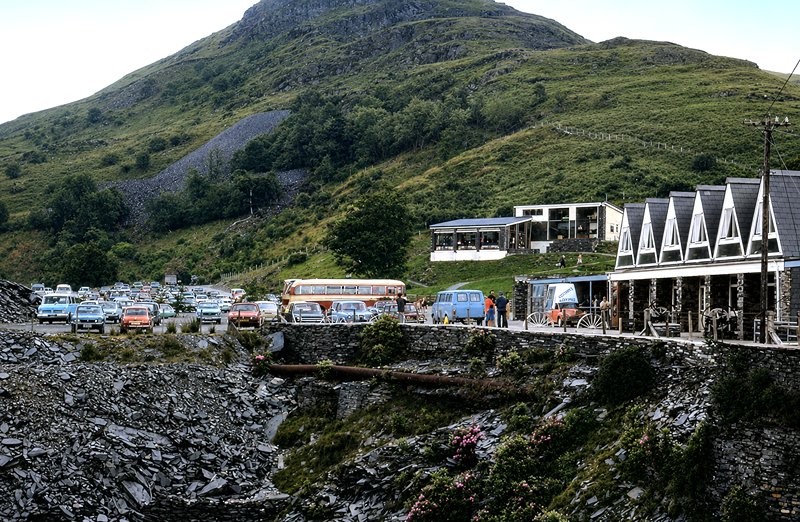
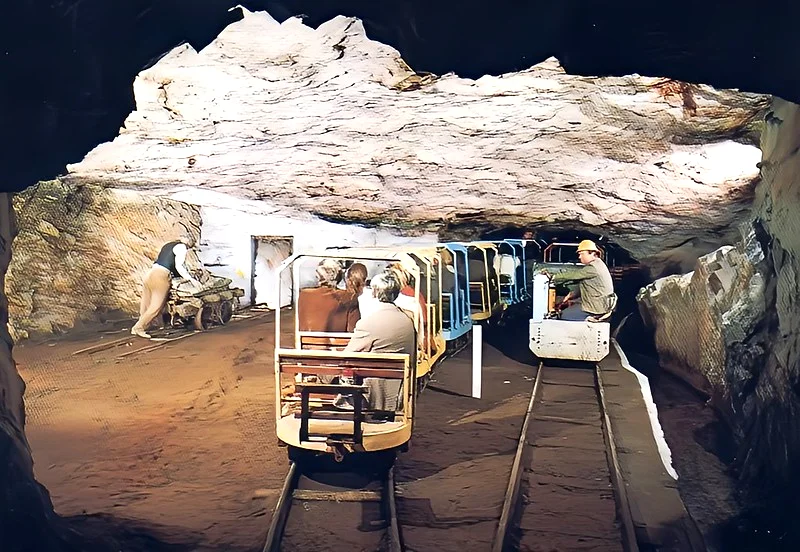
The Deep Mine Tour
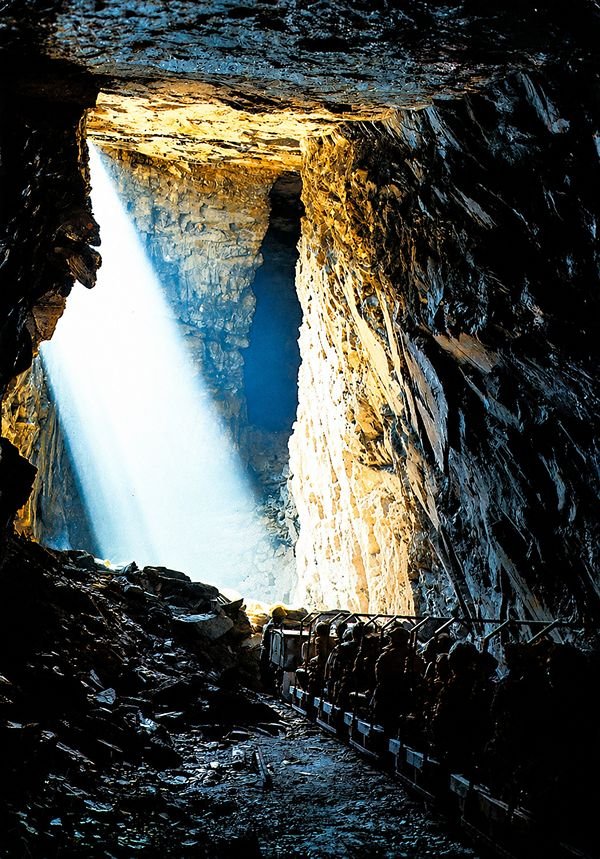
Llechwedd expanded again in 1979 with the opening of a second underground attraction, known as the Deep Mine Tour. Unlike the Miners’ Tramway, which carried visitors horizontally into the workings, the new experience began aboard a 24-seat carriage that was lowered underground by cable down a steep incline. Built with the help of a £40,000 grant from the Wales Tourist Board, it was promoted as Britain’s steepest passenger railway.
Once underground, visitors left the carriage to explore some of the old slate workings before rejoining it for the journey back to the surface. The Deep Mine Tour lasted around 25 minutes and allowed Llechwedd to reveal a much larger and more atmospheric section of the underground complex. Enormous floodlit chambers, twisting tunnels and even an underground lake gave visitors some impression of the immense scale of the workings and the conditions in which generations of quarrymen had laboured.
The investment came as visitor numbers continued to climb. That year, 221,000 visitors came to Llechwedd.
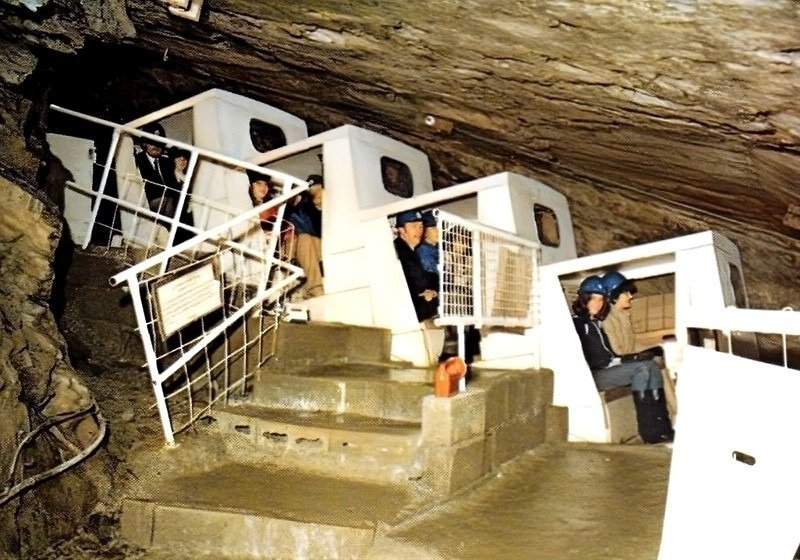
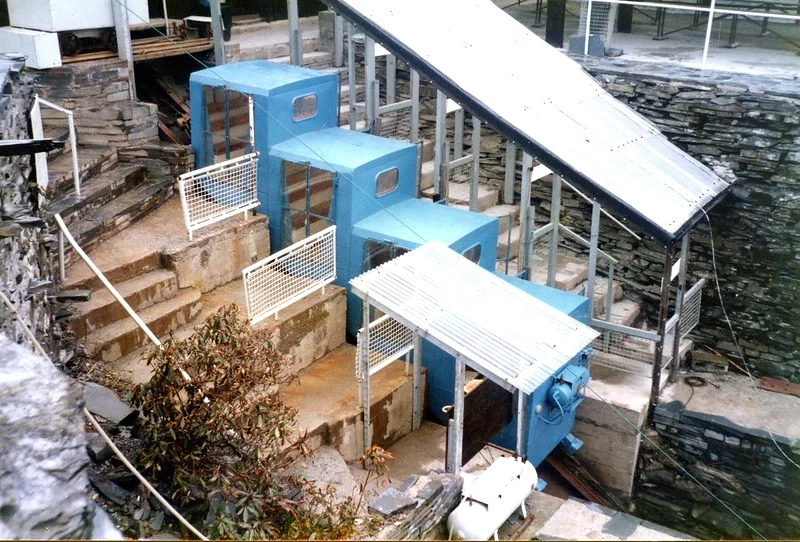
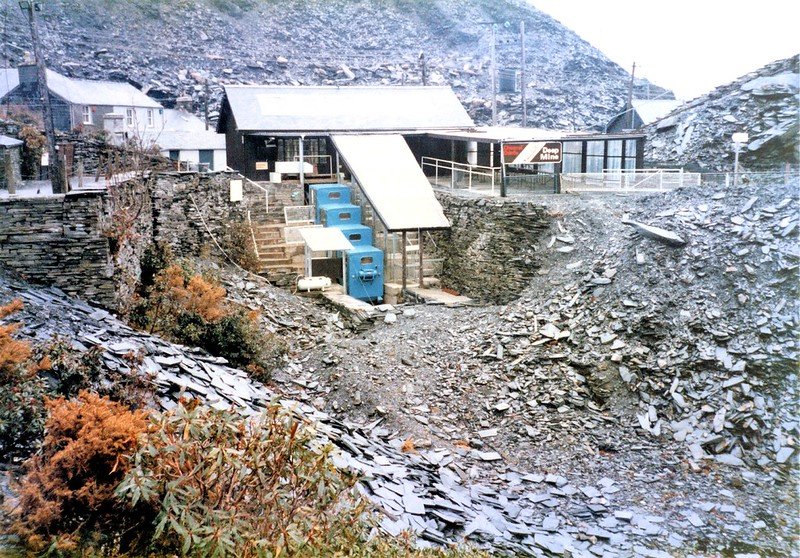
By 1981, just nine years after opening, Llechwedd welcomed its two millionth visitor. Throughout the 1980s, it remained one of the top tourist attractions in Wales, with over 200,000 visitors every year. During the peak summer season, coach parties and family cars poured into the site, and what had begun as an experimental industrial attraction had become firmly established on the North Wales tourist circuit. The complex went on to win every major tourism award.
In the early 1990s, a handful of old buildings were restored to create a ‘Victorian village,’ adding another historical element above ground, and in 1992, £130,000 was invested to upgrade the Deep Mine Tour with modern lighting and technology.
Health and safety standards also changed over time, often to the detriment of the visitor experience. By the 1980s, hard hats were made mandatory on the tramway, changing the rather informal nature of the original ride. An even more noticeable alteration came in 2003, when the mine carriages were enclosed in plexiglass – a move that severely restricted the views and diminished the overall experience. The little open train of the 1970s had gradually become a much more enclosed and controlled attraction.
But despite these upgrades, Llechwedd had struggled to move with the times. By the 2000s, much of the site felt dated and tired, seemingly trapped in something of a 1980s time-warp, while admission prices had become increasingly difficult to justify. Gloddfa Ganol, its rival across the road, had already closed, and Llechwedd itself was attracting only around 50,000 visitors a year – roughly a quarter of the numbers it had welcomed at its peak.
After four decades, it was becoming increasingly clear that simply presenting the old quarry was no longer enough to attract visitors in the numbers Llechwedd had once enjoyed.
Bounce Below
The next transformation came in 2013, when it was announced that major changes were underway. A company called Zip World revealed plans to build the world’s first subterranean playground inside one of Llechwedd’s vast caverns.
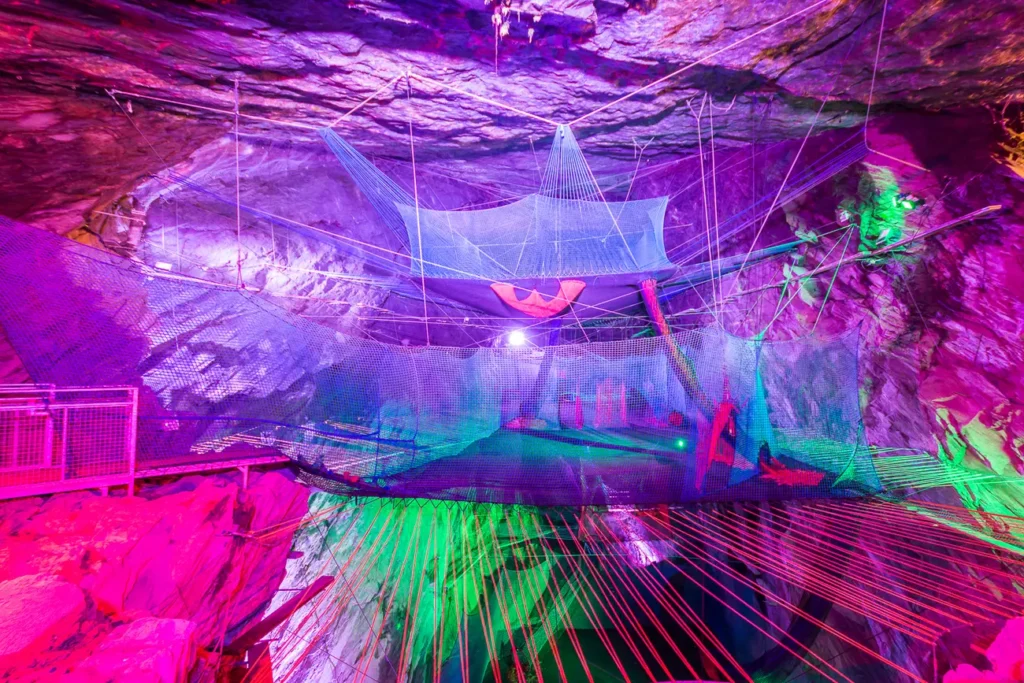
Known as Bounce Below, the attraction is thought to be the world’s largest network of trampolines, covering an incredible 10,000 square feet of nets. Three giant trampolines are suspended at varying heights – ranging from 20 to 180 feet above the cavern floor – and linked together by slides, walkways, and tunnels, offering thrill-seekers a truly unique underground adventure.
It was a radical departure from Llechwedd’s traditional emphasis on industrial history. Instead of merely showing visitors the enormous spaces created by slate quarrying, the new operators were finding imaginative new uses for them. The very caverns that had become redundant following the decline of the slate industry were now the attraction in their own right.
This new attraction completely revitalized the site, and the tramway was once again busy transporting guests to this new underground wonder. For a brief period, the old Miners’ Tramway had unexpectedly found a new purpose.
But the revival proved short-lived. At the end of the 2014 season, after more than four decades of operation, the decision was made to close the tramway for good. The track was subsequently removed, and visitors heading to the underground trampolines now walk along the route once traveled by the little trains.
By the time it closed, the Miners’ Tramway had carried more than six million passengers. The modest attraction that had begun Llechwedd’s transformation into one of North Wales’s leading tourist destinations is now a footpath.
The Deep Mine Tour remained unaffected and was even given a facelift which included a longer walk, tour guides and “enhanced reality technology and explosive special effects”. This represented a very different approach from the relatively simple self-guided tours of the past, but reflected the changing expectations of modern visitors.
In 2021 the Zip World company took over the lease for most of the Llechwedd site and added even more unique attractions. The emphasis increasingly shifted towards adventure tourism, making use of the extraordinary underground chambers and rugged quarry landscape for experiences that the Victorian quarrymen who created them could scarcely have imagined.
Although the little Miners’ Tramway has disappeared, its importance should not be underestimated: it was the attraction that first brought the public underground at Llechwedd and helped turn a declining slate quarry into one of the best-known visitor attractions in North Wales.