During the 1950s, theatre promoter Pentland Hick began building a small entertainment empire, acquiring half a dozen cinemas across northern England. His portfolio included the Gaiety Cinema in Scarborough, the Star Cinema in Bradford and the Central Cinema in Pickering.
Hick was not only a businessman, he was also deeply involved in the creative side of performance. He wrote and produced a variety of theatrical plays and entertainment shows and frequently appeared on stage himself. His enthusiasm for live performance led to a close friendship with Harry Corbett, creator of Sooty. He even contributed scripts for The Sooty Show and helped promote its stage productions, playing a small but intriguing part in the early growth of the beloved glove puppet’s popularity.
In 1961, Pentland Hick entered a new phase of his entertainment career when, together with fellow promoter Don Robinson, he acquired a bankrupt country club at Kirby Misperton Hall. The pair established the Yorkshire Zoological Company, converting the nine-acre estate into what they hoped would become a modern visitor attraction.
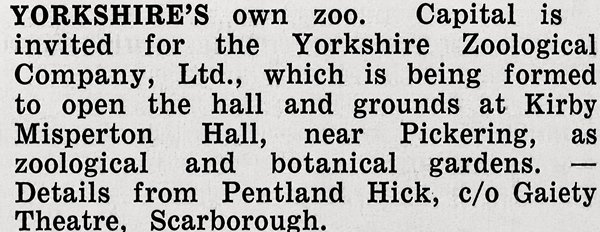
The site required significant work: former military buildings were cleared, and the first collection of animals was sourced through rental arrangements with animal dealer Alan Robertson. Later that same year, the gates opened under the name of Flamingo Park Zoo.
Under Hick’s direction, Flamingo Park quickly evolved beyond a modest animal park, growing into a lively and popular tourist destination. His promotional flair and showbusiness background helped transform the once-failing country club into one of Yorkshire’s top leisure attractions, today known as Flamingo Land.
Cleethorpes Zoo
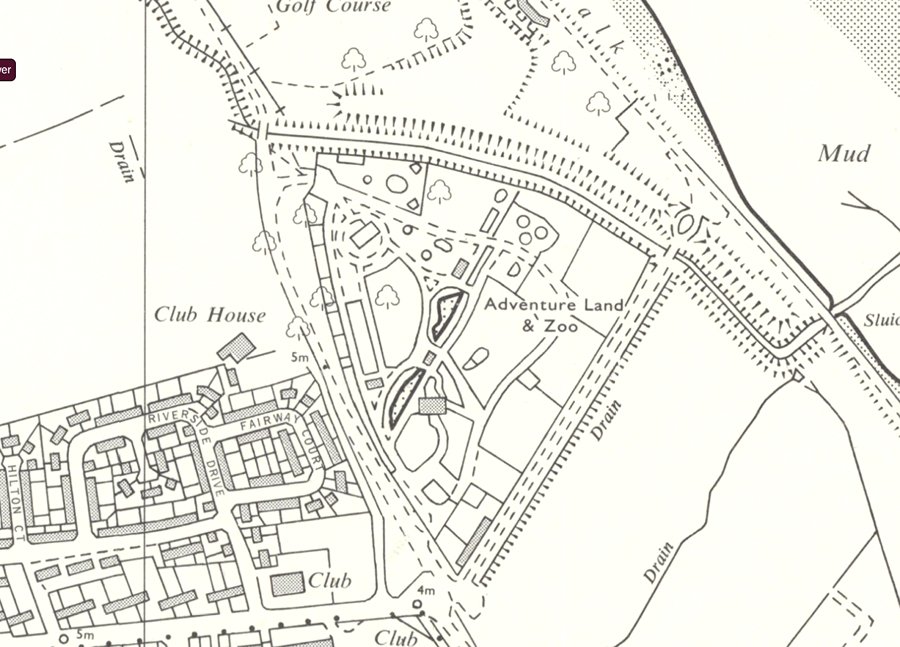
In 1963, Hick set his sights on further expansion and approached Cleethorpes council with a proposal to establish a new zoo in the resort. A 23-acre site on the southern edge of town was identified as the ideal location, with an additional 18 acres available should future growth be required. The site was currently in use as a caravan park.
The council responded enthusiastically, seeing the project as a potential boost to tourism and the local economy. A complex partnership agreement was drawn up in which both the council and Hick would fund different aspects of the development, with profits shared between them. The contract was set for 21 years, though the operators retained the right to withdraw at any point.
The council committed up to £50,000 towards preparing the site, including the construction of access roads, drainage, sewerage, and a café building. The parks department also contributed to the transformation of the land, planting around 1,000 trees and shrubs to give the new zoo a landscaped and established feel long before the animals arrived.
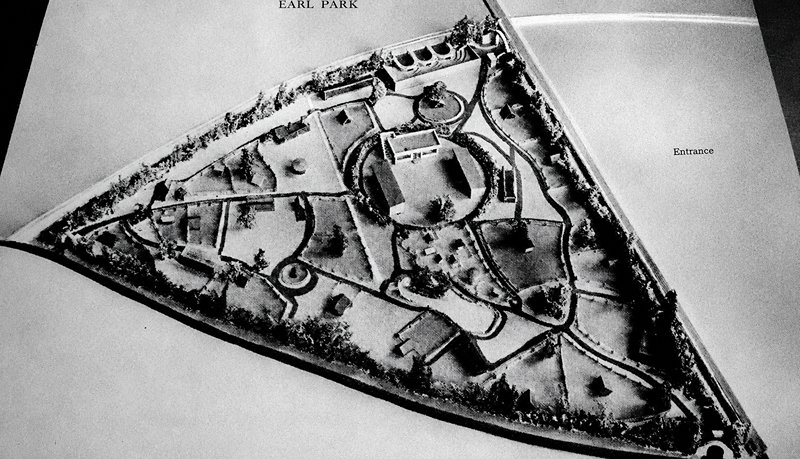
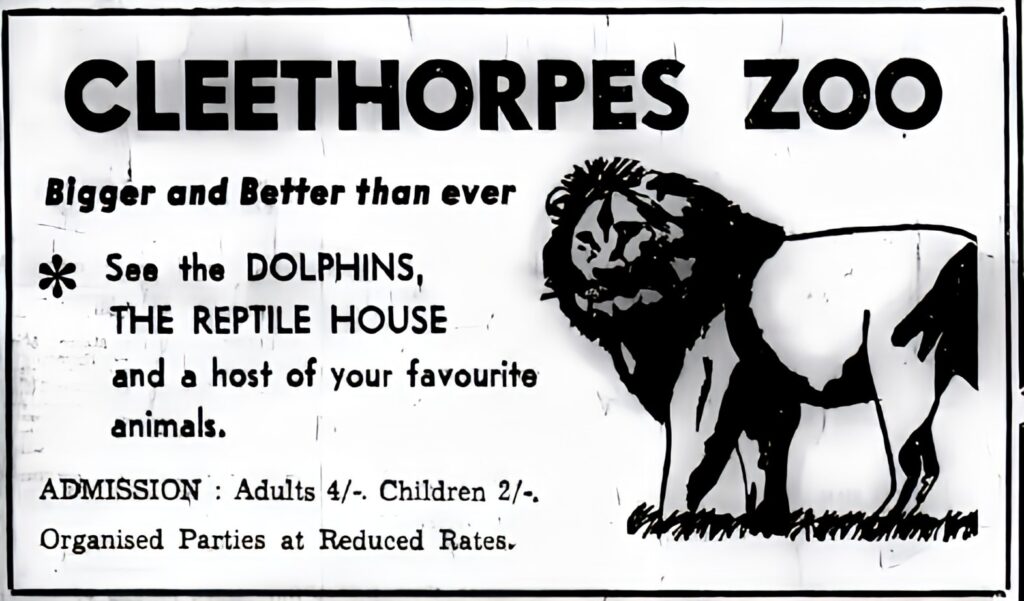
Cleethorpes Marineland and Zoo officially opened its gates on 29 May 1965, with television presenter Johnny Morris performing the honours. The zoo was planned as a satellite operation of Flamingo Park, and from the outset the two sites functioned as a linked system: some animals were sent back to Flamingo Park during the winter months, while others were periodically exchanged. As a result, the line-up at Cleethorpes was never entirely static, and visitors returning year after year often found new species on display.
1965 also marked an important turning point for Pentland Hick’s growing leisure empire. That year he consolidated his various ventures into a new publicly listed company, Associated Pleasure Parks, retaining a substantial controlling interest. The move followed a period of strong performance at Flamingo Park Zoo, which had posted record attendance figures of 626,000 visitors in 1964, and a profit of £34,000.
Around this time, Hick’s business partnership with Don Robinson came to an end, with Robinson later establishing his own zoological attraction in Scarborough. Hick, meanwhile, pressed ahead with an ambitious programme of expansion. Through the late 1960s he acquired additional zoos, purchased Gwrych Castle, and diversified into the holiday industry with the acquisition of at least one caravan park.
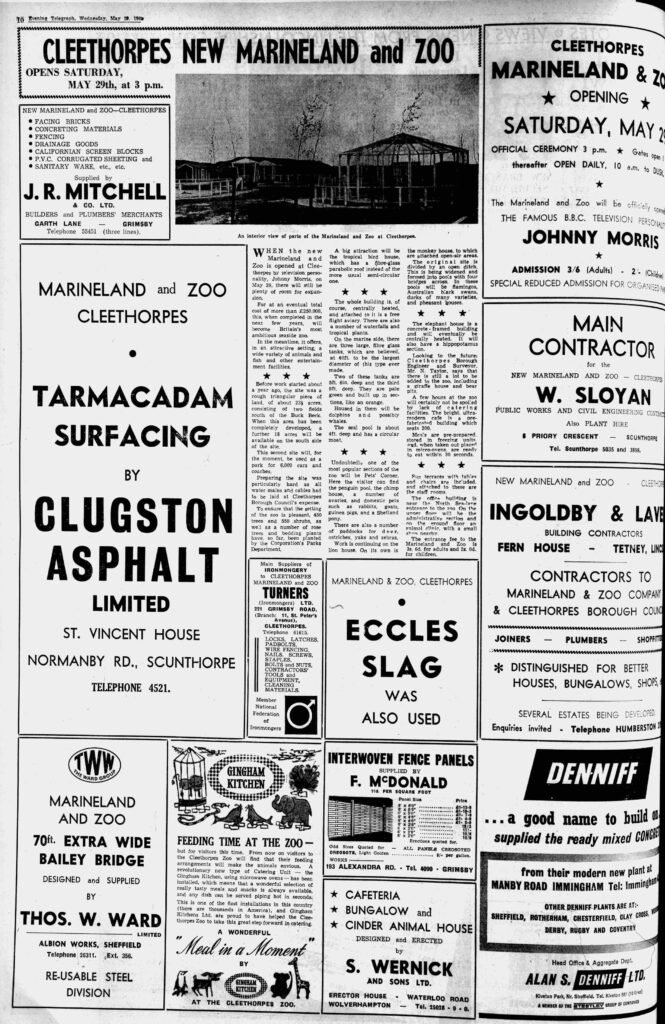
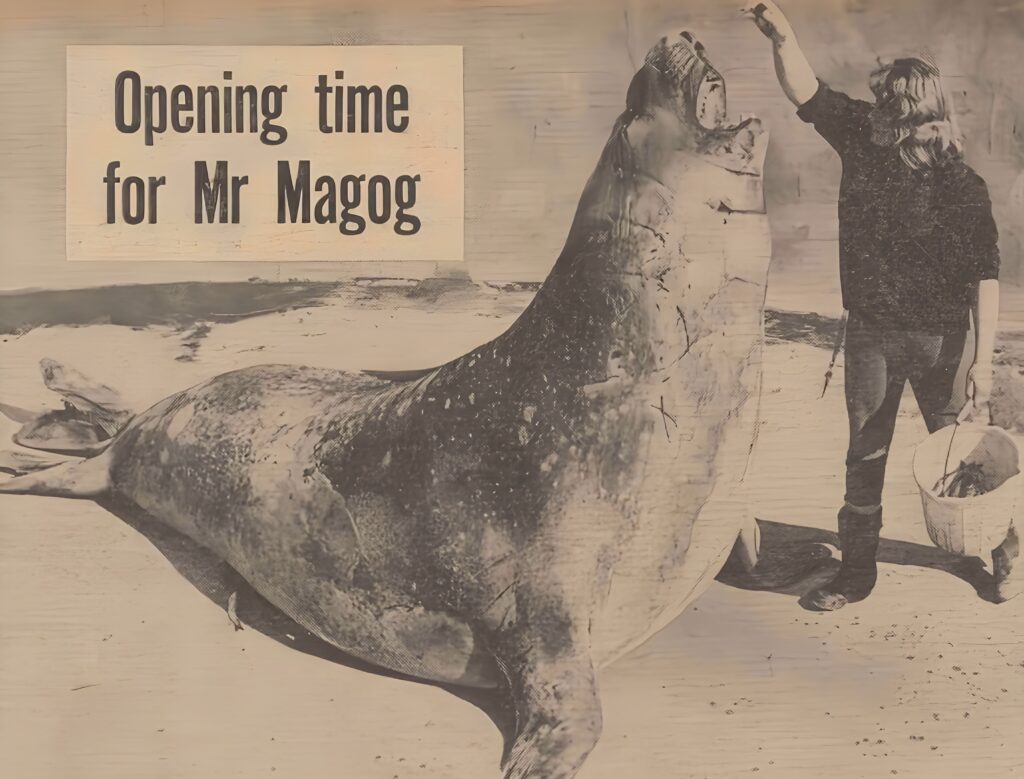
An early building at Cleethorpes was the tropical bird house which featured a fibreglass parabolic roof. The zoo also contained lions, a monkey house, elephant house and penguin pool, along with a two-ton elephant seal named Mr Magog. They also had two Indian elephants named Fred and Tania.
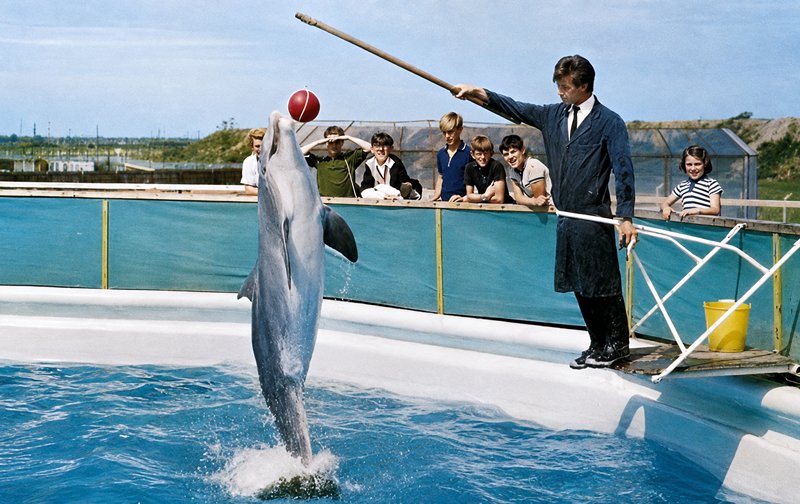
One of the star attractions at Cleethorpes were the live dolphin performances. To accommodate them, three circular fibreglass tanks were installed on site, each measuring 40 feet in diameter. Although innovative at the time, the decision to use fibreglass soon proved problematic. As one zoo official later admitted, “We’ve had nothing but trouble and expense with these tanks. They were a mistake right from the start.”
The first marine mammals arrived in dramatic fashion. Three dolphins – Ringo, Lisa and Pepe – were flown in from Florida, while a far more ambitious shipment involved four beluga whales transported from Canada. Their journey covered 3,500 miles aboard the steamer Arcadian, but the crossing turned tragic. Two whales were washed overboard during a storm, and a third died en route, leaving just one survivor to reach Cleethorpes.
In 1968 the orangutans were replaced by chimps as they had grown too big. Also that year their 8-year old bull elephant Freddy died and was hauled away by a local processor.
Scotia Investments
Scotia began life as a public company in the late 1950s, built on the remnants of what had once been a successful rubber plantation enterprise. By this stage, however, the business had fallen on hard times, and one of its few remaining assets of value was a caravan park in Cornwall.
A turning point came in 1969, when a 70% controlling stake was purchased for £111,000 by millionaire financier Bobby Marmor. Marmor had bold ambitions to reinvent Scotia as a major force in Britain’s expanding leisure and entertainment sector. The company was floated on the Stock Exchange in July 1969, raising the capital needed to begin that transformation. With the new funds, Scotia rapidly diversified, purchasing five nightclubs and acquiring a 25% stake in the film Royal Hunt of the Sun.
The most significant move came in November 1969, when Scotia acquired Associated Pleasure Parks for £1.6 million. Pentland Hick exchanged his personal shareholding for a substantial position in Scotia and accepted a seat on the company’s board. At the same time, Scotia also purchased Dudley Zoo, further strengthening its zoological and tourism holdings.
As its leisure portfolio expanded, Scotia continued acquiring additional assets, including a number of bingo halls. The company strengthened its corporate structure further with the appointment of Keith Stainton, MP for Sudbury and Woodbridge, as Chairman of the Board.
A killer whale arrives
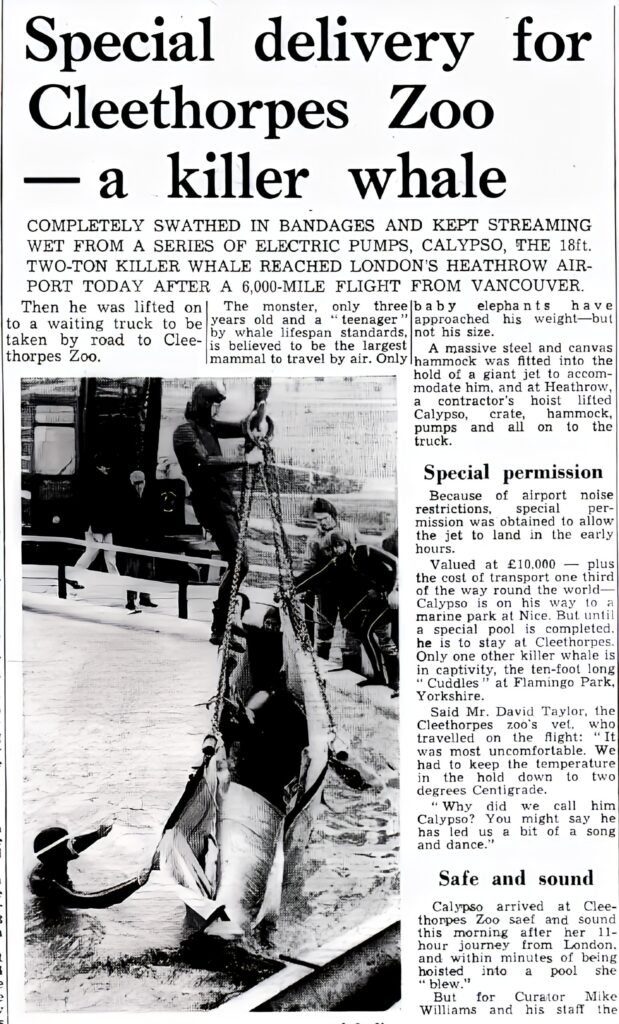
In December 1969, Cleethorpes briefly became home to one of the most talked-about arrivals in the zoo’s history: a three-year-old killer whale named Calypso. At around 18 feet long and weighing approximately two tons, Calypso was reported at the time to be the largest mammal ever transported by air.
The visit was only ever intended to be temporary. Calypso was en route to the newly constructed Marineland in Antibes, France, which was still incomplete and unable to house him. During his six-month stay at Cleethorpes, Calypso drew considerable publicity and public interest, becoming a short-lived but memorable feature of the zoo. In June 1970, he finally departed for France to take up residence in his permanent home. Tragically, Calypso survived only a further six months, dying later that year – bringing a premature end to what had already been a remarkable and heavily publicised journey.
In 1970, the marine collection expanded again with the arrival of two additional dolphins from the United States, named Luke and Freckles. By this point, the dolphin shows had become one of the zoo’s most popular features, and the new arrivals helped refresh the programme and maintain visitor interest.
Not all new additions went smoothly, however. In 1974, an incident made headlines when an African bird-eating spider – reported as being “as big as a saucer”- escaped while being transported in a van from Dudley Zoo to Cleethorpes. Despite an extensive search of the vehicle and surrounding area, the spider was never recovered, becoming one of the zoo’s oddest and most persistent local legends.
In 1972 major changes were afoot at Scotia Investments as both Bobby Marmor and Keith Stainton resigned from their positions, followed soon after by three senior members of the board including the managing director.
In January 1975, Scotia announced that it no longer wished to operate Cleethorpes Zoo and formally handed control back to the council. The withdrawal was abrupt: Scotia removed the majority of the animals and basically just walked away, leaving the future of the site in doubt. With the season fast approaching, it appeared unlikely that the zoo would reopen that year.
Fibreglass animals
However, the council was determined not to let the attraction die. In a bid to keep the gates open – and with no time or resources to rebuild a live animal collection – they adopted an unusual solution: fibreglass animals.
The idea was met with widespread scepticism and, in some quarters, ridicule. Despite the criticism, the council pressed ahead, spending £6,000 on a range of life-size artificial animals and rebranding the site as Cleethorpes Pleasure and Animal Park. New children’s play equipment and small amusement rides were also installed to help broaden its appeal.
To the surprise of many, the gamble paid off. Although unconventional, the fibreglass creatures proved unexpectedly popular – particularly with younger visitors, who delighted in being able to climb, sit, and play on them in a way real zoo animals would never allow. Against the odds, the revamped attraction finished the season with encouraging results. Its unlikely formula was considered successful enough to be repeated again the following year.
In 1976, Scotia made another dramatic announcement: it intended to sell Dudley Zoo, stating that the attraction would close unless a buyer could be found. The news prompted an immediate rescue effort, and within months a charitable trust was established, jointly supported by Bristol Zoo and the local authority. Additional funding was secured through a public appeal, allowing Dudley Zoo to continue operating and ultimately securing its long-term future.
Change continued elsewhere in the former Associated Pleasure Parks empire. In 1978, Robert Gibb, a former Scotia director, became the sole owner of Flamingo Land.
By the early 1980s, Scotia’s rapid expansion and aggressive business strategy began to unravel. Allegations of improper financial practices and unstable investments forced the company into collapse. Pentland Hick, whose fortune was mostly tied up in Scotia stock, was reported to have lost everything as a result. He lived quietly in later life and passed away in 2016, leaving behind a curious legacy: part showman, part entrepreneur, part risk-taker – responsible for some of post-war Britain’s most ambitious, unusual, and occasionally chaotic leisure ventures.
Colossus takes over
In March 1977, the future of the Cleethorpes zoo shifted once again when a London-based leisure company, Colossus Ltd, approached the council with a proposal to revive the attraction as a fully fledged zoological collection. A new partnership agreement was drawn up, and real animals returned to the site for the first time in two seasons. The new stock included lions, tigers, bison, camels, ponies, and a 12-year-old elephant named Louisa.
Later that year, the closure of Aberdeen Zoo provided an unexpected influx of additional animals, including three lions, three wolves, and a pair of dingoes – even though Cleethorpes already had eight lions of its own. Despite the somewhat mismatched assortment, the revived zoo generated strong visitor numbers, and the first season under Colossus was considered a success.
In recognition of this promising start, the council formally granted Colossus full control of the zoo in April 1978, issuing a 21-year lease at an annual rent of £25,000.
However, the optimism of the arrangement was short-lived. During the summer of 1978, events took an extraordinary and unexpected turn. Without going into too much detail, both zoo directors abruptly disappeared – each reportedly running away with a younger woman. Their sudden departure left the operation in chaos. One of the wives left behind said “I have kept the zoo going. I have fought for this company. All I want them to do is to come home and sort it all out.” The situation quickly captured tabloid attention with one calling it a “zoo love tangle”. The story even made it into the Daily Mirror.
At the close of the 1978 season, the arrangement with Colossus collapsed as quickly as it had begun. The council revealed that, out of the agreed £25,000 annual rent, it had received only £1,000. The lease was cancelled and the land repossessed. One of the missing directors was later tracked down to a caravan park in Clacton, where he admitted he believed the business was heading for financial ruin and “saw no point in carrying on.”
Cleethorpes Zoo is closed
This time, the council had no appetite to revive the attraction. In March 1979, the site was cleared through a public auction, selling off what remained: “buildings, sheds, cages and former aviaries.” The zoo had lasted for just 13 years.
Most of the surviving animals were rehomed, sold or put down – but one resident remained at the centre of a national drama: Hercules the hippo. For several weeks, he became one of the most talked-about animals in Britain, as newspapers ran emotional stories warning that he faced being shot if a new home couldn’t be found.
A public fundraising appeal generated £6,000, and Dudley Zoo agreed to take him and build a new indoor enclosure. On his final day in Cleethorpes, an estimated 4,000 people gathered to say goodbye. He was transferred to Dudley in May 1979 – appropriately aboard an RAF Hercules plane – but tragically died just 6 months later. He was replaced by another hippo named Hercules.
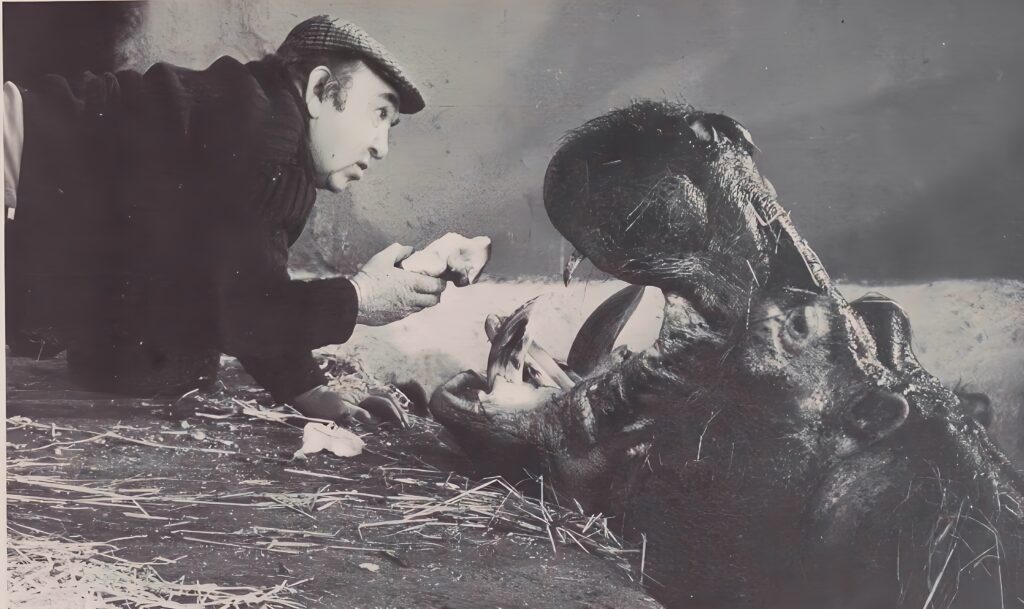
In the aftermath of the zoo’s closure, a number of proposals were put forward for the future of the site. One of the earliest suggestions was a large multi-use sports complex, complete with an arena and indoor swimming pool, but the scheme never progressed beyond planning discussions. Instead, the land was converted into a stock car racing track, a decision that quickly generated a wave of noise complaints from nearby residents.
Pleasurewood Hills
By the late 1980s, a new possibility emerged. Pleasurewood Hills Theme Park near Lowestoft, was looking for a second location, and expressed interest in the Cleethorpes site. The council – keen to see a meaningful redevelopment – reportedly offered the land “more or less free.” Several structures from the old zoo still stood, along with much of the original access roads and pathways.
Joe Larter, the founder and original creative force behind Pleasurewood Hills, drafted plans for a new family theme park specifically tailored to Cleethorpes. He later described his design as “a good family attraction but nothing over the top.” Local councilors were optimistic, with one confidently declaring that the new attraction would make Cleethorpes “the jewel in the East Coast’s crown.”
Construction began in 1990, with hopes of opening the new attraction the following year. As work progressed, contractors made a series of unexpected discoveries beneath the soil: the buried remains of former zoo inhabitants. Whale bones, elephant remains and even lion skeletons were unearthed – silent reminders of the site’s turbulent past.
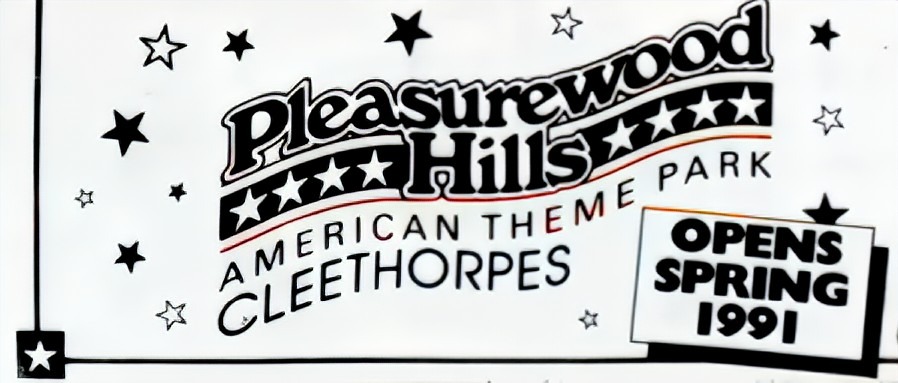
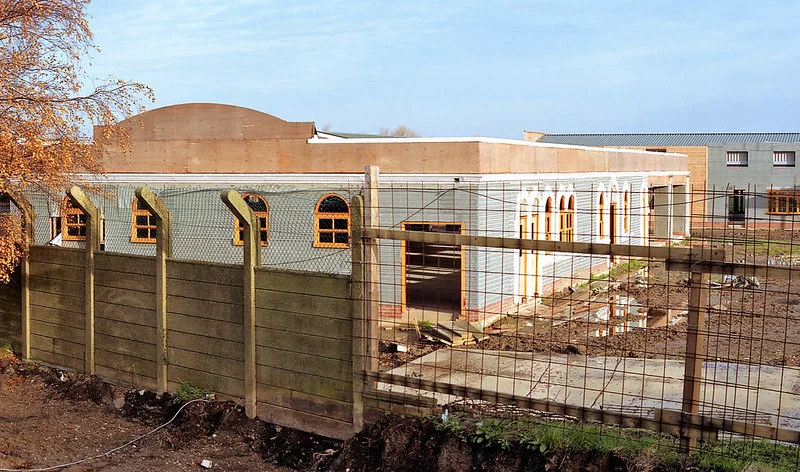
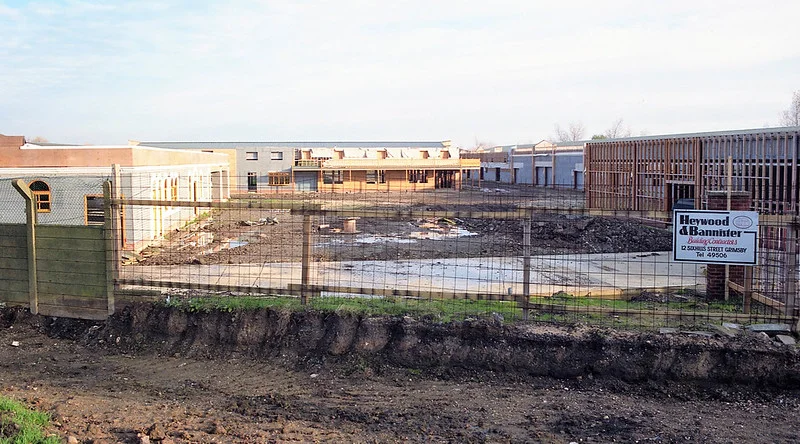
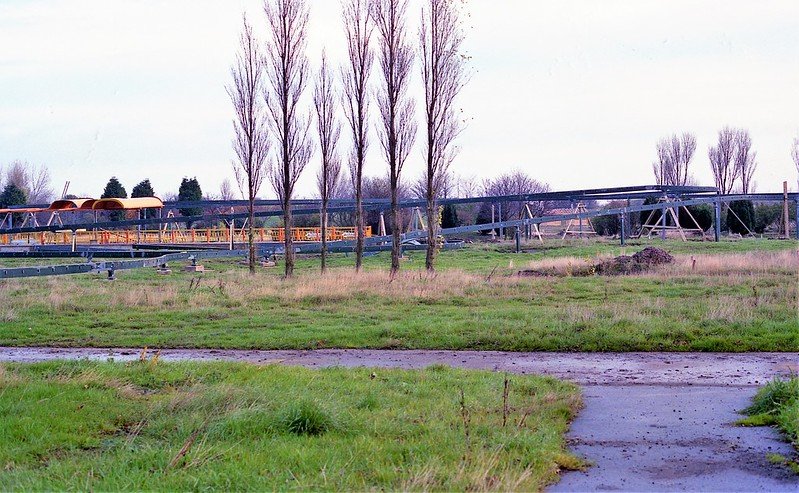
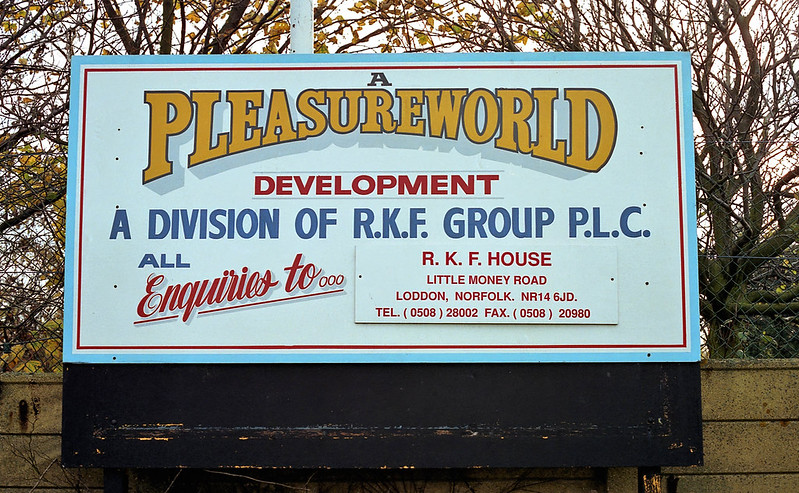
However, the project soon ran into financial difficulty. Pleasurewood Hills had recently been acquired by RKF, a company that had become increasingly unstable following a series of questionable investments outside the leisure industry. By October 1990, RKF collapsed into bankruptcy, forcing the sale of all its assets. These included the original Pleasurewood Hills, the newly opened Bure Valley Railway, three Sea Life Centres, and the half-finished development at Cleethorpes.
Pleasure Island
A period of uncertainty followed, with the part-built park standing idle while administrators sought a buyer. The breakthrough finally came in August 1991, when the site was acquired by Robert Gibb – the former Scotia director and now the owner of Flamingo Land. Under Gibb’s control, construction resumed and the long-delayed project was completed. The park officially opened in May 1993 under its new name: Pleasure Island
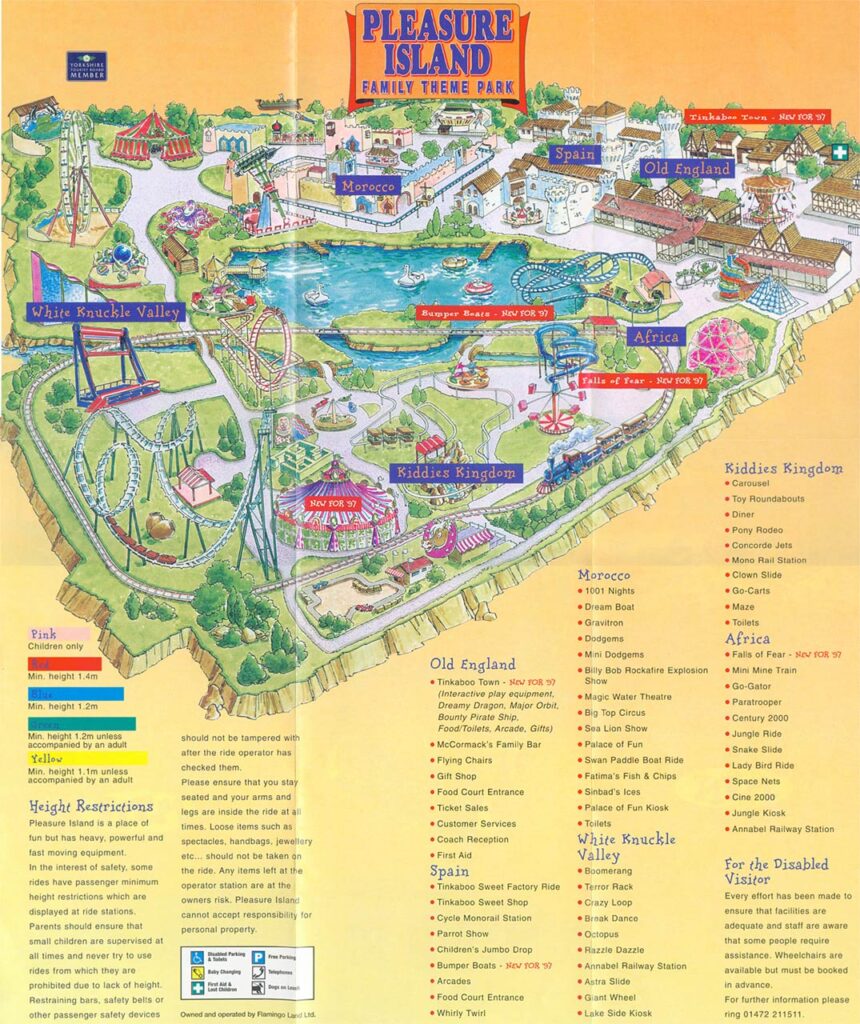
Just two years later, tragedy struck. Robert Gibb was killed in a car accident, leaving the park without its driving force. Despite the loss, the attraction continued to operate under the management of the Gibb family, as a sister park to Flamingo Land.
In 2010, Pleasure Island abruptly closed amid an internal family dispute, though the closure proved temporary. The park later reopened under the leadership of Gibb’s daughter, Melanie Wood, and from that point onward operated independently, with no formal connection to Flamingo Land.
However, the challenges facing British coastal attractions in the 21st century took their toll. Declining attendance and rising operational costs made the park increasingly difficult to sustain, and in 2016 Pleasure Island closed permanently. The theme Park had actually lasted 10 years longer than the zoo that preceded it.
The land was sold in 2020, and while progress has been slow, the current redevelopment plans propose a supermarket, hotel, holiday lodges and a fishing lake, along with other retail and leisure units. For now, the site remains largely dormant.