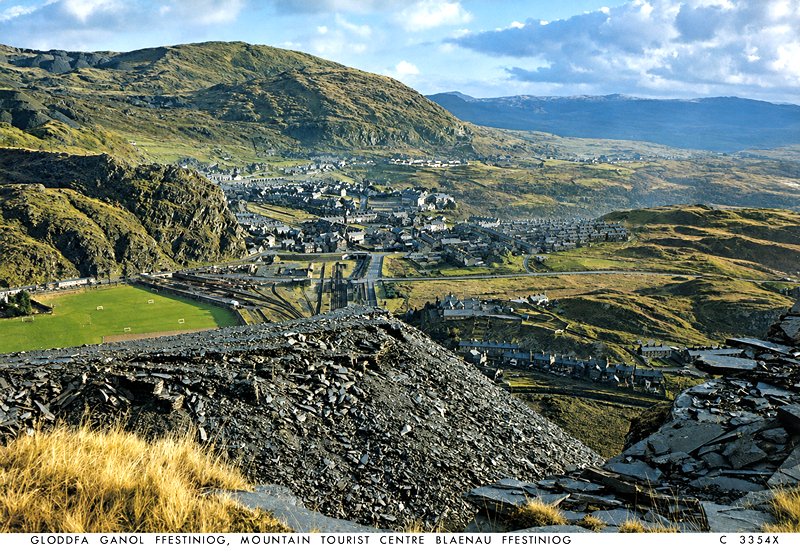
High in the mountains above Blaenau Ffestiniog, Oakeley Quarry was once the largest underground slate mine in the world. Beneath the mountainside lay an extraordinary labyrinth of more than 40 miles of man-made tunnels and chambers spread across 26 levels, created by generations of quarrymen following the valuable seams of slate deep underground.
Slate was first quarried here in 1818, and over the following century Oakeley developed into one of the great centres of the Welsh slate industry. At its peak, hundreds of men worked both above and below ground, while a network of narrow-gauge railways, inclines and processing buildings carried the finished slate down the mountainside. Production remained significant throughout the Second World War, but during the 1960s the industry entered a period of rapid decline as demand fell and traditional Welsh slate faced growing competition from cheaper roofing materials.
The quarry finally closed in 1969, bringing more than 150 years of continuous slate production to an end. Three years later, the sprawling 360-acre site was acquired by aeronautical engineer Wil Roberts, together with his father-in-law and brother-in-law. Rather than simply abandoning the workings, the family saw continuing potential in the slate business. Their interests subsequently expanded to include three more Welsh slate mines, which were brought together under the Ffestiniog Welsh Slate Products Group.
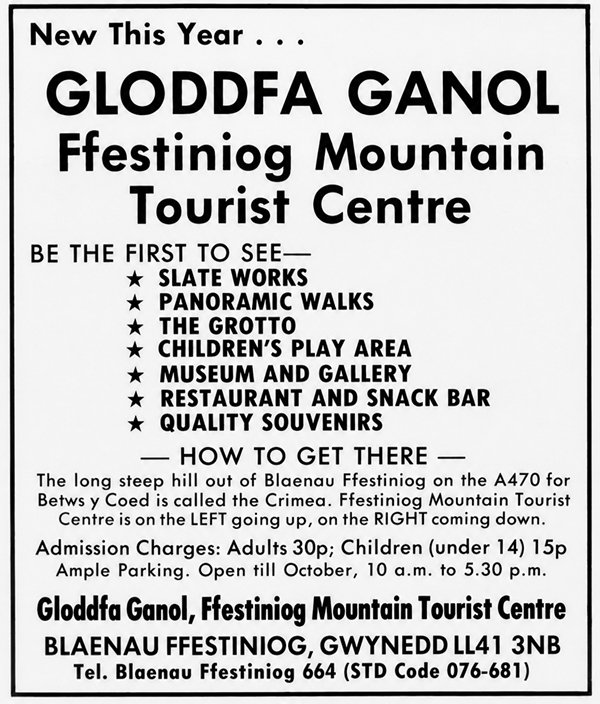
At almost exactly the same time, a rather different use was being found for the area’s industrial heritage. Directly across the road, Llechwedd Slate Caverns made history in 1972 by opening Britain’s first public underground mine ride. Visitors were carried by narrow-gauge train into the old workings before being shown something of the difficult conditions experienced by generations of slate miners. It proved an immediate success, attracting more than 100,000 visitors during its first year.
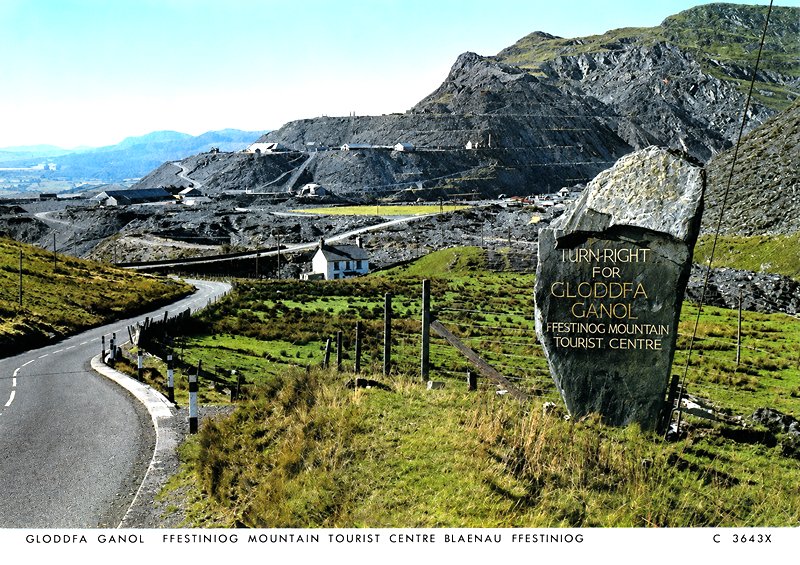
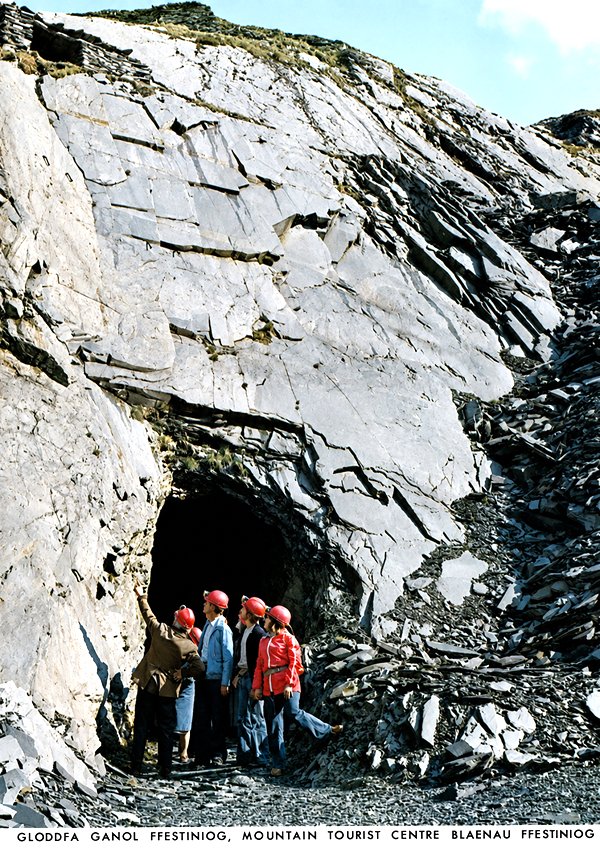
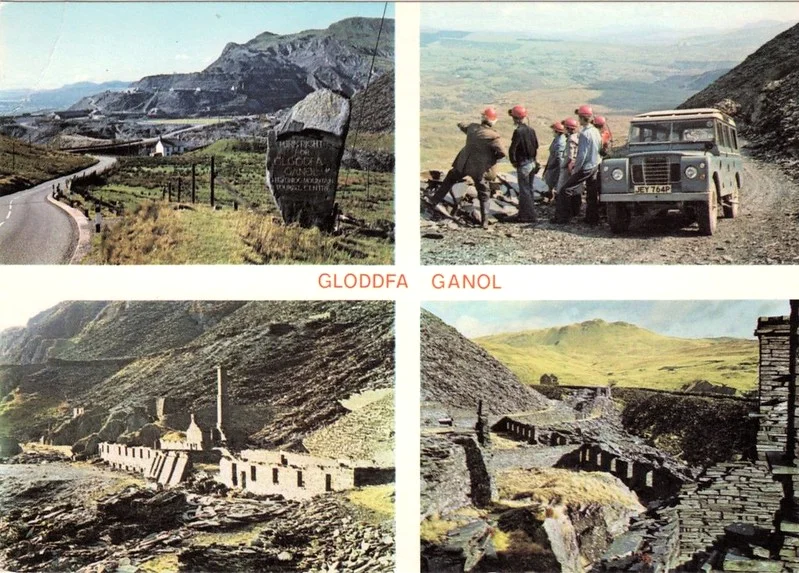
The popularity of Llechwedd demonstrated that the abandoned slate workings themselves could become tourist attractions. Encouraged by this success, plans were drawn up to open part of Oakeley Quarry to visitors. The result was Gloddfa Ganol, which opened in 1974. One of the old mine tunnels was reopened as a show mine, where visitors donned hard hats and explored the chambers and passages at their own pace to experience something of the scale of the enormous underground complex.
Above ground, there was plenty more to see. Guided Land Rover tours carried visitors around parts of the vast quarry landscape that would otherwise have been difficult to reach, giving them a closer look at the workings, towering slate tips and remains of the old industrial operation.
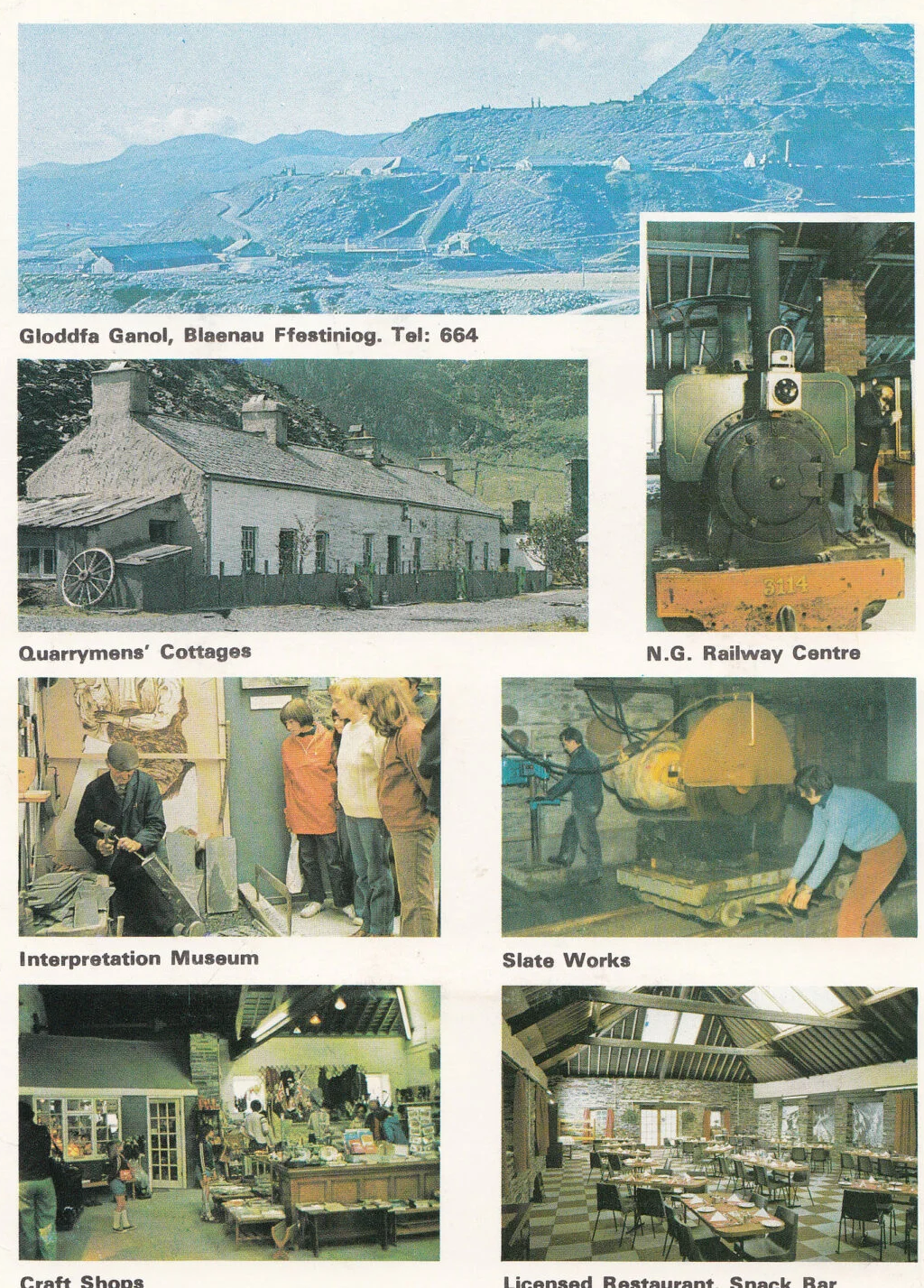
Another popular feature was a terrace of four former quarrymen’s cottages, each furnished to represent a different period in time and illustrating how the lives of quarrying families had changed over the generations. A large narrow-gauge railway museum was also established, eventually becoming one of Gloddfa Ganol’s major attractions in its own right.
Although the two attractions stood almost opposite one another, Gloddfa Ganol was deliberately conceived as something quite different from Llechwedd. As Wil Roberts explained:
“Ours is fundamentally different. Here, visitors are free to explore a large site containing a museum, interpretative exhibitions, a working slate mill, and an extensive narrow-gauge railway collection. Underground, they can explore unescorted a three-quarter mile section of old slate workings.”
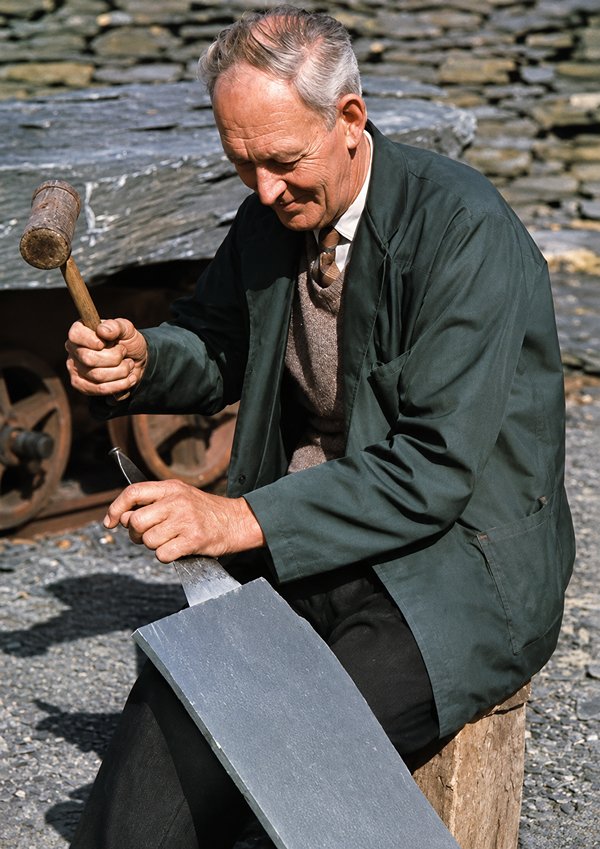
Rather than following a tightly controlled tour, visitors could spend much of the day exploring the sprawling former quarry at their own pace. The attraction combined an industrial museum with a working slate operation, allowing visitors not only to learn how slate had traditionally been extracted and processed but also to see the industry continuing around them.
Gloddfa Ganol and Llechwedd complemented each other well, and both attractions went on to be hugely popular throughout the 1970s and 1980s.
Gloddfa Ganol was not entirely devoted to slate and industrial history, however. Among its more unusual features was the Lewis Discount Store, boldly advertised as “Gwynedd’s largest furniture store.”


The Narrow Gauge Railway Museum
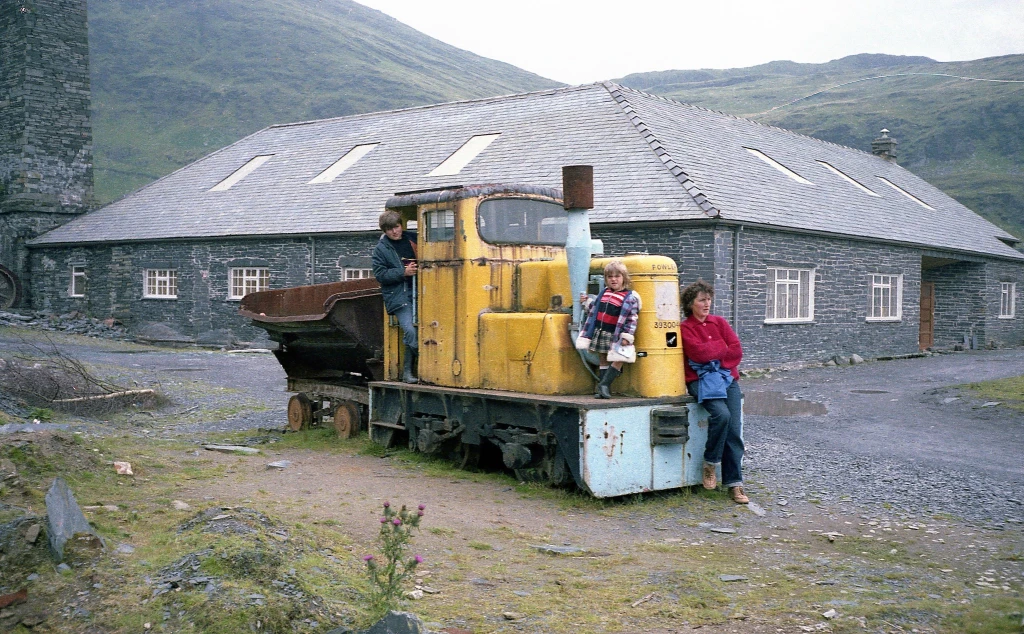
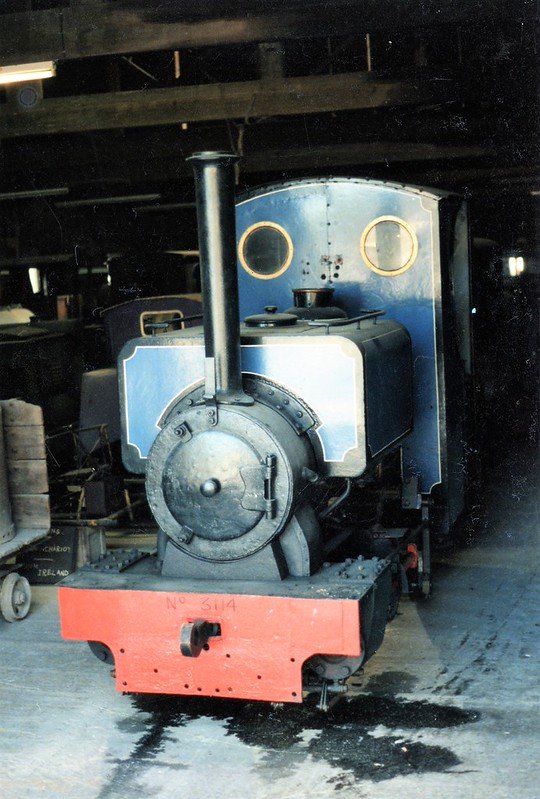
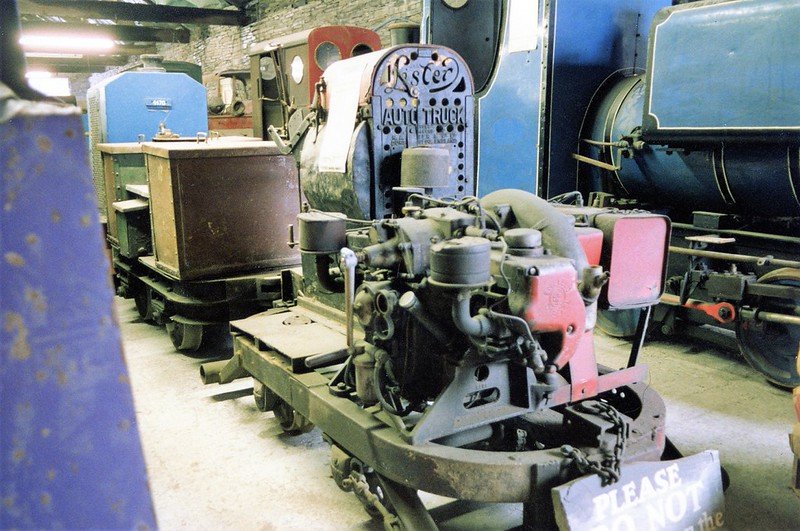
The narrow-gauge railway museum was established in 1978, with much of the equipment coming from the collections of Rich Morris, Peter Nicholson and Michael Jacob. The trio had begun collecting narrow-gauge railway equipment during the 1960s, when it could be picked up relatively cheaply as few people considered them worth preserving. Their collection grew rapidly, with Rich Morris even constructing his own 2ft-gauge railway in the garden of his suburban bungalow near Dartford in Kent.
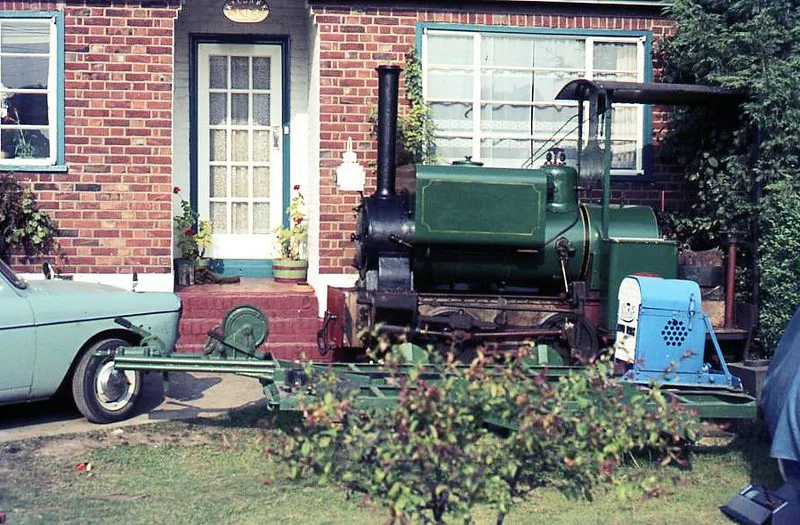
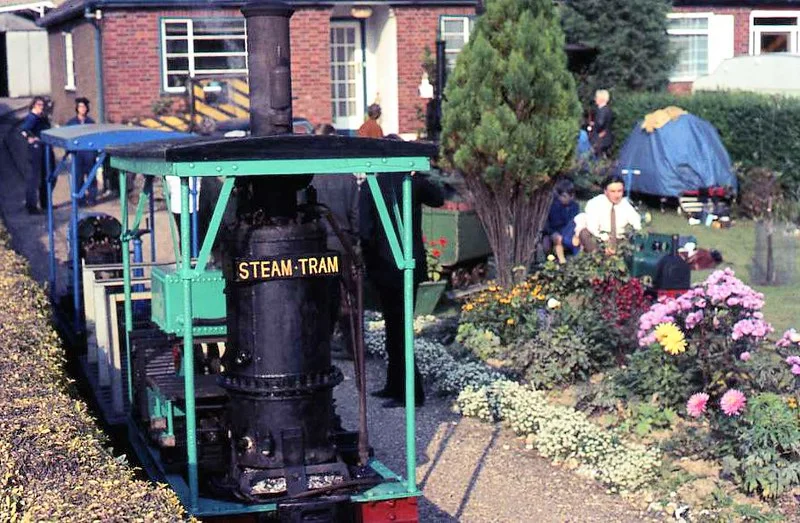
After the collection was moved to Gloddfa Ganol it was initially housed in the winding house of the old seven-track Dafydd Glanamarch incline, but in 1980 it was relocated to a new building on the site of the former Holland’s Lower Mill.
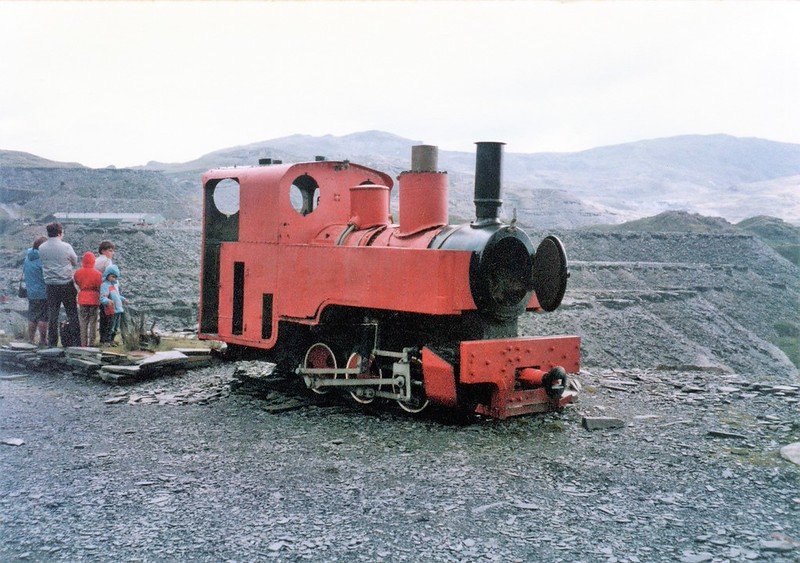
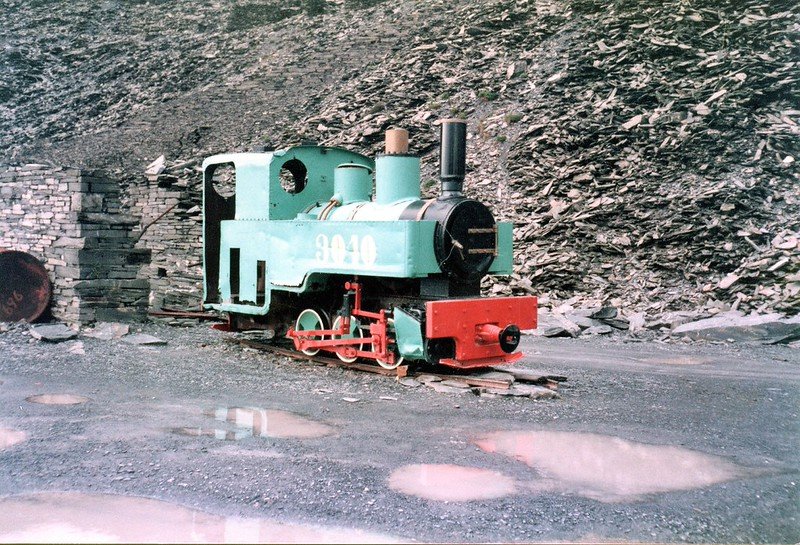
It was advertised as housing the largest collection of narrow-gauge railway equipment in the British Isles, with several dozen locomotives, mostly diesels, packed tightly together inside a large barn. Further locomotives, wagons and other equipment were displayed outside, while still more were stored in private areas away from public view. Being located halfway up a Welsh mountain was certainly not the ideal environment for storing historic equipment outdoors, with exhibits exposed to the notoriously wet and harsh North Wales weather.
Rich Morris became the resident custodian. Frequently to be found somewhere around the museum, Morris was only too happy to talk with visitors about the locomotives and their histories – although conversations could just as easily wander onto almost any other subject. A colourful and outspoken character, he became almost an attraction in his own right, freely sharing his sometimes controversial opinions with anyone prepared to listen.
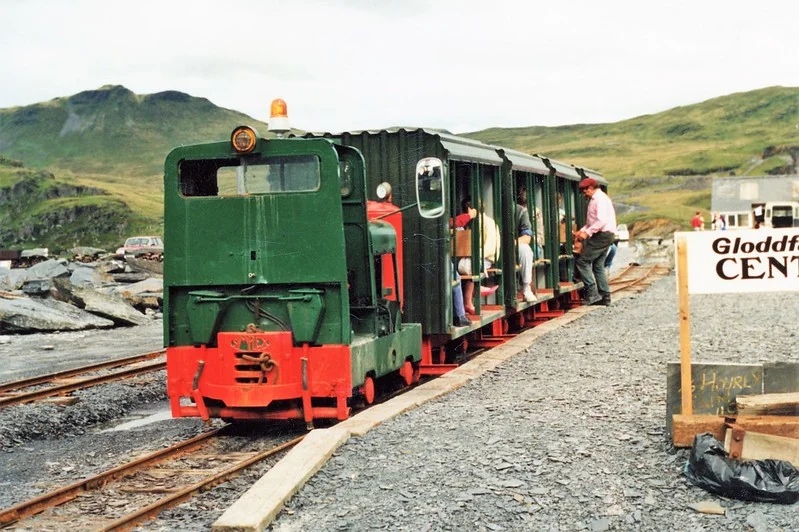
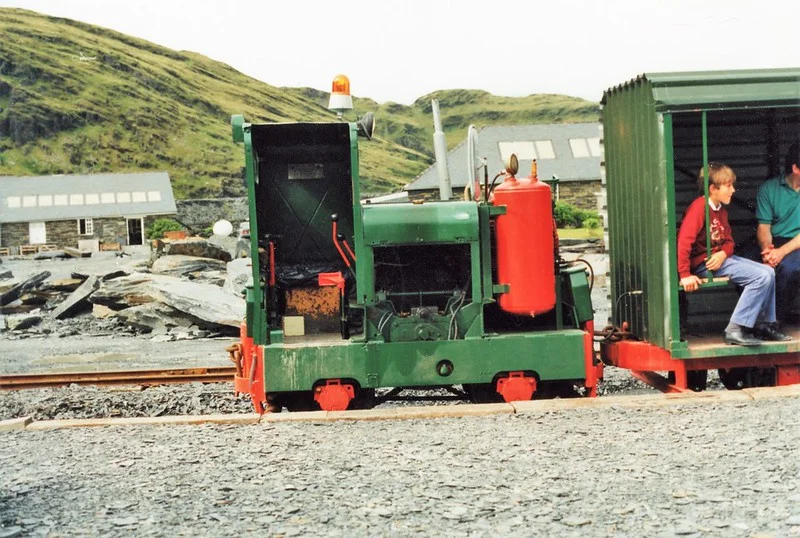
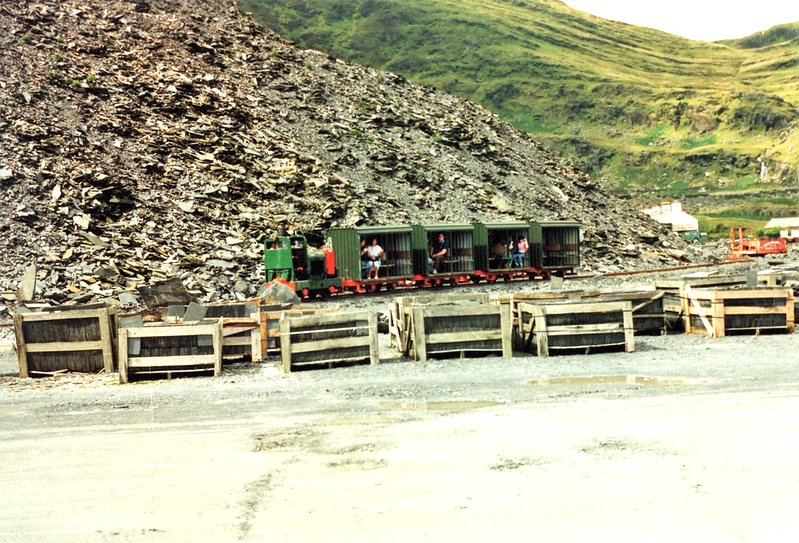
A short 2ft-gauge railway was later constructed through the site, carrying visitors from the centre of the complex to the railway museum and adding another attraction in its own right.
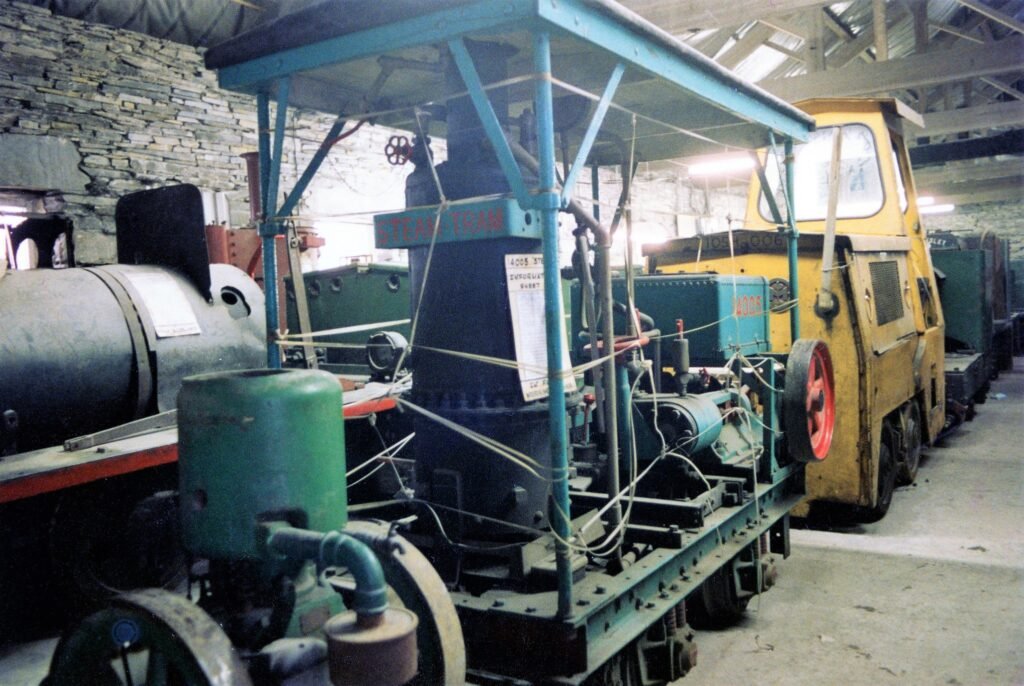

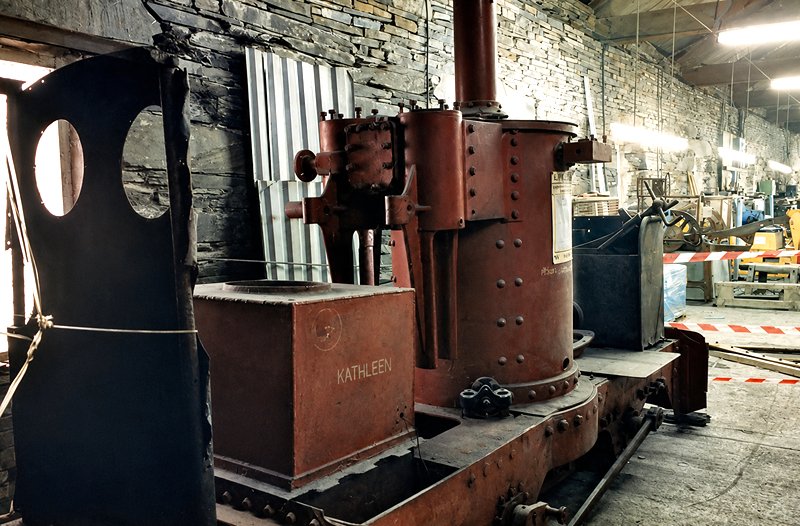

Slate production continued alongside the tourist operation, meaning Gloddfa Ganol was never simply a museum or visitor attraction. Guests could tour the working mill and watch as huge blocks of freshly quarried slate were sawn, split and trimmed into finished products, providing an unusual opportunity to see a traditional industry still operating alongside the preserved machinery and displays.
During the early 1990s, however, the slate industry experienced something of a resurgence, and once again quarrying became more profitable than tourism. Inevitably, the priorities at Gloddfa Ganol began to change. The visitor attraction increasingly took a back seat as more of the site was required for commercial slate production. Part of the railway museum was requisitioned for quarrying operations, forcing numerous locomotives, wagons and other pieces of historic equipment to be dumped outside, where they were left exposed to the harsh mountain weather.
The arrangement also highlighted one of Gloddfa Ganol’s fundamental problems. Combining a tourist attraction with an increasingly busy working slate quarry was far from ideal. Visitors, historic exhibits and industrial machinery were all competing for space within what was, first and foremost, becoming a productive quarry once again.
At the end of the 1997 season, the Ffestiniog Welsh Slate Products Group was acquired by McAlpine Slate Products in a £6 million deal. The new owners had little interest in continuing Gloddfa Ganol as a tourist attraction and soon announced that the site would close to visitors, allowing Oakeley Quarry to concentrate entirely on commercial slate production. After more than two decades, Gloddfa Ganol had reached the end of the road.
The closure also meant the break-up of its remarkable narrow-gauge railway collection. By this time, much of the equipment had become the property of the quarry owners and was offered for sale through a sealed-bid auction organised by Rich Morris. The locomotives and rolling stock that had been gathered together over many years were subsequently dispersed to heritage railways, museums and private collectors around Britain.
Oakeley continued as a working slate quarry for another 12 years, but its long industrial history finally came to an abrupt end in 2010, when major subsidence was discovered within the workings. The resulting safety concerns forced the quarry to close, bringing slate production at the site to an unexpectedly sudden conclusion.
The former show mine, once one of Gloddfa Ganol’s biggest attractions, was subsequently sealed off and left largely untouched. Despite this, urban explorers have occasionally managed to gain access, revealing that some of the old mannequins, displays and other remnants of the visitor attraction still survive underground – creating an eerie time capsule of Gloddfa Ganol as it once was.