Woburn Abbey had been home to the Russell family since the sixteenth century, but during the Second World War the 3,000 acre estate took on a very different role. In 1939, a government propaganda organisation moved into the stable block and riding school, and from 1941 Woburn became one of the bases of the Political Warfare Executive. Writers, broadcasters and other staff were housed in and around the estate, producing propaganda leaflets and clandestine radio broadcasts aimed at Nazi Germany. For several years, this quiet corner of Bedfordshire became part of Britain’s secret propaganda war.
By the late 1940s, however, the Abbey itself was in a sorry state. Serious dry rot had taken hold and, in 1949/50, large sections of the building were demolished, including the east wing and parts of the north and south wings. After years without normal domestic use, what remained required extensive and expensive restoration. It didn’t even have a kitchen.
When John Bedford became the 13th Duke of Bedford in 1953, he inherited not only Woburn Abbey but an enormous financial burden. He was hardly a conventional aristocrat. Indeed, he later recalled that he had not even known his grandfather was a duke until a parlourmaid told him when he was sixteen. His father and grandfather had fallen out and had not spoken for some twenty years, leaving John to grow up at some distance from the world he would eventually inherit.
The Duke remembered his childhood as surprisingly uncomfortable. Although his father had money, he said he had little business sense, and the family lived in rented houses, wore patched up clothes, and ate food that was often little more than “the worst ends of anything mixed up with mince.”
“So we didn’t really have high-class friends,” he later joked. “Only starving missionaries ever spoke to us.”
For a short time his father gave him what the Duke later described as the “grand allowance” of £98 a year. That arrangement ended when John fell in love with a woman his father disapproved of. His allowance was stopped and relations between father and son were severed. Neither his father nor his grandfather attended his twenty-first birthday party.
His grandfather died in 1940, making John’s father the 12th Duke of Bedford. He was due to take up residence at Woburn, but wartime circumstances prevented this and he instead lived in a house in Woburn High Street. In 1953 he died after accidentally shooting himself, and John unexpectedly found himself Duke of Bedford.
What he inherited was a magnificent but deeply troubled estate. Death duties arising from the deaths of his grandfather and father amounted to about £4.5 million, while the annual cost of maintaining the estate was later put at around £140,000. Woburn could no longer be treated simply as a private country house.
The new Duke’s solution was radical for the time: open the Abbey to the public and make the estate help pay for itself. Rather than preserve Woburn as a private aristocratic retreat, he would turn visitors into the source of income needed to keep it alive.
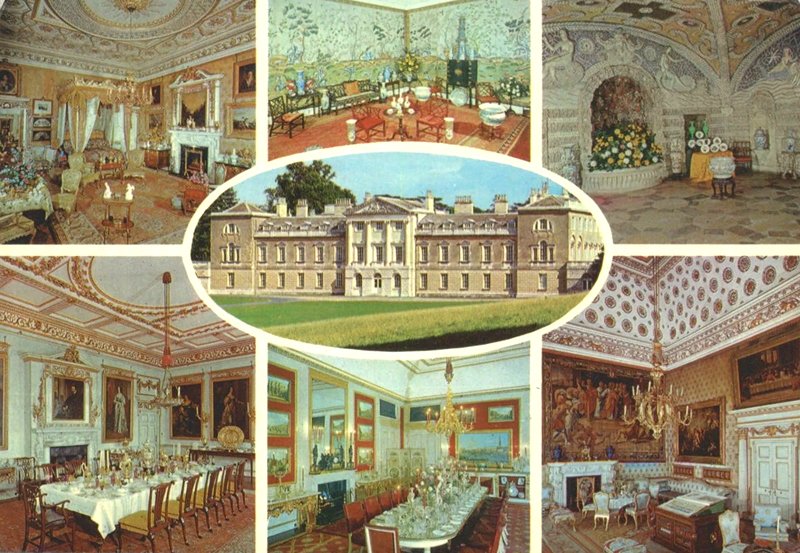
Opening the gates
Woburn Abbey opened to paying visitors on Good Friday 1955. On that first day someone stole the Duke’s dog and someone else was caught cutting part of a curtain off as a souvenir. But 181,000 people came during that first season, giving the Duke good reason to believe the idea could work.
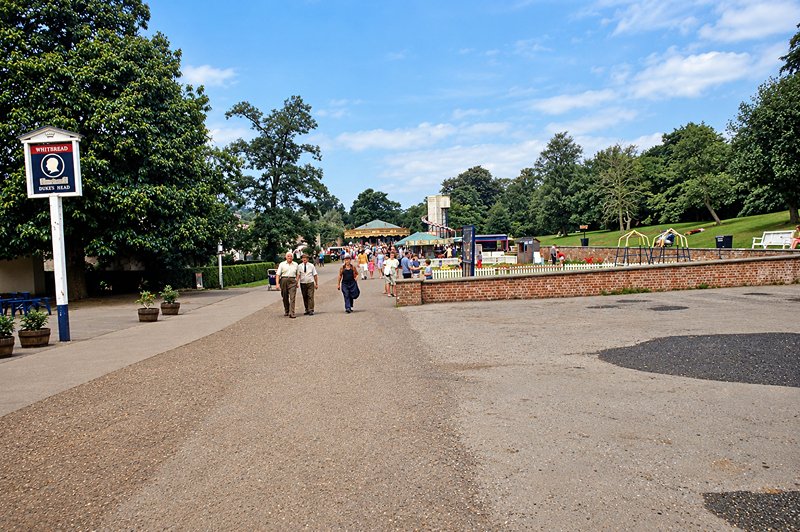
He quickly realised that families needed more than paintings and historic rooms to keep everyone happy. A children’s zoo, playground, boating lake and tearoom helped broaden the appeal. He even opened a pub called the Duke’s Head.
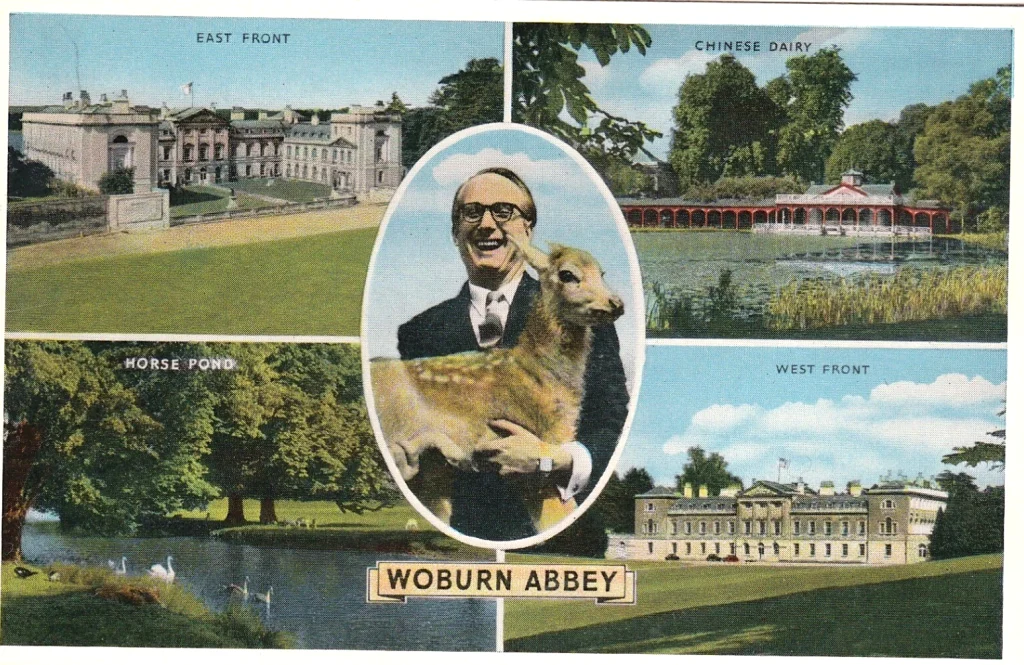
The Duke was also happy to put himself in the public eye. He appeared frequently on television and understood that publicity could translate into more visitors the following weekend. He was an approachable, friendly figurehead who was willing to promote the estate with an enthusiasm not usually associated with a stately home. He could often be found wandering the halls and was more than happy to stop and chat with anyone.
“I am always very grateful that I wasn’t brought up as a gentleman and didn’t go to Eton,” said the Duke. “Because I would have known the correct thing to do. As I didn’t know the correct thing to do, I was able to do what my customers would like. Otherwise I would have had to behave like a gentleman, which would have been very inhibiting. “One thing I loathe in this world are pompous, narrow-minded Englishmen.” Once asked what his children thought about him he replied “I think they find it a little embarrassing. They would like me to be a nice respectable English peer, wearing tweeds, who went huntin’, fishin’ and shootin’.”
Many within the aristocracy were uneasy about the increasingly commercial way he promoted Woburn. He was even promoting “Dinner with a Duke” for £90 a head. Bedford made little apology for any of it. As he once put it, “I do not relish the scorn of the peerage, but it is better to be looked down on than overlooked.” Whatever his critics thought of his methods, there was growing recognition that his flair for publicity had played a major part in rescuing the Abbey and securing its future.
By 1959, attendance had reached around 462,000 making Woburn the top visited stately home in the UK. By 1961 3 million of the debt had been paid off, mostly by selling property the Duke had inherited from around the country. But he was certainly kept busy running the estate “I have 35 sitting rooms and no time to sit in any of them!”
Railways and popular entertainment
Among the attractions added during the 1960s was an elaborate OO-scale model railway, introduced in 1964. Built by Rovex Scale Models of Margate, it combined Tri-ang Railways, Minic Motorways and Arkitex buildings in a landscaped display. Also that year saw the arrival of an impressive Carousel ride (Merry go Round) which had been built in the 1920s by Savages.
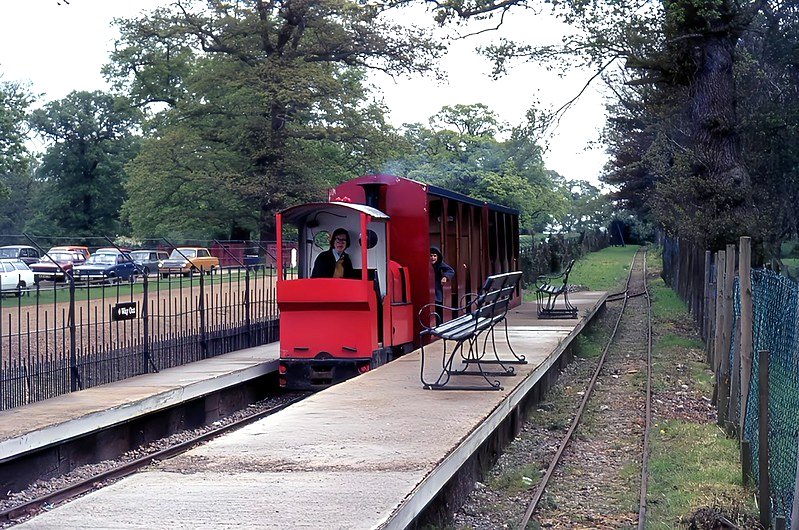
This was followed in 1968 by the opening of a 2ft-gauge passenger railway. Five years later, in 1973, a £150,000 model village covering around seven acres was added, and the railway was subsequently rerouted to pass through the new attraction. Both the railway and the model village were operated under concession by Margate Model Village Ltd, a company run by Margate councillor Dennis Masters.
Meanwhile, Woburn was attracting a rather different audience through outdoor events. A 1967 “love-in” brought thousands of young people to the estate, with around 5,000 camping in the grounds. In July 1968, a two-day festival sponsored by Melody Maker featured Jimi Hendrix, Fleetwood Mac, Donovan and Pentangle. A ticket for the whole weekend cost £2.
Concerts became another strand of the estate’s business. Over the years, performers included Neil Diamond, Tina Turner, Dire Straits, Elton John and Van Morrison.
By the late 1960s, visitors could choose between the house, zoo, pets corner, funfair, camel rides, boating lake, garden centre and the antique market which contained 40 shops. Woburn was already a busy leisure destination, but its biggest animal attraction was still to come.
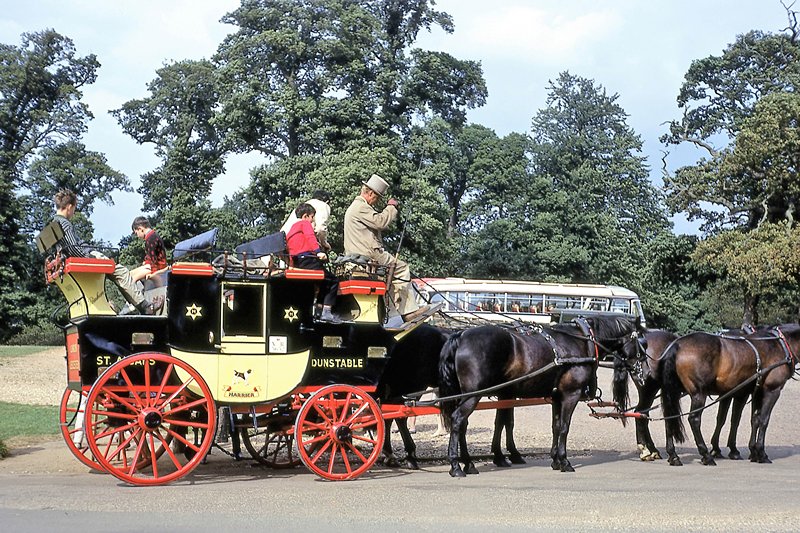
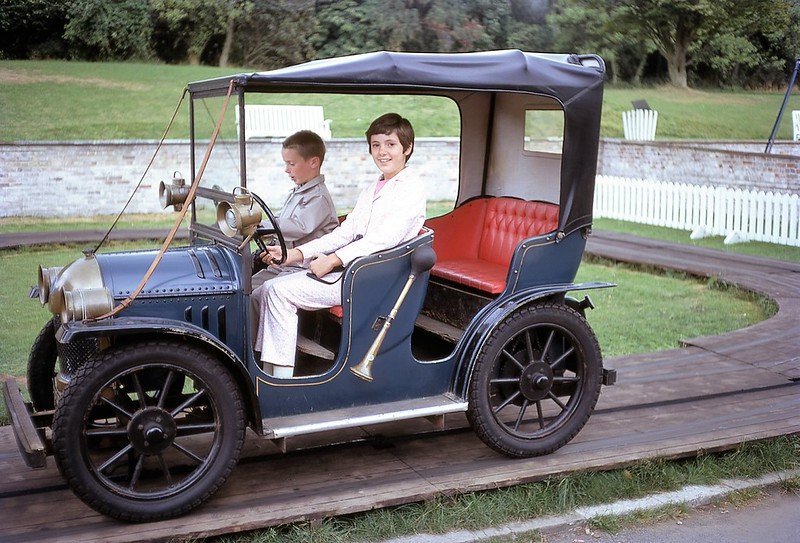
Woburn Wild Animal Park
Keeping unusual animals at Woburn was nothing new. The sixth Duke had established a menagerie in the early nineteenth century, and bison had been introduced to the grounds in the 1920s. What changed in 1970 was the way visitors encountered them.
Jimmy Chipperfield had helped establish the British safari-park idea, drawing on his experience with animals and his work in Africa. Following the success of Longleat, the Chipperfields joined forces with the Bedford estate to create Woburn’s Wild Animal Kingdom.
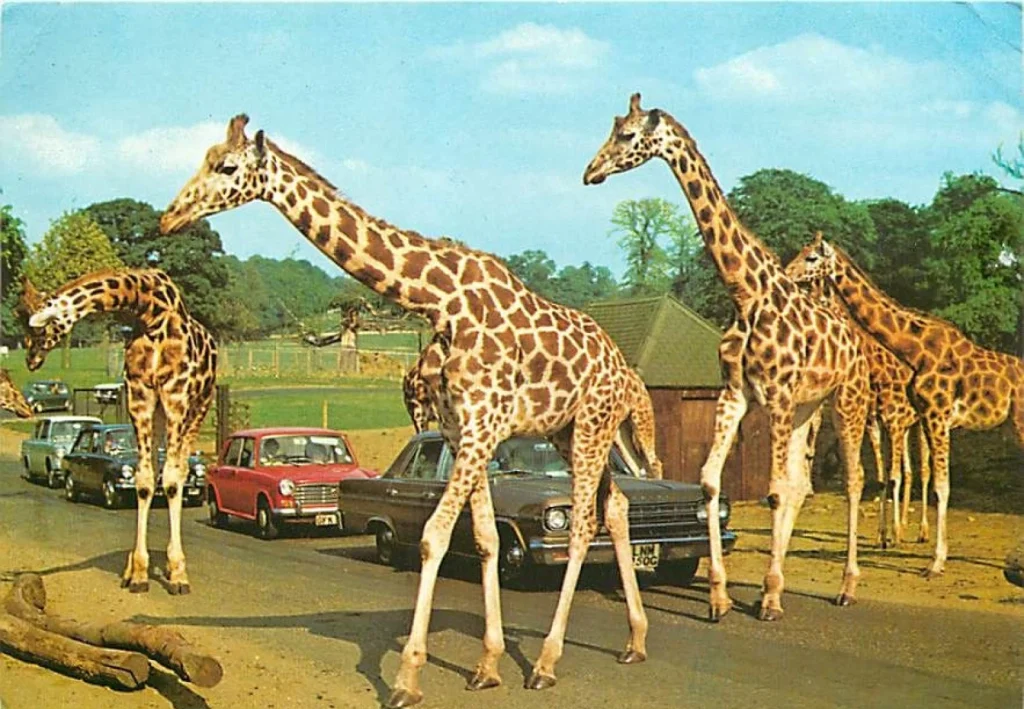
Richard Chipperfield was still setting up the attraction in April 1970, and it opened later that year. Visitors could drive their own cars through reserves containing lions, elephants, giraffes, rhinoceroses and other large animals. Seeing them in the open landscape, with only the car windows separating people from some of the animals, was a large part of the appeal.
The danger became clear a few weeks after opening when a five-year-old girl was attacked by a lion. A window of the car she was travelling in had been left open, allowing the animal to reach inside. “We were terribly upset,” said the Duke. But the following week 80,000 people came to see the lion which had bitten the child – all with their car windows open. “That put us on the map.” he said.
By this time, Woburn had developed into three main attractions: the Abbey itself, the leisure area and the drive-through safari. Like many attractions of the period, however, the final cost of a day out could soon mount up because almost everything was charged separately.
In 1976, admission to the grounds cost 50p, followed by £2 per car for the safari. Entry to the Abbey was another 60p per adult, with a further 25p to see the private apartments. The chairlift cost 40p, the dolphinarium 30p, Pets’ Corner 15p, the miniature railway 15p and the antiques centre 10p, while it was even 5p to walk through the Abbey gardens. On top of all that, each of the individual amusement rides carried its own additional charge.
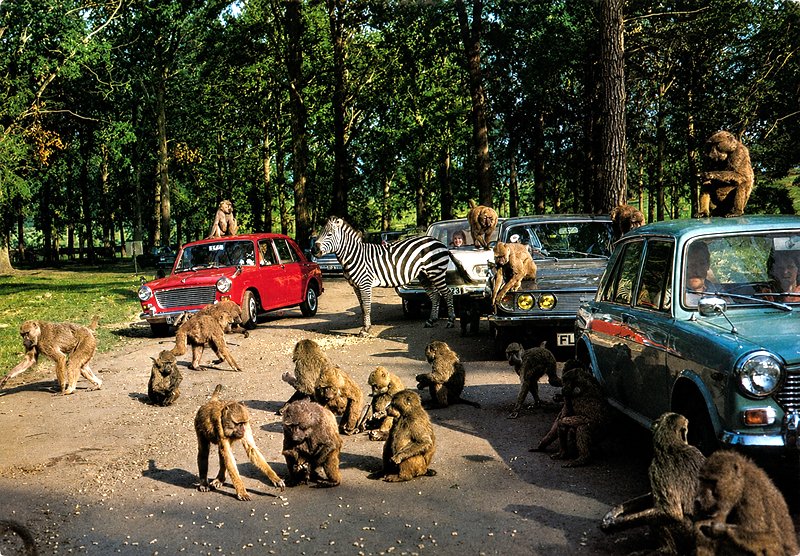
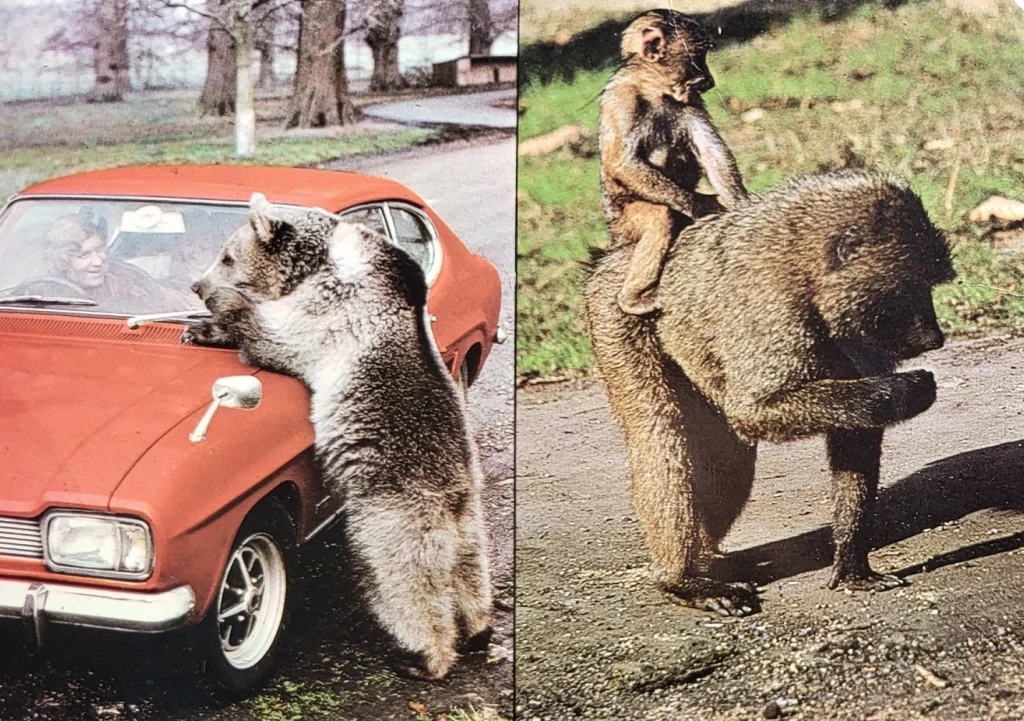
The Jungle Cabin Lift
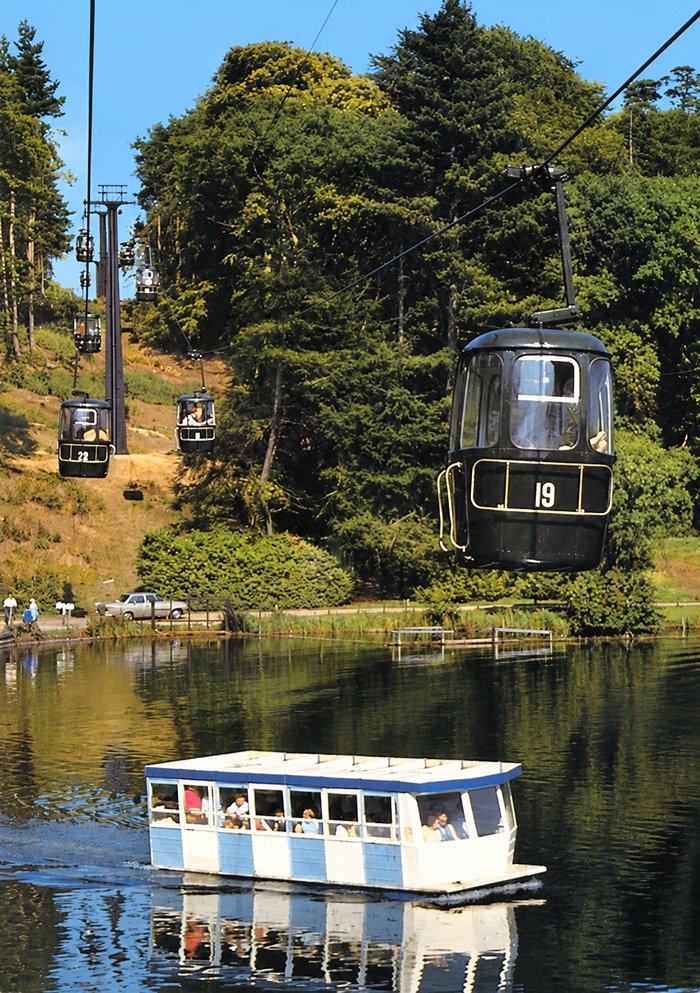
One of Woburn’s most ambitious new attractions was the Jungle Cabin chairlift, which opened on 23 August 1972 at a cost of £180,000. Stretching for about 4,400 feet and carried on ten support towers, it linked the amusement area with Drakeloe Lake. At the lake, visitors could board boat trips that passed an island inhabited by chimpanzees, while sea lions swam alongside the boats and could be fed with small buckets of fish sold to passengers. Flamingos and other birds completed the exotic lakeside scene.

On the journey across to the lake, views of camels, elephants, zebra, ostriches and deer were available. In places, passengers travelled nearly eighty feet above the ground, before descending to around thirty feet over the water. The journey took sixteen minutes. The cabin lift was a Von Roll ropeway system, while the UK company of Mitchell Cabin Lifts Ltd was involved in its construction, operation and maintenance.
Dolphins and more
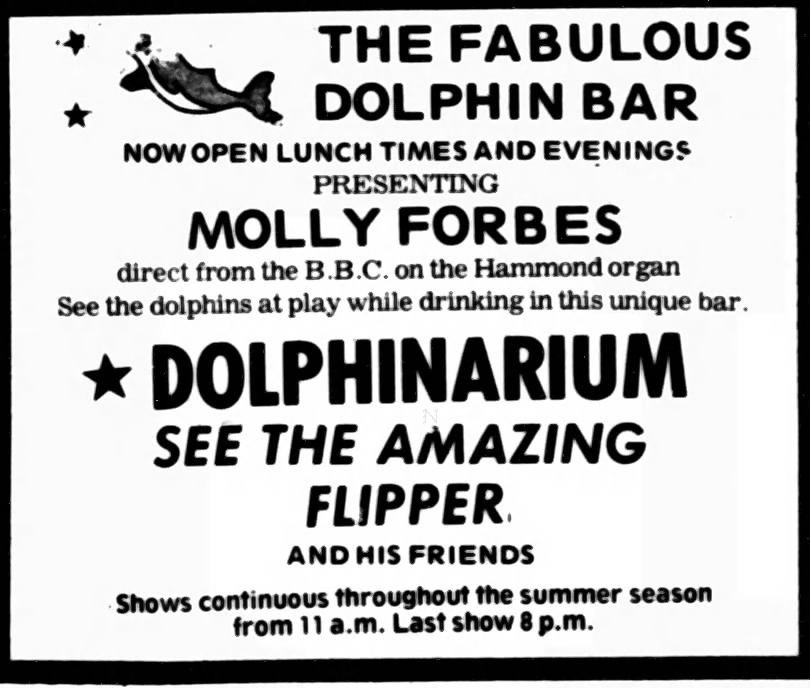
In 1973 a dolphinarium was added, adding another major attraction to the amusement area. Advertisements promoted “Flipper and his friends” performing throughout the summer. An adjacent Dolphin Bar allowed customers to watch the animals while having a drink.
Bedford increasingly became as much a celebrity as an aristocrat. He was a natural television guest, appearing on programmes on both sides of the Atlantic including The Jack Paar Tonight Show, Perry Como’s Kraft Music Hall, The Golden Shot, Dee Time, The Merv Griffin Show, the Joan Rovers show and The Liberace Show. In 1973 he even appeared as himself in Coronation Street when Ena Sharples and Hilda Ogden visited Woburn. Far from being embarrassed by such exposure, Bedford understood its value: every television appearance was publicity for Woburn, helping turn both the Abbey and its unconventional owner into household names.
Obviously well aware of the huge problems that death duty could bring, the Duke handed over control of the estate in 1974 to his Harvard educated son Robin, later the 14th Duke of Bedford. The current Duke did not know how his eldest son, “a most upright Englishman” was going to run Woburn Abbey after him. “I am quite sure it won’t be the way I have done,” he said. “But I am sure it will be efficiently run, and in extremely good taste.”
The 14th Duke was not altogether comfortable with the job of Woburn curator. He did not share his father’s flair for personal publicity and refused to live in the house, instead preferring to live in a small house 50 miles away. “ I was just terrified by the Abbey. It is so big. I had nightmares about how I could keep it clean. You can’t even dust the lintels of most of the doors without a stepladder. We are merely its custodians.” The 13th Earl left Woburn and went off to live abroad where he helped establish the Great Adventure amusement park in New Jersey, now known as Six Flags Great Adventure.
In March 1984, the Abbey suffered a burglary involving treasures valued at more than £5 million. The haul was eventually recovered, with part discovered by water-board workers in a pumping-station control room at Eaton Socon. Among the objects was a gold cup engraved with the name Woburn Abbey.
Also in 1984 the park switched to a pay-one-price model which covered the safari park and all the individual attractions. For that first season the prices were £3 for adults and £2 for kids. That year saw the arrival of a HUSS Rainbow ride which had cost some £350,000. The following year the Helter Skelter was damaged by a storm and never replaced. For 1987 the park introduced a display of Canadian Timber wolves along with a parrot show.
An ambitious leisure development was proposed in 1988, when Madame Tussaud’s announced plans for a £50 million theme park at Woburn. The scheme never went ahead due to fierce local opposition, but it shows the scale of development being considered for the estate by the end of the decade.
The end of the lake attractions
The Drakeloe Lake attractions had all closed down by the mid-1980s and passengers were no longer able to leave the chairlift at the far end. The chairlift itself closed around 1990. But it remained in place for many years afterwards with the cabins stored away inside the buildings at each end. It was not finally dismantled until around 2006. However the main station building still survives today as the Safari Hangout, a dedicated event and meet-and-greet area where visiting children’s TV characters and special celebrity guests meet fans during scheduled event days.


The model village closed in 1979 after the operators were accused of failing to maintain it. The Ghost Train and Rainbow Ride both closed in 1991, and the Carousel left the park in 1992.
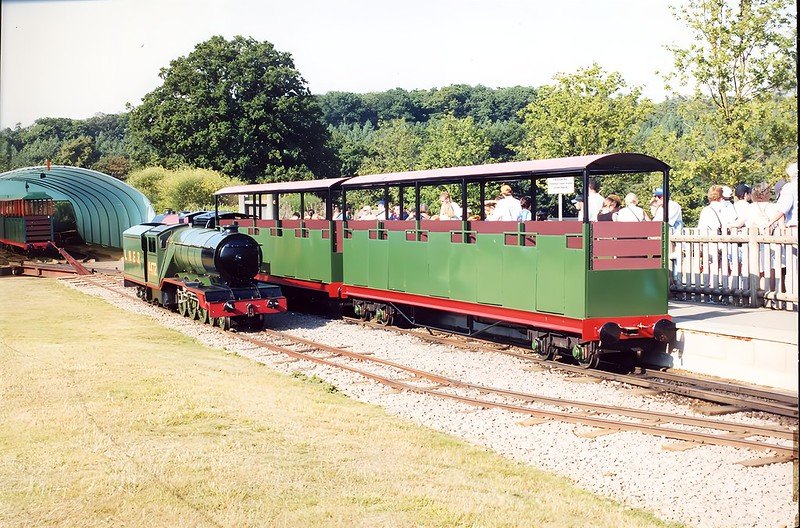
In 1994, the original 2ft-gauge railway was replaced by a longer 20-inch-gauge line. Trains were initially hauled by two Hudswell Clarke steam-outline diesel locomotives dating from the 1930s, both of which had previously worked at Morecambe Pleasure Park. In 2004, they were replaced by a new locomotive built by Alan Keef, which remains in service today.
A changing estate
Woburn feels a little more refined today. The cable cars, dolphin shows and funfair have all gone, with more attention given to the animals and their habitats. But there is still plenty to fill a family day out.
Woburn remains one of Britain’s largest and best-known drive-through safari parks, with the attraction extending across some 360 acres of the Bedfordshire estate. The Foot Safari gives visitors a chance to explore on foot, seeing penguins, lemurs, meerkats, otters and red pandas. Sea lions are still part of the experience, now viewed in their own enclosure rather than fed from boats on the lake. Keeper talks and demonstrations help visitors learn more about the animals.
The miniature railway still carries passengers, and families can take swan and dragon pedal boats onto Swan Lake. Outdoor playgrounds, an indoor play area, a high ropes course and a children’s driving circuit continue the tradition of offering something beyond the animals.
With death duties still sharp in his own mind, the 14th Duke handed over control to his son Andrew in the 1980s, who would become the 15th Duke. The 13th Duke, the man who had started it all, died in 2002 aged 85. Sadly, less than a year later, the 14th Duke died aged just 63.