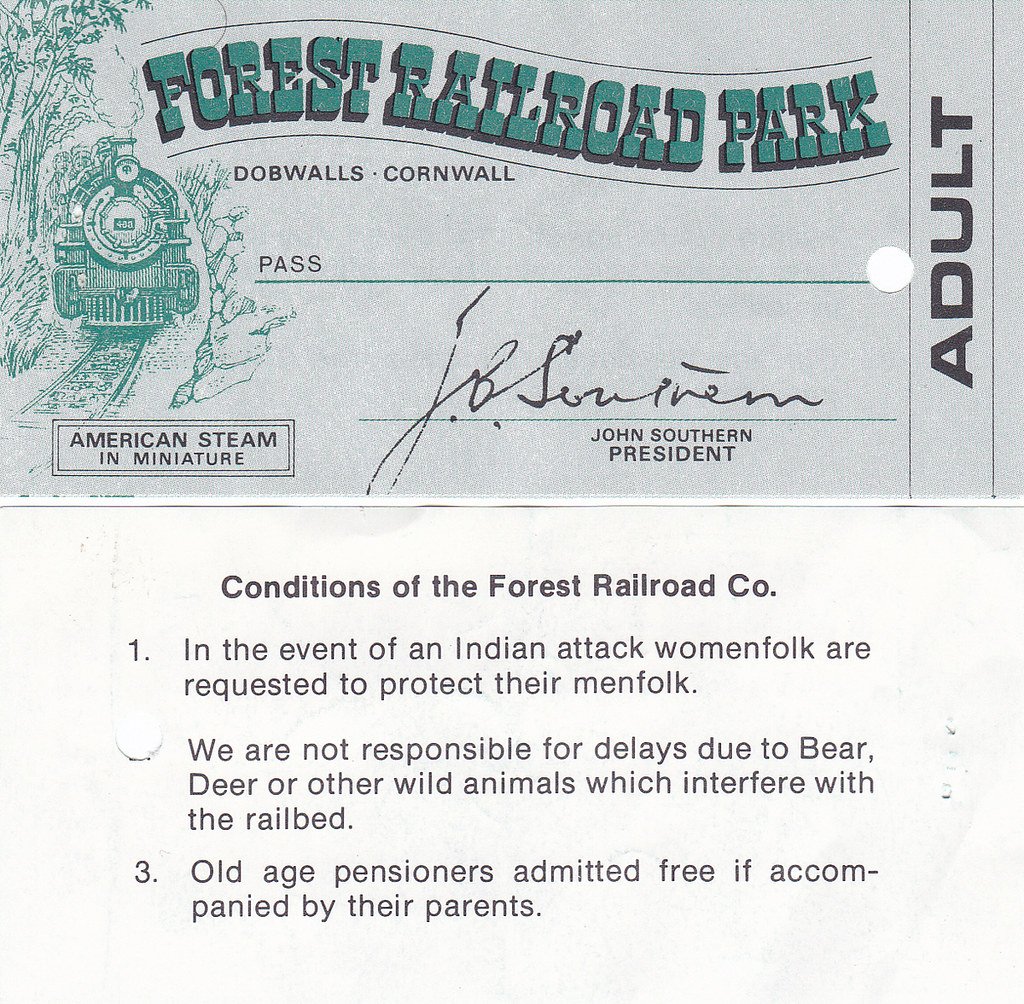
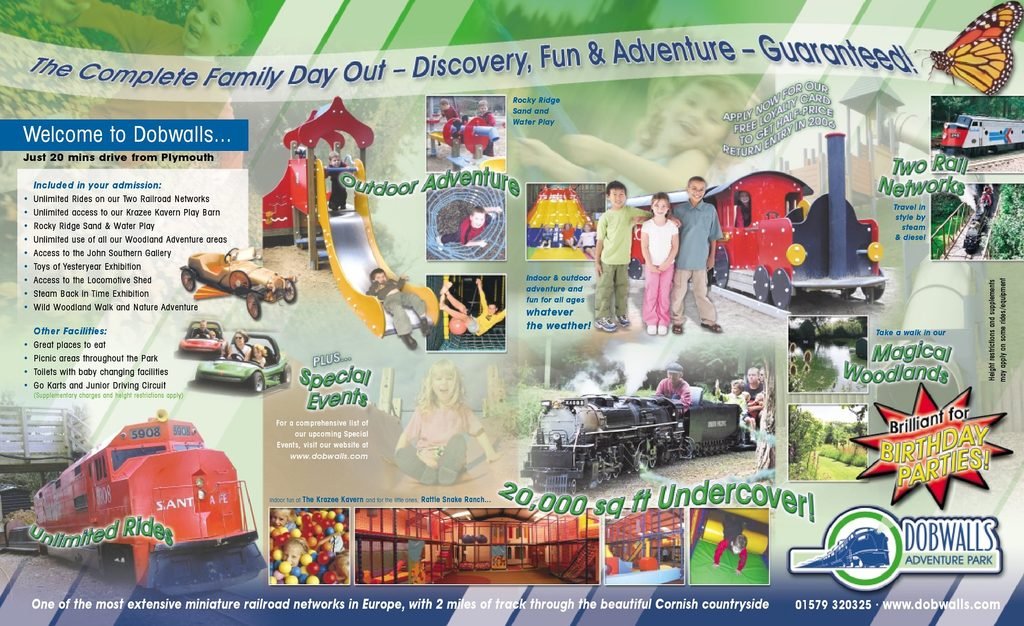
Few miniature railways have enjoyed such spectacular success – or suffered such a dramatic decline – as Dobwalls Adventure Park. What began as one man’s private hobby gradually developed into one of Cornwall’s leading tourist attractions, complete with world-famous locomotives, an award-winning art gallery, one of Britain’s largest adventure playgrounds and annual visitor numbers that exceeded 300,000.
Yet within just a few years it had disappeared almost without trace.
The trains have gone, most of the trees have been felled and more than fifty holiday lodges now occupy land once threaded by two elaborate railway systems. Yet the story of Dobwalls remains one of the most extraordinary in the history of British leisure attractions: the story of how one man transformed a Cornish pig farm into a miniature version of the American West.
From Manchester to Cornwall
The story began in 1956 when John Southern, a former pupil of Manchester Grammar School, acquired the 22-acre Penmount Farm near the village of Dobwalls in Cornwall. At the time, part of the land was occupied by Dobwalls Football Club, but Southern soon began transforming the property into what would eventually become the largest pig farm in Cornwall.
Alongside farming, however, he was developing another interest – miniature railways.
In 1966 Southern acquired a 5-inch gauge model of a GWR King class locomotive and laid a small railway around a four-acre field beside the farm buildings. It was initially little more than a private amusement, but the purchase marked the beginning of something far greater.
Only a year later, the King was replaced by a much larger 7¼-inch-gauge model of an LMS Duchess. Built during the 1930s by Harry Powell, the Duchess required a more substantial railway than the original garden line.
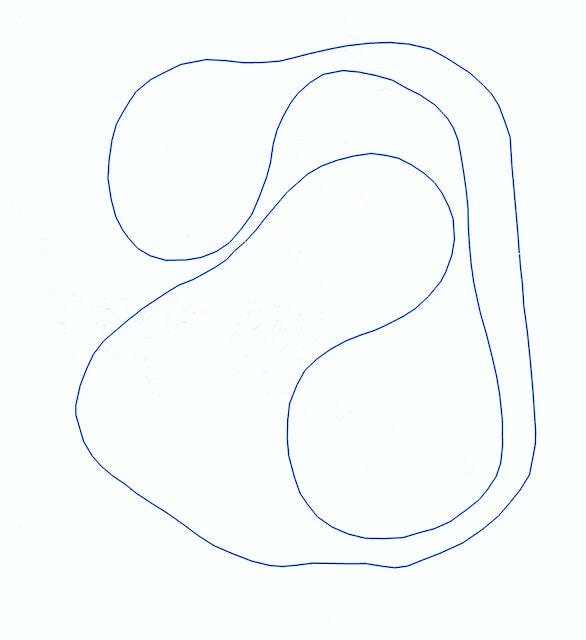
Southern began planning a completely new layout, but he had no interest in constructing the traditional ‘loop around a field’ found at so many other miniature railways. He wanted something much more exciting – something that would give passengers the impression of travelling through a real mountain landscape.
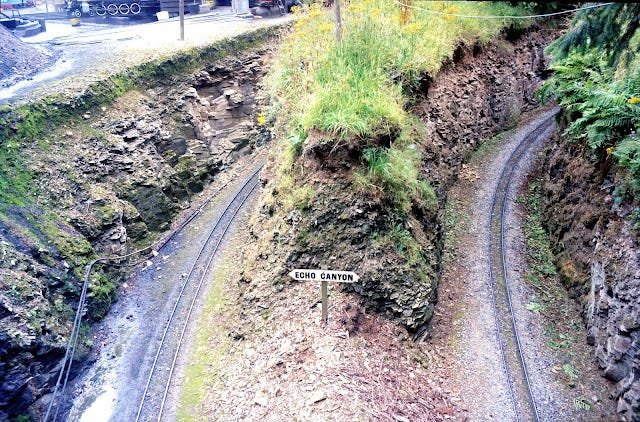
His design featured sharp curves, deep cuttings, steep gradients and long tunnels. Construction of the half-mile layout continued for the next two years. More than 3,000 little pine trees were planted around the route.
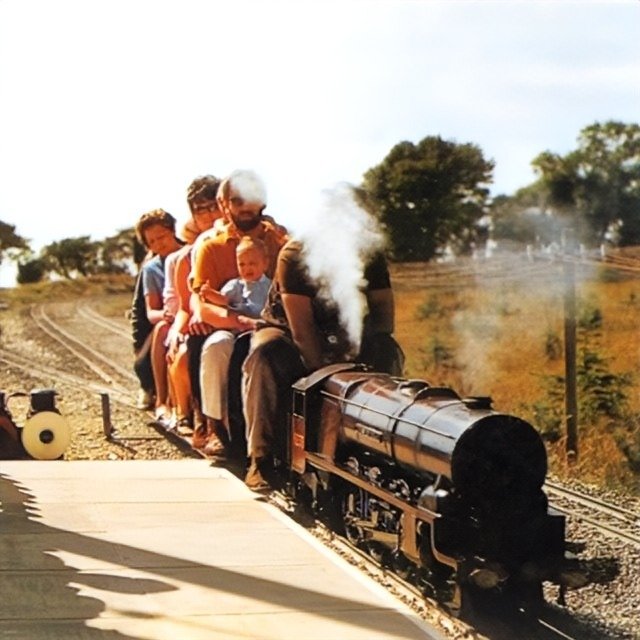
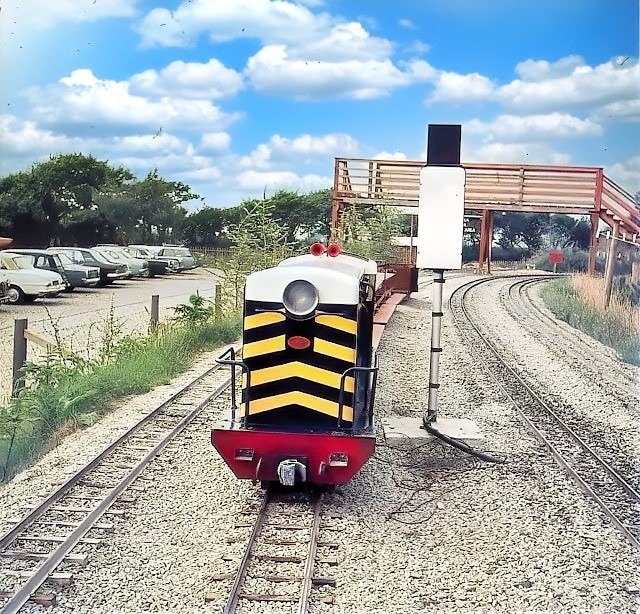
By 1969 two petrol locomotives had arrived from miniature railway engineer David Curwen. One was styled after a British Rail Western diesel, while the other was based on an American switcher. The switcher had originally been intended to resemble a BR Class 20, but its design was changed halfway through construction.
The Forest Railway Opens
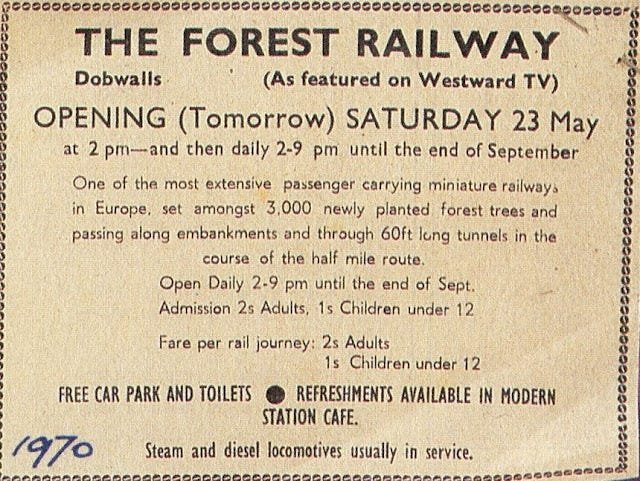
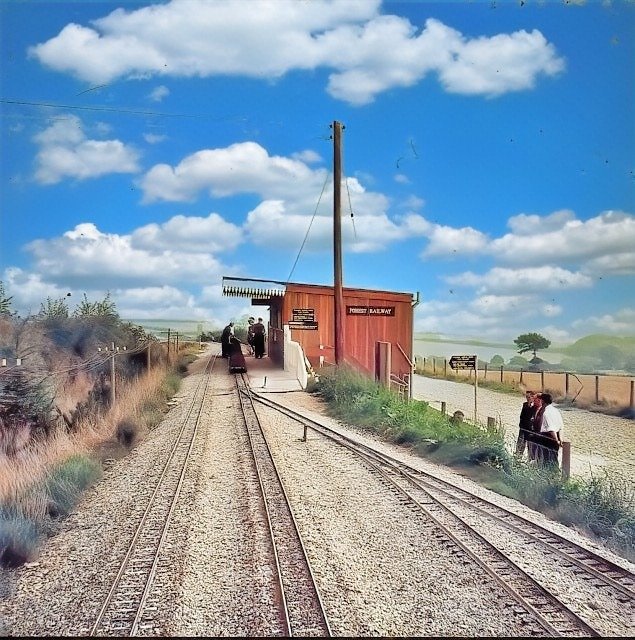
Although the railway remained a private hobby, its growing scale inevitably attracted attention. People began stopping by and peering through the hedges. Faced with this increasing curiosity, Southern decided to open the railway to the public in 1970.
The thousands of pine trees were still only saplings, but Southern was already thinking about the landscape they would eventually create. The attraction was therefore named The Forest Railway.
It was an immediate success. More than 20,000 people rode the trains during that first summer alone.
The large crowds and demanding 1-in-25 gradients soon demonstrated that more powerful locomotives would be needed. Through the fortunate cancellation of another customer’s order, Southern was able to obtain a huge K36-style steam locomotive from David Curwen.
He named it General Palmer, after General William Jackson Palmer, the co-founder of the Denver and Rio Grande Railroad.
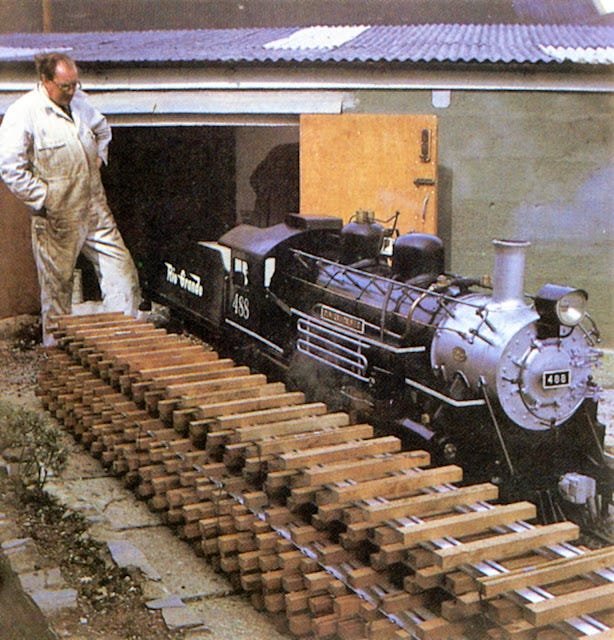
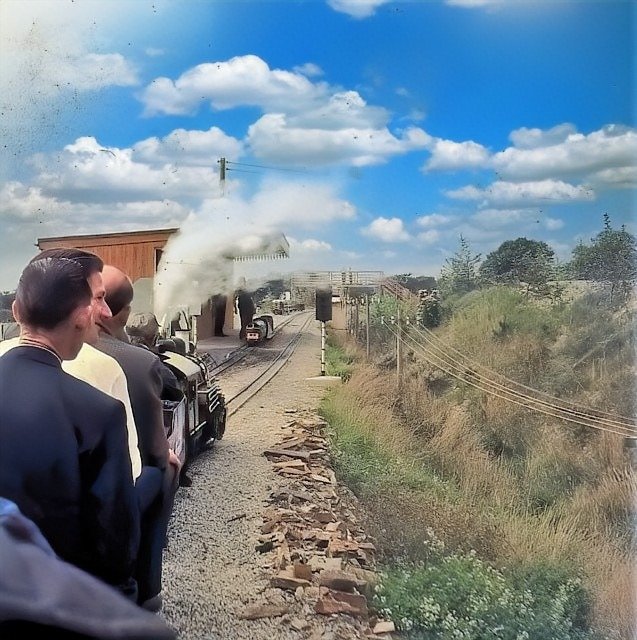
General Palmer entered service in 1971 and made approximately 3,000 journeys around the railway during its first season.
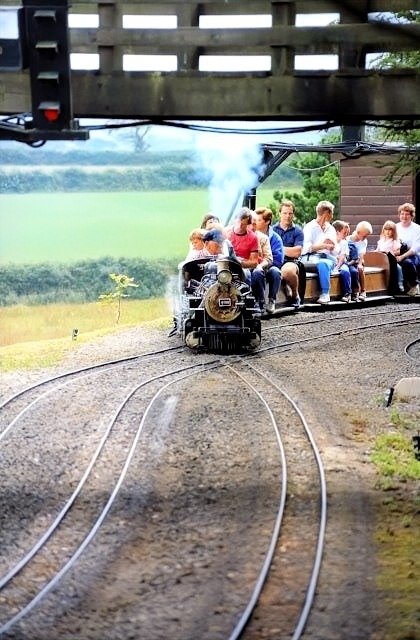
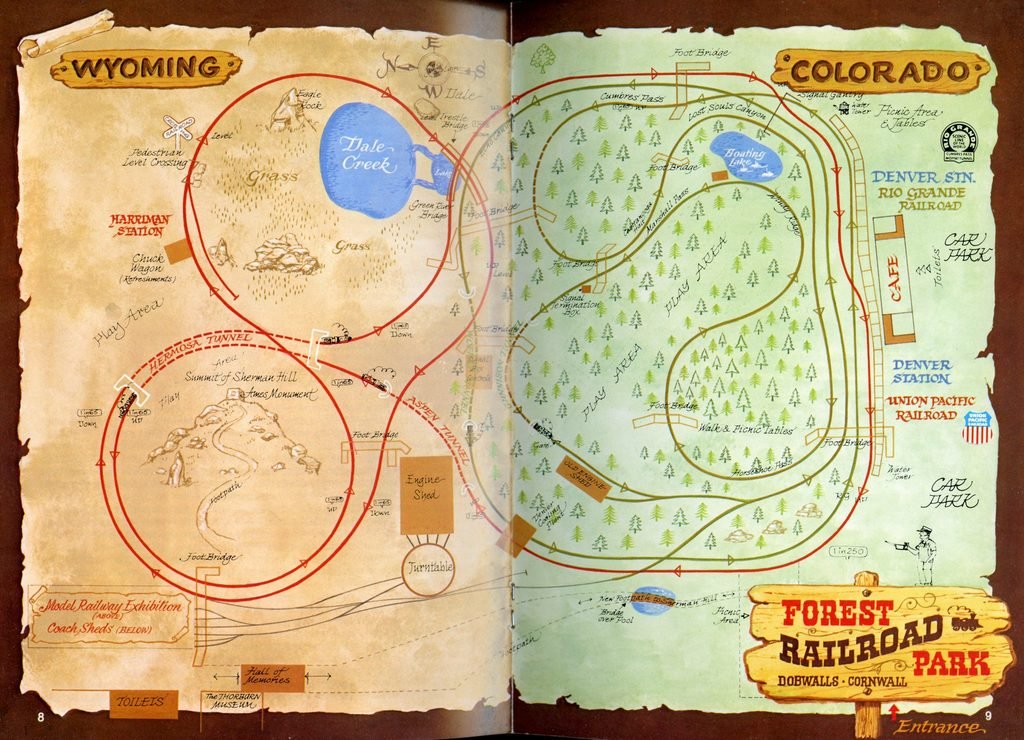
The railway became known as the Rio Grande route, drawing inspiration from the narrow-gauge railroads that crossed the forested mountains of Colorado. Its steep gradients were among the most demanding found on any passenger-carrying miniature railway.
Trains and Thorburn
Railways were not Southern’s only passion. He was also an enthusiastic collector of paintings by the celebrated wildlife artist Archibald Thorburn.
Southern had bought his first Thorburn painting at the age of just eleven, paying only one pound for it. By adulthood, he had assembled one of the largest private collections of the artist’s work.
In 1972 he converted an old cow shed into an art gallery where visitors could view the collection.
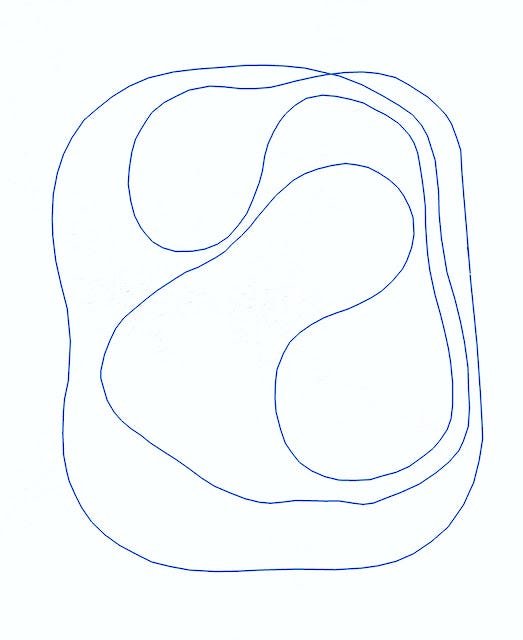
The railway continued to expand. In 1973 a second loop was constructed around the outside of the original track, greatly extending the journey. A new signalling system was installed, making it possible to operate three trains simultaneously.
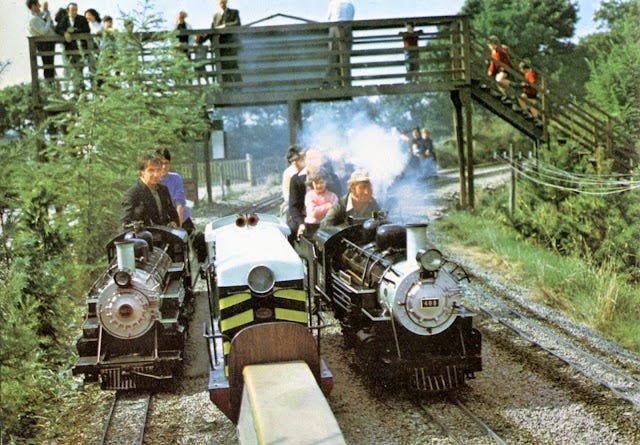
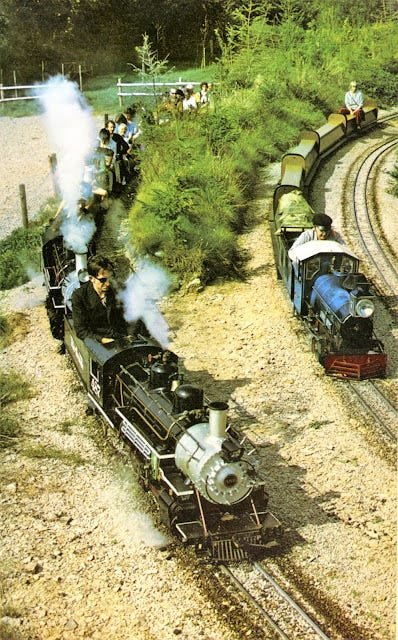
In 1973 another steam locomotive arrived from David Curwen. This was a Colonial-style 0-6-0 named David Curwen in honour of its builder. A second K36-type locomotive, Queen of Colorado, also arrived on loan for the 1973 season from railway writer and historian Brian Hollingsworth.
At around the same time, the Western-style diesel was sold.
In 1974 another large American-inspired steam locomotive joined the fleet. Built by Severn Lamb, Queen of Wyoming further strengthened the railway’s increasingly distinctive North American identity.
Pigs Make Way for the Union Pacific
By the late 1970s it had become clear that farming and tourism were not good neighbours. The smells from the pig farm was hardly an ideal accompaniment to a family tourist attraction, and Southern made the bold decision to abandon the pigs and concentrate entirely on the railway.
The pigs departed, the old farm buildings were demolished and the land became the setting for a second miniature railway.
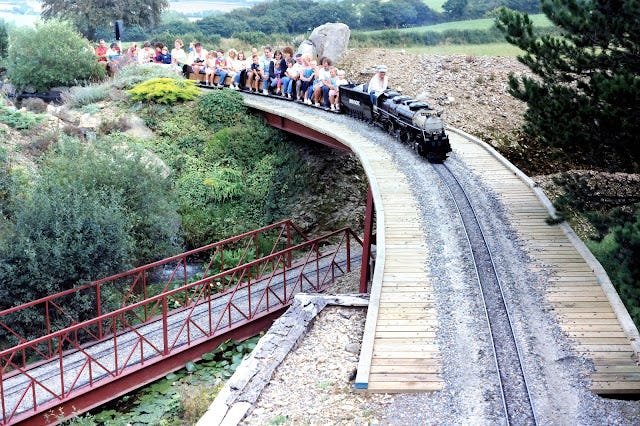
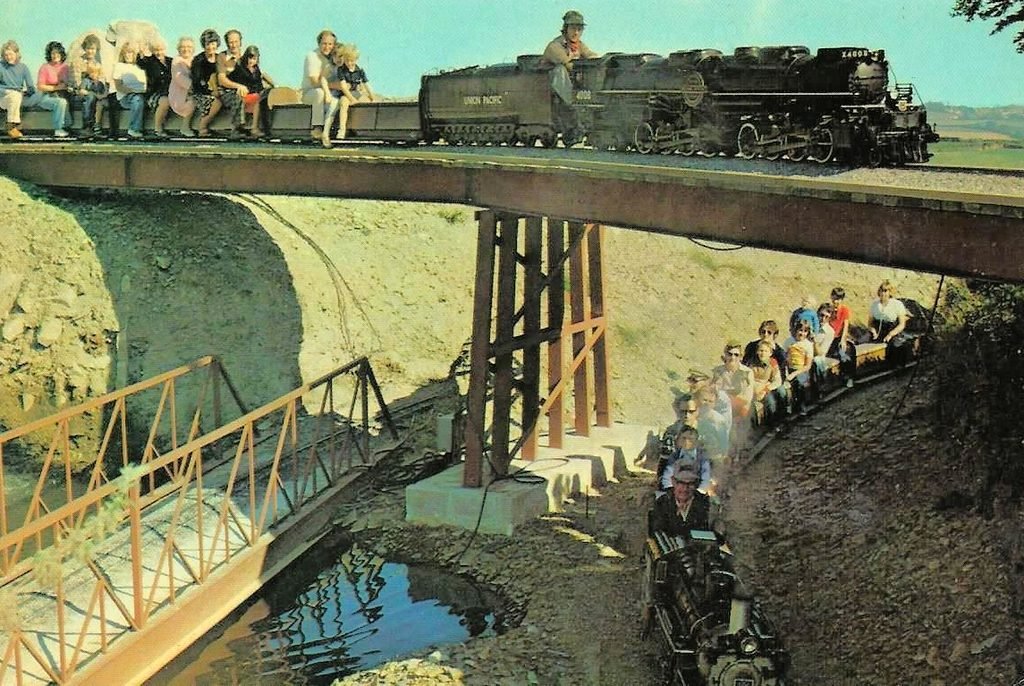
The new line was based on the Union Pacific Sherman Hill route across Wyoming. Whereas the original Rio Grande railway ran through thick woodland, the Union Pacific route had a much more open, rocky appearance. The new railway continued the ambitious engineering style established on the original line, and featured steep gradients, sharp curves, bridges and long, winding tunnels.
At the centre of the landscape was Dobwalls’ own version of Sherman Hill, a distinctive cone-shaped artificial mountain. A slide ran down its exterior, but the hill also served a very practical purpose: it was an ingenious way of concealing the huge quantity of bricks, stone and rubble left behind after the demolition of the farm buildings.
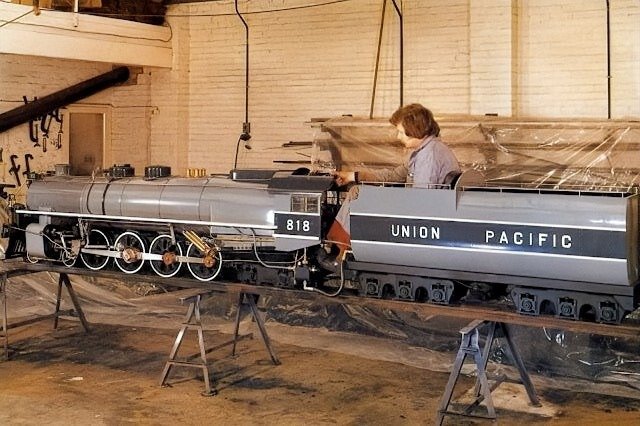
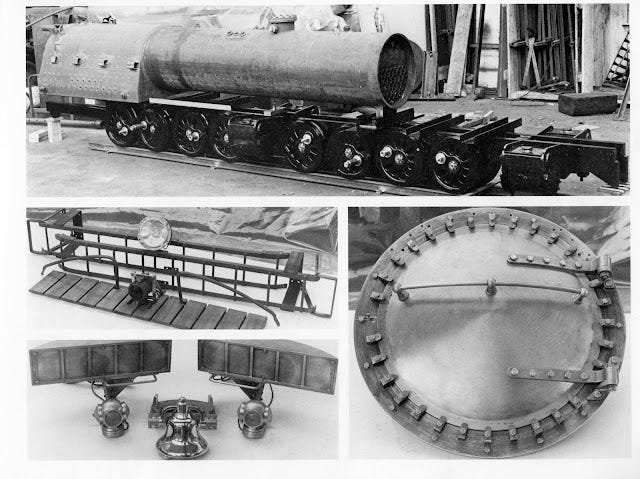
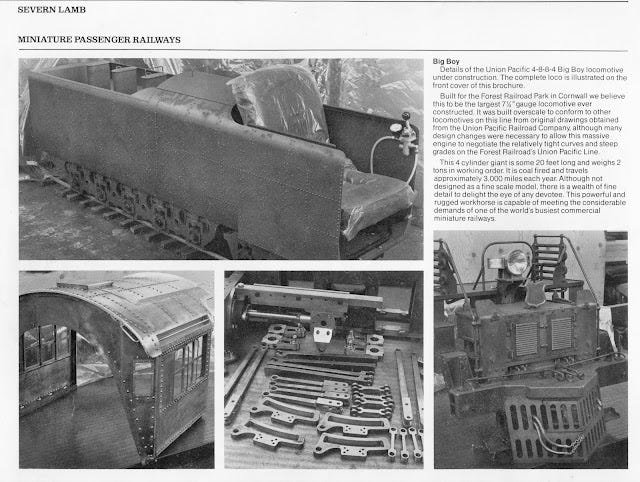
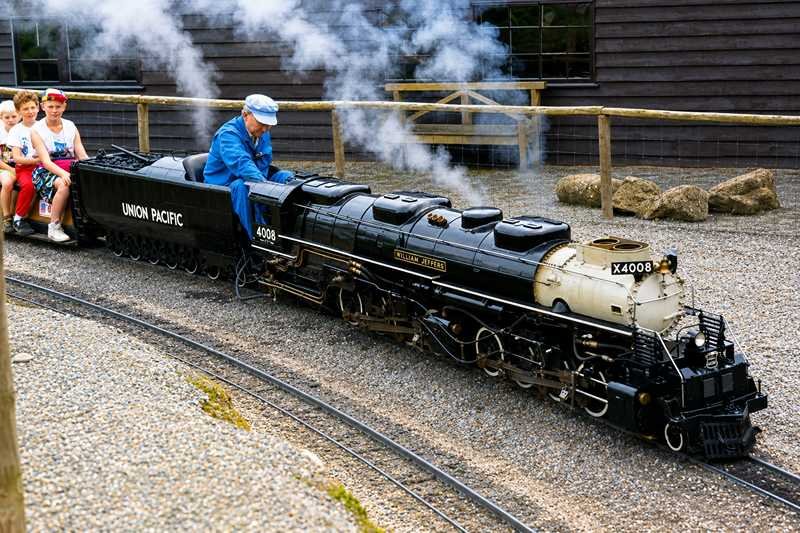
The Union Pacific project cost approximately £120,000 and officially opened on 7 April 1979. To haul its trains, Severn Lamb constructed an enormous model of a Union Pacific 4-8-8-4 Big Boy No. 4008, one of the largest steam locomotive designs ever built.
The Dobwalls locomotive carried the name William Jeffers, although it was almost universally known simply as Big Boy. On the railway’s opening day, it hauled a special train carrying 88 passengers.
The investment was a huge success. Passenger numbers increased by 20 per cent during 1979, reaching approximately 170,000 for the year.
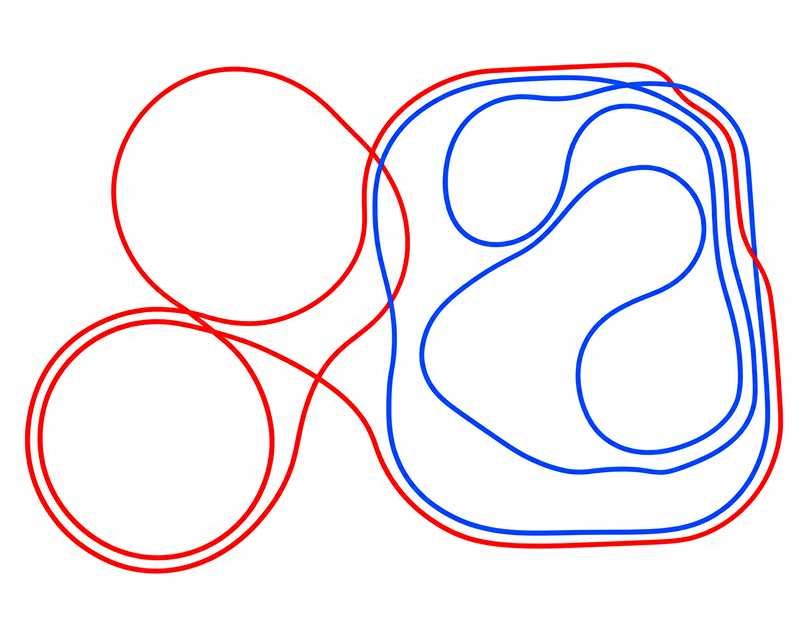
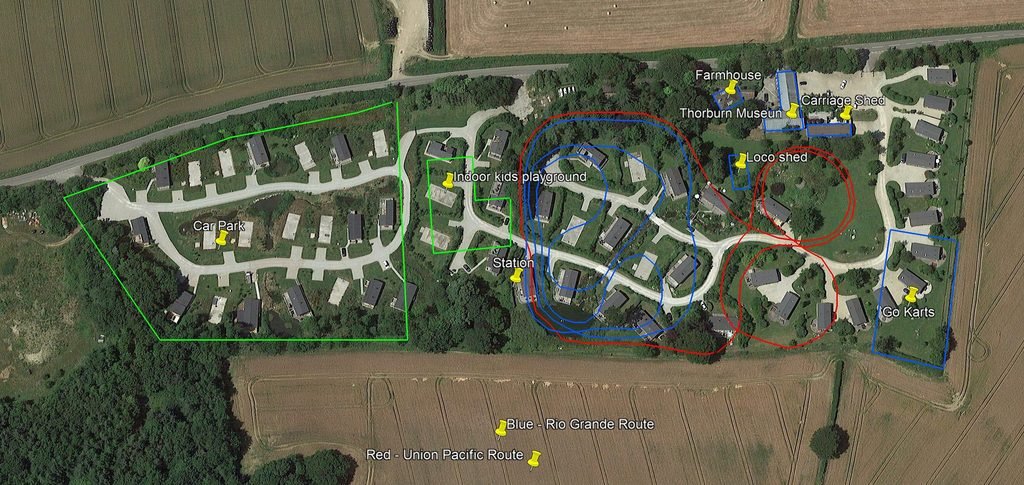
The two railways operated as separate rides, each providing a journey of about a mile. Their tracks were ingeniously interwoven, looping around one another and repeatedly crossing above and below each other. The result was visually spectacular, although to anyone attempting to follow the routes from the ground it could also be thoroughly confusing.
Only a month after the opening of the Union Pacific line, Severn Lamb delivered another giant locomotive. This time it was a 17-foot-long diesel weighing approximately one and a half tons. Named Centennial, it was based on Union Pacific’s enormous DDA40X diesel locomotives.
Dobwalls could now claim to operate both the largest and most powerful 7¼-inch-gauge steam and diesel locomotives in the world. By then the railway was widely regarded as one of the finest miniature railways in Britain.
Building a Fleet
Further locomotives arrived during the early 1980s.
In July 1980 David Curwen delivered Otto Mears. Although it looked broadly similar to General Palmer, it was based on the slightly larger K37 design. The locomotive was named after the American railroad entrepreneur Otto Mears, who became closely associated with the narrow-gauge railways of Colorado.
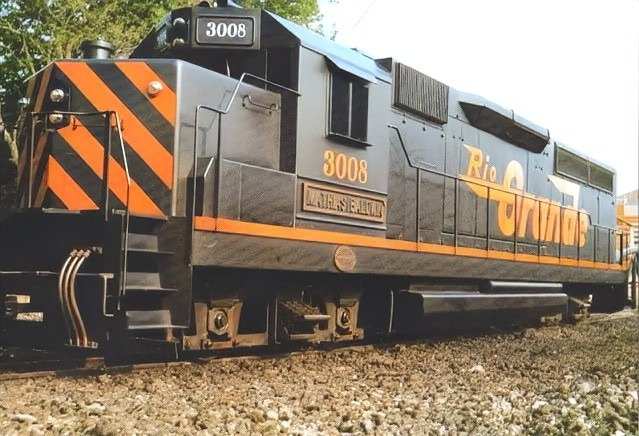
During the same month, Severn Lamb delivered a new diesel locomotive named Mathias Baldwin.
In September 1981 another large steam locomotive, Queen of Nebraska, joined the Union Pacific fleet. It was followed in August 1983 by the streamlined diesel Spirit of America. Both had again been built by Severn Lamb.
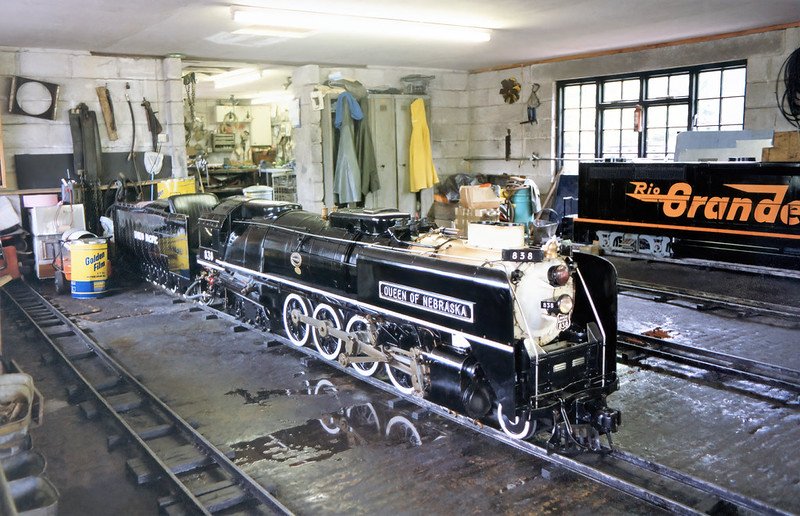
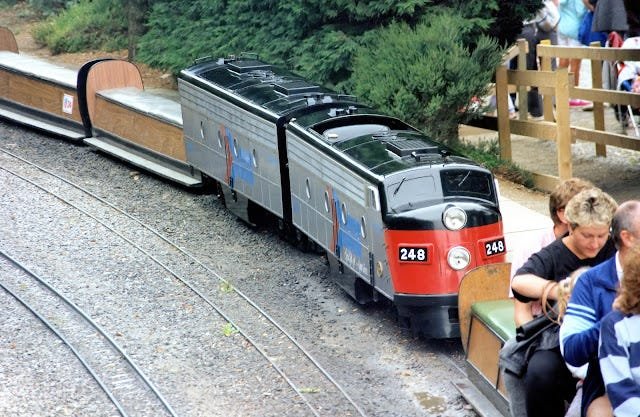
Other attractions were also being introduced. These included an outdoor LGB G-scale railway, radio-controlled boats and a model railway exhibition constructed above the carriage shed. The model railway was later removed and its space converted into an antique penny arcade and sweet shop.
In August 1989 Severn Lamb supplied the railway’s final diesel locomotive, Pioneer. Dobwalls now possessed a fleet of ten impressive steam and diesel locomotives.
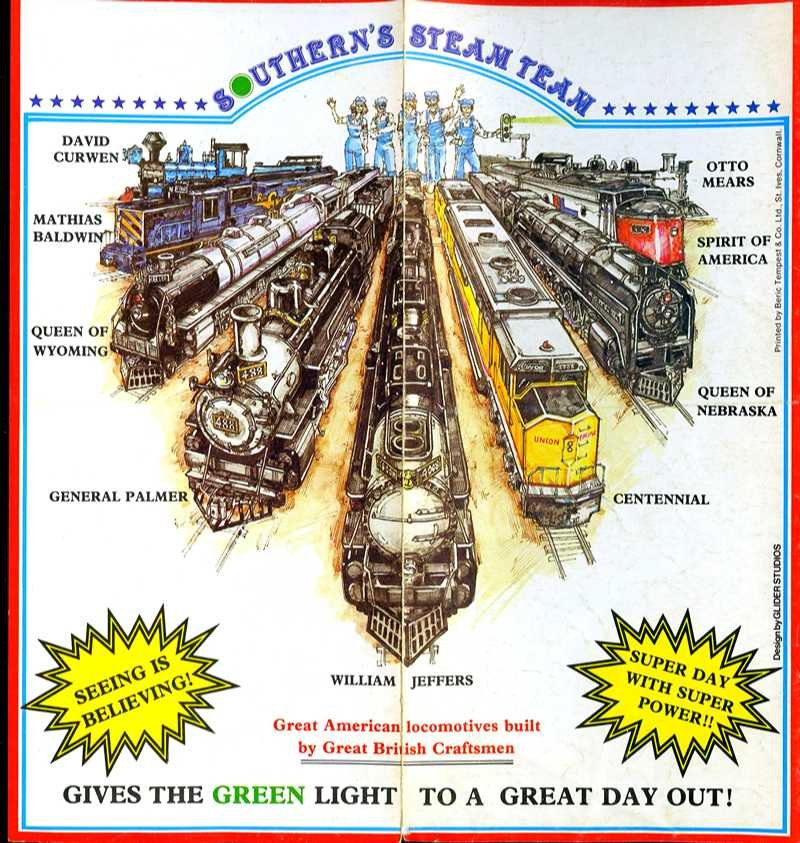
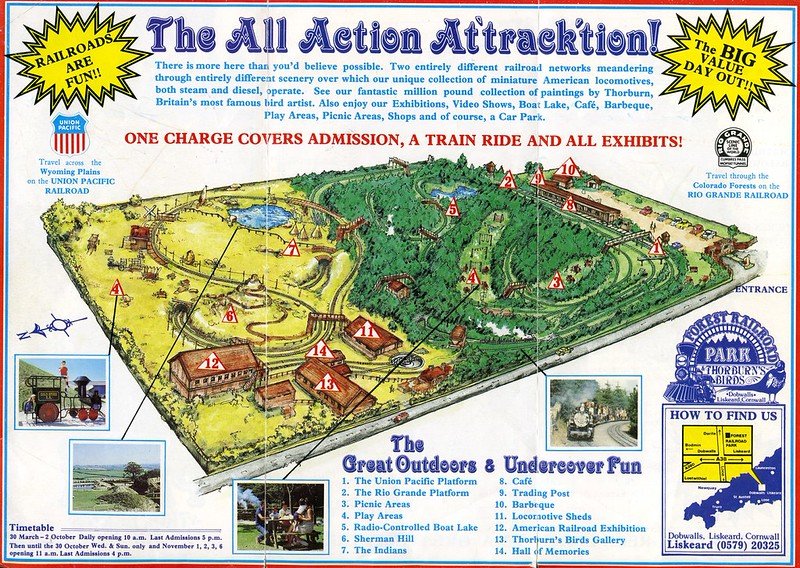
Mr Thorburn’s Edwardian Countryside
Although Southern’s Thorburn gallery contained a remarkable collection, many visitors paid it little attention. Southern therefore decided that the paintings needed to be presented in a more imaginative way.
In 1986 £300,000 was spent on a brand new attraction which placed the paintings within an interactive recreation of the Edwardian countryside. Rather than simply hanging works on plain gallery walls, the exhibition surrounded visitors with atmospheric displays incorporating countryside sights, sounds and smells. It was known as Mr Thorburn’s Edwardian Countryside.
It also featured an indoor period street scene and an Edwardian-style tearoom.
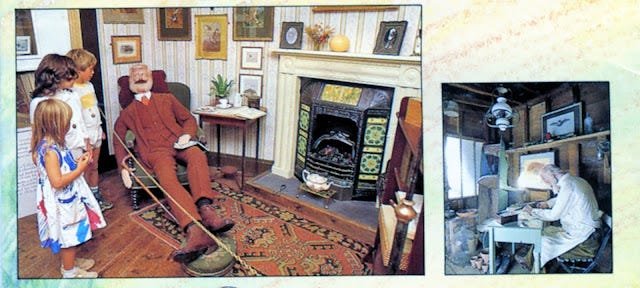
The gallery was officially opened by Prince Charles in 1986 and received Sotheby’s award for Britain’s Best Fine Art Museum the following year.
Southern was determined that the new gallery should be accessible to as many people as possible. It included Braille pads for blind visitors, audio equipment for deaf visitors and a simplified commentary recorded by actor and disability campaigner Brian Rix for people with learning disabilities. Considerable attention was also paid to wheelchair access throughout the attraction.
From Railway to Adventure Park
Two years later, in 1988, another £300,000 was spent on an enormous outdoor adventure playground. It became the largest of its kind in Britain.
Further activities followed, including remote-controlled trucks, a shooting gallery, go-karts and gold panning.
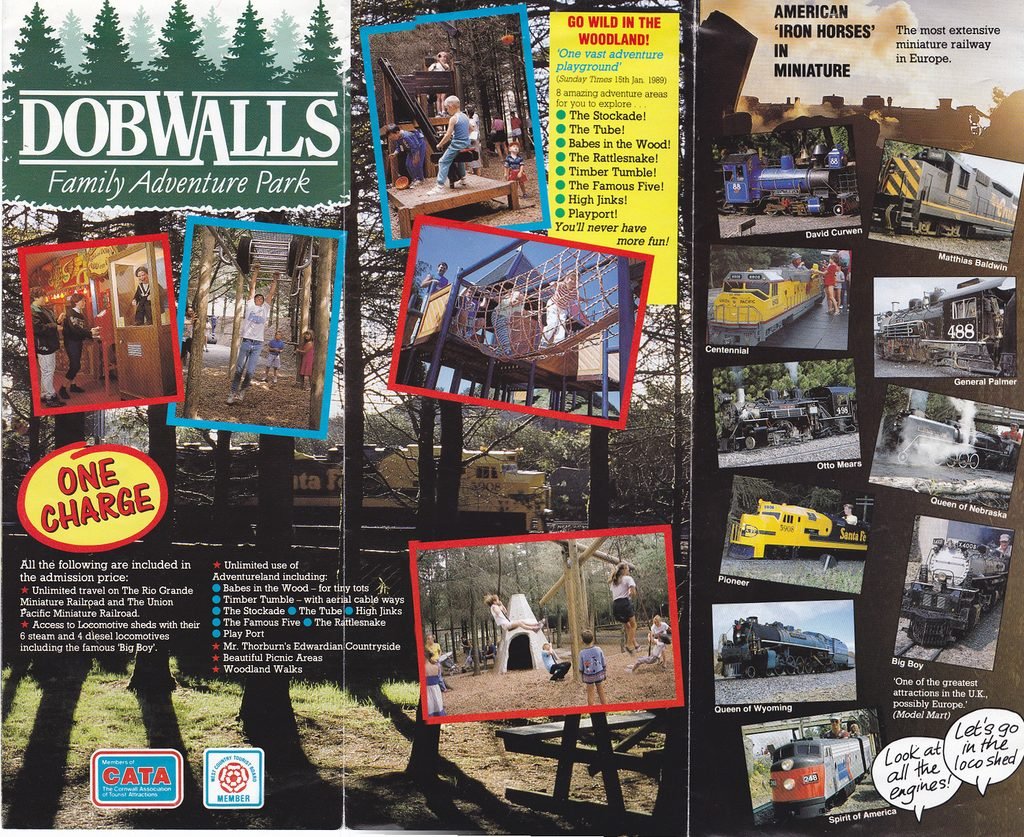
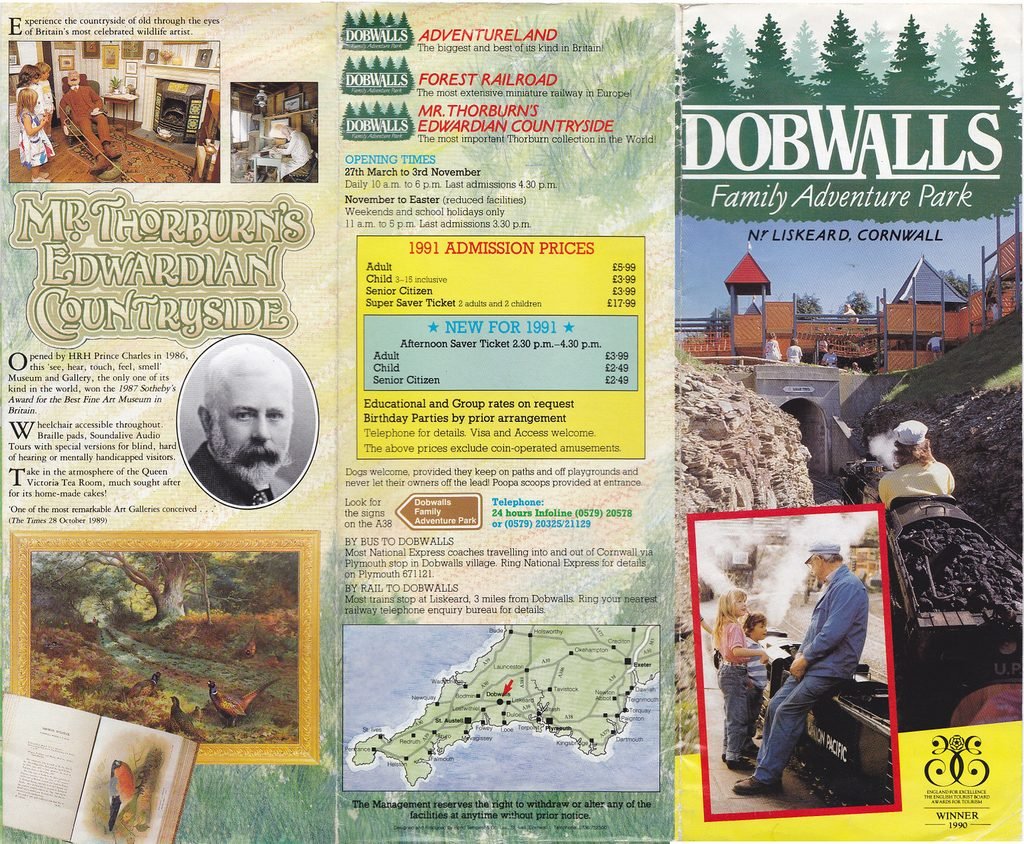
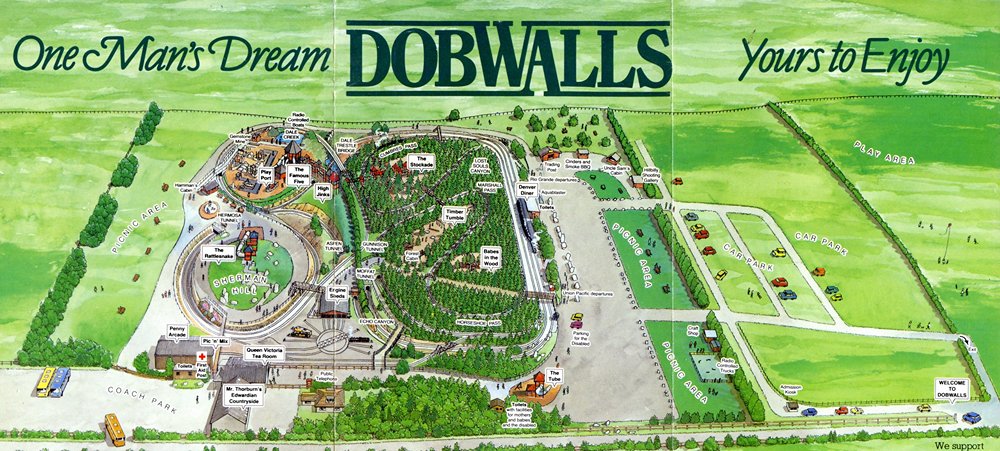
Dobwalls was no longer just a miniature railway. It had developed into a fully fledged leisure attraction and began promoting itself as an adventure park.
By the late 1980s the site had reached its heyday. Annual attendance exceeded 300,000, more than one hundred people were employed there and the locomotives collectively travelled more than 20,000 miles each year.
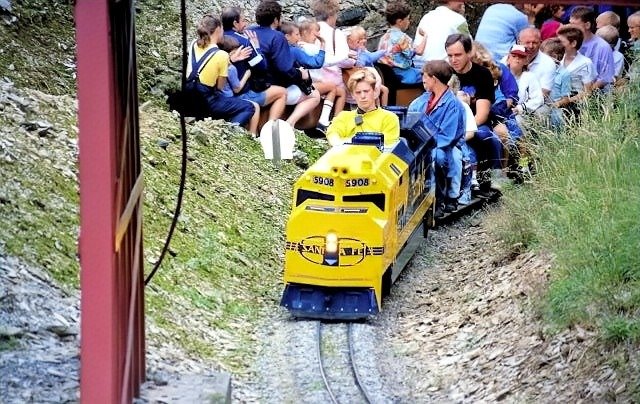
But this rapid expansion had come at a cost.
Many of the developments had been financed through bank borrowing. Dobwalls even appeared in television advertisements for Mercantile Credit, but behind the cheerful publicity the financial burden was becoming increasingly serious.
By the early 1990s the park said it was paying approximately £100,000 every year in bank interest alone.
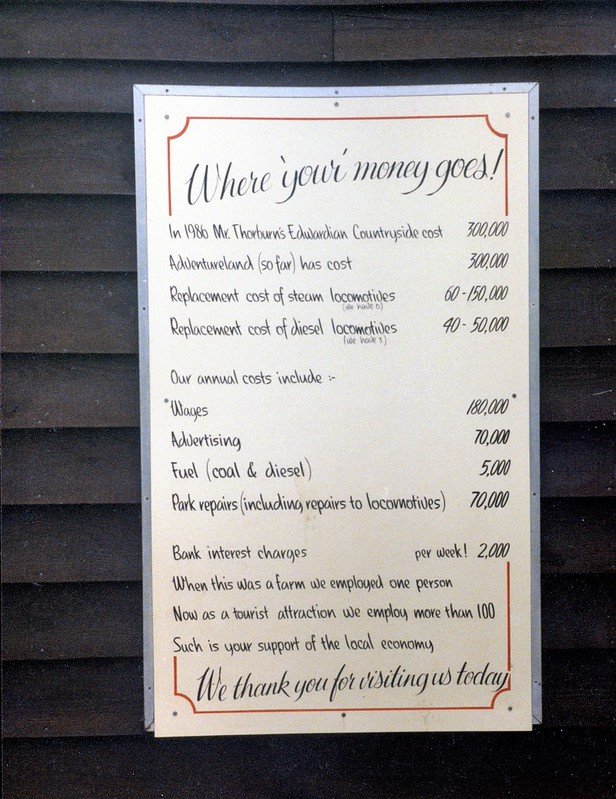
Several locomotives were advertised for sale in World’s Fair in an attempt to reduce the debt, but no buyers could be found.
Despite the financial pressure, the railway continued to receive investment. In 1992 the original Cromar White aluminium track was replaced with harder wearing steel rail.
The Two Million-Pound Auction
In March 1993 John Southern made one of the most painful decisions of his life.
117 paintings from his prized Archibald Thorburn collection were consigned to a major auction at Sotheby’s in London. The collection had been built up over most of Southern’s lifetime, but selling it offered the best opportunity to relieve the park’s financial difficulties.
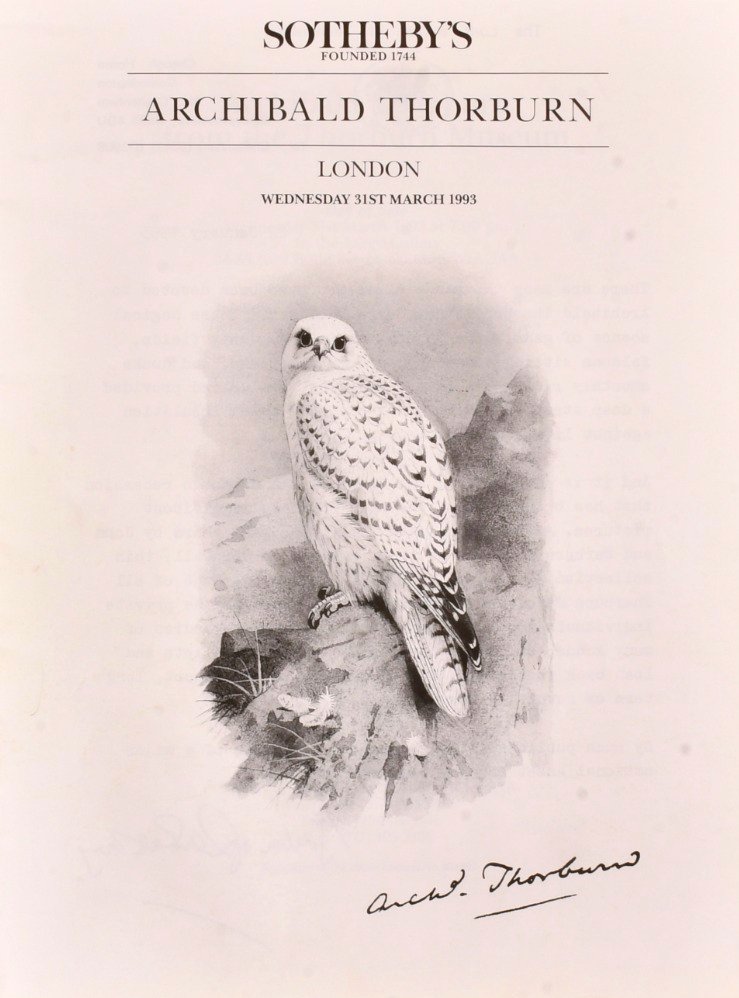
The auction raised £2.5 million. The Thorburn museum remained open, but reproductions replaced most of the original paintings. Southern reportedly observed that most visitors would be unable to tell the difference.
That same year, disaster struck elsewhere in the park when a major fire destroyed the carriage shed and the amusement arcade above it, which had previously housed the model railway exhibition.
Several passenger carriages were lost, although enough were saved to allow the railways to continue operating. A new single-storey carriage shed was soon constructed in place of the destroyed building.
Pizza, Playgrounds and Mr Blobby
Dobwalls continued to diversify during the middle of the decade.
In 1995 a 10,000-square-foot indoor play building opened. It included a 130-seat pizza and burger restaurant.
The Thorburn Museum was renamed the John Southern Gallery and broadened its focus to include original wildlife art and limited-edition prints.
The following year brought one of the park’s most memorable – and unmistakably 1990s – developments.
In 1996 Mr Blobby arrived at Dobwalls.
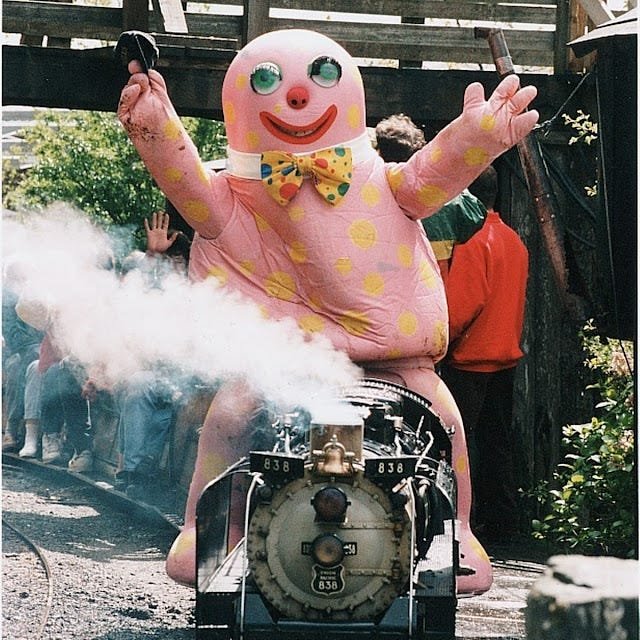
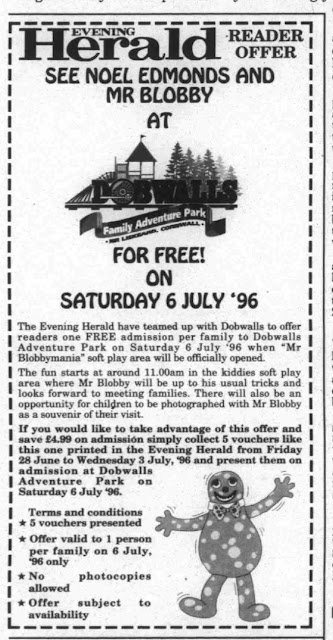
The indoor play area was rethemed as Krazee Kavern, while an outdoor stage was constructed for live performances and character meet-and-greets. Noel Edmonds himself even made an appearance at the park.
In 1997 John Southern was appointed an OBE in recognition of his contribution to tourism and his work to improve facilities for disabled visitors. It was a fitting acknowledgement of what he had achieved. In four decades he had transformed a working farm into one of Cornwall’s most distinctive and popular visitor attractions.
But just as Southern received national recognition, the British holiday market was beginning to change.
Changing Holidays and Falling Crowds
Dobwalls had prospered during an era when families commonly spent one or two weeks holidaying in Cornwall. Those visitors looked for a variety of attractions to visit during their stay, and places such as Dobwalls benefited from the large numbers of families arriving in the county each summer.
By the late 1990s, however, cheap flights and package holidays were encouraging more British families to travel abroad. People increasingly chose long weekends and short breaks instead of the traditional two-week family holiday, while stricter school attendance rules made it more difficult for parents to take children away during term time.
Dobwalls could do little to influence any of these trends. Between 1997 and 2000, turnover at the park fell by approximately 30 per cent.
The opening of the nearby Eden Project in 2001 intensified the competition. Eden attracted around two million visitors during its first season, becoming an almost compulsory destination for tourists in Cornwall and drawing attention away from many established attractions.
That same year General Palmer carried its one-millionth passenger, thirty years after entering service. It was an impressive milestone, but it came during a period of unmistakable decline.
In 2003 a second smaller indoor play area opened, aimed particularly at younger children. The park’s two railways were still carrying approximately 100,000 passengers a year, but that figure represented a fall of around 70 per cent from the heyday years of the late 1980s.
The park was now running at a loss.
Southern remarked that his one-man art gallery generated more income than the whole of the adventure park. It was becoming obvious that the existing business model could not continue indefinitely.
A £7 Million Plan
In 2005 ownership of the site passed to John Southern’s eldest son, Malcolm Southern.
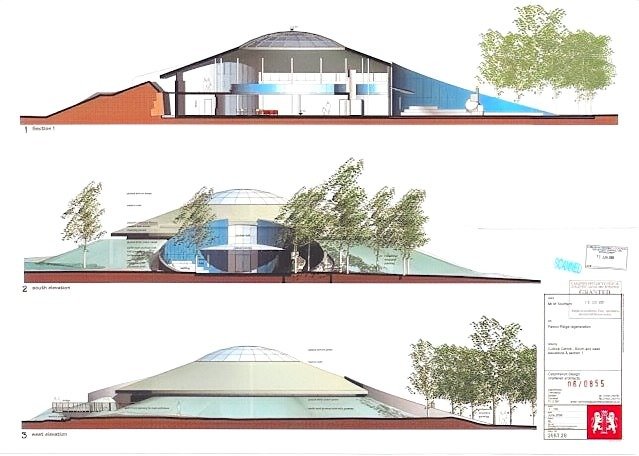
A £7 million redevelopment scheme was announced in an attempt to create a more sustainable future for the property.
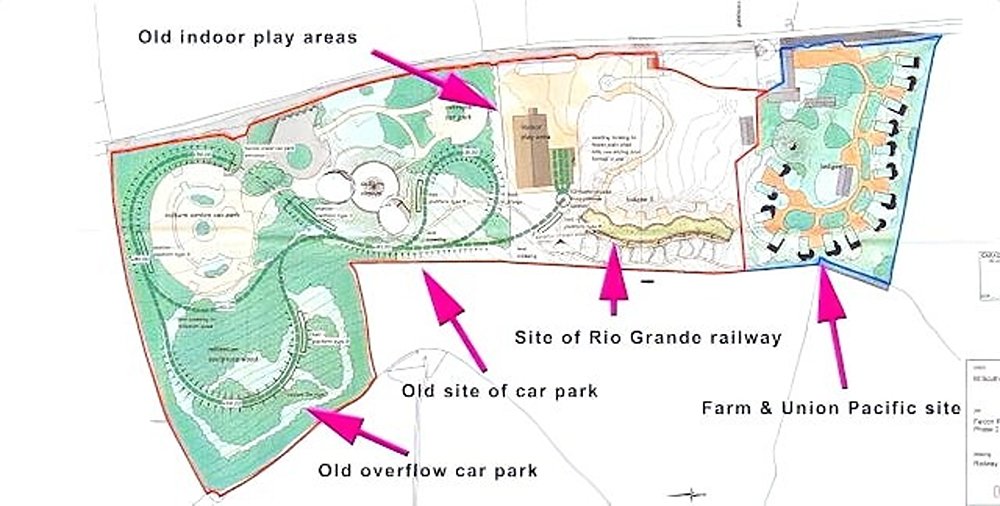
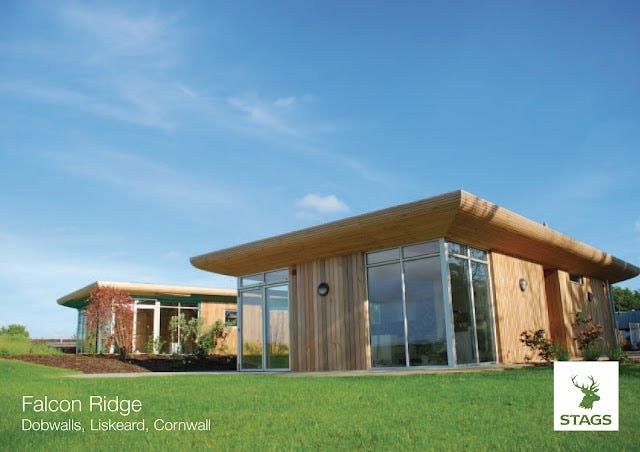
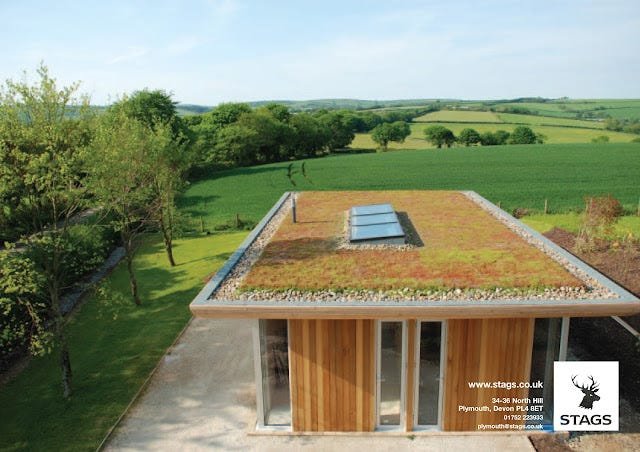
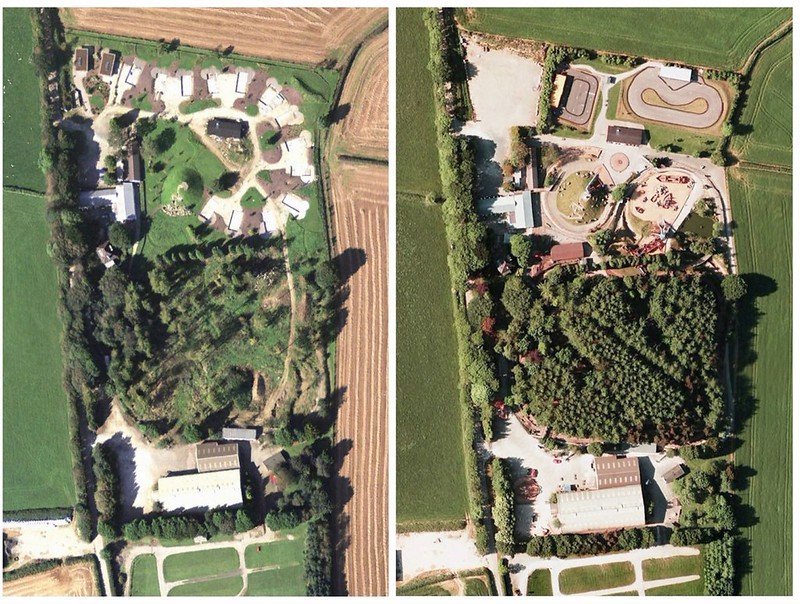
Under the proposals, the northern third of the site – originally occupied by the pig farm and then by the Union Pacific railway – would be redeveloped with holiday homes to be known as Falcon Ridge.
The middle section would remain largely unchanged, retaining the original Rio Grande railway and play areas.
The southern third, then used mainly as car parking, would become an environmentally friendly art centre, conference facility and restaurant serving locally produced food. The plans also proposed a shorter replacement railway. The small indoor play building was to be converted into a locomotive shed.
The David Curwen 0-6-0 steam locomotive was sold during 2005 and moved to the Eastleigh Lakeside Railway in Hampshire.
Dobwalls opened as normal for the 2006 season, although the coming changes cast a shadow over the year.
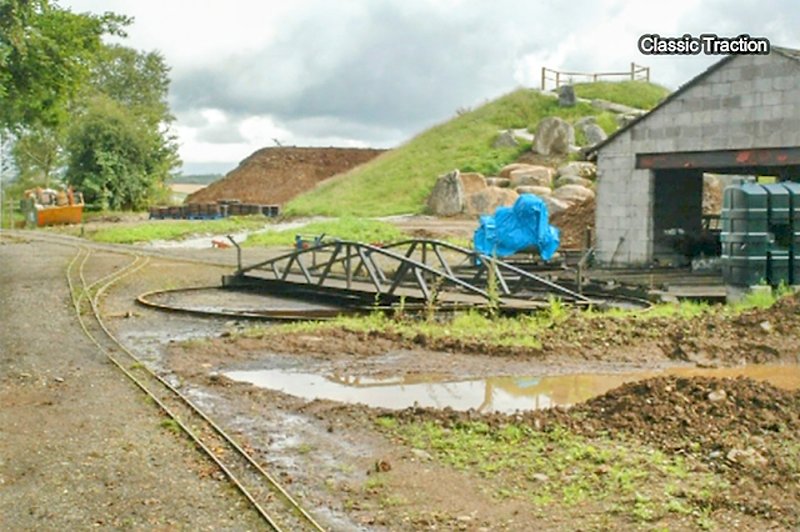
On 29 October 2006 the final passenger trains operated. Within weeks the Union Pacific railway had been completely demolished. The track was lifted, the landscape levelled and the land prepared for the proposed holiday homes.
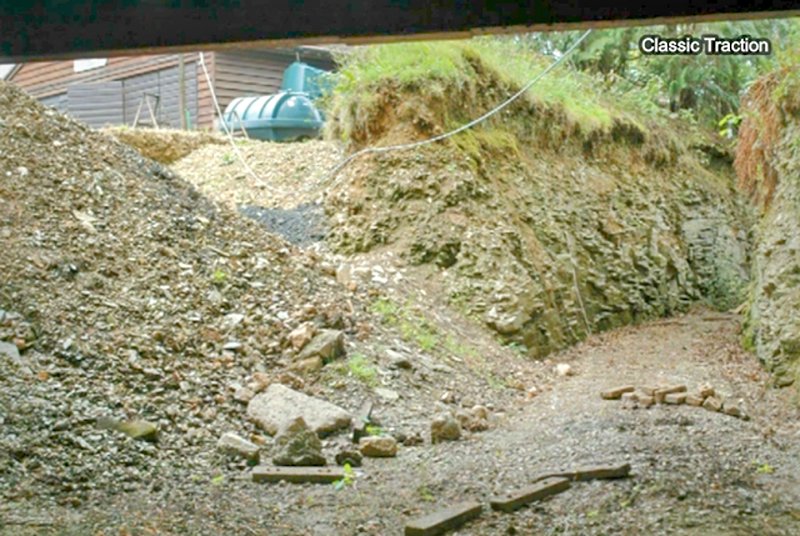
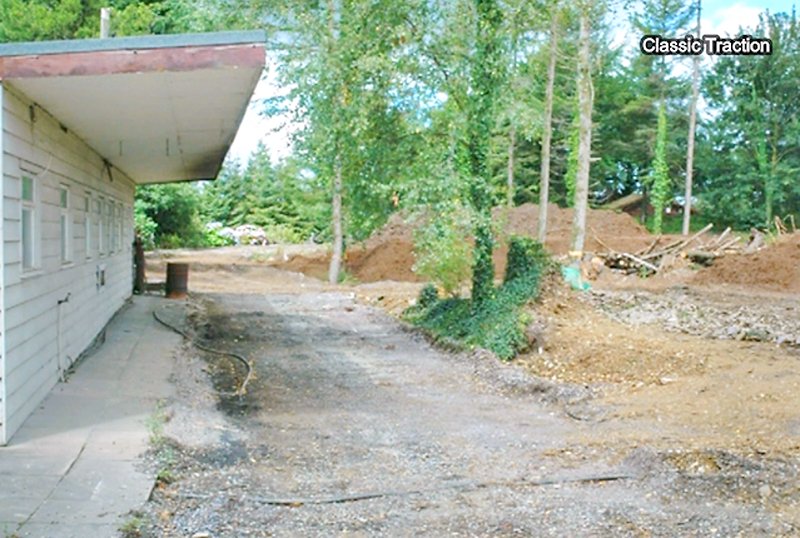
Visitors had initially been assured that the older Rio Grande railway would return, but in June 2007 it was announced that it would not reopen. The remaining trees were gradually felled, the locomotive shed and station were demolished, and the once-famous tunnels and cuttings were filled in.
The Locomotives Go to Dorset
In November 2007 most of the railway collection was offered for sale through a sealed-bid auction. The sale comprised four steam locomotives, four diesels and twenty-eight passenger carriages.
Despite enquiries from interested parties, the auction ended without a sale.
A buyer was eventually found. In 2008 Plowmans Garden Centre near Ferndown in Dorset acquired the eight Dobwalls locomotives. They left Cornwall in April. A new railway was hastily constructed around the garden centre, and it officially opened in November 2008 with Big Boy hauling the inaugural train.
Back at Dobwalls, General Palmer remained the only steam locomotive left on the site. The locomotive that had helped establish the railway in 1971 was retained for possible use on the proposed replacement line, and a new boiler was constructed for it.
Month after month passed, however, without anything happening. It was becoming obvious that the £7 million redevelopment was failing. Only two holiday lodges were ever built, while construction of the art centre and replacement railway never began.
General Palmer was eventually sold to a buyer in Australia.
In 2009 four former Dobwalls locomotives appeared at the Great Dorset Steam Fair, operating over a temporary portable railway. It offered enthusiasts one of their final opportunities to see several members of the fleet running together in Britain.
The Final Departure
In 2010 part of the site reopened as a camping and caravan site.
The large indoor play building was initially used as a gymnastics centre, but both former play buildings were later advertised for rent as warehouse space.
Any remaining traces of the railways were steadily removed. Its tunnels and cuttings were filled, while the surviving playground equipment was sold.
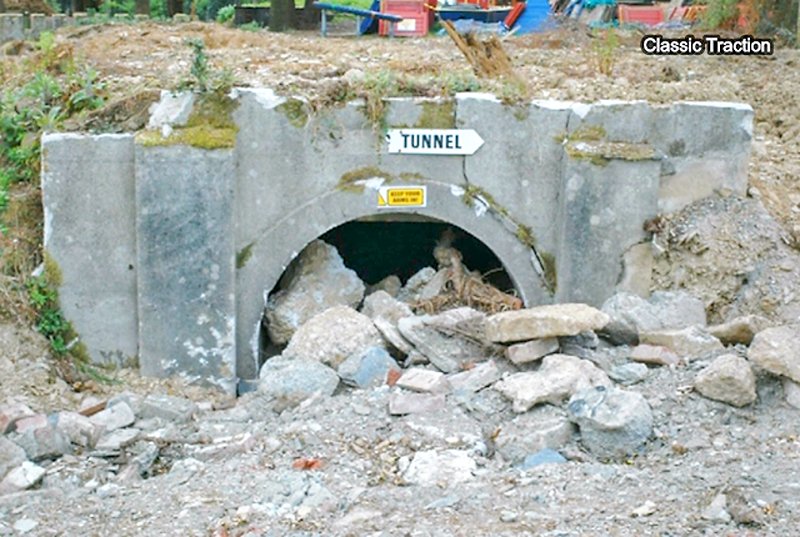
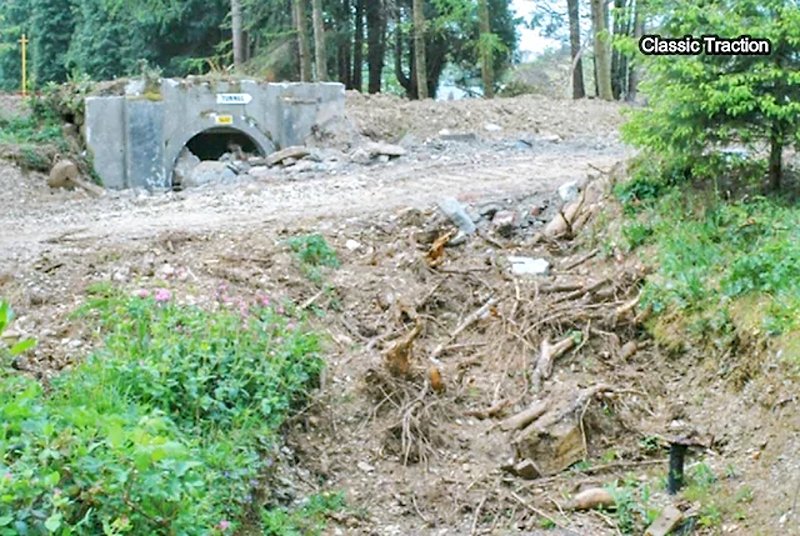
The revival in Dorset also proved short-lived. Plowmans Railroad encountered planning difficulties and was forced to close, and the former Dobwalls locomotives were sold again. This time the buyer was in Australia. The collection left Britain in September 2010.
The Dobwalls site continued to operate as a camping and caravan park during 2011 but the following year it entered administration and the entire 22-acre property was placed on the market. The guide price was just £400,000 – a remarkably small sum for a site that had once attracted hundreds of thousands of visitors each year.
Charteroak purchased the property in March 2013 and revived the holiday accommodation plans. The land was gradually transformed into a lodge park containing more than fifty upmarket holiday homes.
The redevelopment was named Southern Halt in tribute to John Southern.
The only Dobwalls locomotive to remain in Britain is David Curwen, the Colonial-style steam locomotive that arrived in 1973 and was sold in 2005. It can still be seen today at the Eastleigh Lakeside Railway.
What Remains of Dobwalls?
It is now difficult to imagine what once occupied the quiet lodge park at Southern Halt.
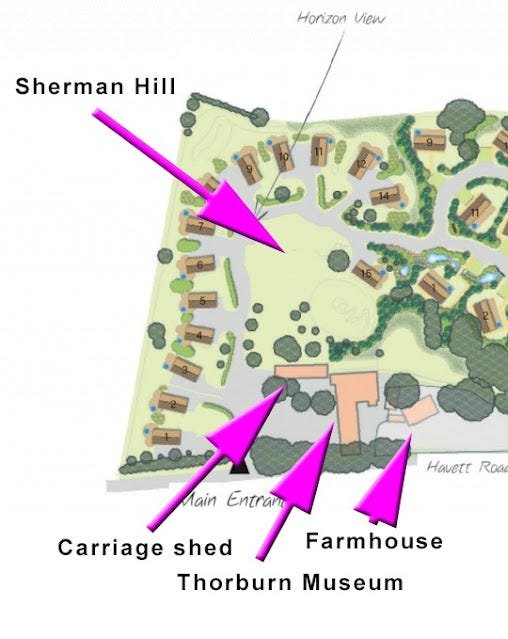
The original Penmount farmhouse survives, as does Sherman Hill. The buildings that housed the Thorburn Gallery and carriage shed are also still standing. Almost everything else has vanished.
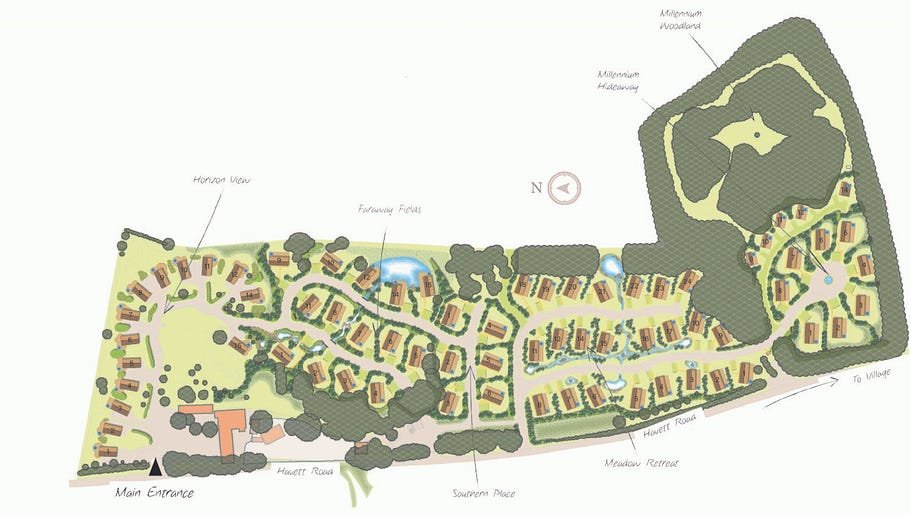
The stations have gone. The rails have been lifted. The tunnels and cuttings have been buried.
Yet for the millions of passengers who traveled aboard its trains, Dobwalls remains unforgettable. It was an extraordinarily ambitious recreation of the American railroad landscape, built on a Cornish farm by a man who refused to do things on a small scale.
Classic Traction
The photos above showing the railway after closure were taken from the excellent video from Classic Traction available on YouTube – THE FOREST RAILROAD THEME PARK : THEN & NOW. They also have many more wonderful Dobwalls videos showing the railway in its prime, including full trips around both Railways and plenty more. Here’s a list of all their Dobwalls titles.