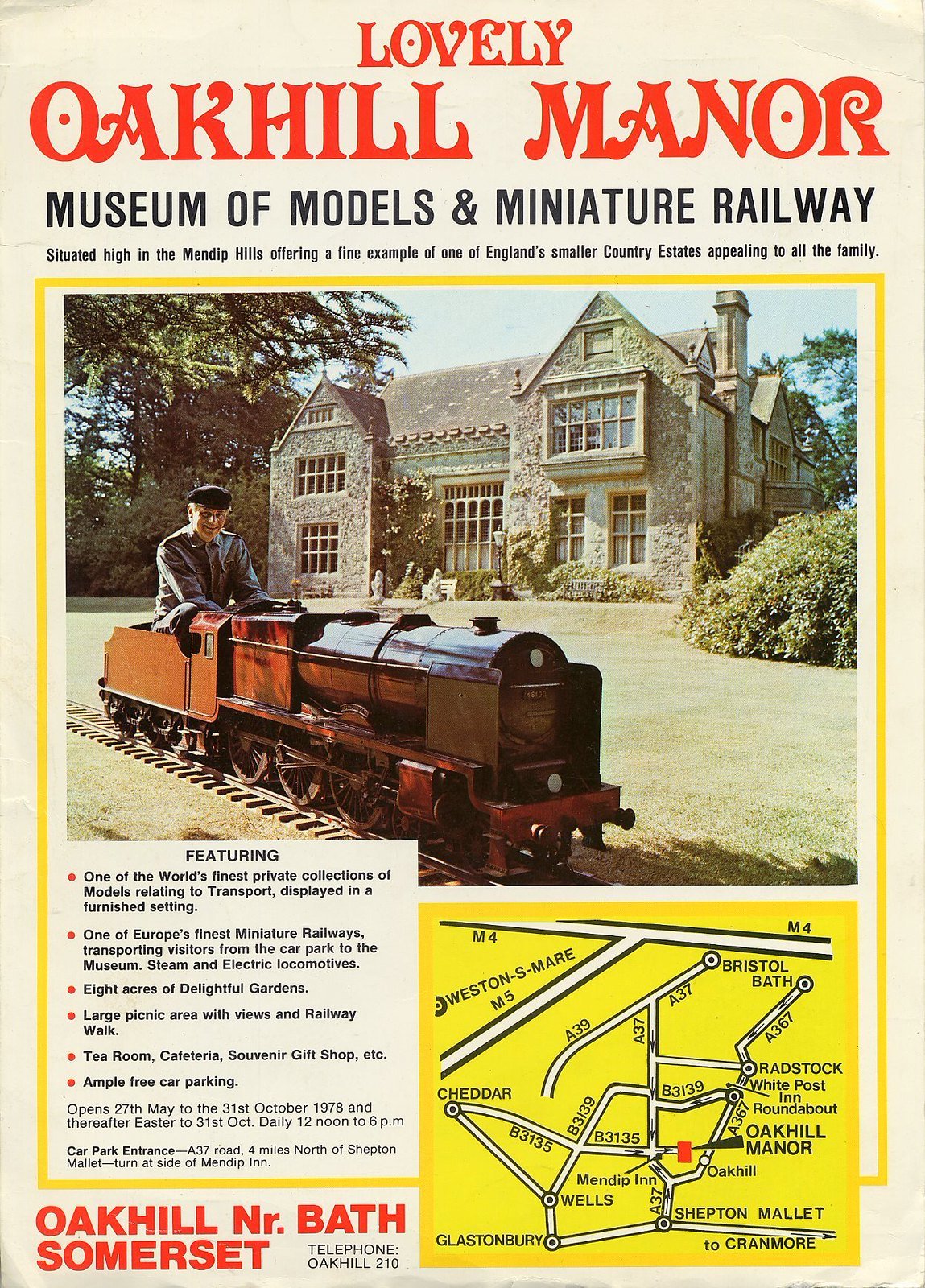
Oakhill Manor was one of Somerset’s most unusual visitor attractions. Opened in 1978, it combined an outstanding collection of scale models with one of Britain’s most impressive miniature railways, all set within the grounds of a small country house. It was the lifelong dream of one man, but despite the enormous effort and money invested in the project, it survived for less than a decade.
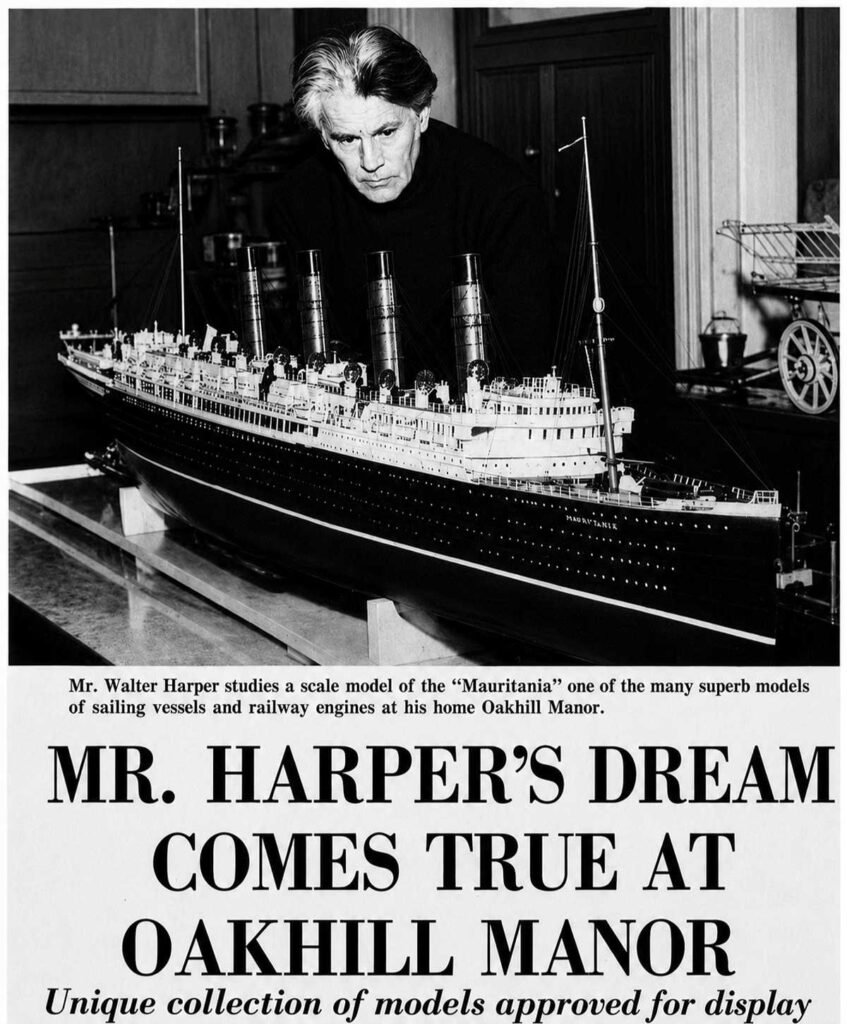
The driving force behind Oakhill Manor was chartered surveyor Walter Harper. After a highly successful and prosperous career in London, he took early retirement to pursue the hobby that had fascinated him since childhood. Over many years Harper had assembled one of Britain’s finest private collections of scale models, including locomotives, ships, aircraft, steam engines, road rollers, model railways, fire engines and other historic vehicles. Some were built by Harper himself, while others had been purchased from around the country. His ambition was to display them in a suitable setting where the public could enjoy them.
In 1969 he found exactly what he was looking for when he purchased Oakhill Manor, an eight-bedroom house near Shepton Mallet. Although built in an Elizabethan style, the house only dated from the Victorian era. The previous owner had auctioned off all of the contents, so Walter and his American-born wife, Teresa, set about furnishing it with period antiques while transforming almost every room into galleries displaying his remarkable collection of models. The size of the house, combined with the high cost of heating it, meant they only heated the main rooms on special occasions, spending most of their time in the kitchen while the rest of the manor was given over to the collection. Models were even displayed in the bathroom!
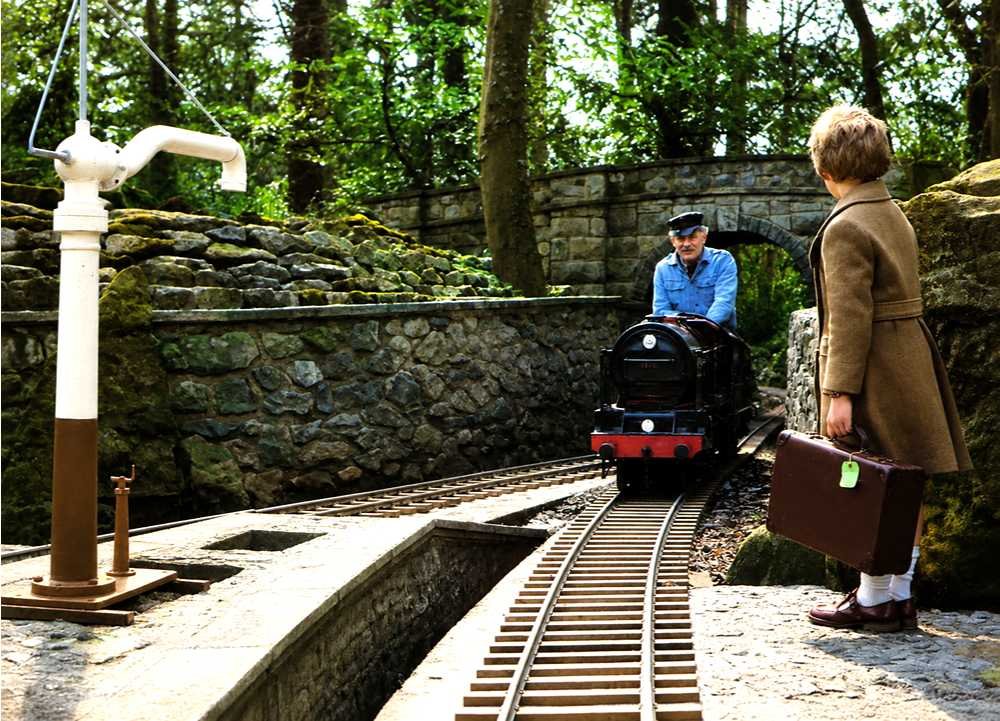
From the outset, the plan had been to build a short 7¼-inch gauge miniature railway running around the gardens, and work soon began on a terminal station beside the stables. Built in a stone-lined cutting, this small but impressive scale station gave visitors a glimpse of what was to come.
Before long, however, ambitions grew. Plans for the modest garden railway were abandoned in favour of a much larger scheme, with the gauge increased to 10¼ inches. Additional land was acquired, and proposals were announced for a large car park, picnic area and restaurant, transforming the project from a small garden railway into something much bigger.
Unfortunately many local residents were strongly against the idea, and soon formed the Oakhill and Ashwick Action Group which collected over 200 signatures opposing the scheme. They warned that the development would turn the village into “a miniature Butlins holiday camp” and staged a banner waving protest outside the local council offices.
From the outset, Harper made it clear that he had no ambition to create a mass-market tourist attraction. The museum, he explained, would be open daily during the summer and only occasionally during the winter, with the aim of attracting “responsible” visitors who had a genuine interest in the museum and its gardens. There would be “no hot dog stands and the suchlike to bring in hordes of people,” adding that he believed the attraction would only benefit the village. He admitted that his real passion had always been his models. “I am truly dedicated to them and to exhibiting them,” he said, adding that by moving to Oakhill he had finally “escaped to fulfilment.”
Despite the opposition, planning permission was granted with a clause that “no train whistle should be blown on the site between the hours of 8pm and 8am”.
Work soon began on the new railway which would also serve as a transport link by connecting the car park to the house. The line was relatively short, offering a 5 minute ride over 1000 meters of track, but it involved some surprisingly ambitious civil engineering. Deep rock cuttings were blasted through solid rock, while the route also included two tunnels, a spiral where the track crossed over itself on a substantial bridge, and a passing loop with a halfway station. The main station, built in a deep cutting, even featured a scaled-down replica of the ticket office at Chipping Campden.
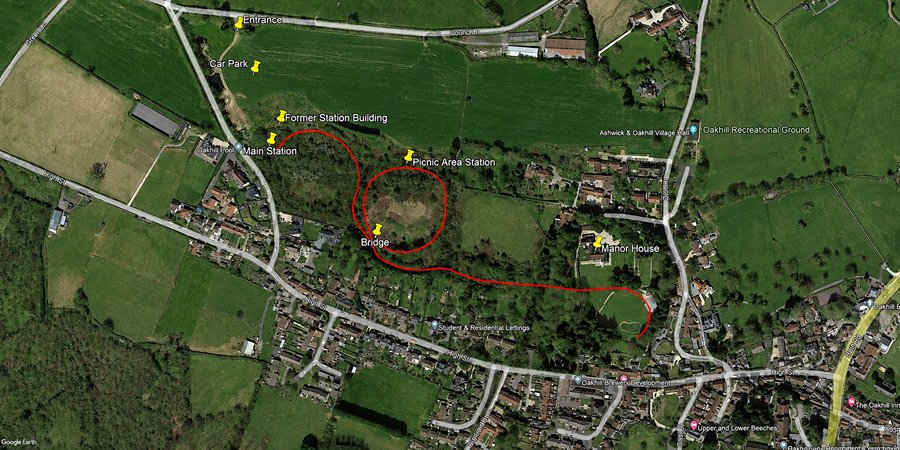
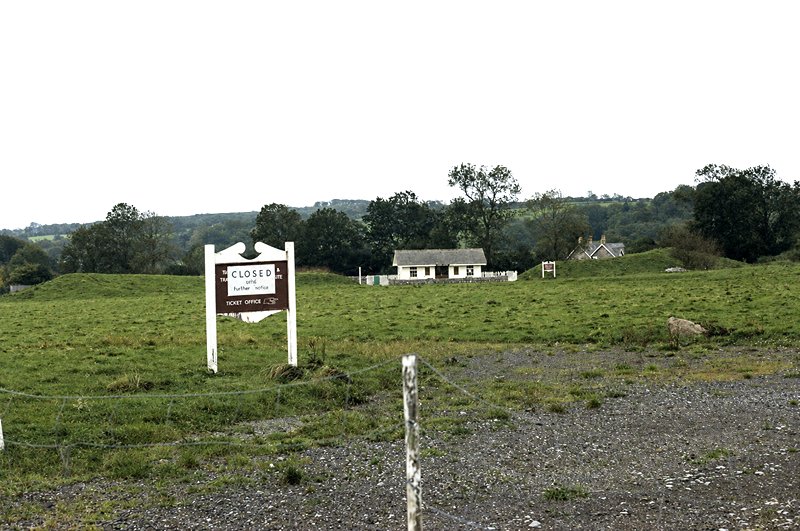
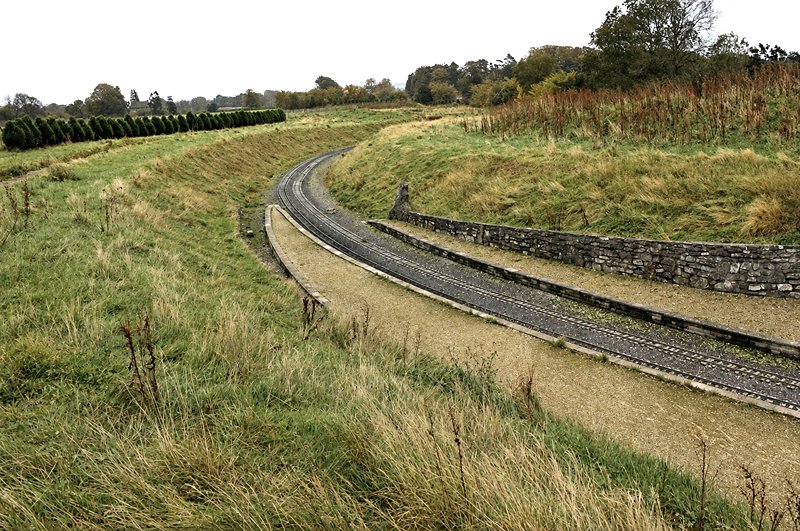
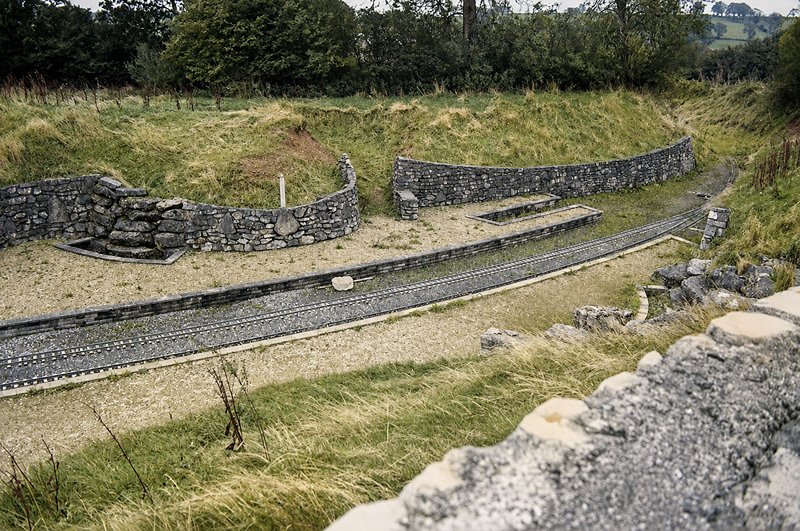
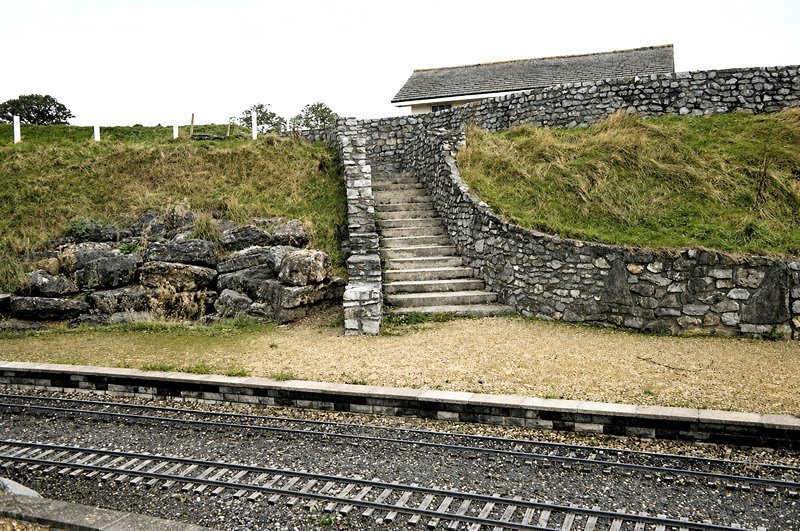
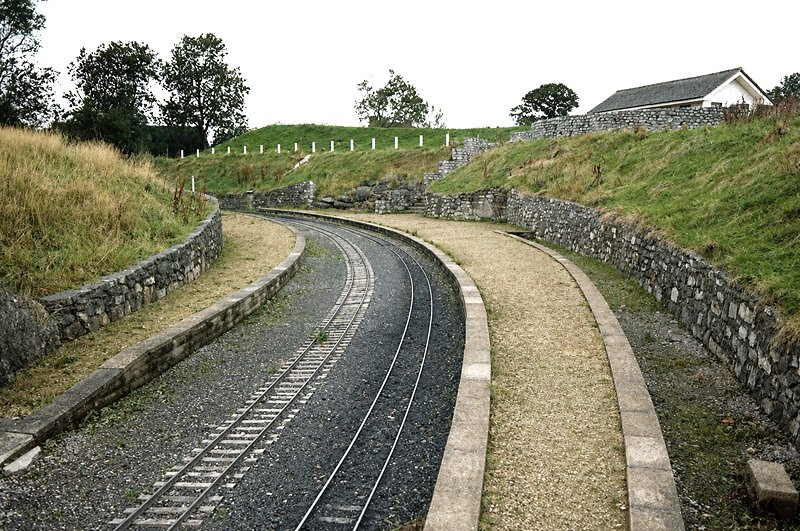
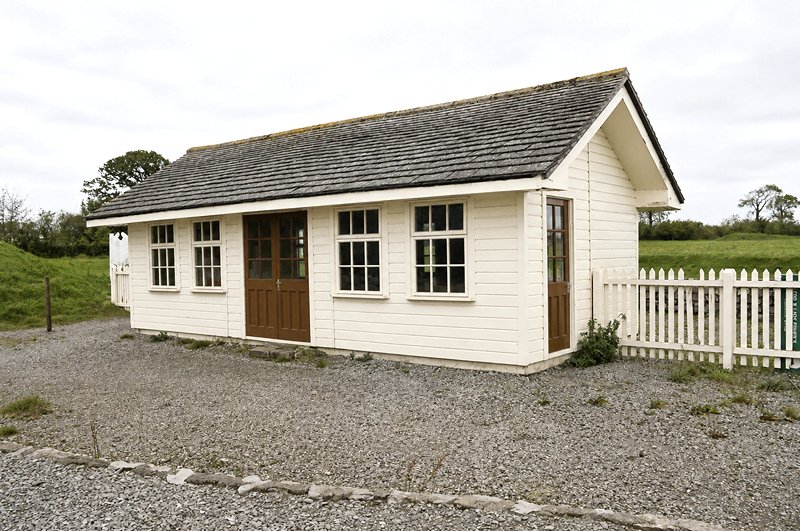
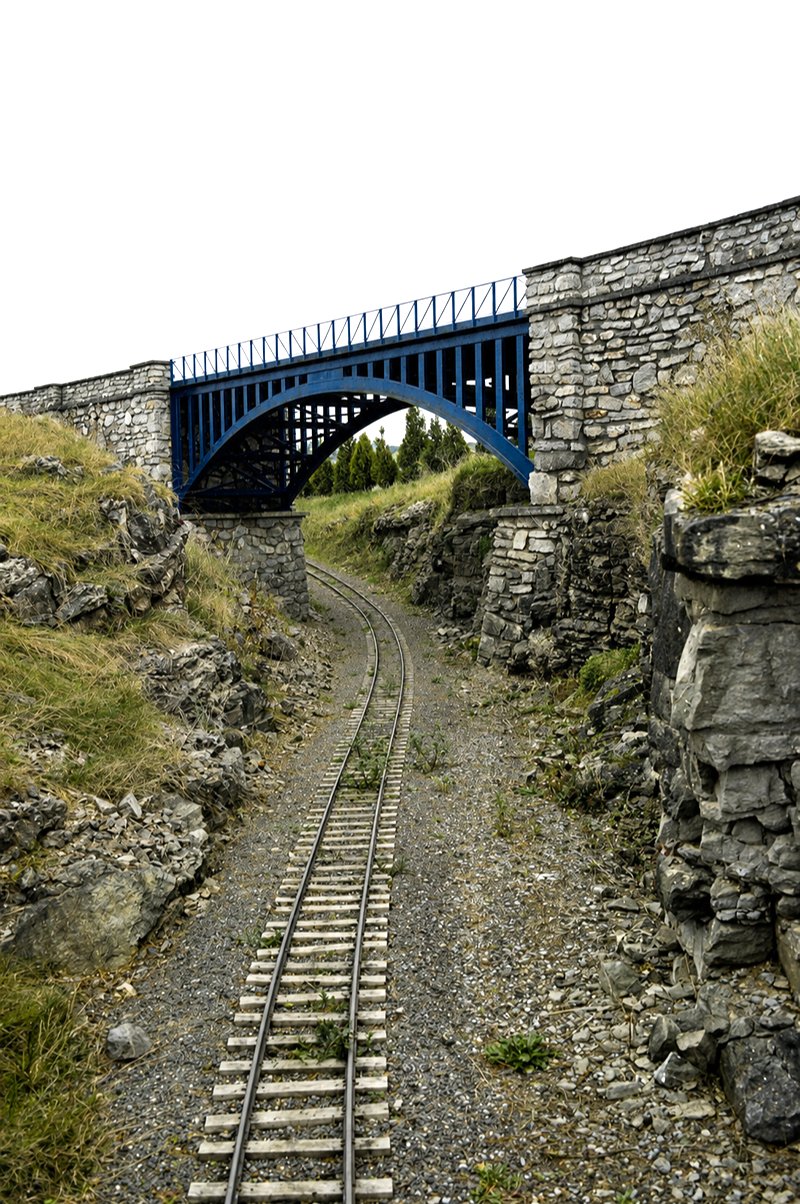
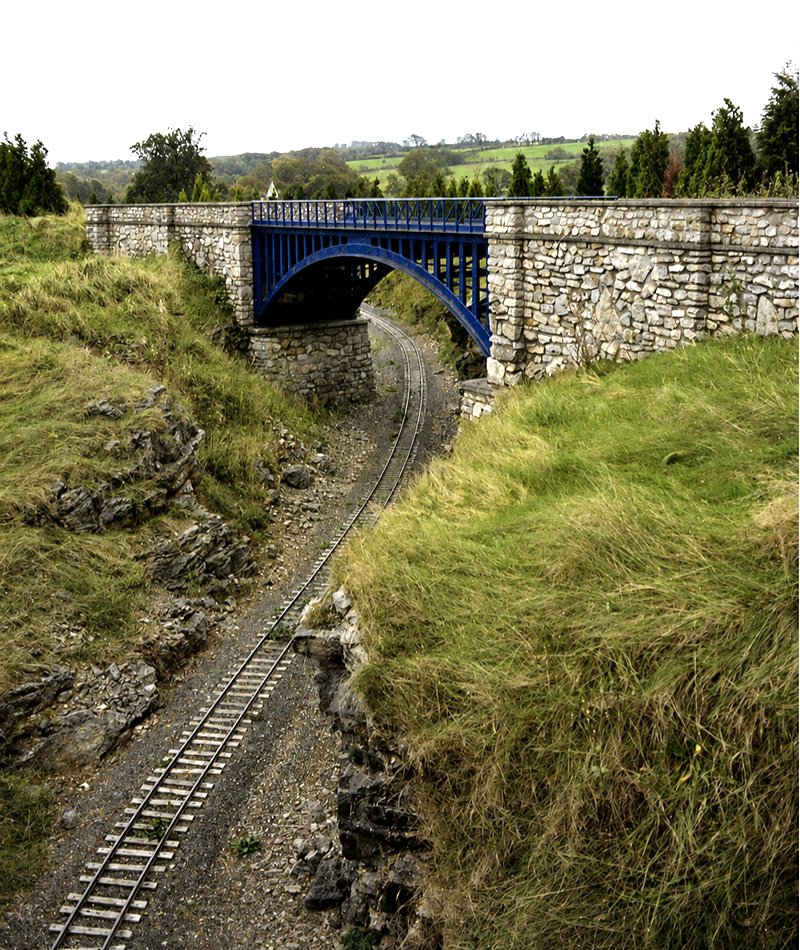
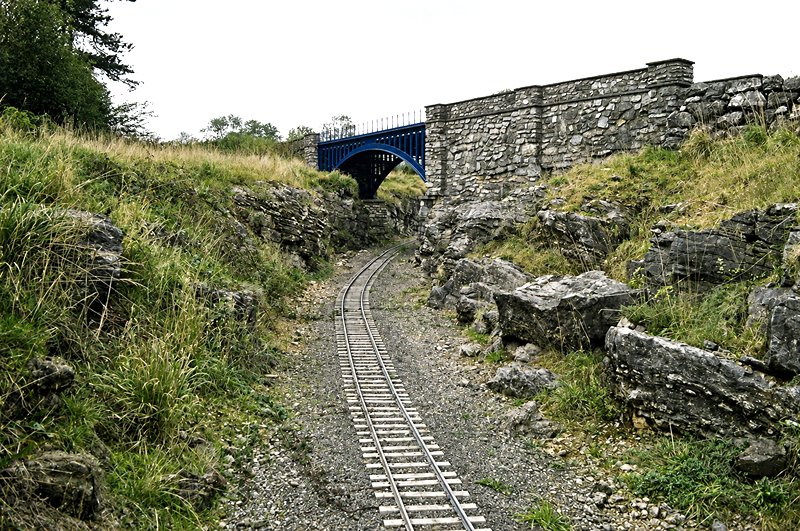
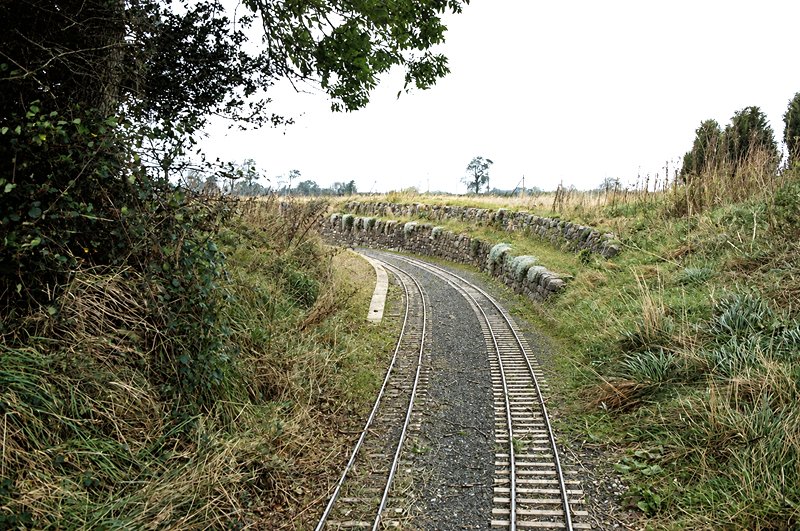
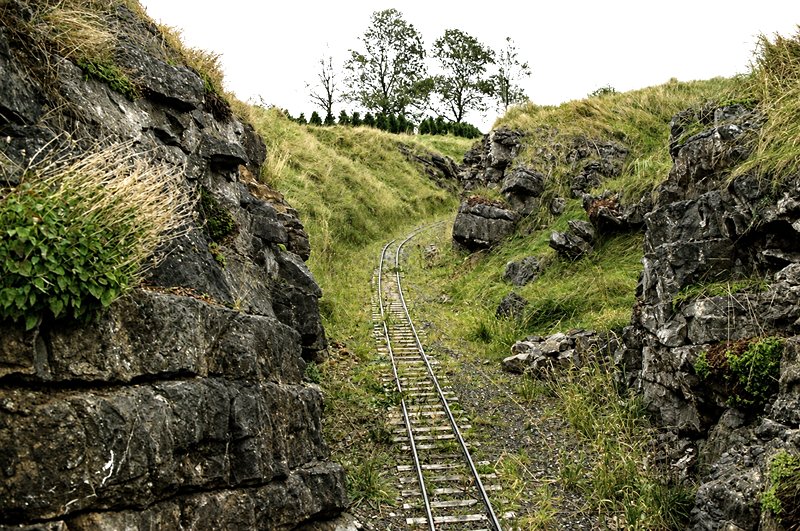
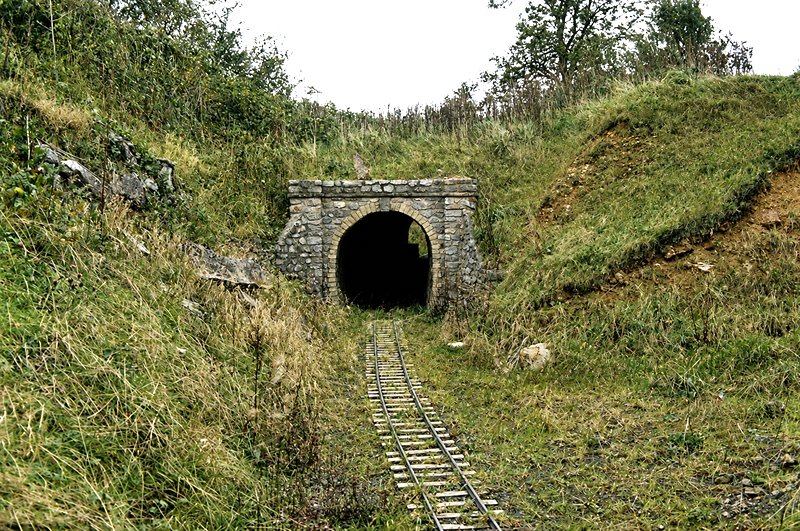
It was later decided not to use the original manor station as it was deemed too small, so a new station was built in front of the house.
The railway officially opened in July 1978 when Robin Leigh-Pemberton, chairman of National Westminster Bank and later Governor of the Bank of England, cut the ceremonial ribbon. Harper joked that, since most of the project had been financed by a bank, it was only fitting that a banker should perform the honours.
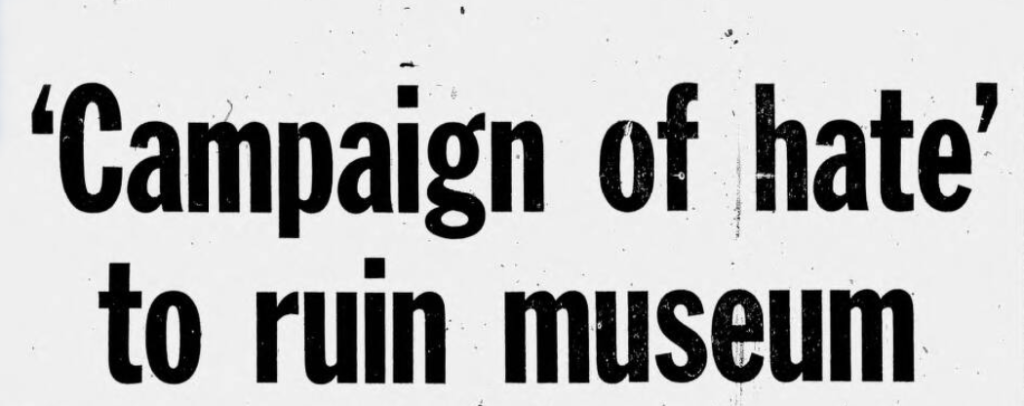
Yet while visitors remained impressed, the local hostility continued. Vandalism became commonplace with police regularly patrolling the grounds. Staff sometimes camped out overnight hoping to catch any possible troublemakers. Harper endured several obscene phone calls and the repeated removal of roadside signs. At one point he was even shot with an air rifle! “The people who resort to this behaviour are beneath contempt,” said Mr. Harper. “This has been going on for months, and I wonder when it is going to stop.”
Yet despite all the troubles, the site soon established itself as a popular local tourist attraction. At the time of the opening, Walter Harper remained modest about its prospects, telling reporters, “All I hope to do is cover running expenses. If any profit is made, which I very much doubt, it will be used to improve the museum.”
But in reality, even covering the running costs proved difficult. The expense of maintaining the extensive grounds and exhibits, and repaying the hefty loans placed the business under increasing financial pressure. By the mid-1980s, the future was looking increasingly uncertain.
In a last ditch attempt to save the attraction, Harper applied for planning permission to build four houses within the grounds, hoping the development would provide enough income to keep the site operating. The application came too late. In October 1986 he was forced to sell the manor, bringing an end to the attraction as visitors had known it.
Harper retained ownership of much of the land occupied by the railway and remained hopeful that at least part of the line might one day reopen. He moved into the adjacent coach house with his wife, which had previously served as the cafeteria and gift shop. The collection of models that had once filled the manor house was stored away in various stables and outbuildings.
Over the following years many of the models were sold off, but Harper refused to part with the miniature railway equipment, convinced that the railway might somehow have a future. All the track had been left in place, but with no trains running it was rapidly disappearing beneath an ever-thickening blanket of vegetation. After nearly twenty years he accepted that the dream was over. By the early 2000s, with Harper now in his eighties, he decided to sell the locomotives, bringing the final chapter of the Oakhill Manor Railway to a close.
Walter Harper died in 2008 aged 86
The video below was filmed in 1984 and shows a complete round trip along the railway with the Royal Scot:
Technical details of the Oakhill Manor Miniature Railway
The entire railway was built on a ruling gradient of 1 in 80, with trains descending gently from the car park to the manor house. While this gave an easy downhill ride, the return trip demanded considerably more effort from the locomotives as they climbed back towards the summit.
The track was supplied and installed by Cromar White, using the company’s standard large-section aluminium rail. Cromar White also provided five Southern Railways passenger coaches which, although attractive in appearance, proved awkward for passengers to board and alight. They were soon sidelined by a fleet of more practical ‘Ian Allan’ style coaches, around ten in number, which were much better suited to commercial operation. The line also had a rake of open brick cars which were popular in service.
The manor station lacked much of the character of its predecessor and, more importantly, had no run-round loop. On arrival, trains had to be propelled back out of the platform, the locomotive uncoupled and driven into a siding, before the carriages were pushed back into the platform by hand, ready for the next departure. The original scale station remained connected to the main line via a short branch line, but was only used on special occasions. Regrettably, most visitors never got a chance to see it.
Plans were drawn up to add balloon loops at each end of the line, enabling trains to operate in a continuous circuit. Construction began on the loop at the main station, with the necessary earthworks completed, but the project stalled before any track was laid.
Following the closure of the railway, the original Cromar White coaches were stored inside the tunnels, where they remained protected from the elements. After almost twenty years hidden away, they were sold and later restored to their former glory. Some of the brick cars also survived. The plywood Ian Allan coaches were left out in the open and, exposed to the weather, they mostly rotted away until only their bogies remained.
Locomotives used on the Oakhill Manor Railway
All of these locos still survive elsewhere:
E7045, this Bo Bo battery electric model was built by Cromar White in 1974 and was the first loco used on the railway. It was loaned to Oakhill Manor for several years before being sold to a private railway in Essex.
Robin Hood, 4-6-2 built by David Curwen in 1948. Originally supplied to the Weymouth Miniature Railway. Towards the end of its working life at Oakhill it was stripped down for a rebuild and remained in pieces for many years. Since restored and rebuilt.
Sir Percivale 4-6-0 E772 ‘King Arthur’ class model built by Richards Engineering. Harper also ordered a second identical loco to be named ‘Sir Sagramore’, but the order was cancelled and the part-built remains were not completed until the 1990s.
2-8-0 GWR 47xx class built by Keith Wilson in 1982. By the time the railway closed it was out of action with boiler problems.
4-6-0 ‘Royal Scot’ built by Basset Lowke in 1938. Previously owned by Capt Howey of the Romney Hythe & Dymchurch Railway, later used at Hastings for many years. Became one of the more successful and well used locos at Oakhill
0-4-0ST Nelly built by Richards Engineering. Named after Harper’s mother. Based on a quarry Hunslet and much larger than all the others. The short wheelbase was hard on the aluminium track so it was later converted into a 2-4-0.
Shepperton Metal Products ‘Meteor’ loco, No.9. Built in 1971 as part of the ‘Ian Allan’ miniature railway supply business.
Insiude the manor were two more sizeable locos:
9 1/2 inch gauge LBSC 2-6-0 No. 337 built by the prototype’s designer, L. B. Billinton
10 1/4 gauge 4-4-0 D Class, one of two such glass-case locos built by Ken Woodham, the other went to Bill McAlpine
Oakhill Manor Visitor Guide (1983)
The following guide was produced by Walter Harper in 1983 for visitors to Oakhill Manor. It describes the house, the gardens and many of the exhibits exactly as they appeared at the height of the museum’s success. Today, much of the collection has been dispersed and the displays no longer exist, making this an invaluable record of one of Britain’s most remarkable private museums.
Editor’s note: The guide is reproduced here in full as a historical document. Minor spelling, punctuation and formatting inconsistencies from the original have been retained.
OAKHILL MANOR
A SHORT GUIDE TO THE HOUSE AND MODELS
Oakhill Manor, situated high in the Mendip Hills at an altitude of about 700ft above sea level, is an example of one of England’s smaller country estates, having a land area of some 45 acres. Beacon Hill, the second highest point in Somerset, may be viewed from the south terrace whilst Maesbury Ring and the Roman camp are but a short distance away on the Wells road.
The Mansion House was built about 130 years ago and is a particularly fine example of Victorian architecture at its best. In his book Old Mendip Robin Atwell mentions that most of the windows and stonework, as well as some mantelpieces, come from an earlier 16th century building; the architect, no doubt, adopted the very pleasing Elizabethan style in order to incorporate these features. The work was commissioned for their own occupation by the brewing family of Spencer, famous for their Oakhill Stout. For many years the brewery was the mainstay of employment in the village and it is still in operation on the southern boundary of the estate, although now taken over by Courage.
The house is built amidst 8 acres of landscaped gardens and in the shadow of two cedar trees, reputed to be about 300 years old. The grounds are said to have been re-modelled by Capability Brown and it is thought that the site may have been the location of an old monastery — this could account for the presence of the ghost, seen on earlier occasions and still much in evidence despite the blessing of the Right Rev. The Lord Bishop of Bath & Wells on 16 December 1957. The plaque commemorating this event may be seen in the oriel window on the first floor. Also the house is evidently on the line of the Glastonbury vibrations since these may sometimes be felt on the terrace and in the study in the south west corner.
The Little Hall
The visitor enters the house by the Little Hall which has a pine panelled dado surmounted by impressive wallpaper designed by Pugin for the House of Lords. There is a souvenir chair used at the investiture of the present Prince of Wales while a second chair commemorates the Queen’s Silver Jubilee. Immediately facing is one of the most important models in the collection, a 9½in-gauge working model of a London, Brighton & South Coast Railway mixed traffic locomotive in umber livery. The full size locomotive was designed by Col. L. B. Billinton in 1914 and he also built the model personally. In addition to its quality as a fine piece of engineering this exhibit is, therefore, unique in being the only significant model in existence built by a Chief Mechanical Engineer of one of the great British railway companies.
The Great Hall
Passing into the Great Hall, with its fine mullioned south window, panelled dado in mellowed pine and stone arcading supporting the gallery above, the visitor is immediately struck, and possibly awed, by the monumental showcase enclosing THE FINEST LOCOMOTIVE MODEL IN THE WORLD. After eight years in building it was finally delivered in January 1983 and the interior of the Great Hall has, therefore, been re-arranged for the time being to accommodate this magnificent showpiece until a permanent situation, elsewhere on the property, can be found for it.
The normal arrangement of the Great Hall can be seen on postcards available in the Gift Shop. The model is 10¼in-gauge, ten feet in length and fully operational. It is an exact replica in the minutest detail of the famous and beautiful class ‘D’ express locomotives of the South Eastern and Chatham Railway Company built 1901–7. The principal trains worked by these locomotives were the all-important continental boat-trains from Dover to London and during the course of these duties their passengers included the world’s most influential and important personages, including practically all of the crowned heads of Europe as well as our own Royalty. The present situation of the model, surrounded as it is by maritime subjects, is not therefore out of place with its historical background.
The model itself was specially commissioned by Walter Harper in January 1974 and the superlative end product of his conception is owed to the genius of its builder, Ken Woodham, who spent eight years in the research and painstaking construction of the model, and the showcase also. Indeed it is not an overstatement to say that this masterpiece rocked the model world at its debut in London when it appeared as the principal exhibit of the ‘Gold Room’ at the Model Engineer Exhibition 1983.
Surrounding this locomotive model are three magnificent ship models, two of which are mounted on unique tables of white Calacata Gancia marble supported by lions. The first, one of the most important model ocean liners in private hands, is the original builder’s model of the famous German liner Kronprinz Wilhelm circa 1901. Over 75 years old, the model carried the signature of its cabinet maker builder. Kronprinz Wilhelm is considered by many ship lovers to be the most beautiful great ship of the period and in addition it ranks as the most notorious merchant ship commerce raider of all time; a chart showing its cruise together with a list of allied ships sunk is exhibited with the model. German ship lovers have pointed out that the German nation does not possess a builder’s model of this vessel; however, in view of the number of British ships she sent to the bottom, we decided Britain has prior claim.
On the adjoining table is an 8ft, electrically-driven model of our own much-loved Mauretania, sister ship of the Lusitania. Mauretania captured the Blue Riband of the Atlantic from the German liners and held it for a period of over twenty years, a record never to be broken. Under the great window, in a splendid Victorian case, is another important model — the P & O liner Aragon, first of the luxury ‘A’ class ships and headquarters vessel during the Dardanelles campaign. Around the walls are further imposing models, some standing on hand-carved eagle tables with white marble tops. Amongst these is the superb and highly detailed Sovereign of the Seas, winner of the Maze Challenge Trophy and, by the same builder, a delicate model of a gun brig; also a cut-away model of a forty-gun frigate and, nearby, a very pretty and unusual river steamboat by Thornycroft.
Paintings gracing the walls include a rare portrait of the young Queen Victoria by a French artist and a large, but captivating, oil painting of Chelsea Pensioners in the gardens of the Royal Hospital. The walls of the MUSIC ROOM on the east side are hand painted and depict floral scenes with exotic birds and butterflies. A rare and beautiful Steinway piano in satinwood with rosewood inlay, circa 1912, occupies the stone mullioned bay window whilst two elegant motor yacht models by Thornycroft blend well into the furnishings of this room.
The Victoria & Albert Room
Passing through the wrought iron gates into this room, which takes its name from the two terra cotta busts of the young queen and her consort, the visitor will appreciate the unusual soft tone of the panelled walls, expertly hand-grained by special craftsmen normally employed on the internal finishings of ocean liners. Some interesting oil paintings of railway subjects contrive to identify themselves with this setting.
The centre piece of this room is a most magnificent model of the first motor fire engine — the prototype was built by Merryweather of Greenwich and is now preserved in the Science Museum. This exhibit is considered to be the finest fire engine model in the world, is mounted on a green St Denis marble table supported by Chinese griffins. Around the walls are some particularly fine models of famous locomotives, including the two great rivals of the Rainhill Trials of 1829, Rocket and Novelty.
The Blue Drawing Room
Crossing the Great Hall to the Blue Drawing Room opposite the visitor, once again, is introduced to the saga of the sea. In this room models depicting the early story of the steamship are displayed in a setting of period style furniture which includes a mid-19th century French bureau. They include such pioneer vessels as Charlotte Dundas (1802), Fulton’s Curious 1803 design, Comet (1820), the great rivals of the first Atlantic crossing Sirius and Great Western and, finally, Brunel’s famous Great Britain, now preserved in the Bristol docks. Several of these models were shown on BBC television recently depicting the story of the sea. The oil paintings in this room are by famous artist Robert Taylor.
In the adjoining corridor is an exquisite model of a Merryweather self-propelled fire engine. This model is fully operational under its own steam and photographs showing it actually putting out a fire are attached. Facing is a bust of Queen Victoria set within a large plaque commemorating her 78th birthday; this is the actual plaque that was carried by the locomotive during her birthday train. In another corridor nearby may be seen a series of Victorian prints of famous battle scenes, also a signed portrait of the Queen. Just a fraction of the collection of over 400 small scale aircraft models are displayed in a case here.
The study contains a miscellany of further models, including a notable Foden steam driven brewer’s dray. Here too the visitor may be intrigued to see some of the note and sketch books which began the ‘Lovely Oakhill Manor’ project.
The Gallery
Ascending the moon shaped double marble staircase the visitor is faced with an exceptional steam driven, radio controlled, working model of the Clyde paddle steamer Duchess of Fife, awarded the Championship Cup at the London Model Engineer Exhibition.
Around the gallery itself are waterline ship models together with oil paintings by the distinguished railway artist Paul S. Gribble, Dion Pears, well known for his paintings of racing cars, and Robert Taylor. Dioramas on the gallery include ‘Return from Recce’, a silver medal winner as is the adjacent Wallis & Stevens showman’s road locomotive.
Main Bedroom Suite
On the east side of the first floor gallery lies the main bedroom suite complete with antique four poster canopy bed and adjoining dressing and bath rooms, the latter with a hand-painted ceiling.
There are some eye-catching aircraft models here, including the magnificent SE5A fighter of the First World War fame. This is the only model to have won the Championship Cup of the L.M.E. and the Shuttleworth Trophy awarded for an outstanding aircraft model by the Shuttleworth Aircraft Museum.
A 6ft radio-controlled, electrically-driven, working-model of the World War I British heavy cruiser Carnarvon is particularly apt at this period in our history since this ship was Rear Admiral Stoddart’s flagship at the first Battle of the Falklands in 1914 when the German invading squadron was sent to the bottom of the Atlantic Ocean.
The beautiful sailing ketch Erya gained a silver medal. The large Canadian Pacific liner Empress of Britain is another steam driven working model and the galleon, built of matchsticks, featured in a TV quiz guessing the number of matchsticks! Another fine matchstick model, this time of Tintern Abbey, will be found in the adjoining oriel window and comprises over 27,000 matchsticks. A fine oil painting by Paul Gribble, ‘Call of the Wild’ is on display and is the subject of some very popular prints available in the Gift Shop.
Externally
In the ‘Boat Train Buffet’ will be found a very important ship model indeed. This is an original builders model of the famous Cunard Blue Riband holder Campania. The model is over 14 feet long and approaching 100 years old—it is considered one of the most important steamship models in existence. At the end of her days Campania achieved additional fame by being converted into the world’s first aircraft carrier. Also in the Buffet are builders’ models of two other famous liners, the Canadian Pacific Empress of France and the Cunard White Star motorship Britannic.
Under the canopy in the courtyard is a very large and unusual waterline model of a beautiful old-time steam and sail paddle ship, the Persevero II. This model was built in the film studios for the 1962 Walt Disney film In Search of the Castaways and is remarkably accurate in detail. When completely restored, this model will form a unique and attractive exhibit.
This collection is considered to be the finest private collection of its kind in the world and was assembled by Mr Walter Harper over a period of some fifty years. Owing to space limitations it is not possible to exhibit the whole collection of models, pictures and full-size horse drawn vehicles. However, the policy of the Museum is to rotate some of the exhibits from time to time which allows fresh models to be seen by returning visitors. This leaflet, therefore, may contain temporary discrepancies, though as far as reasonably possible, we try to keep it up to date.
The visitor will have observed that most of the models are of a very high standard and several are the finest examples of their kind in the world. Walter Harper has, however, deliberately introduced into his exhibition models of varying standards, though nonetheless interesting for that, because the average modeller cannot normally hope to achieve the skill nor devote the requisite time to the construction of a model reaching the peak of perfection. He should not be discouraged, however, since the examples shown prove that a model which is not of the finest quality may nonetheless still be of tremendous interest and his efforts will be no less creditable and give him the greatest pleasure.
NOTE: The awards and medals referred to are those given by the London Model Engineer Exhibition, recognised throughout the world as the premier exhibition for models. They are given only to amateur model engineers and many of the equally fine models at Oakhill Manor built by professional model builders would not, therefore, be eligible.