In the city of Quincy, Illinois, lay a 130-acre island that for many years had formed part of a railroad bridge system across the mighty Mississippi River. Prone to flooding and littered with dead trees, piles of junk and makeshift homeless camps, it was somewhere that most locals avoided
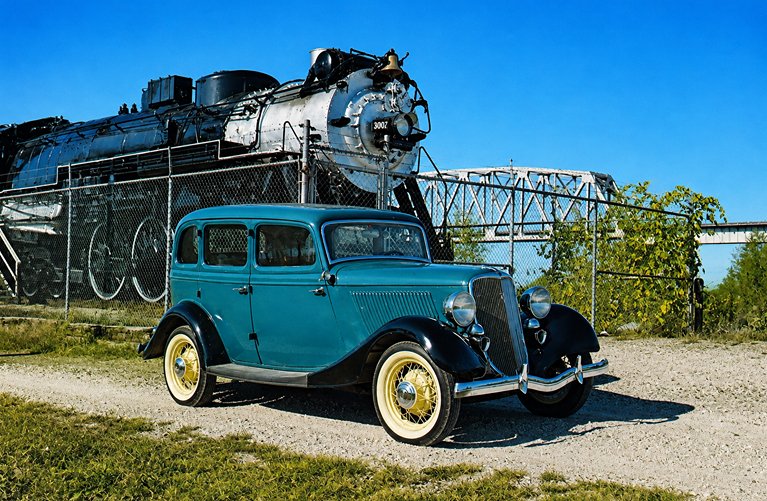
In 1960 a new railroad bridge was completed, bypassing the island altogether. The following year the Chicago Burlington & Quincy Railroad donated the land to the city, together with one of the old bridges connecting it to the mainland. Also donated was an enormous Baldwin 4-6-4 steam locomotive #3007 which was left on the island on an isolated stretch of track.
To many people, the land was little more than a worthless swamp. But city officials saw something different, and believed it could be transformed into a recreational area to draw visitors into town. Although Quincy was a prosperous manufacturing and commercial city, it wasn’t exactly known as a major tourist hub. Just 22 miles to the south, however, the story was very different. Hannibal, Missouri – the boyhood home of Mark Twain – had become one of the Midwest’s best-known tourist destinations. A 1956 National Geographic article even remarked that the town attracted “more American travelers than Hawaii.”
Quincy hoped to tap into this steady stream of visitors by giving them a reason to continue north along the Mississippi. If even a small proportion of Hannibal’s tourists could be persuaded to spend another day in the region, the potential benefits for Quincy’s hotels, restaurants and other local businesses were considerable.
The land was renamed to Quinsippi Island, and work soon began on transforming the low-lying floodplain into usable parkland. Much of the site was raised above flood level and landscaped, utilites were installed and an ambitious collection of attractions was assembled. Local officials confidently predicted that Quinsippi Island would become “one of the finest recreational areas in the Midwest” and it opened to the public in 1966.
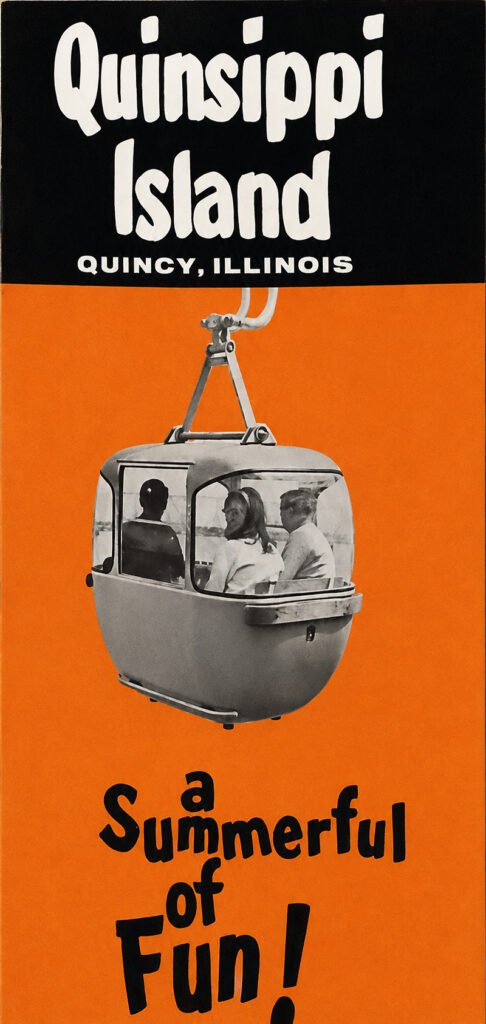
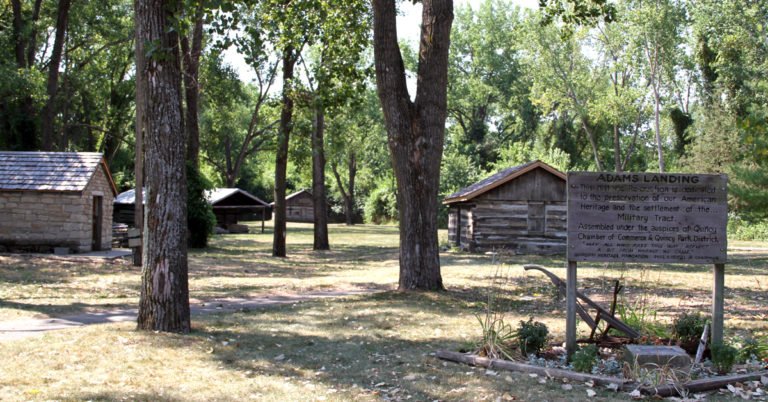
Among the new facilities on the island were a marina, picnic areas, nature trails and a pioneer log cabin village. The old steam locomotive #3007 was cosmetically restored and placed on display. An Indian Museum and lighthouse were added in the early 1970s.
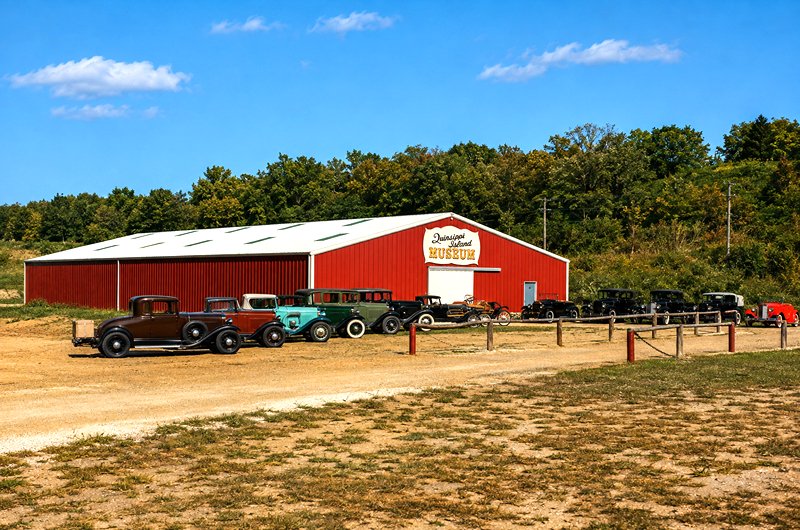
A 13 acre park was also established on the mainland known as All American Park. This was located directly across from the island bridge, and featured a large parking lot, gift shop, an antique auto museum, a ferris wheel, carousel and free petting zoo.
What made the site unique was the journey itself. Although you could walk to the island along the railroad bridge, vehicle access was banned which forced visitors to use one of three completely different transport modes, each an attraction in its own right.
The Sky Cruise
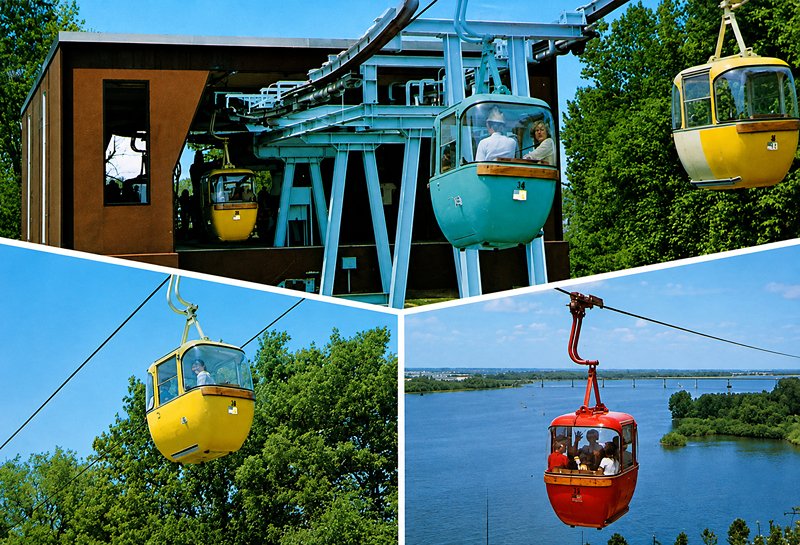
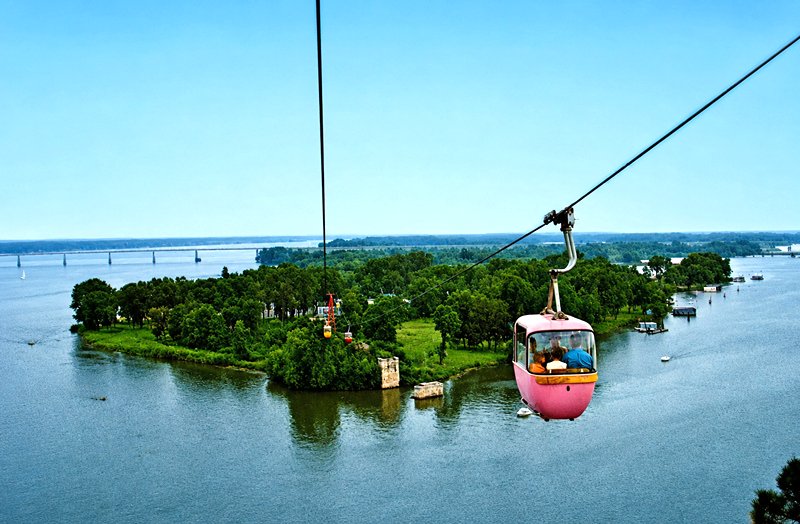
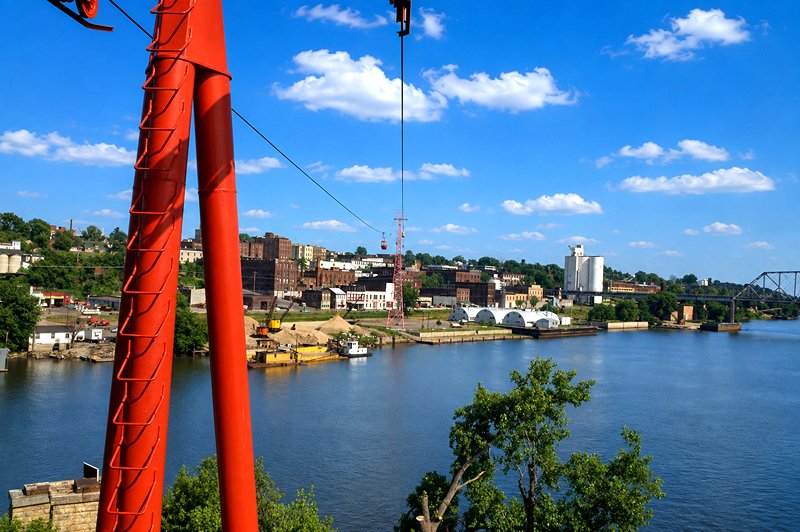
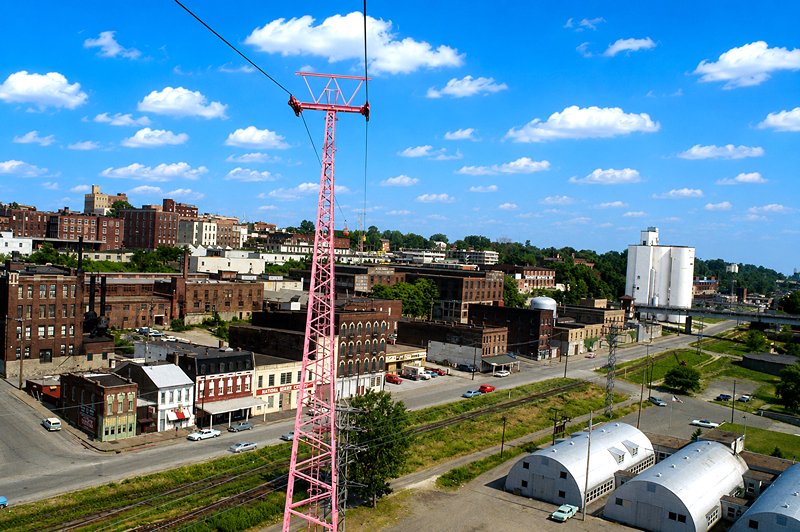
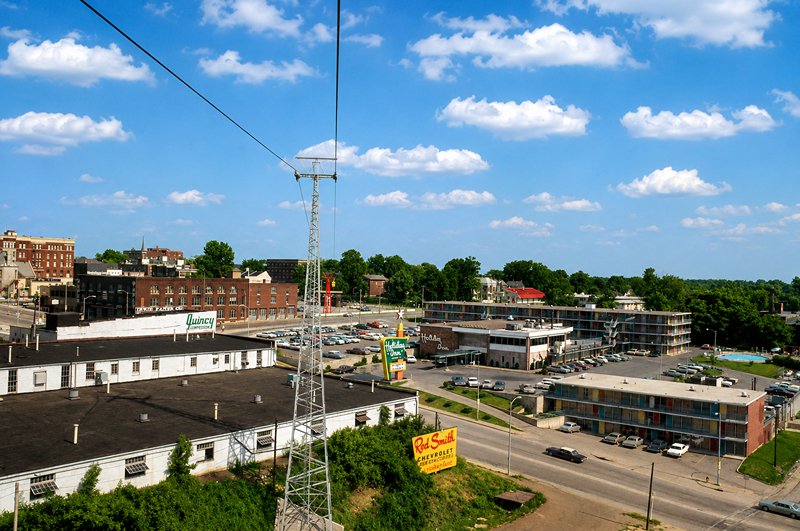
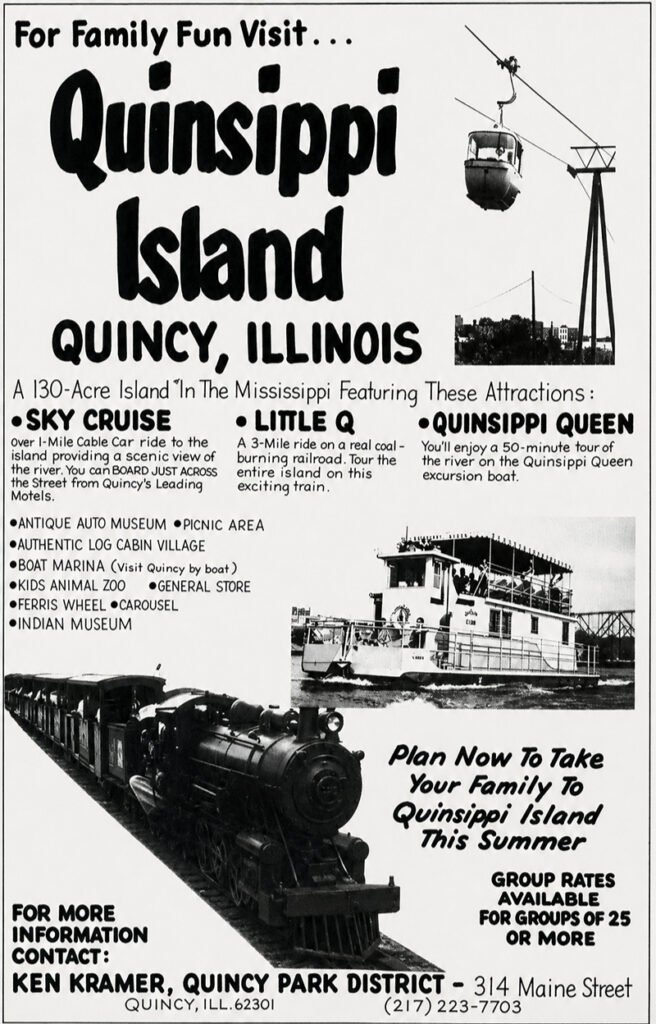
The centrepiece of the development was an aerial tramway linking downtown Quincy with Quinsippi Island. The mainland station was located in a city-owned parking lot on 3rd Street, and from there it traveled some 3,000 feet to another station on the island, crossing the river at a maximum height of 140 ft. it was the only publicly owned facility of its kind in North America, and the only other cities with a skyway linking business and recreational areas where in Caracas (Venezuela), Rio de Janeiro (Brazil) and Cologne (Germany).
The 19 passenger cabins could each seat 4 adults and were built by the Hall Ski Lift Co of Watertown, New York, who also supplied the four pylons and other structural components. More specialized parts came from Pohlig-Heckel-Bleichert (PHB) of Cologne, Germany.
Costing $300,00 it opened in July 1968 and was an instant hit, earning $44,516 in the first three months.
Quinsippi Central Railroad
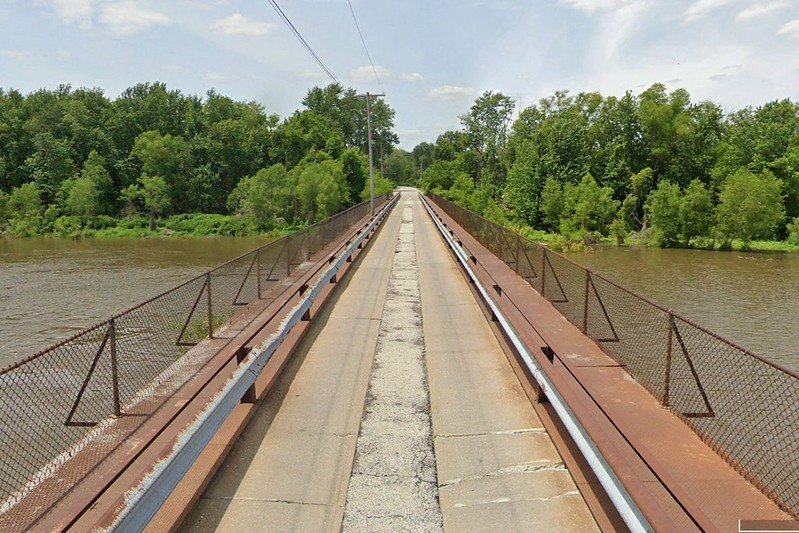
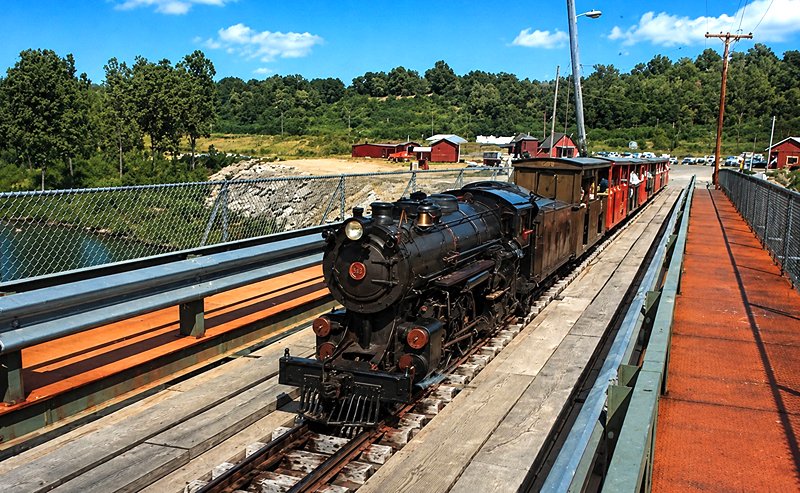
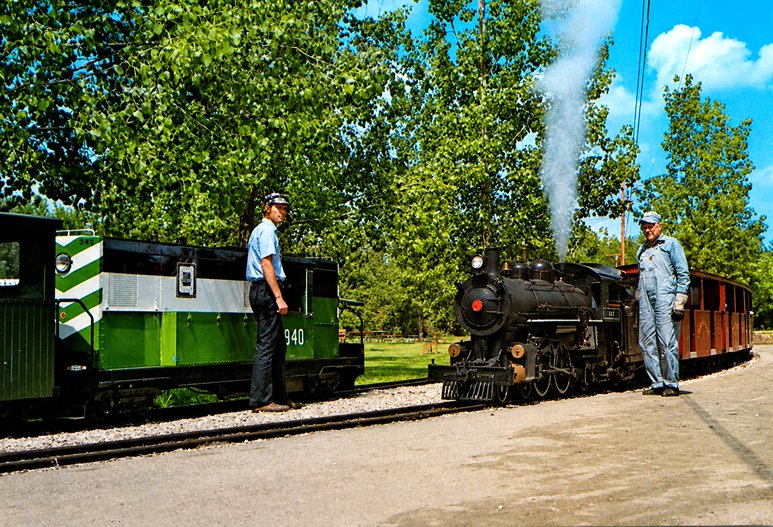
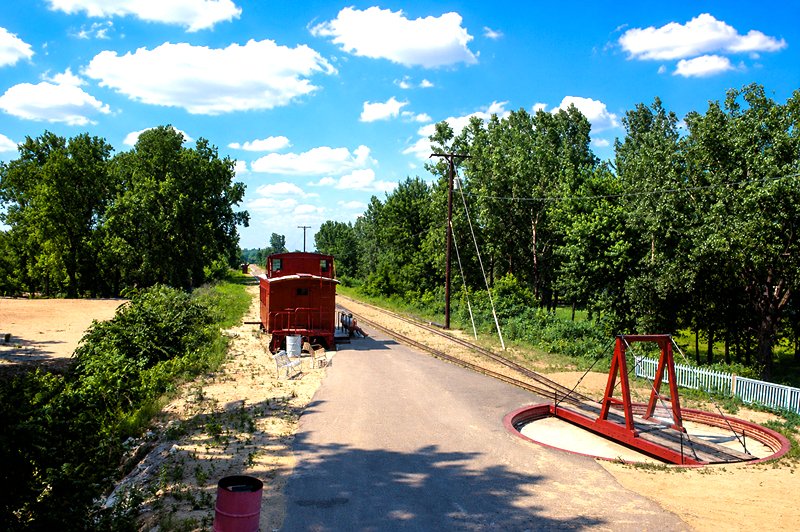
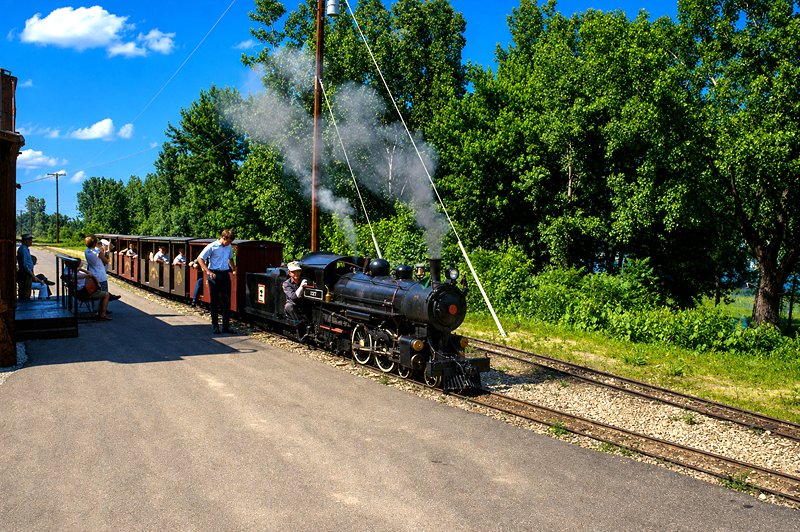
Another way to reach the island was via the Quinsippi Central Railroad, a 15-inch gauge miniature train. Passengers departed from a station in All America Park. The train then rode across the old railroad bridge and headed to the southern tip of the island, a distance of 1.3 miles. The bridge had originally been built to carry a single-track railroad and was widened slightly to also accommodate a pedestrian walkway
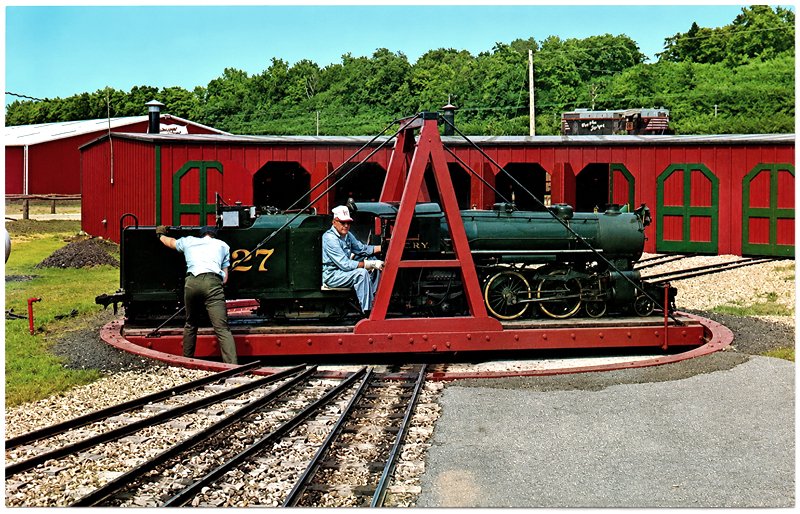
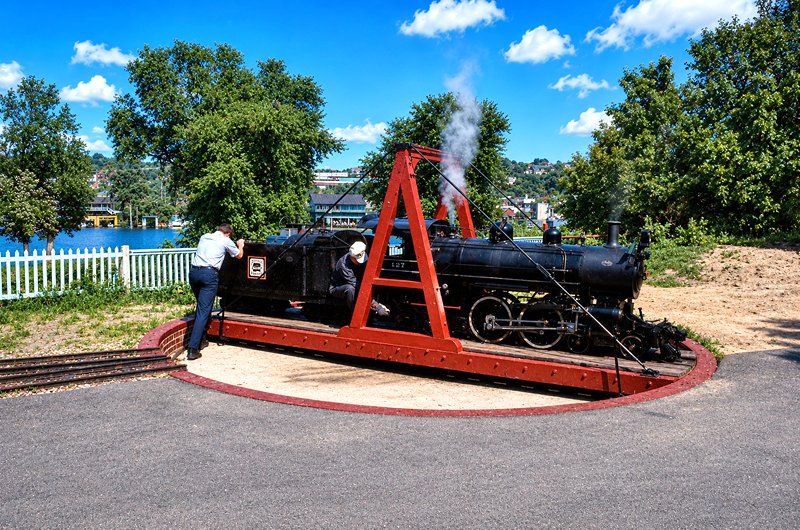
To operate the service a 4-4-2 coal-burning steam loco was supplied which carried the number 127. Although not officially named it became affectionately known as the Little Q. This loco, along with nine passenger cars, was built by the Sandley Light Railroad Equipment Works of Wisconsin Dells.
The official spike-pounding ceremony was held in September 1966 and was performed by eight dignitaries assisted by beauty queen Mary Lee Inzerello, the current holder of Miss Illinois 1966. The inaugural train was driven by builder Norman Sandley, with new chief engineer Roy Copeland serving as conductor.
An 8-stall roundhouse was added in 1967, followed by a new gasoline loco in 1970. Although officially named the Quinsippi Central Railroad, most visitors simply knew it as the Little Q.
The Quinsippi Queen
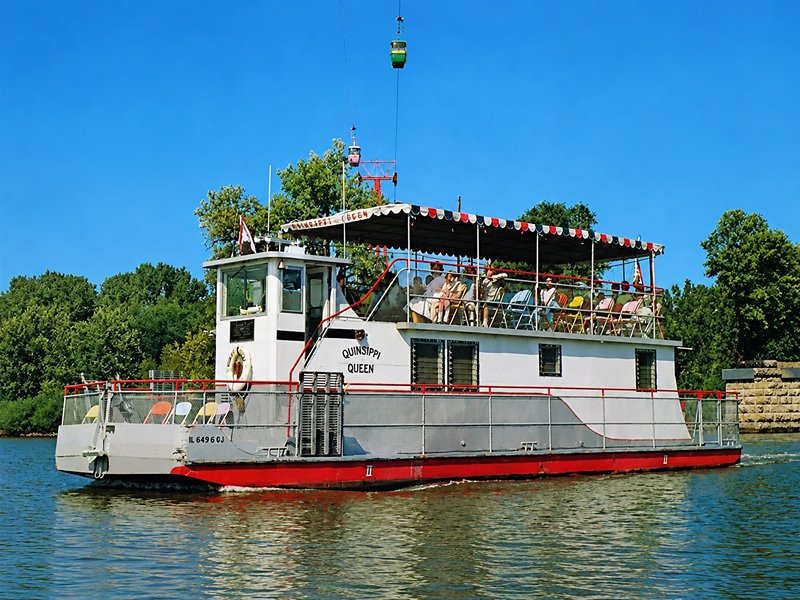
The final way to reach the island was aboard the Quinsippi Queen, a 50-passenger riverboat that departed from All America Park and cruised the Mississippi before landing passengers on the island. It was financed through donations from the Quincy Herald-Whig newspaper and the Quincy Broadcasting Company. It also operated evening dinner cruises and quickly became a familiar sight on the Quincy waterfront.
The Revenue Bond
Much of the development of Quinsippi Island was financed through a combination of city funds and donations of money, materials and equipment from commercial businesses and private individuals. One of the most significant contributions came from Elliott Donnelley of the Chicago printing firm R. R. Donnelley & Sons, who financed the purchase of the steam locomotive and rolling stock for the miniature railroad.
However, the Sky Cruise, together with the remaining expenditure on the railroad and other improvements, was financed through a $500,000 revenue bond issue. A total of 100 bonds were sold in $1,000 denominations and a further 80 in $5,000 denominations. The intention was that profits generated by the Little Q and Sky Cruise would repay the bonds, together with interest, rather than placing the burden on local taxpayers.
The bond money was not used solely for the two rides. It also helped finance improvements to the former railroad bridge as well as the installation of restrooms, picnic facilities and other amenities needed to develop Quinsippi Island as a recreational attraction.
America’s Newest Vactionland
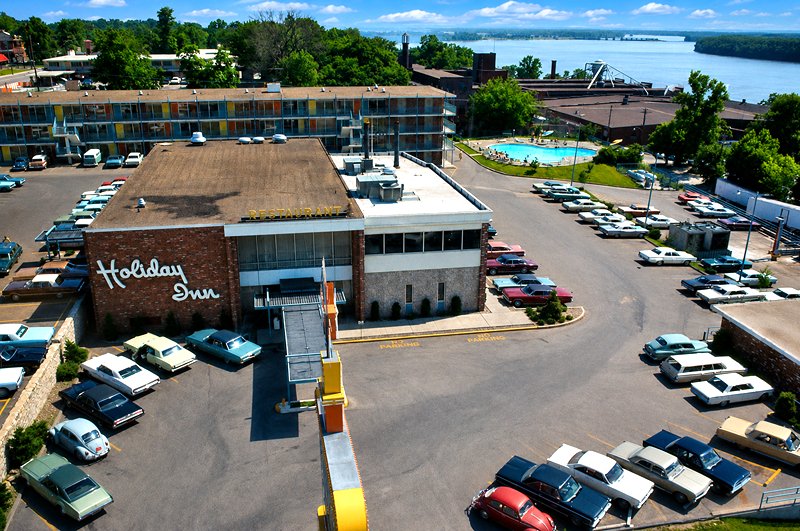
Contemporary publicity proudly promoted Quincy as “America’s Newest Vacationland.” Adjacent to the island was Sid Simpson State Park with its camping facilities, boat docks and sandy beaches. Only a few blocks away was a KOA Kampground. Campers could also choose Siloam Springs State Park east of Quincy, or Wakonda State Park across the river. Alternatively two downtown motels were located within easy walking distance to the Sky Cruise.
Visitors could spend several days enjoying Quinsippi Island, exploring downtown Quincy, or making the short trip south to Hannibal, creating the kind of regional holiday destination that city planners had envisioned.
The wording on the back of the railroad tickets reflected the attraction’s light-hearted Wild West theme. Passengers were politely asked “not to hitch horses or buggies near the tracks” or “allow livestock onto the railway”. They were also advised to keep an eye on their valuables in case of “train robbers and river pirates,” before being reassured that “all local Indian tribes are friendly and no longer take scalps.” Although these tongue-in-cheek warnings would be considered inappropriate by today’s standards, they captured the playful sense of humor that characterized many family attractions during the 1960s.
Things begin to decline
Although the island proved popular with local residents, it never developed into the major tourist destination that city planners had originally envisioned. From the outset, the intention had been for the Sky Cruise and miniature railroad to generate enough revenue not only to cover their own operating and maintenance costs, but also to repay the bondholders who had financed the development. After a promising start, however, visitor numbers slowly declined and both attractions began struggling financially. Some of the original bondholders had never received a single return on their investment.
The scale of the problem was highlighted by figures released for the 1978 season. That year, the Sky Cruise cost $17,377 to operate but generated just $10,815 in revenue. Matters were made worse by a fatal accident that summer on a sky ride at Six Flags St. Louis, in which three people were killed. In the aftermath, insurance rates for such rides skyrocketed, adding yet another expense to an attraction that was already losing money. In April 1979, it was announced that the Sky Cruise would not reopen, as it had simply become uneconomic to operate. The ride remained standing while officials attempted to sell it to a private operator, in the hope of raising money that could be used to repay the bondholders.
By this time, economies were also being made on the Little Q railroad. The steam locomotive had been deemed too expensive to operate, so all trains were instead hauled by the railroad’s gas locomotive. The Quinsippi Queen riverboat also remained in service, although by then it was operating a very limited schedule. Its fortunes worsened further in 1982 when a serious engine fire put the boat out of action.
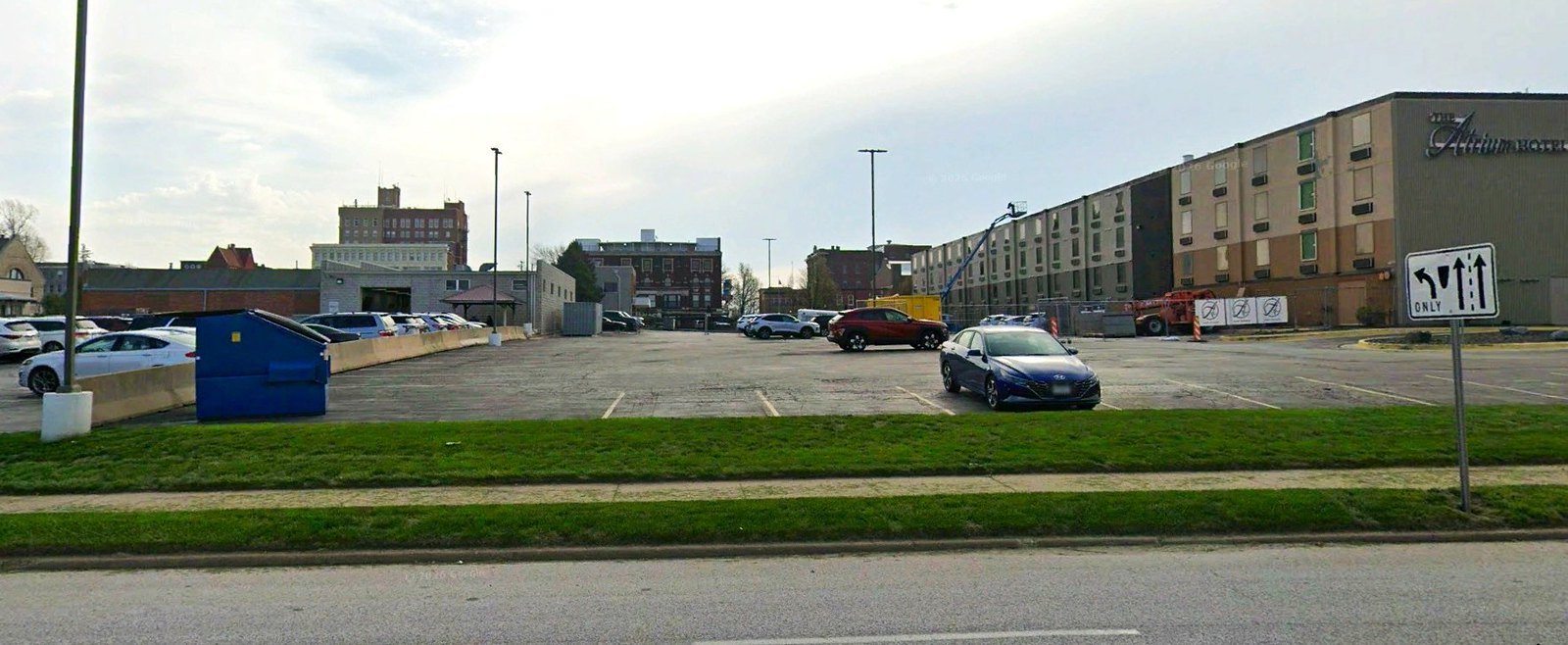
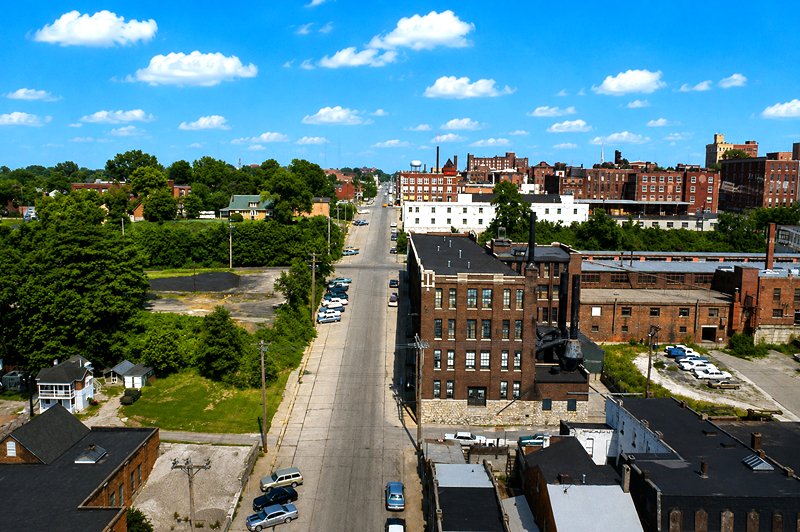
In 1983 the city sold a 7-acre tract of downtown land to a developer seeking to build a new hotel. Part of this land was occupied by the Sky Cruise station and the new owner wanted it gone. After failing to reach a deal, the main cable was removed and the building was demolished in March 1984, dashing any hopes it might one day reopen. The passenger cabins, along with the internal machinery and one of the pylons, were removed and placed into storage.
The miniature railroad was closed at the end of the 1983 season, never to reopen. Expensive repairs were needed and the funds were simply not available.
The equipment is auctioned
The bond holders were growing increasingly frustrated. At the time, nine $1,000 bonds and forty-two $5,000 bonds were still outstanding. Some investors accepted an offer of just $61 for every $1,000 they were owed, but fourteen bondholders or their representatives refused. After a court hearing in May 1988, it was agreed that all assets of the railroad and Sky Cruise should be sold with all proceeds being split among the remaining bondholders. The bond issue would then be voided.
The auction was held in October 1988, divided into 35 lots. The railroad equipment had generated a lot of interest with potential buyers travelling from several different states. In the end most of it was purchased by local lawyer Don Weinberg. The steam loco sold for $31,400, the gas loco for $7,100, the passenger cars for $20,200 and all the track for $25.447. He also acquired both turntables, the water tower, a coal bunker and other bits and pieces for a total spend of $84,561. Other buyers picked up the rest. The ticket office and storage building were sold for $8 while the roundhouse was sold for just $2.
Despite earlier valuations of around a million dollars, the Sky Cruise sold for a paltry $4,085. The buyer was Robert Frese of FIM Inc, a Quincy-based metal company. He acquired all 19 passenger cabins, all four support towers and all the machinery and spare parts. He remained tight-lipped about his future plans, but stated that the equipment was too valuable to be scrapped.
What happened to the railroad equipment?
Weinberg moved all the equipment to a nearby location on the outskirts of town. The two locomotives were placed in a barn while the passenger cars sat outside. In 2002 the passenger cars were sold and returned to their birthplace in Wisconsin Dells. Although the Sandley Light Railroad Equipment Works has long since disappeared, its legacy lived on. The company’s demonstration railway, built alongside its workshops, continues to operate today as a popular tourist attraction known as the Riverside & Great Northern Railway. The wooden bodies of the cars were beyond saving, but their steel frames and wheels were incorporated into newly built coaches
After 26 years in storage, the two locos were sold in 2018 to a cattle ranch in Texas. But six years later they too returned to Wisconsin Dells allowing the Little Q equipment to be reunited on the very railway where it was created.
What happened to the full-size steam loco?
The steam locomotive #3007 had been sitting on the island since 1961, but after nearly 20 years of exposure to the elements and repeated vandalism it had become something of an eyesore. In 1980, the city offered it free of charge to anyone willing to take on the task of removing it.
The offer was accepted by entrepreneur Jesse Wade, who had made his fortune in the television antenna business. As a gesture of goodwill, Wade donated $2,000 to the city and estimated that moving the locomotive would cost him a further $25,000. “The engine had been terribly vandalized,” he recalled. “The bell, valves and whistle had been stolen and she sat there, just rusting.”
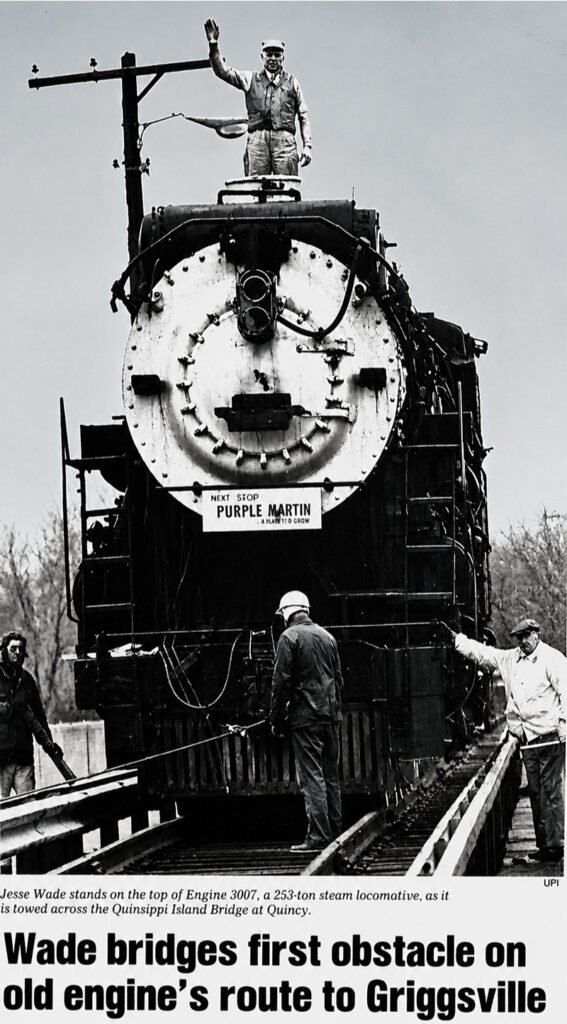
The plan was to take the locomotive across the same bridge used by the miniature train, but engineers warned that the ageing structure could no longer support such an enormous load and predicted that it would collapse beneath the locomotive’s 250-ton weight. City officials also cautioned Wade that if the engine ended up in the river, he would be responsible for recovering it and paying for any damage to the bridge.
Undeterred, Wade pressed ahead. Apparently confident that the engineers were wrong, he even stood on top of the locomotive as it was slowly winched across the bridge. Fortunately, his confidence proved justified: the bridge held, and the giant locomotive reached the mainland safely.
From there it began a 52-mile journey to Griggsville, where Wade had established a roadside attraction known as Purple Martin Junction.The locomotive was cosmetically restored and placed on static display where it headed up a train of 28 passenger cars, all painted purple. Thankfully the loco retained its more dignified black paint.
Wade closed the attraction in 1987 and sold off the collection. After subsequently being moved to Iowa, the loco was acquired by the Illinois Railway Museum at Union in 1995 and can now be seen today on display at the museum.
Quinsippi Island today
Although much quieter today, Quinsippi Island remains a popular recreational area, with its marina, picnic areas and wildlife continuing to attract visitors. Vehicle access is still provided by the same railroad bridge that once carried the Little Q trains. Of the original attractions, only the log cabin village remains. The Indian Museum was relocated to a new home in Quincy.
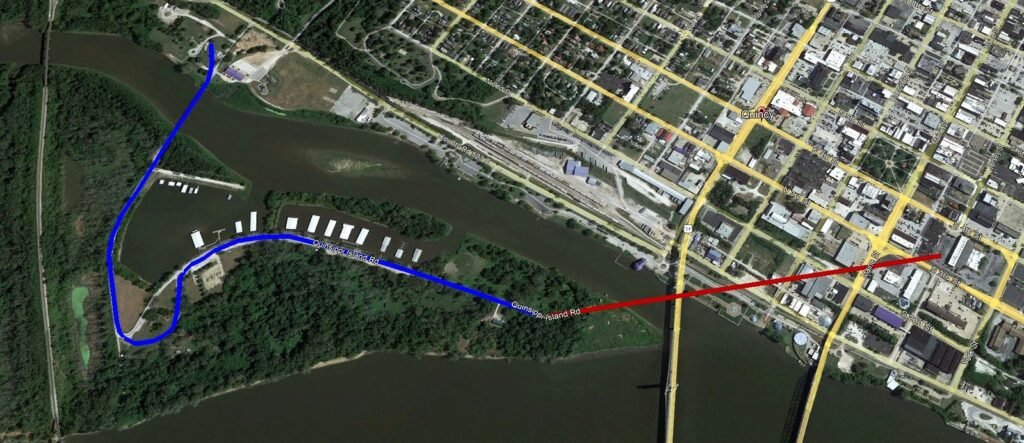
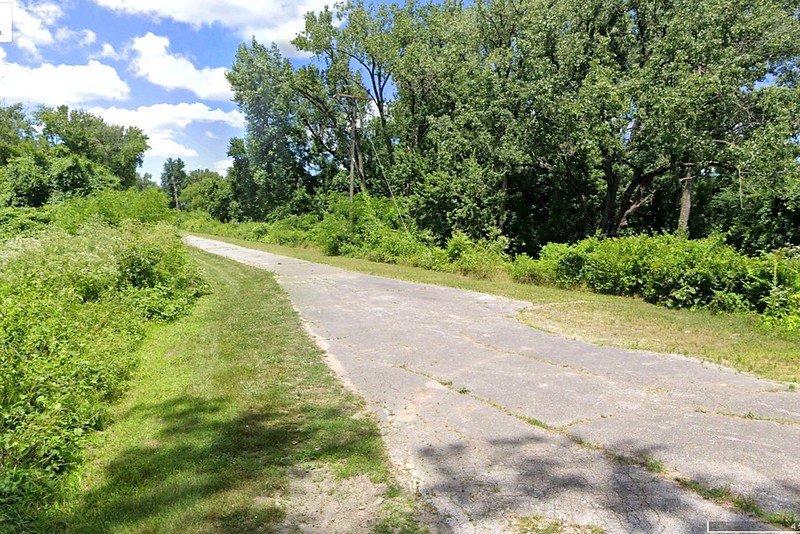
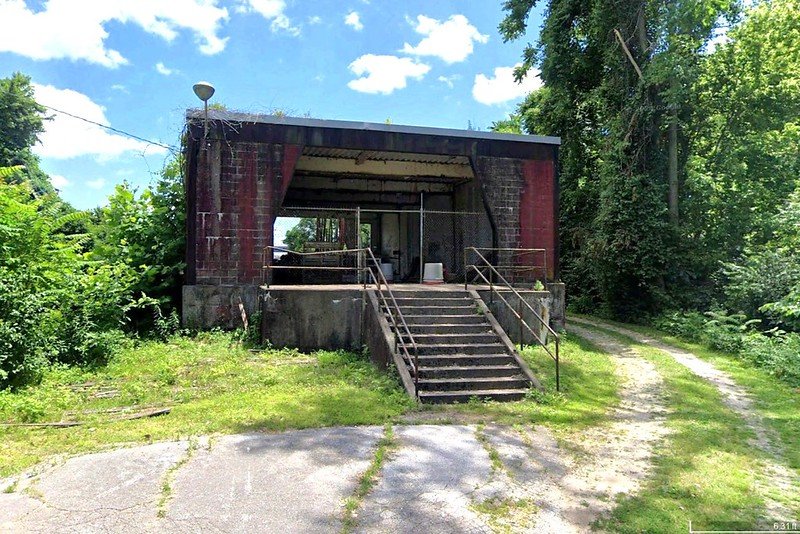
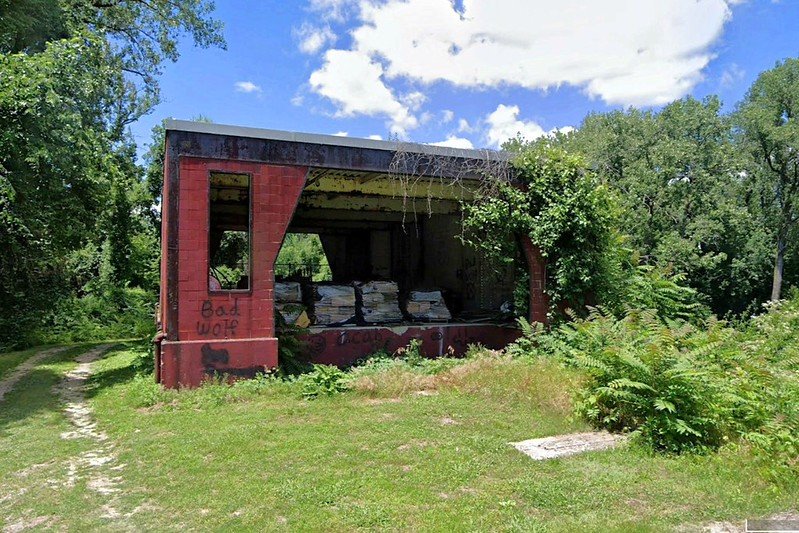
A few reminders of the island’s ambitious past can still be found. The former Sky Cruise terminal on the island still stands, albeit in a derelict condition. The route of the miniature railroad is now a paved road. The circular outline of the turntable can still be made out at the southern terminal station next to the abandoned Sky Cruise building. Also if you look down the center of the bridge, you can still see where the tracks used to run.
All America Park still exists, although nowadays it consists of a small parking lot, skate park and picnic area. The Antique Auto Museum lasted 48 years before being forced to close in 2015.
The old Sky Cruise station was located on 3rd Street. The site of the station is now the parking lot for the Atrium Hotel.