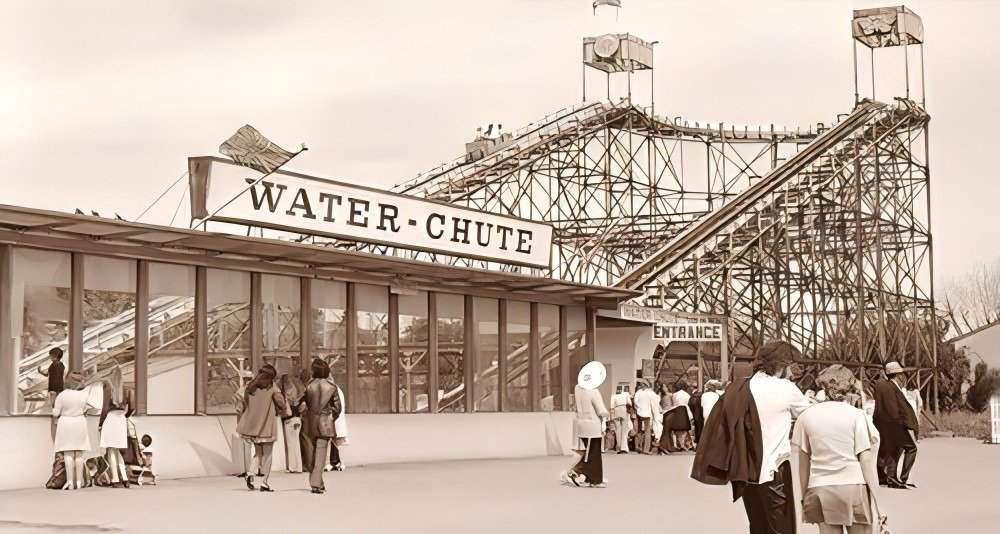
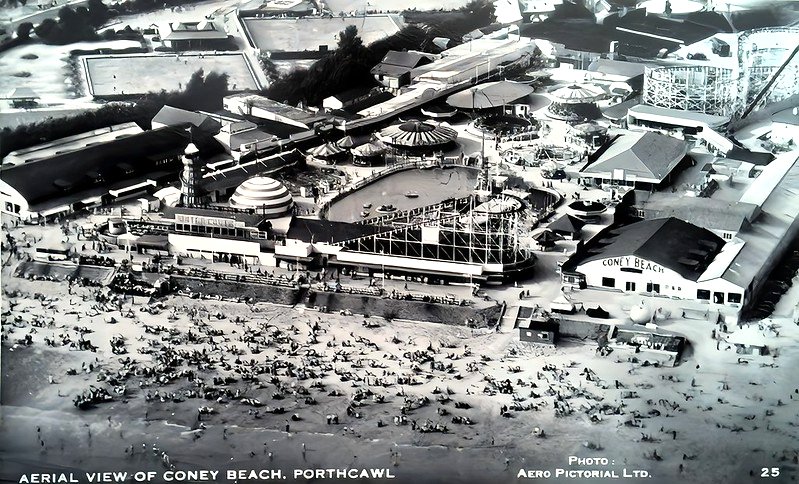
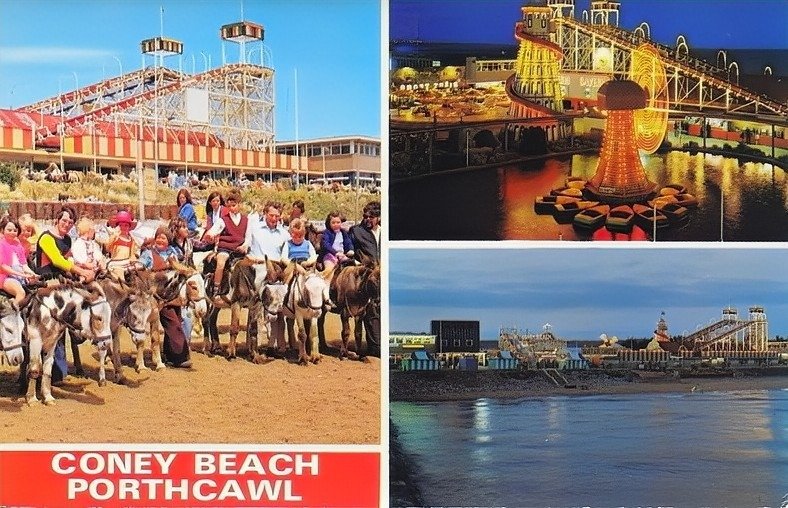
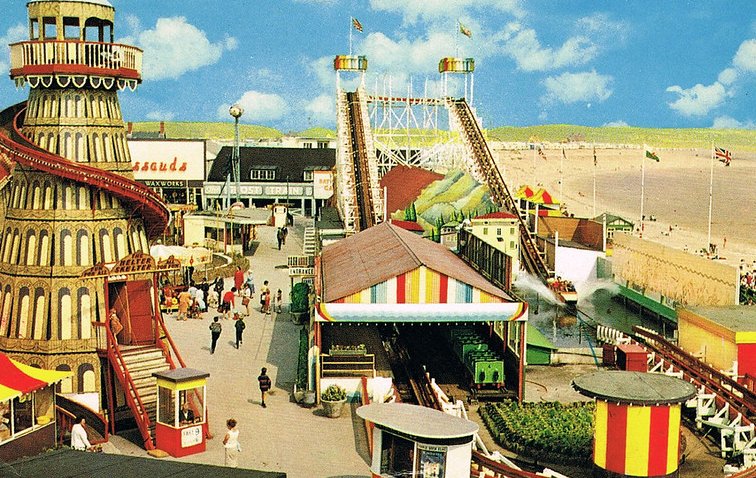
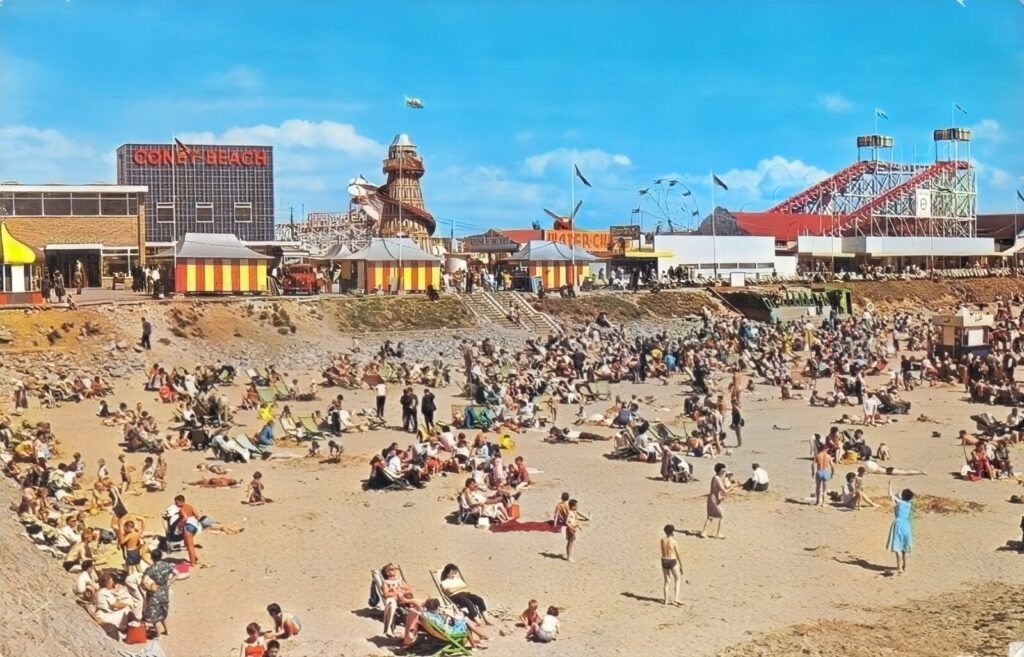
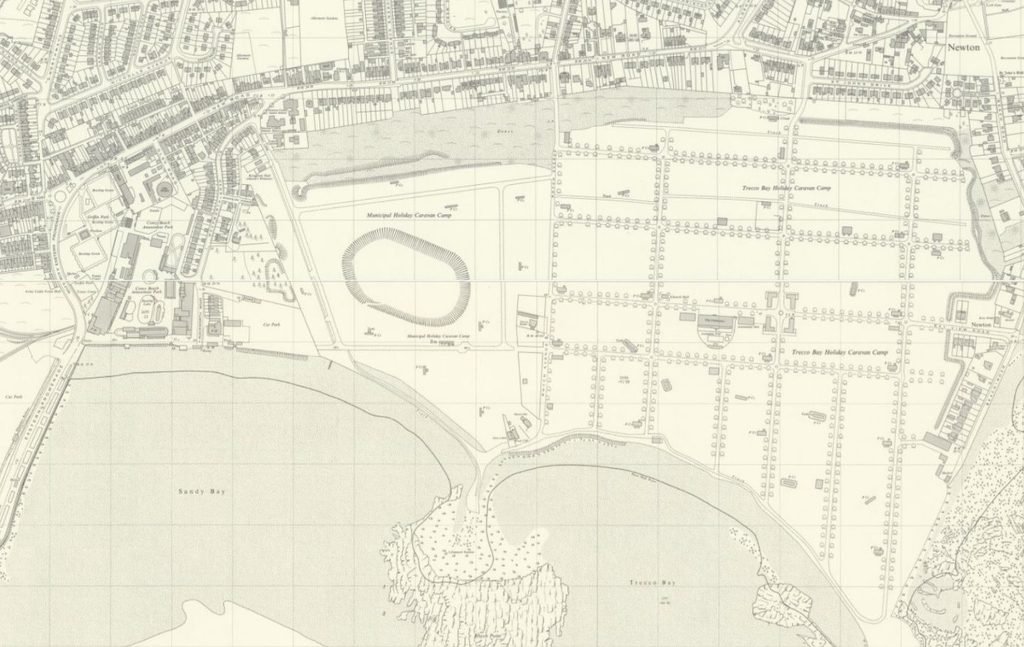
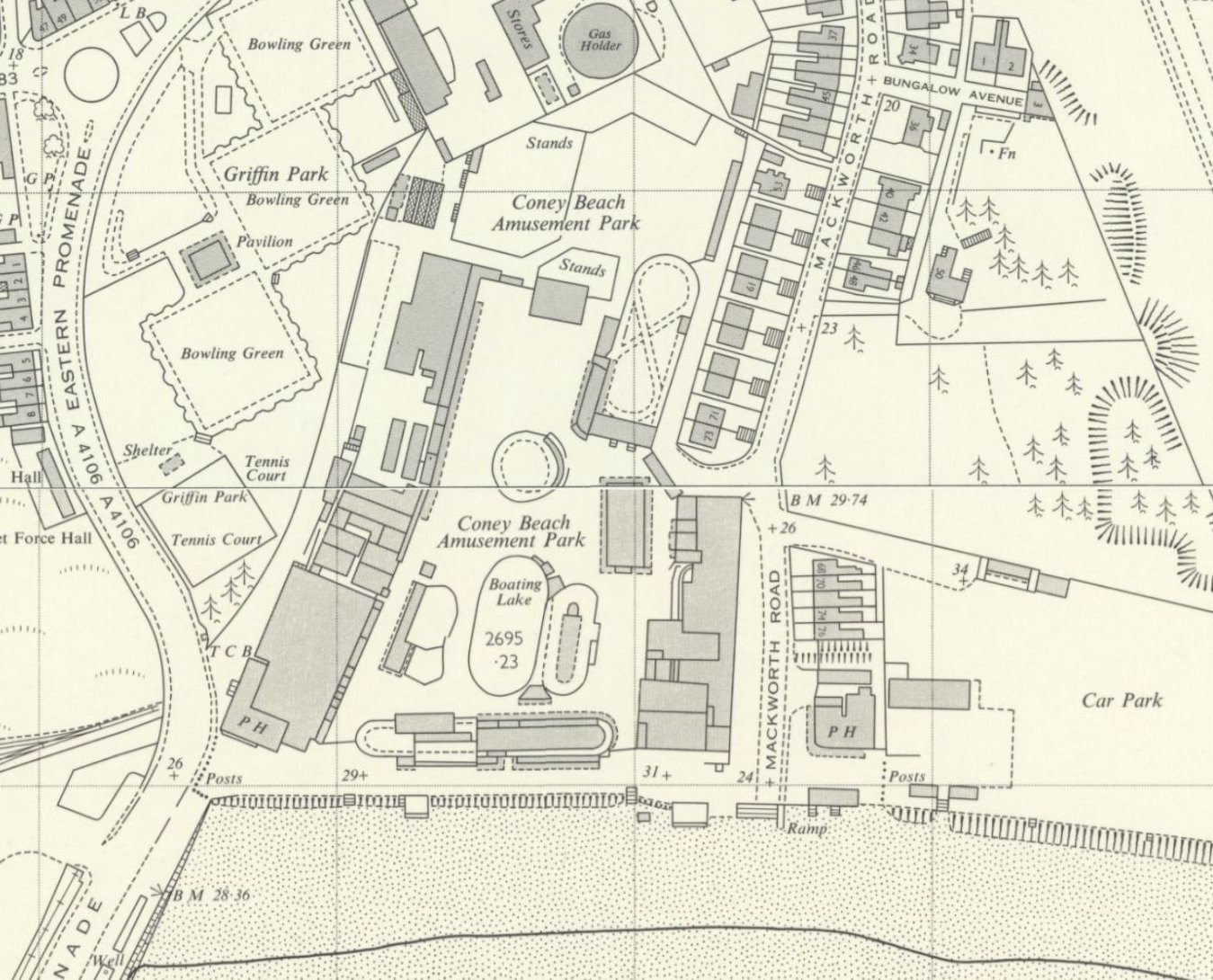
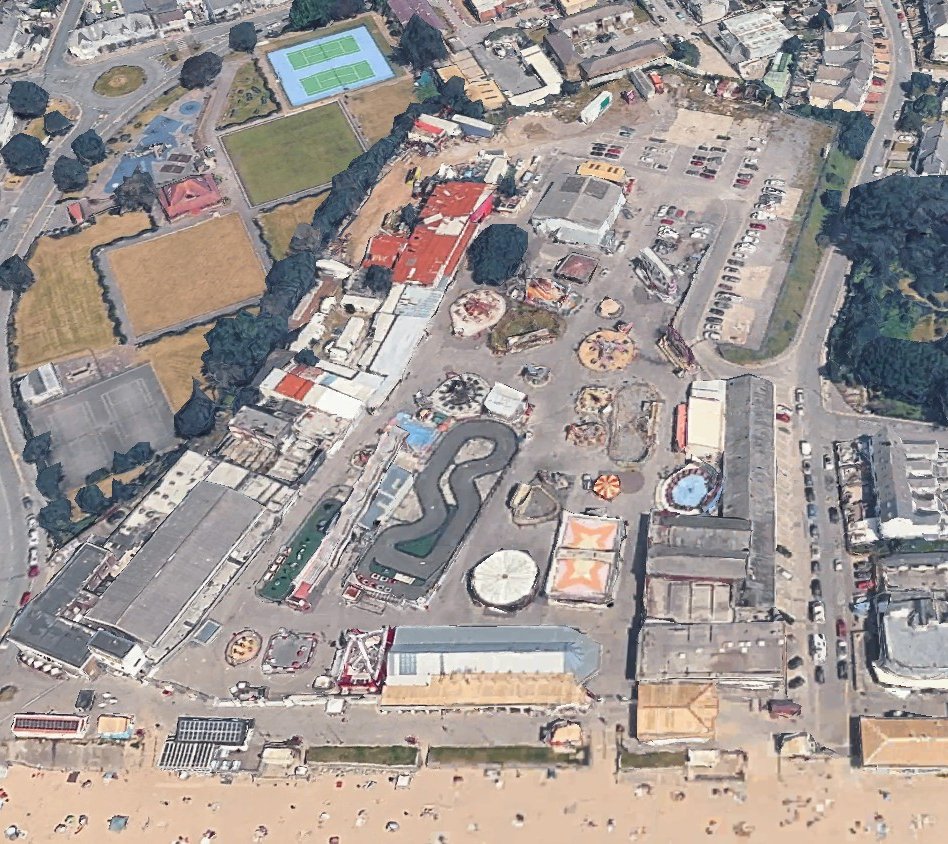
Coney Beach Pleasure Park in Porthcawl was founded in 1921 by local businessman Ernest Joseph, who redeveloped a 24-acre former seaside ballast pit. Other attractions included a bandstand, outdoor and indoor skating rinks, three cinemas, and a pantomime stage. The Joseph family were well established in the area, owning a string of local newspapers and a construction company that later played a key role in rebuilding large parts of Swansea after the Second World War.
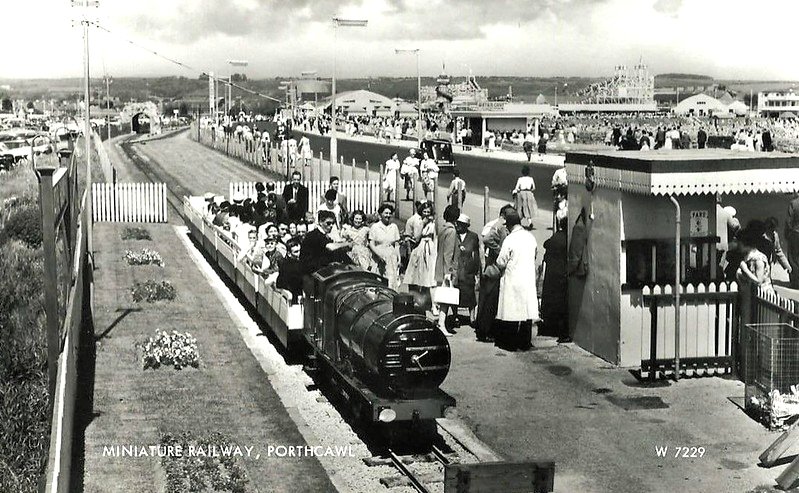
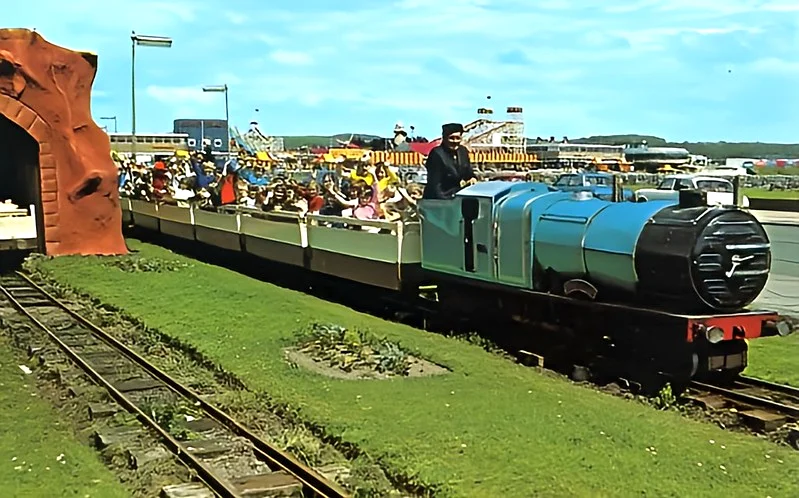
To establish his amusement park, Ernest Joseph acquired two ex–First World War aircraft hangars and a second-hand Figure 8 roller coaster from Swansea. His only son, Major Leslie Joseph, soon joined the venture and quickly made his mark, becoming managing director at just 21 years of age. In 1935 Leslie built a short miniature railway which ran outside of the park, it started from a station near the main entrance and ran south for 400 yards following the edge of the road. The following year he designed and constructed a 65-foot Water Chute.
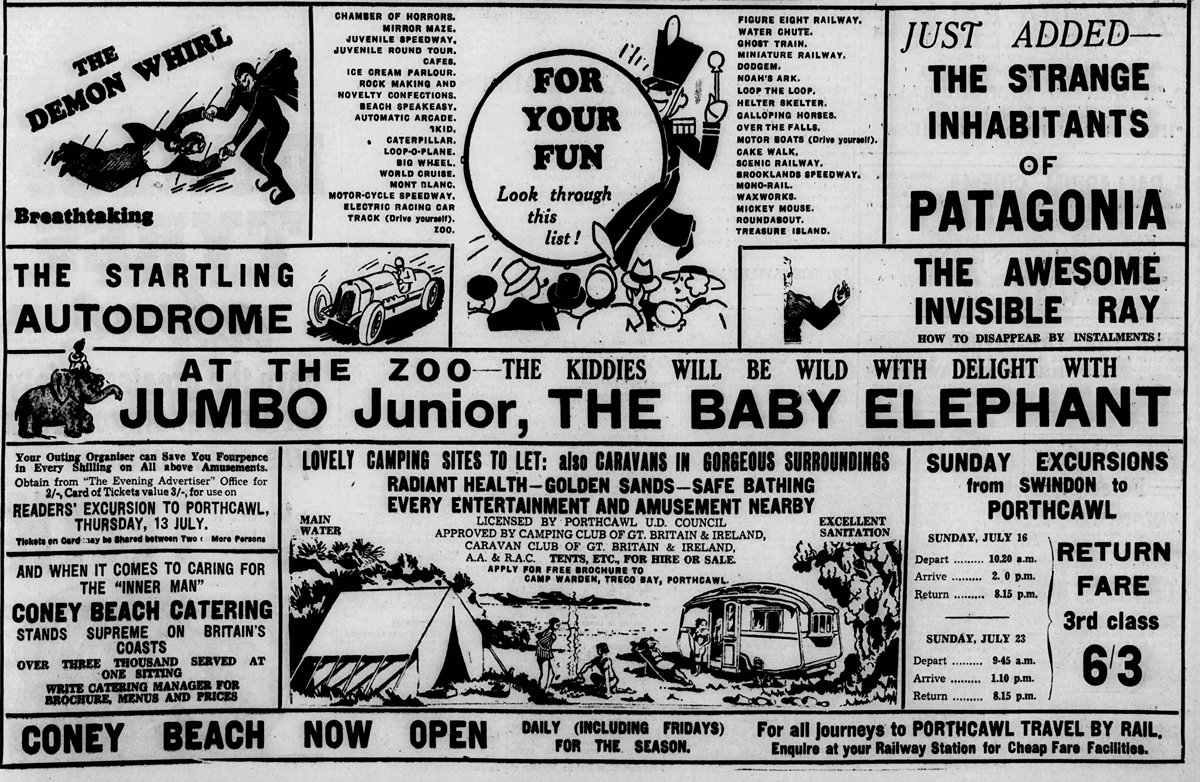
After the Second World War, Leslie found new ways to bring crowds to Porthcawl. He began an annual fireworks show in 1947 which usually ran for three days a week in September. The highly polished 40 minute show soon became one of the largest in the country complete with synchronized music, live commentary, tightrope walkers and mock naval battles. In 1948, a large 12,000 seat arena opened beside the amusement park to accommodate the fireworks. Brass band concerts were staged there during its first season, and boxing followed in 1949 which continued throughout the 1950s and 1960s. Henry Cooper appeared there in 1958. The arena also hosted a popular annual jazz festival.
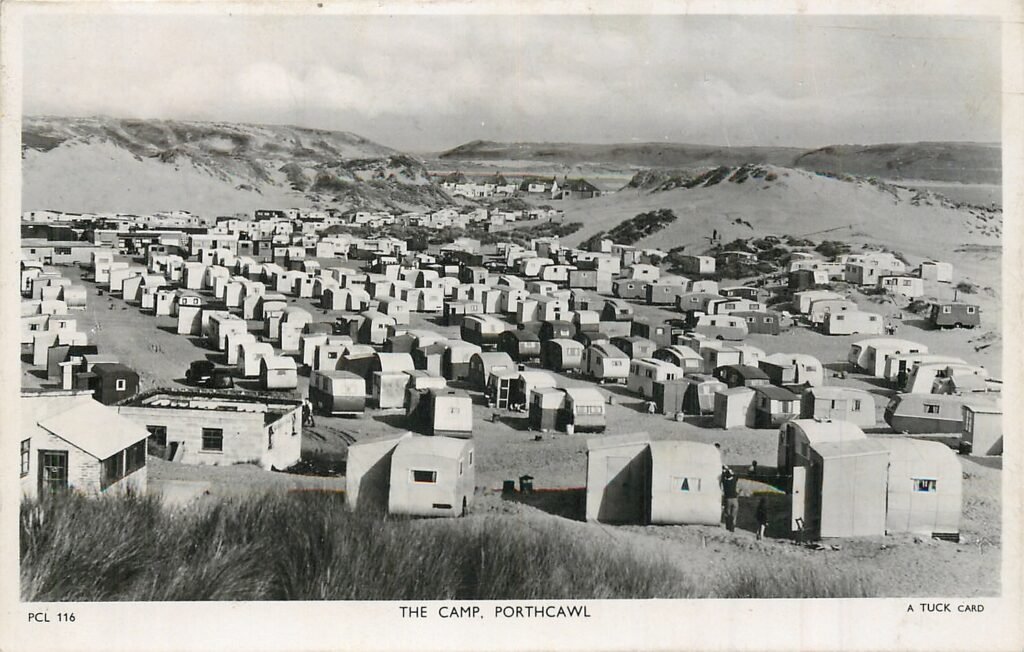
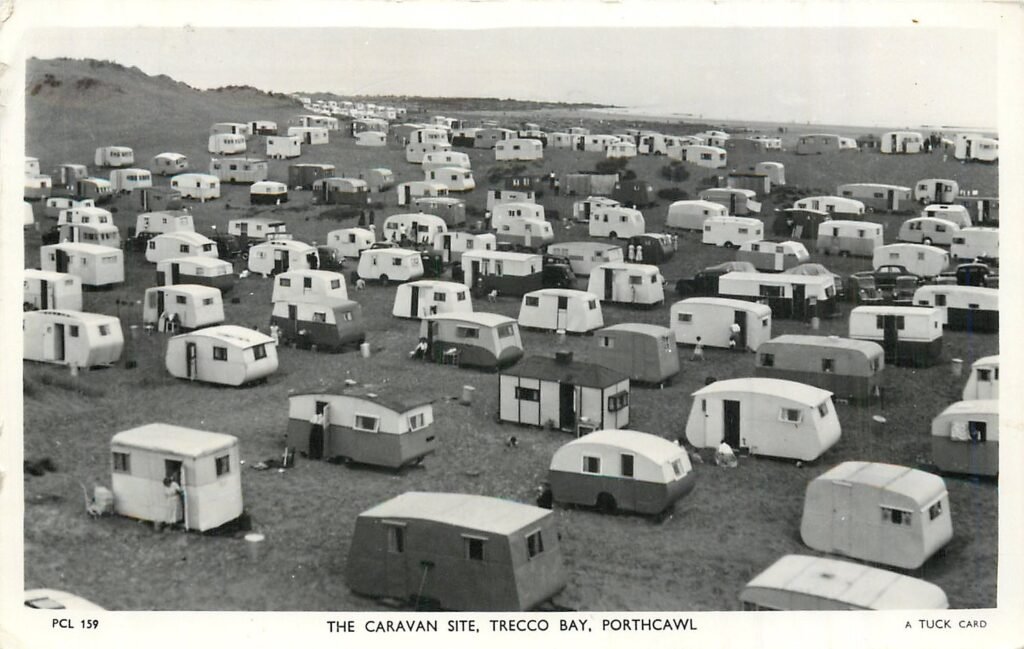
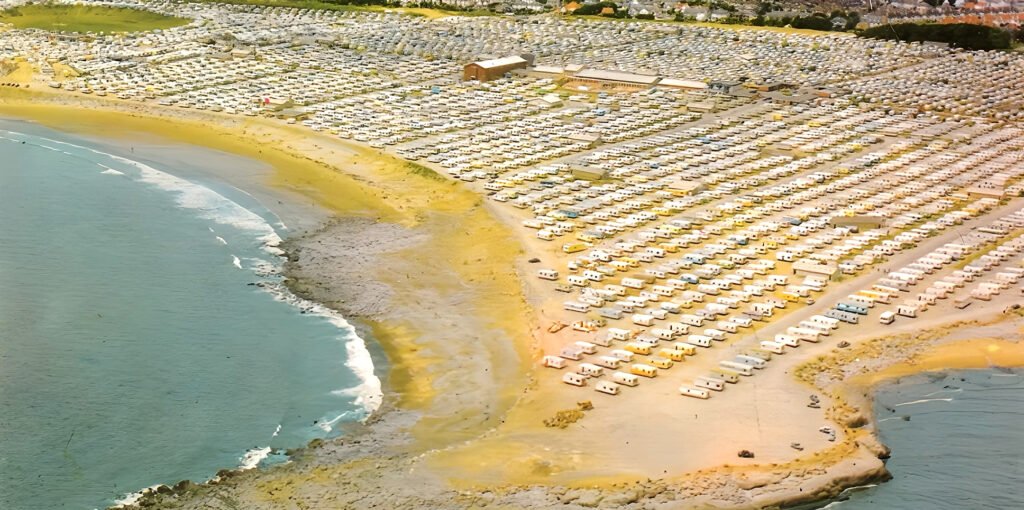
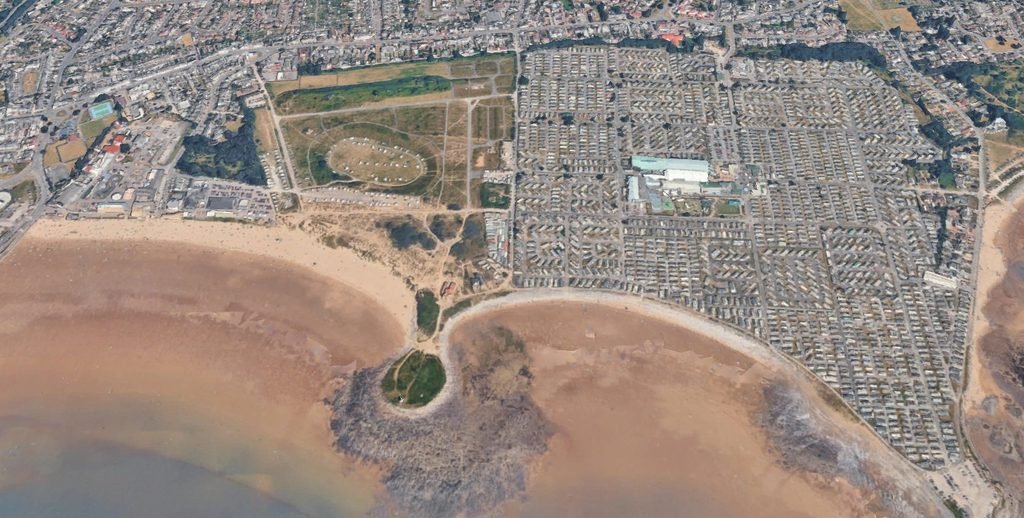
Another major success of Ernest Joseph was the Trecco Bay caravan park which he first established as a camping ground in the 1930s. By the end of the decade the site held around 100 caravans and continued to expand rapidly throughout the 1950s. By 1960 the 130-acre park contained over 1,000 caravans. A major expansion followed in the early 1960s: “for three years, heavy machinery reshaped the landscape, shifting thousands of tons of sand to level hills and fill hollows, creating a gentle slope down towards the sea.” By the mid-1960s Trecco Bay had grown to 3,300 caravans, making it the largest caravan park in Britain. Next door was another 40-acre caravan park owned by the local council, which contained another 1000 caravans.
Leslie’s reputation for organising large attractions brought him to the attention of the government during preparations for the Festival of Britain. The Festival Gardens at Battersea Park were behind schedule and beset by problems. Joseph was brought in as managing director and was told to “sort out the mess”. He managed to get it open and it earned him a knigthood in the 1952 New Year Honours. Over the next few years, Sir Leslie continued to manage the park and owned several ride concessions.
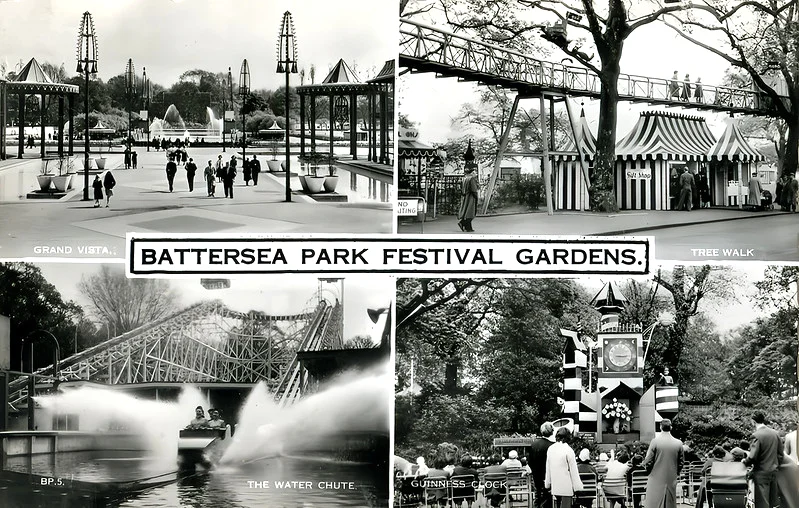
Battersea also brought Joseph into business with Charles Forte who had been awarded the Festival Gardens catering contract. The government continued to operate the gardens through the 1953 Coronation season, then withdrew at the end of the year. Most of the temporary attractions were removed, but the funfair survived. A company headed by Joseph and Forte took it over on a 21-year lease.
In 1955 Leslie Joseph built another one of his Water Chutes at Battersea Park, followed by a third in 1957 at Belle Vue, Manchester, and a fourth in 1958 at Southend’s Kursaal.
In 1959 he teamed up with Charles Forte to acquire Belle Vue, with Joseph becoming managing director and Forte serving as deputy chairman. During the late 1960s Joseph sold Coney Beach and Trecco Bay to Forte and joined the board of Trusthouse Forte, eventually rising to the position of vice-chairman.
During the late 1960s, Fortes created a new leisure division known as Entam, with Sir Leslie appointed chairman and Kenneth Paxton as managing director. All of Forte’s existing leisure and tourism interests – including zoos, amusement parks, and holiday parks – were transferred into the new company. Entam then embarked on a major acquisition drive, purchasing nine seaside piers along with ballrooms, bars, arcades and more amusement and holiday parks.
Most of these attractions were concentrated in Britain’s seaside resorts. As holidaymakers increasingly turned to foreign travel during the 1970s, many traditional resorts entered a period of steep decline. Within little more than a decade, much of Entam’s portfolio had either been sold off or closed entirely. Among the disposals was Coney Beach in Porthcawl, which Sir Leslie Joseph was able to buy back.
By then, some of the attractions that had defined the Joseph years were disappearing. In 1981 the park was sold to Pat Evans. Later that year the old Figure Eight roller coaster was closed. The miniature railway followed in 1986, and the annual fireworks came to an end. The arena, once the setting for packed boxing matches and elaborate shows, was increasingly used for markets and car boot sales. Coney Beach continued to operate, but its great years as an all-round entertainment venue had passed. Trecco Bay was sold to First Leisure in 1984 and then to Parkdean Holidays in 1999.
Sir Leslie Joseph died in January 1992, aged 83. Ernest, affectionately known as “Mr Coney Beach,” had died in 1959. At Ernest’s funeral, a floral wreath was made in the shape of a Figure Eight – a tribute to the roller coaster with which his pleasure park had begun.
In 2023, it was announced that Coney Beach had been sold to the Welsh government who announced that the rundown park would be closing for good at the end of 2025. The park is due to be demolished and the land extensively redeveloped. Trecco Bay remains as popular as ever.
What happened to the Leslie Joseph water chutes?
The original 1932 Porthcawl ride lasted until 1995 when it was tore down after a fatal accident the previous year. The Battersea ride was sold to Dreamland Margate in 1977 and continued in use until 1995. The Belle Vue ride was sold to Blackpool Pleasure Beach in 1979 and reopened as Vikingar where it remained in use until 2003. The Southend Kursaal ride was sold to Ocean Beach Rhyl in 1971 and continued in use until 2007. Parts of the ride, including the boats, were rescued by the Save Dreamland Campaign. In 1972 another Water Chute opened at Great Yarmouth Pleasure Beach which was built by the park to the original Leslie Joseph plans. It lasted until 1992 when it was scrapped.