In the 1920s, Andrew Carmichael Arbuthnot had a dream – quite literally. One night he dreamed of an extraordinary house, complete with fine oak interiors, twisted wooden pillars and door brasses fashioned in the shapes of hearts, diamonds, spades and clubs. When he awoke the following morning, the vision was apparently still so vivid that he decided to build the house he had seen in his sleep.
For most people, such an idea would have remained nothing more than a dream. Arbuthnot, however, had both the determination and the considerable fortune required to turn it into reality. His family was behind the private merchant bank Arbuthnot Latham & Co., and money was no obstacle when it came to recreating his imagined house exactly as he remembered it.
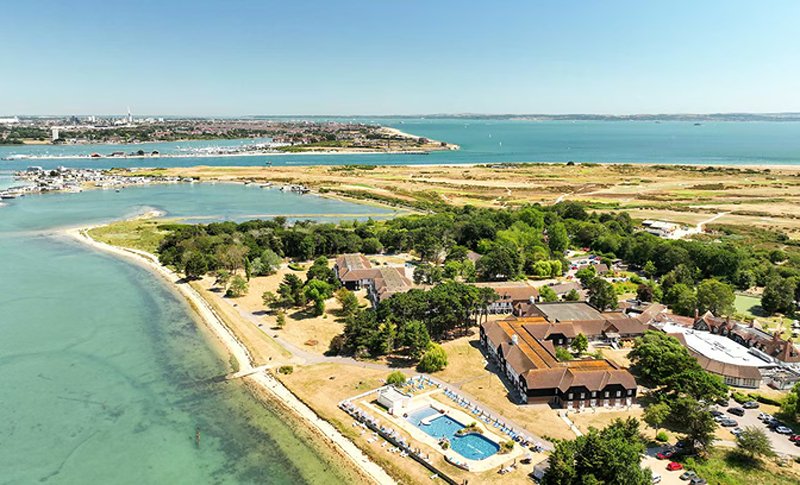
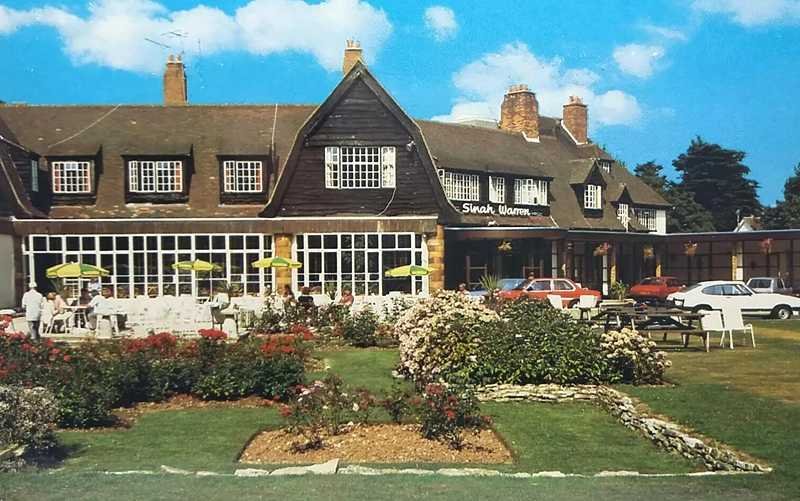
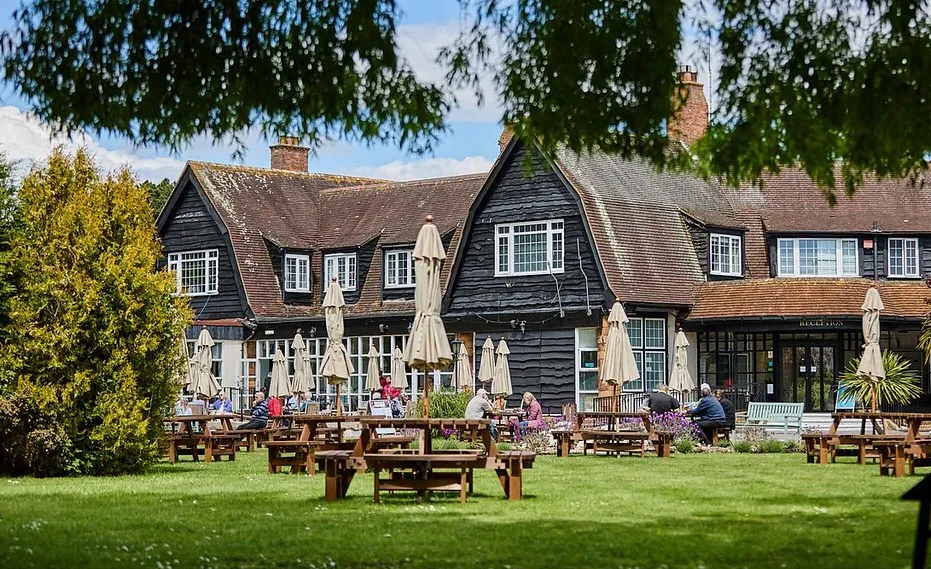
The result was Sinah Warren, built on the western end of Hayling Island overlooking Langstone Harbour. No expense was spared in bringing Arbuthnot’s unusual vision to life. An expert on timber, he personally ensured that only the choicest woods were incorporated into the house, with fine oak used extensively throughout. Even the more eccentric details from his dream were reproduced, including the twisted pillars and playing-card-inspired door fittings.
His enthusiasm for timber extended far beyond the walls of the house. Arbuthnot was fascinated by trees and plants and began transforming the surrounding estate into something approaching a private arboretum. Specimens were collected from his travels and planted throughout the grounds. Local tradition maintains that his ambition was to grow an example of every known tree, or at least every variety that could survive the British climate. Whatever the precise truth, the extraordinary variety of mature trees which later characterised Sinah Warren owed much to Arbuthnot’s enthusiasm.
The estate was not kept entirely hidden from the outside world. Arbuthnot and his wife Jessie were well-known figures locally and occasionally allowed visitors to explore the grounds and admire the unusual collection of trees. Jessie came from another extremely wealthy family, being the daughter of Charles Edward Lambert and connected with the Lambert & Butler tobacco business. Together the couple entertained on a lavish scale, holding parties at Sinah Warren which became legendary on Hayling Island.
Arbuthnot was certainly no ordinary country gentleman. He had served with the Seaforth Highlanders during the Boer War and later drove an ambulance during the First World War. At Sinah Warren his interests ranged from horticulture and forestry to agriculture, and the estate eventually became home to a large-scale farming operation. He experimented first with Angora rabbits before turning increasingly to poultry production.
During the Second World War the house was taken over by the Navy but Arbuthnot continued developing the gardens into what has been described locally as one of Britain’s early examples of intensive or “factory” farming, helping to increase food production at a time of national shortage.
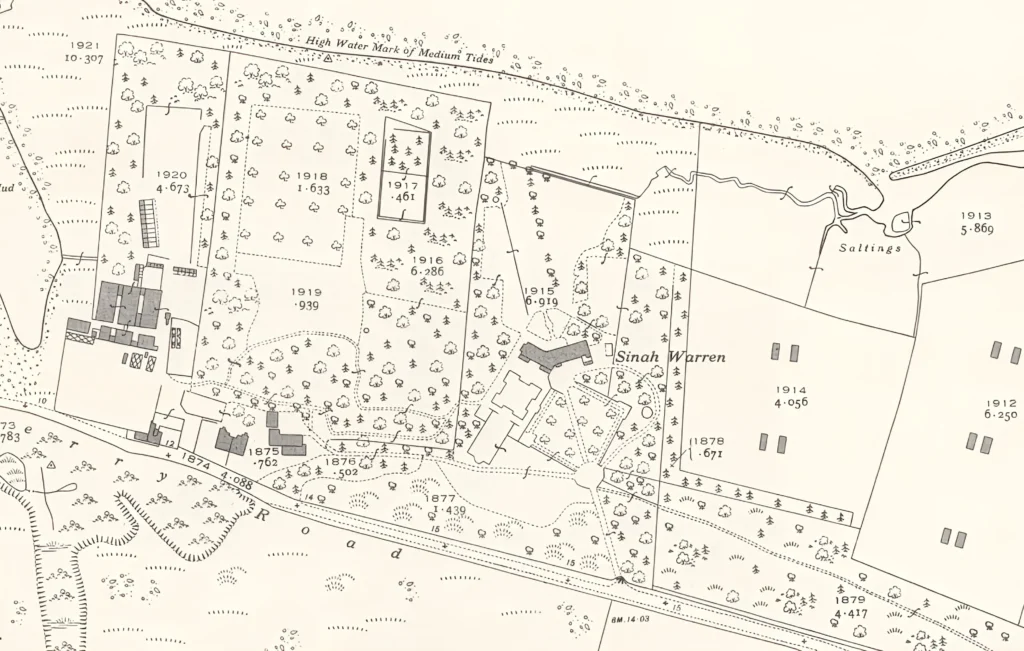
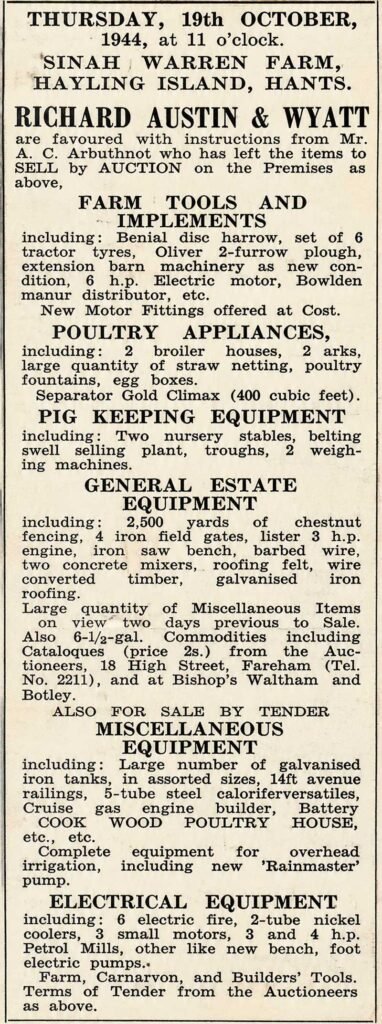
For reasons that remain something of a mystery, Arbuthnot’s enthusiasm for Sinah Warren eventually disappeared almost as suddenly as it had begun. Partway through the Second World War, the man who had devoted so much time and money to creating his dream estate seemingly lost interest in it altogether. He dismissed the staff, sold off the farm machinery and effectively walked away from the place. Rather than return to his grand mansion, he chose instead to live in a modest two-bedroom flat nearby.
Exactly what prompted such a dramatic change is unclear. Contemporary recollections portray Arbuthnot as an unusual character who could be both impulsive and unpredictable. One local who remembered him described him as eccentric and “intensely fascinating”.
Whatever his reasons, Arbuthnot showed no desire to return. After the Royal Navy eventually vacated Sinah Warren, the mansion was simply left standing empty. For the next thirteen years the house and its once immaculate grounds were largely abandoned.
Inevitably, deterioration soon set in. The extensive gardens, which at their peak had required a staff of twelve gardeners to maintain them, became increasingly overgrown, while the empty mansion attracted the attention of thieves and vandals. In 1948, four men were arrested after attempting to steal lead from the roof – an indication of just how vulnerable the deserted property had become.
It was a sad end to Arbuthnot’s grand experiment. The carefully selected timbers, exotic trees and elaborate gardens had all been created as part of one man’s vision, yet within little more than two decades Sinah Warren had gone from being one of Hayling Island’s most remarkable private estates to an empty and decaying mansion.
Arbuthnot died in 1953 without ever returning to live at Sinah Warren. By then the property had already been abandoned for several years, and it appeared increasingly uncertain whether the house had any future at all.
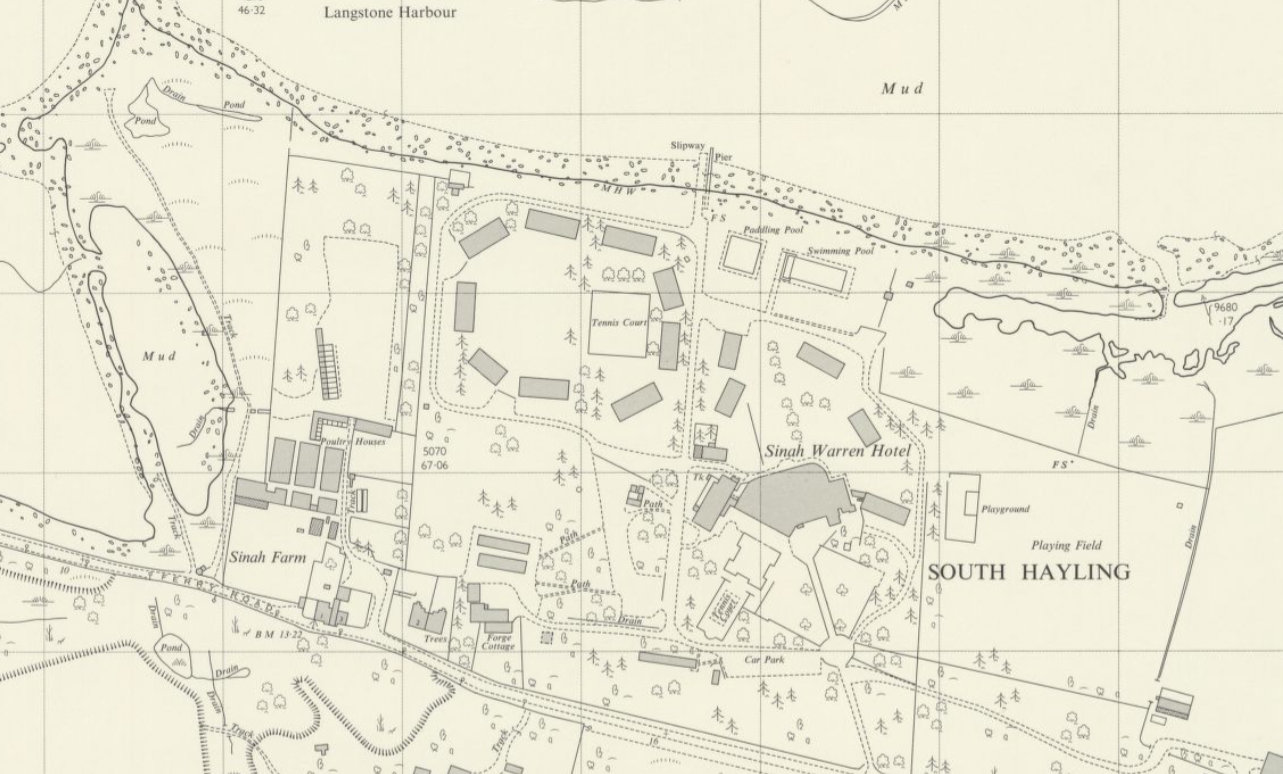
That future finally arrived in 1957 when the 53-acre estate was purchased by Portsmouth builder Albert Figgins. Where others might have seen little more than a neglected mansion surrounded by overgrown grounds, Figgins saw the potential for an entirely new type of business. He began restoring the house and converting it for use as a hotel, while rows of new brick-built holiday chalets were constructed throughout the grounds, all with private bathrooms.
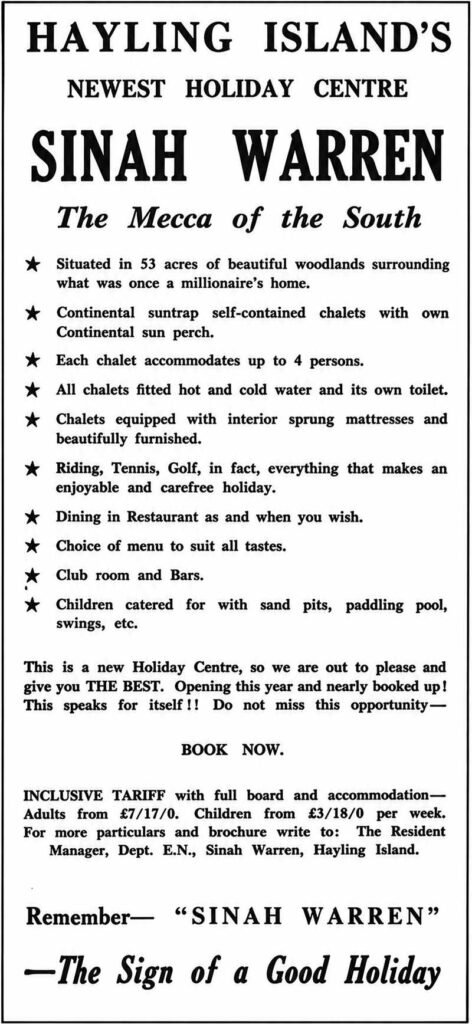
In May 1958, Sinah Warren finally came back to life, not as the private retreat of a wealthy banker, but as a holiday camp. Initially capable of accommodating around 200 guests, the new venture opened the estate to ordinary holidaymakers for the first time.
Figgins did not remain at Sinah Warren for long. Less than a year after opening the holiday camp, he received what was apparently an offer too good to refuse, and the entire site was sold to Warner Holidays. For Warner, the acquisition provided an established holiday centre with considerable room for expansion, while for Figgins it represented a remarkably quick return on a project he had only recently completed.
Sinah Warren also had an interesting parallel within the rival Pontins empire. Barton Hall, a country estate on the outskirts of Torquay, had opened as a holiday camp in 1951 and was acquired by Fred Pontin in 1956. Under the management of his sister Elsie Brown, it developed into one of Pontins’ most prestigious resorts, with an emphasis on good food, attentive service and a more refined atmosphere.
Whether Pontins’ earlier acquisition and success at Barton Hall influenced Warner’s decision to buy Sinah Warren is unknown, but the similarities are striking. Both companies now possessed a flagship country-house resort that stood apart from their more conventional holiday camps. Both retained the familiar full-board formula, but combined it with grand surroundings, better dining and a greater emphasis on comfort and exclusivity. In effect, each company had found a way of taking the traditional British holiday camp distinctly upmarket.
The Warner family evidently took an immediate liking to their new acquisition. In October 1959, John Warner, one of the Warner brothers, even held his wedding reception at Sinah Warren, giving the former Arbuthnot mansion another brief taste of the grand social occasions for which it had once been famous.
Figgins subsequently turned his attention across the Solent to the Isle of Wight, where he developed two further successful holiday centres at Fort Warden and Nodes Point. He continued operating both until 1973, when they were sold to Ladbrokes Holidays. By then, Sinah Warren had long since become part of the expanding Warner empire, beginning the association with the Warner name that continues to the present day.
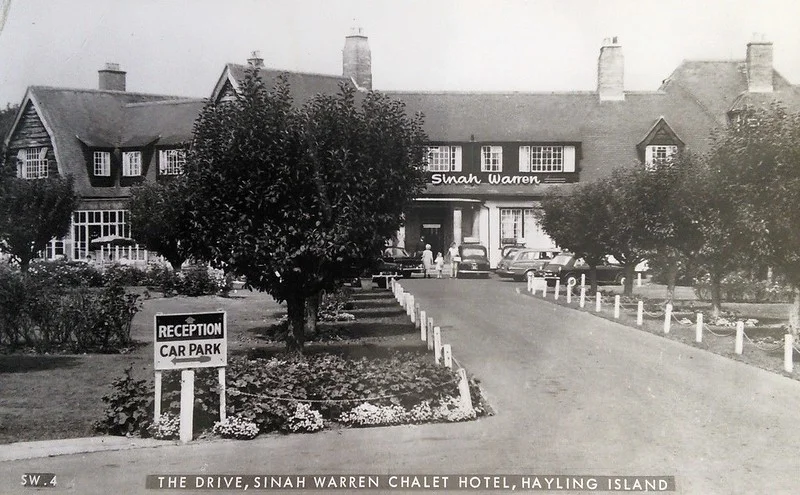
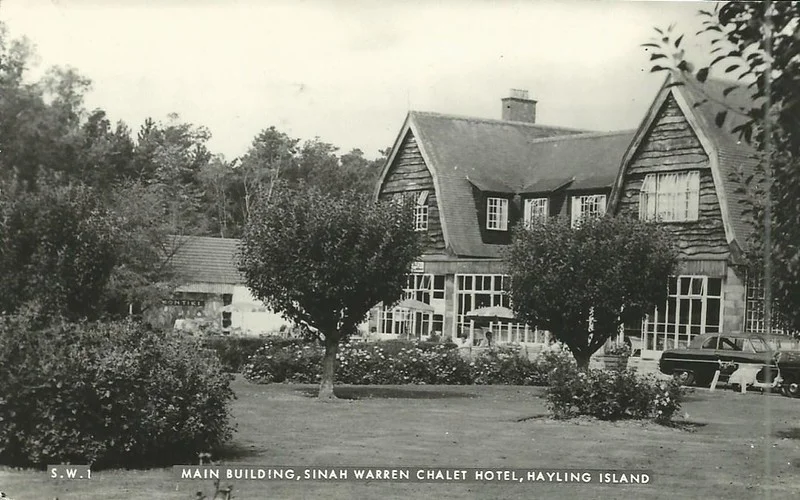
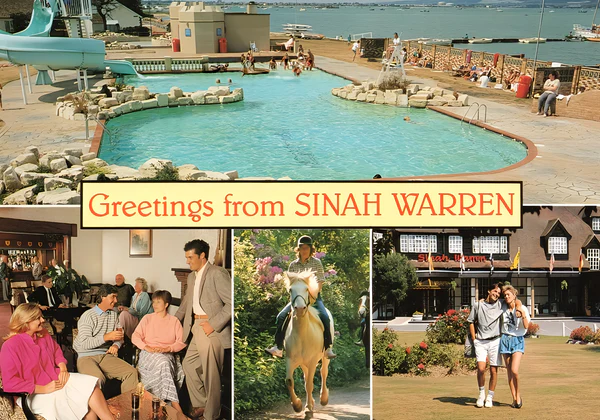
Warner had wanted to expand Sinah Warren almost from the moment it acquired the property, but its early proposals had met with fierce local opposition. Some of the objections also revealed the rather unflattering image that holiday camps – and their guests – had among certain sections of the local community. One resident complained that the typical holiday camper “noisily parades the streets in a degree of undress and behaves as if he has bought the island for a week.” Another described holiday camps as “a necessary evil,” while a third warned that, with a golf course nearby, “holiday campers and golfers cannot exist side by side.”
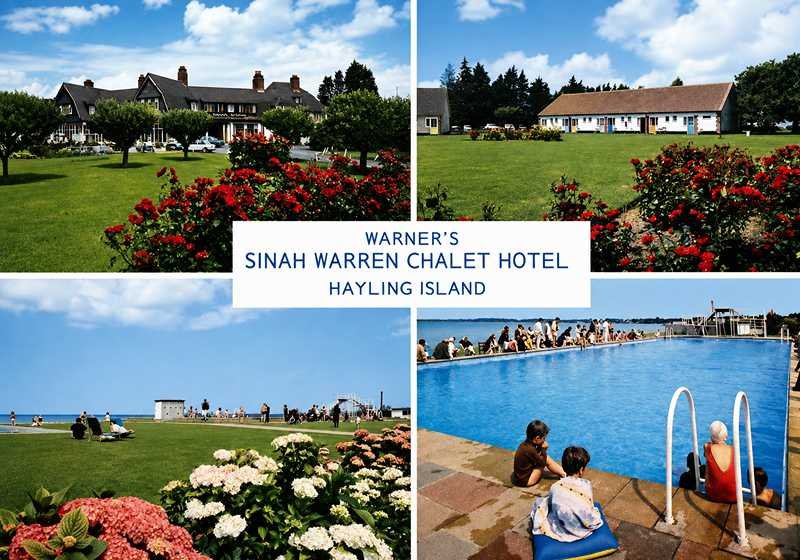
Despite this, new chalets were added which more than doubled its capacity to around 500 guests. But despite its growth, it was never treated as just another Warner holiday camp. The company recognised that the mansion, mature grounds and millionaire origins gave Sinah Warren a character all of its own, and deliberately positioned it at the more exclusive end of the market.
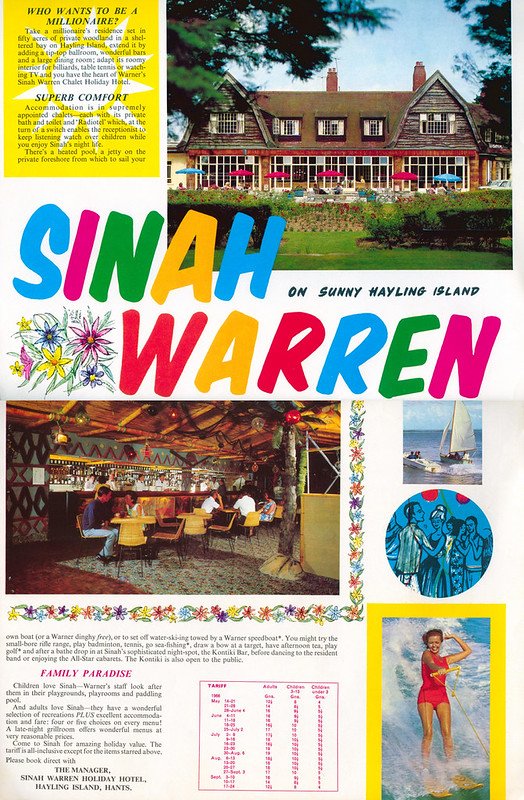
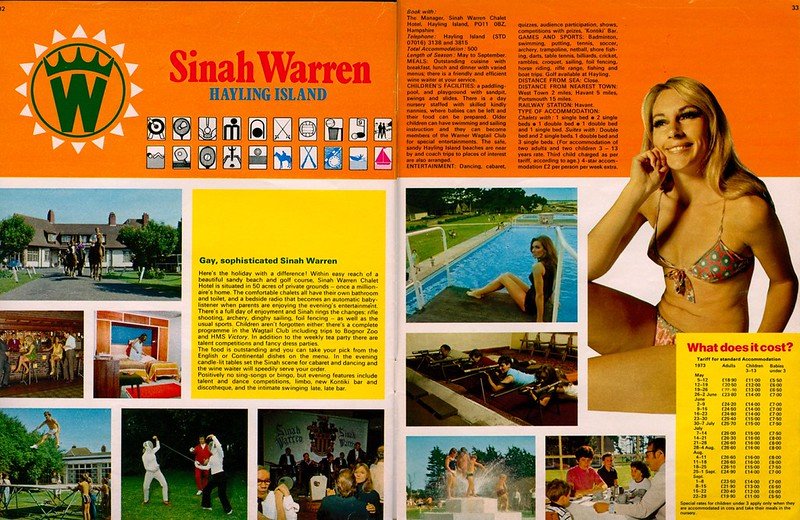
Warner generally avoided using the term “holiday camp” altogether, preferring to describe Sinah Warren as a “chalet hotel.” It was a subtle but deliberate distinction. Guests still enjoyed the familiar ingredients of a Warner holiday – chalet accommodation, organised activities, entertainment and three meals a day – but everything was presented as being a little quieter, smarter and more sophisticated. One advertisement summed up the difference rather neatly with the promise: “No sing-songs or bingo.”
New facilities were introduced to reinforce this more upmarket image. These included a Tiki bar and the popular Old English Grill, where guests could pay extra for a more refined alternative to the meals already included. Its chef described his ambitions rather modestly: “My aim is to serve food in such a way that a customer will say afterwards, ‘That was a jolly good meal I had.’”
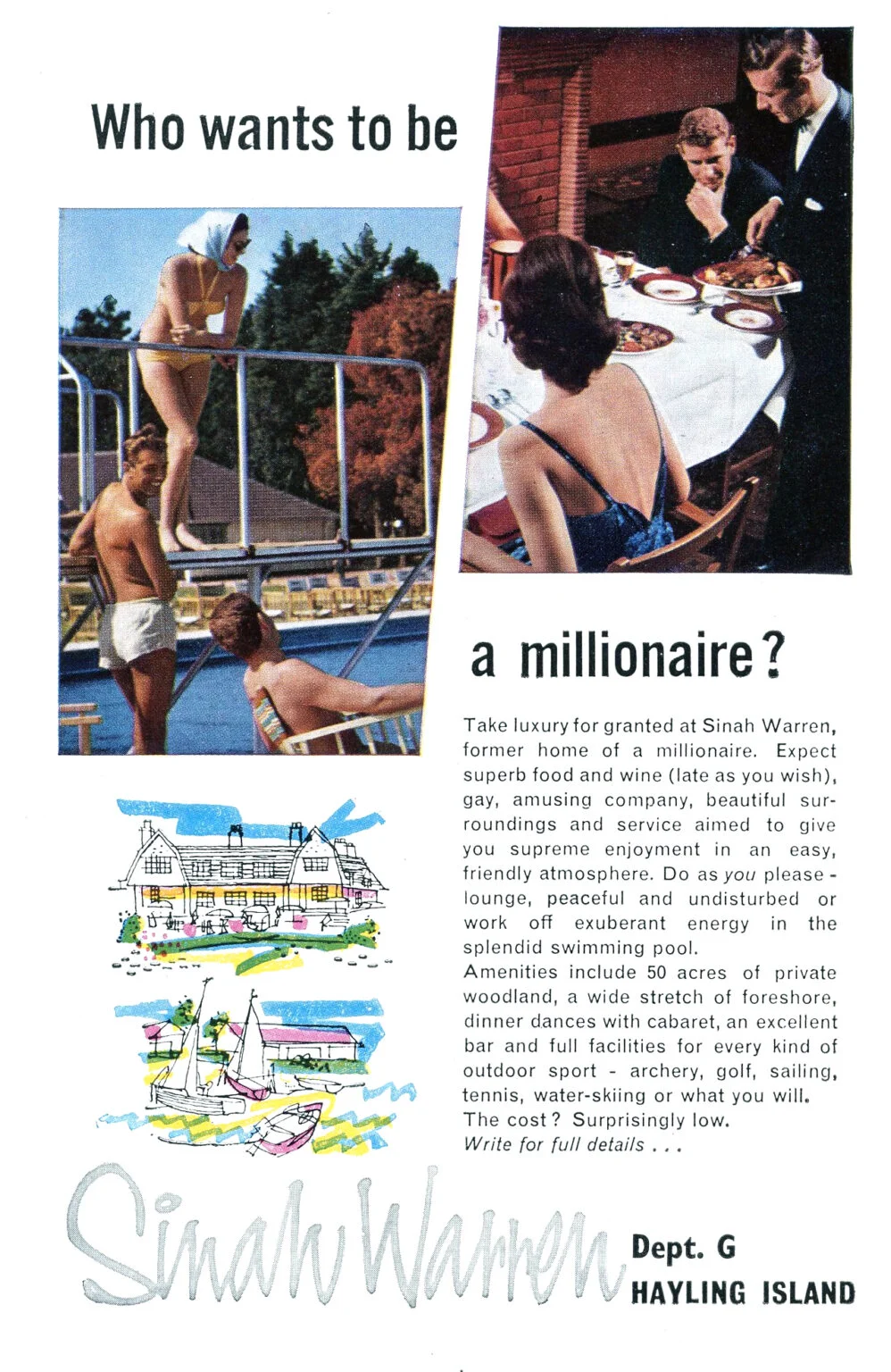
All this came at a price. Sinah Warren became the most expensive resort in the Warner portfolio, with prices consistently around 25% higher than other Warner camps. But rather than shy away from this, the company turned it into a selling point. Prospective guests were invited to “Take luxury for granted in the former home of a millionaire.”
It was clever marketing. Rather than trying to disguise Sinah Warren’s grand past beneath the trappings of a conventional holiday camp, Warner made that history part of the attraction. The mansion and its grounds provided a sense of exclusivity that could not easily be recreated elsewhere, allowing Sinah Warren to offer the familiar Warner formula while remaining distinctly different from the company’s other resorts.
Warner continued to invest in Sinah Warren. In 1981 a new nightclub opened under the name Arbuthnot’s, a fitting tribute to the eccentric millionaire who had created Sinah Warren more than half a century earlier.
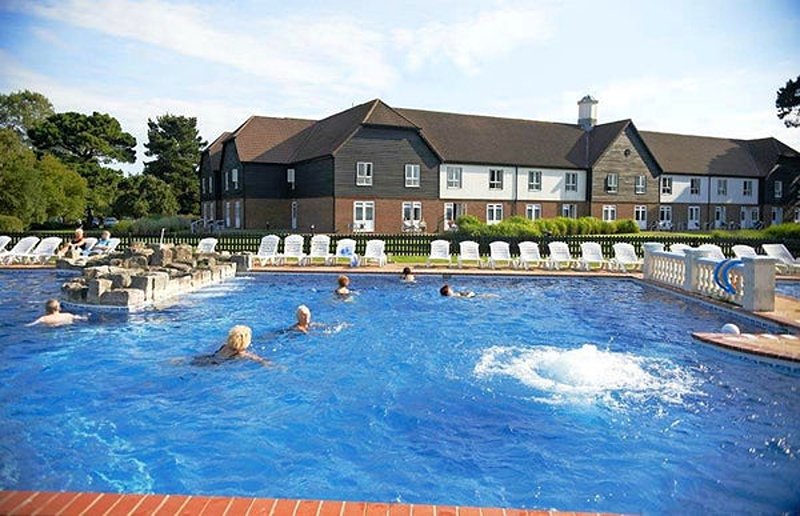
A huge investment followed in 1983, when Warner spent £500,000 on a new leisure complex. The development included an indoor swimming pool, gymnasium, sauna and badminton courts, considerably expanding the range of facilities available to guests and helping Sinah Warren keep pace with changing expectations of British holiday resorts.
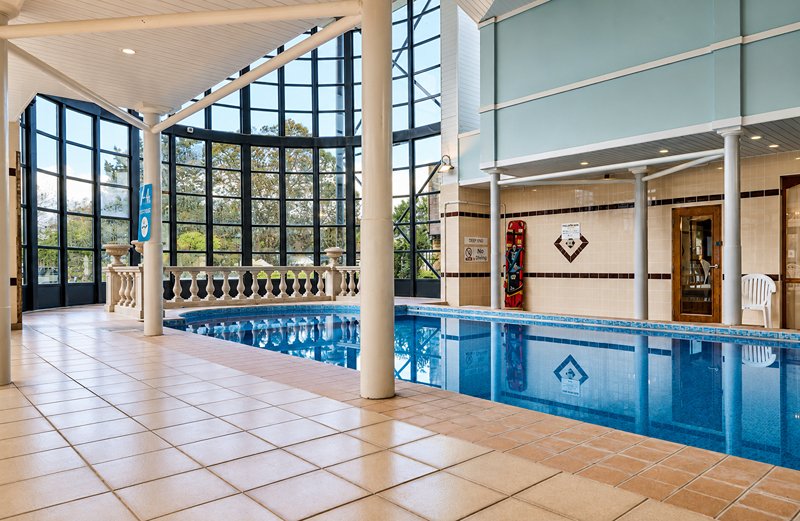
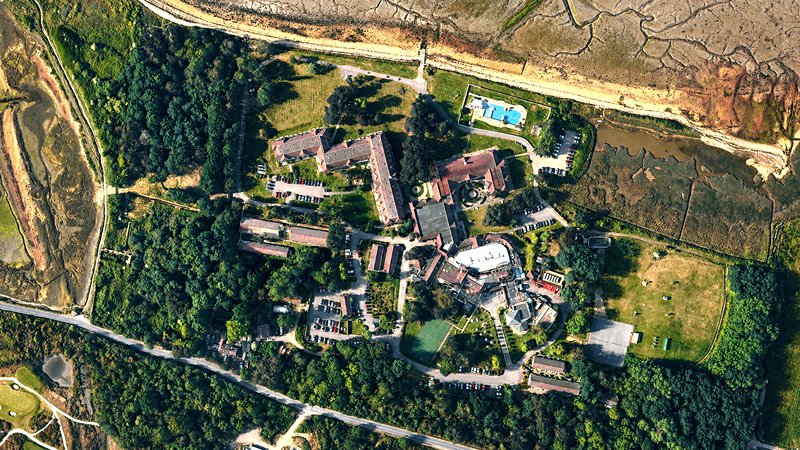
For many years, however, much of the accommodation continued to consist of the brick chalets that had gradually spread through the grounds since the holiday centre first opened. It was not until the late 1990s that the long-awaited major expansion finally took place. Most of the old chalets were demolished and replaced by two substantial new hotel buildings, providing around 250 bedrooms between them. The development marked perhaps the biggest change to Sinah Warren since Albert Figgins had first converted the abandoned estate into a holiday camp forty years earlier.
The emphasis was now firmly on hotel-style accommodation, completing a transition that Warner had arguably begun decades before when it chose to promote Sinah Warren as a “chalet hotel” rather than a conventional holiday camp. A handful of the old chalets escaped demolition and remain in the grounds, providing a small reminder of an earlier era in Sinah Warren’s history.
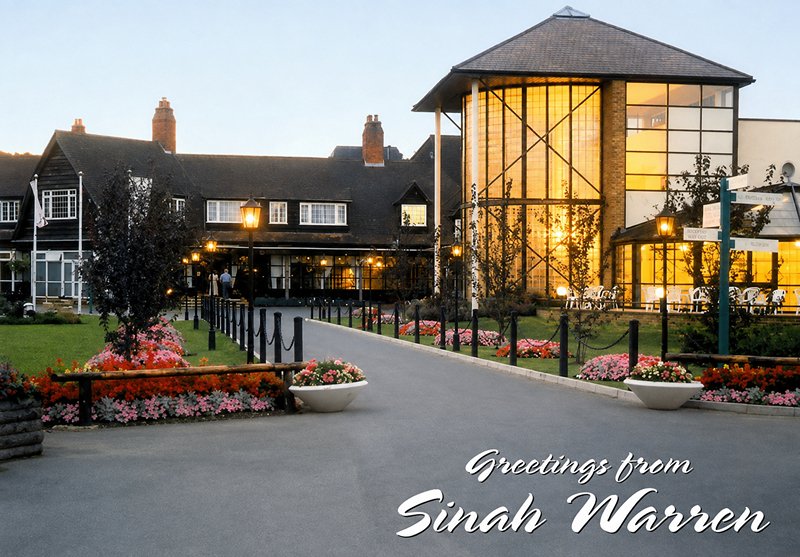
More than sixty-five years after Warner first arrived, Sinah Warren remains open today and is still part of the Warner Hotels portfolio. Now operating exclusively for adults, the resort bears little resemblance to the modest holiday camp that opened with just 200 guests in 1958. Modern hotel accommodation and extensive leisure facilities have replaced most of the old chalets, yet Arbuthnot’s original mansion survives at the heart of the complex, surrounded by many of the mature trees that once formed part of his remarkable estate.
It is perhaps a fitting legacy for a house with such an unusual history. What began as the extravagant dream of an eccentric millionaire, was abandoned for more than a decade and came close to falling into ruin, has spent far longer welcoming holidaymakers than it ever did as a private home. More than a century after Arbuthnot began creating Sinah Warren, his name – and much of the character of the estate he created – lives on.