Butlin’s first venture into the hotel business came in 1939 with the opening of the Ingoldmells Hotel beside its Skegness holiday camp. Built at a cost of £50,000, the purpose-built hotel contained 68 bedrooms together with lounges, dining rooms and a large ballroom capable of accommodating around 600 people for banquets. Almost a decade later, in June 1948, the company opened its second hotel at Ayr in Scotland.
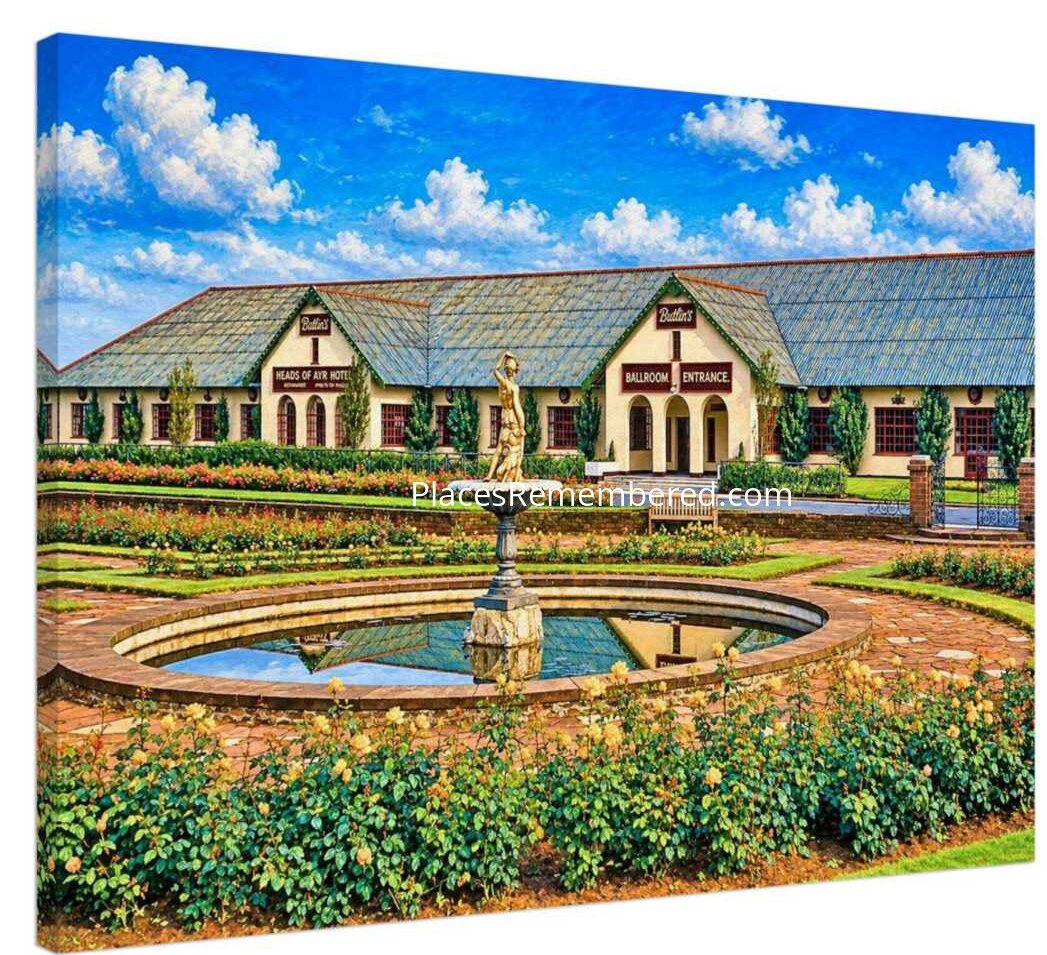
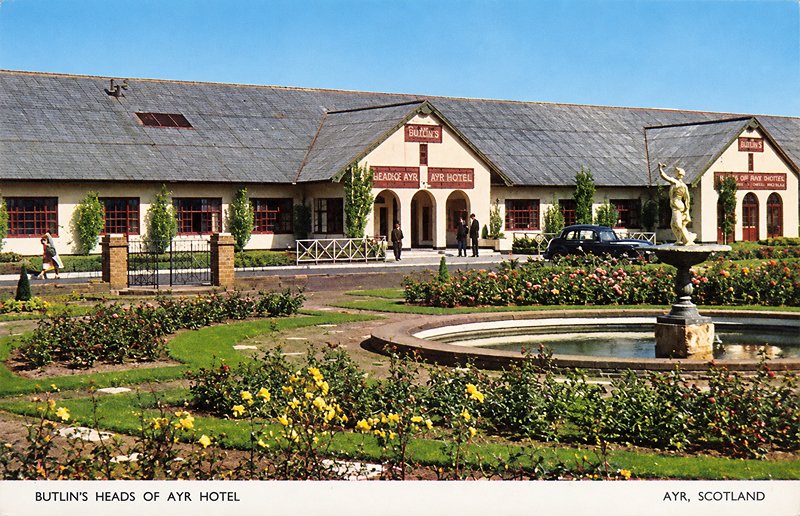
The Heads of Ayr Hotel, situated prominently beside the main road near the entrance to the holiday camp, contained 74 bedrooms. Unlike its purpose-built predecessor at Skegness, however, the building had a very different origin. It had been constructed during the Second World War as part of HMS Scotia, the Royal Navy training establishment which occupied the site before Butlin’s took it over.
Standing prominently beside the main road near the camp entrance, the hotel contained 74 bedrooms and soon became a familiar landmark for visitors arriving at the resort. Unlike most Butlin developments, however, the building had not originally been intended for holidaymakers. It had been constructed during the war as part of HMS Scotia, the Royal Navy training establishment that occupied the site before it became Butlin’s Ayr.
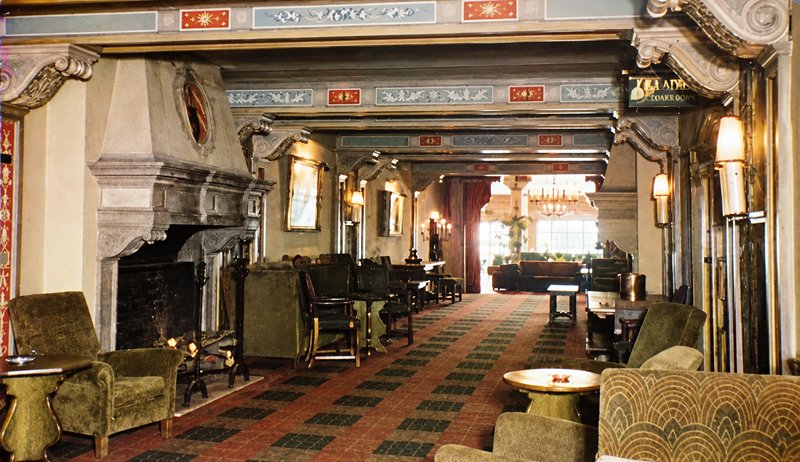
Converting the wartime building into a hotel presented particular difficulties at a time when building materials remained in short supply. Much of what was needed was salvaged from other structures around the former naval base that were being demolished. Even the hotel’s fittings reflected this make-do-and-mend approach: the cocktail bar and much of its decorative woodwork were reportedly recovered from ships being broken up.
Advertised as “The Show-Place of the Scottish Coast”, the Heads of Ayr was intended to be considerably more than simply somewhere to sleep. It had its own bar and restaurant, together with an enormous ballroom which became one of the hotel’s principal attractions. During its early years there was dancing six nights a week, while the ballroom was also used for conferences, dinners and other large gatherings. It was said to be capable of accommodating around 1,200 people for dancing, or 600 seated for dinner.


The hotel also served a rather different market from the holiday camp itself. In those early years, camp holidays were sold in fixed seven-day periods, whereas the hotel could accommodate guests wanting to stay for only a few nights. It also provided an important service for day visitors. The camp operated under a club licence, which meant that people who were not resident campers or members could not simply enter its bars and buy alcohol. The hotel, by contrast, held an ordinary public licence, allowing both hotel residents and day visitors to purchase drinks there.
Its proximity to Prestwick Airport also brought an unexpected source of business. In 1951, 31 of the hotel’s rooms were reserved exclusively for United States Air Force personnel passing through Prestwick, then an important staging point for American military flights.
Trouble at the Heads of Ayr Hotel
Unfortunately, the hotel soon acquired a less desirable reputation. Barely a year after opening, a large drunken brawl broke out in the bar after a group of young men from Glasgow became involved in a fight. Around 30 people were caught up in the disturbance, with tables and glasses thrown, windows smashed and barmaids forced to shelter beneath the counter.
The Heads of Ayr became particularly popular with coach parties travelling down from Glasgow, but the combination of dancing and alcohol repeatedly caused problems. By the late 1950s the situation had become serious enough to attract the attention of the courts. In one case involving four men and a woman from a Glasgow bus party, the chairman of the hotel company was warned that because of the continual trouble at dances, the court would prefer to see the ballroom closed.
Contemporary reports suggest that such incidents were far from isolated. The deputy chief constable of Ayrshire later claimed that “hardly a day went by” without someone appearing before Ayr Sheriff Court on a charge arising from an incident at the hotel.


In May 1958, just ten years after it had opened, Butlin’s brought the hotel operation to an end. Its alcohol licence was surrendered and the building, together with its amenities, was absorbed into the adjoining holiday camp for the exclusive use of resident campers. Publicly, Butlin’s attributed the decision to the “enormous success” of the Ayr holiday camp, announcing that the additional accommodation was needed for campers. Coming after years of well-publicised disturbances and court criticism, however, the change also conveniently brought an end to the hotel’s troublesome public bar and dances.

After the hotel operation ended in May 1958, the building was absorbed into the adjoining holiday camp. Its bedrooms were converted into staff accommodation and the bar remained closed, while the ballroom continued to be used for dinners, conferences and other large gatherings. Without its public licence it was now an alcohol-free venue, and in the years that followed it became particularly popular for children’s events and entertainment.
In 1959, a chairlift was built linking the former hotel with the main holiday camp below. It quickly became one of Ayr’s most distinctive attractions and helped integrate the old hotel building more fully into the camp.
The question of alcohol returned in 1968, when Butlin’s applied to have the former hotel pub licence restored. By then the camp was attracting around 36,000 day visitors each year, but because the main camp bars operated under a club licence, these visitors were unable to buy alcoholic drinks. Butlin’s made it clear that there was no intention of reopening the building as a hotel; the aim was simply to reopen the public bar for day visitors.
The application proved controversial. Police objected on the grounds that restoring the licence could bring back the sort of trouble that had plagued the hotel during the 1950s, with concerns even raised about an increase in “weapon-carrying hooligans.” Despite the objections, the licence was eventually reinstated.
The former hotel building survived into the 1970s before finally being demolished. The chairlift, however, outlasted it by more than two decades and remained in use until 1998.
The original Butlin hotel at Skegness enjoyed a much longer life. It continued operating as a hotel until 1974, when it too was closed and incorporated into the main camp.
The Butlin’s camp at Ayr was later transformed into a Haven caravan site known as Craig Tara. The former location of the hotel is now known as the Electric Brae area.