The story of Warner’s holiday camps began with Captain Harry Warner, a retired army officer who moved to Hayling Island in 1928. Soon after arriving, he took over the Grotto Café on the seafront, situated just east of the Royal Hotel. It was here that Warner began to notice a changing pattern in the way ordinary families wanted to spend their holidays.
During his daily walks along the beach, he encountered what he later described as “the usual assortment of tent dwellers, railway carriage and beach-hut lodgers who packed the foreshore every summer.” He watched these holidaymakers “trying to cook on oil stoves, improvising beach games out of nothing and trying to get to know each other and enjoy a communal holiday.”
At first glance, it might have appeared that these rather basic arrangements were simply the result of limited finances. But after talking to the holidaymakers, Warner came to a different conclusion. He discovered that “most of them were not enduring this kind of holiday because they couldn’t afford anything better, they just didn’t want to stay in the overcrowded and blighted boarding houses.” Many evidently preferred the freedom, informality and sociability of camping, even if that meant sacrificing some of the comforts of a conventional hotel or guest house.
This gave Warner an idea. Why not provide holidaymakers “with the best features of a camping holiday – open air and freedom – but remove such irksome necessities such as cooking, bed making and finding one’s own entertainment”? It was a deceptively simple concept, but one that anticipated many of the features that would come to define the British holiday camp: inexpensive accommodation, communal meals, organised entertainment and plenty of outdoor activities, all provided within a self-contained resort.
Warner was also able to observe an existing holiday camp at close quarters. A Civil Service holiday camp had opened on Hayling Island in 1930, although it was available only to government employees. Many of its guests found their way to Warner’s Grotto Café, where he regularly heard complaints about the poor quality of the food and entertainment. Listening to their grievances only strengthened his conviction that he could provide something better.
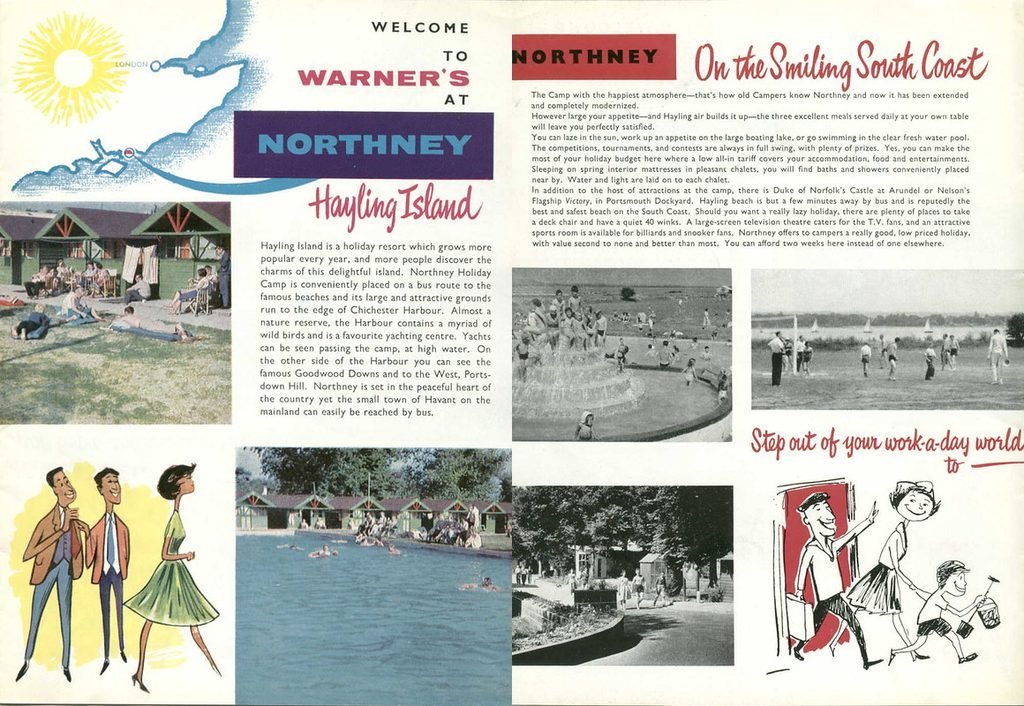
In 1931, Warner finally put his ideas into practice. He purchased North Farm in Northney, on the northern side of Hayling Island, and transformed it into his first holiday camp. Appropriately enough, the new venture was simply called Northney.
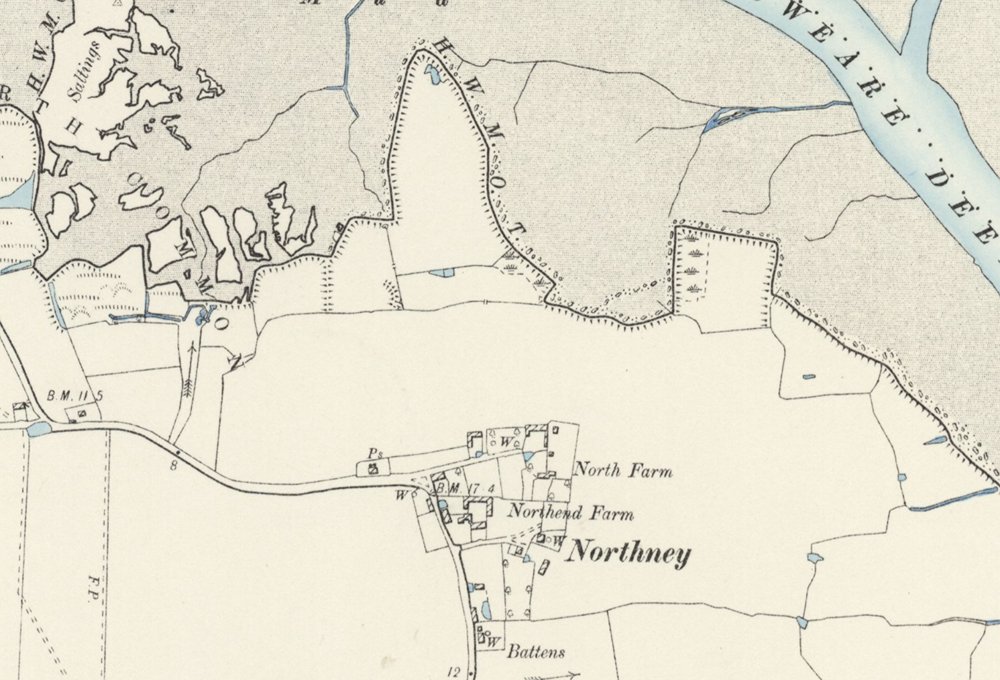
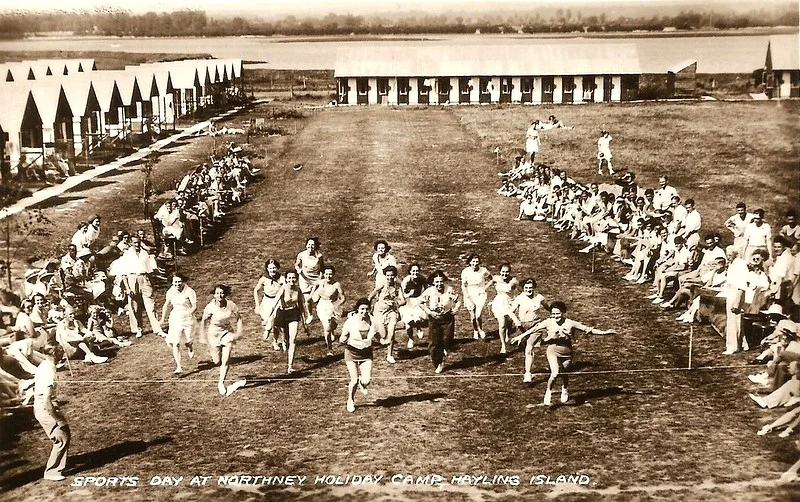
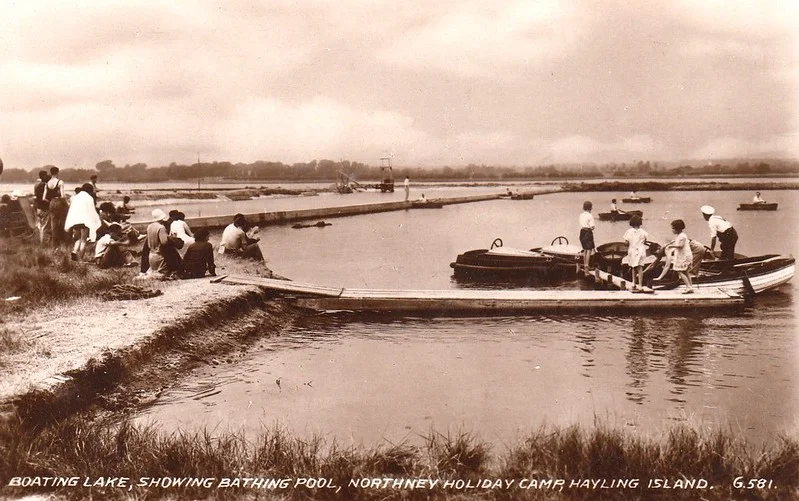
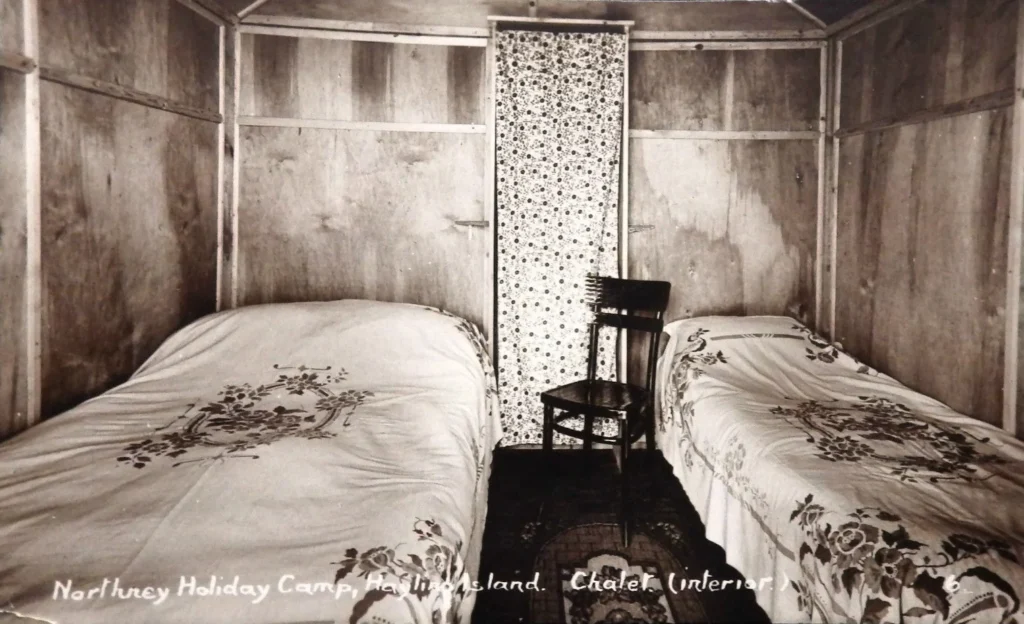
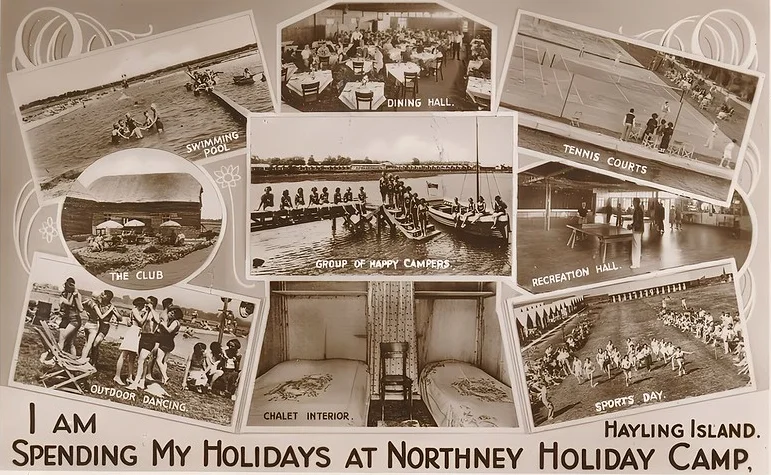
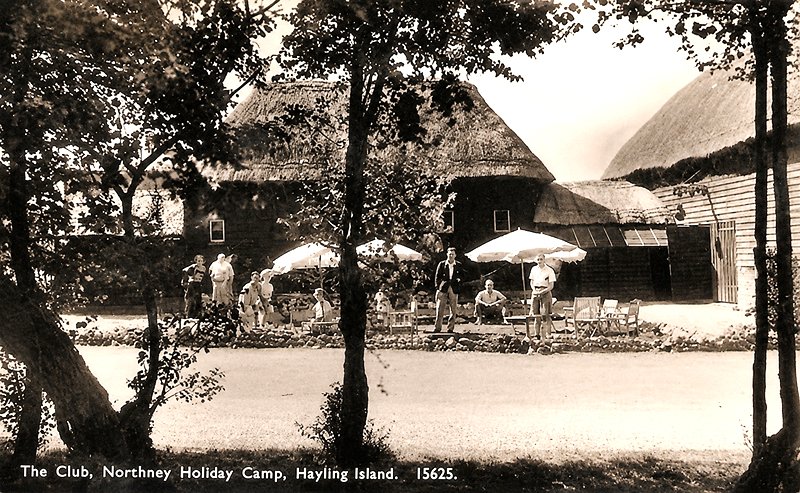
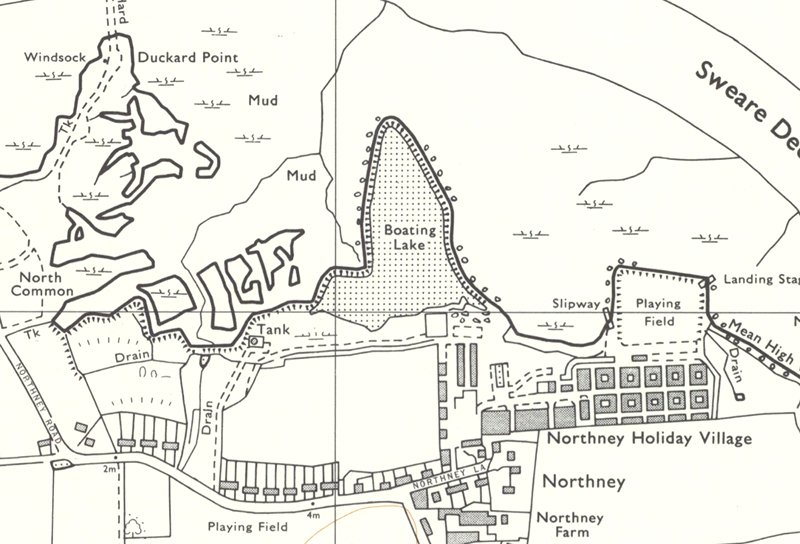
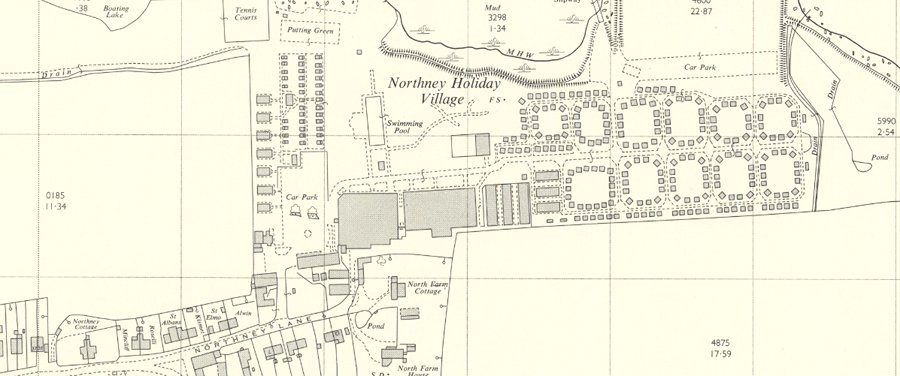
The beginnings were modest. Existing farm buildings were put to new uses, with some of the old barns converted into a communal dining hall and ballroom. Cheap wooden chalets were constructed to provide sleeping accommodation, while part of the sea was cordoned off to create a huge 10-acre boating lake. Rather than expecting guests to fend for themselves, Warner provided the meals, activities and entertainment that he had seen campers struggling to organise on the beach.
The formula proved an immediate success. Northney offered the freedom and communal atmosphere of camping without many of its inconveniences, while avoiding the formality and restrictions associated with the traditional boarding house.
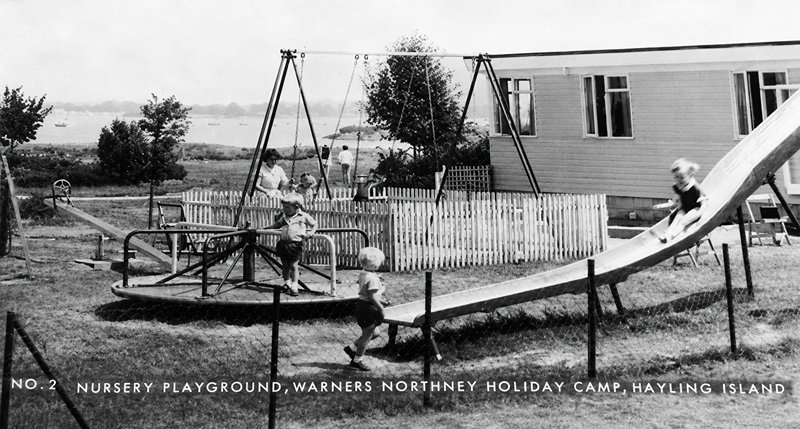
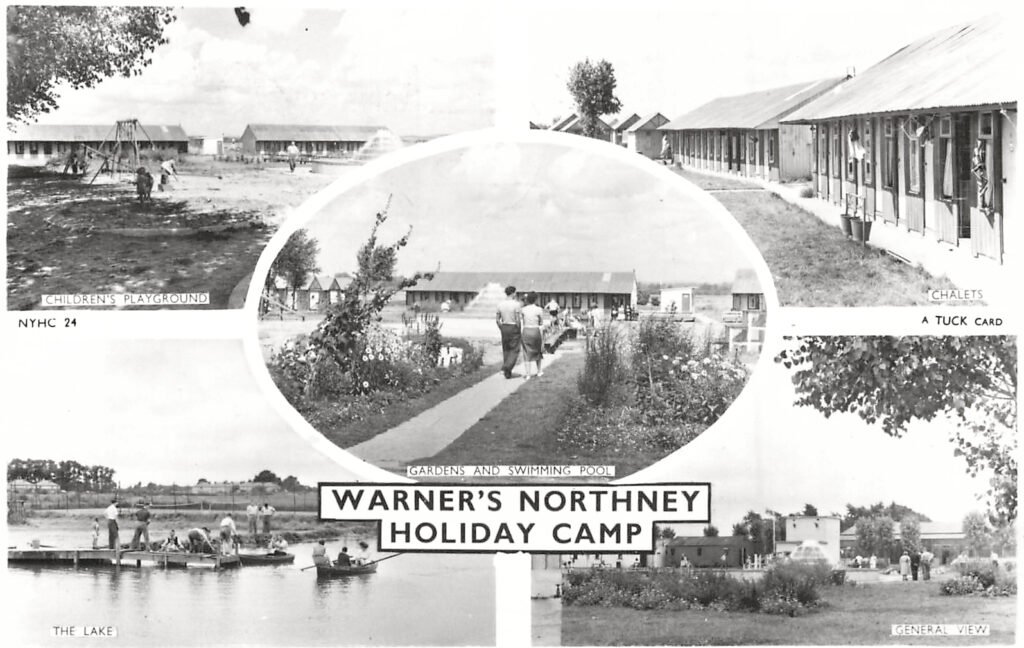
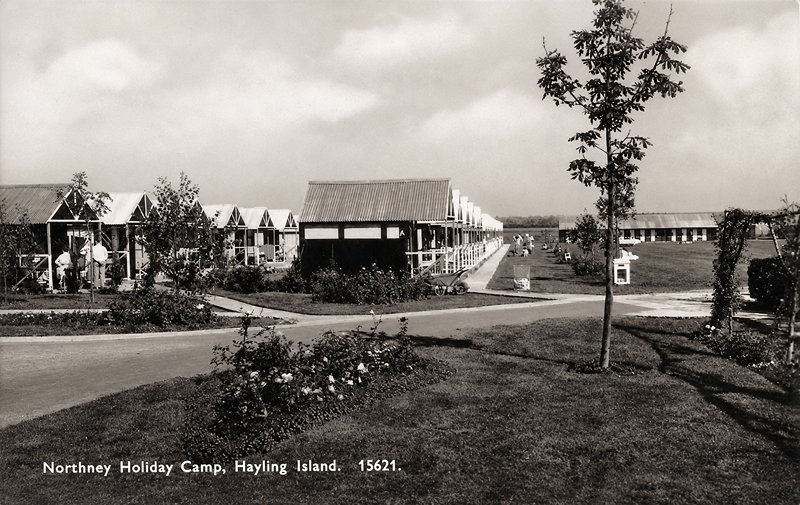
Billy Butlin had also become fascinated by the emerging holiday camp business and, keen to see how the idea worked in practice, paid a visit to Warner’s Northney camp. He and Harry Warner soon struck up a close friendship. Recognising the potential of the concept, the two men decided to go into business together, with Butlin acquiring a 50% interest in Warner’s company.
There was another connection between the two men back at the Grotto Café. Butlin later leased land adjacent to Warner’s café and established an amusement park there, giving visitors another reason to congregate along this part of the Hayling Island seafront. The cafe is now demolished but the amusement park continues to operate on the site today.
The Warner and Butlin partnership soon began expanding beyond Hayling Island. In 1934 they opened a new holiday camp at Seaton in Devon, followed by Dovercourt in Essex in 1937 and Puckpool on the Isle of Wight in 1939.
At the same time, Butlin was developing holiday camps under his own name. His first Butlin’s camp opened at Skegness in 1936, followed by Clacton in 1938. Despite establishing what would ultimately become a rival organisation, the relationship between the two men remained extremely close, and Warner was involved in the design of both of Butlin’s early camps. The histories of Britain’s two best-known holiday camp companies were therefore much more intertwined than their later rivalry might suggest.
The scale of Warner’s ambitions became particularly apparent in 1939 when the company was floated on the stock market. The share issue raised £145,000 and proved extraordinarily popular, being oversubscribed within just five minutes.
Butlin became chairman of the public company, although he was careful to make clear that Harry Warner remained the man actually running the business. Butlin described his own role as purely “acting in an advisory capacity.” At the same time, he transferred his personal shareholding in Warner’s to Butlins Ltd, explaining that he felt “it was undesirable to retain such a substantial personal interest in other holiday camp companies.”
Despite the increasingly separate identities of the two businesses, there was no intention at this stage for them to become outright competitors. Butlin stated that Warner’s and Butlins would continue to work closely together, believing that cooperation would produce “substantial savings in advertising and printing, economies in the purchase of supplies and constructional costs and a reduction in administration costs.” In effect, the two companies could retain their separate identities while benefiting from their combined purchasing power, experience and publicity.
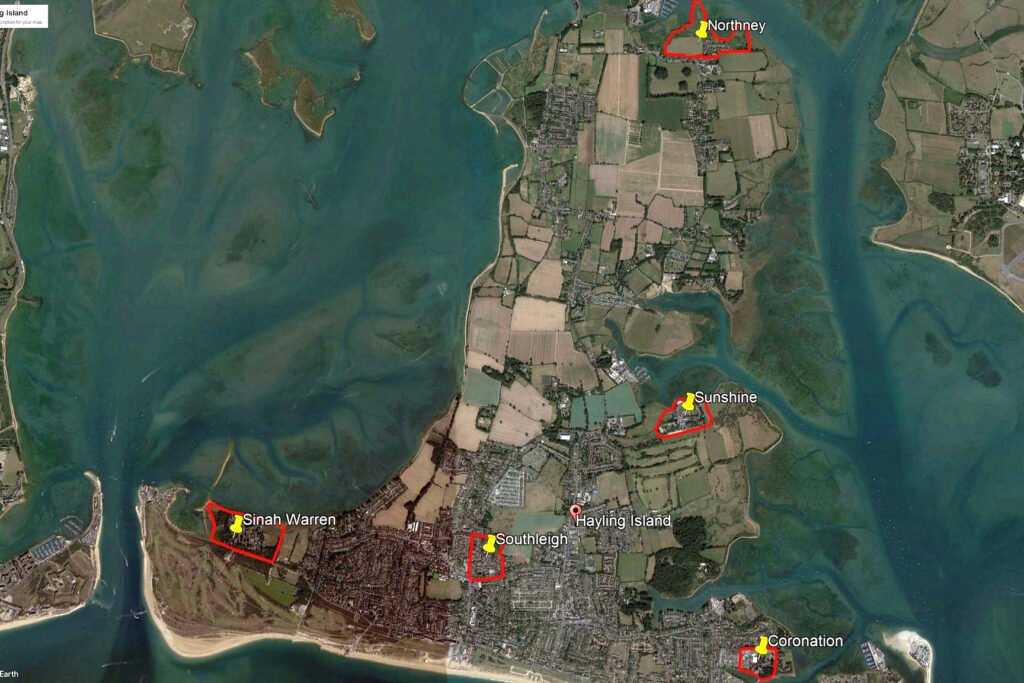
The outbreak of the Second World War brought this period of rapid expansion to an abrupt halt. In June 1940, the Royal Navy requisitioned three holiday camps on Hayling Island – Northney, Sunshine and Coronation – and renaming them as Northney 1, Northney 2 and Northney 3. The island itself became an important centre of naval activity during the war. Its position on Chichester Harbour made it particularly suitable for amphibious warfare training, and the island became one of only two major landing-craft training and repair bases in Britain.
With the return of peace, Warner quickly resumed expanding the business. In 1946 he was able to acquire the Civil Service camp on Hayling Island whose guests had frequented his café before the war and whose complaints about food and entertainment had helped inspire his original holiday camp idea. Warner renamed it Southleigh, finally bringing the camp that had played an indirect part in the birth of his business into the Warner organisation.
Life at Northney itself was not always uneventful. In 1956, the thatched roof of the manager’s house caught fire, seriously damaging both the house and a nearby storeroom. The following year the camp suffered a rather different setback when thieves stole some 30,000 cigarettes from the camp shop.
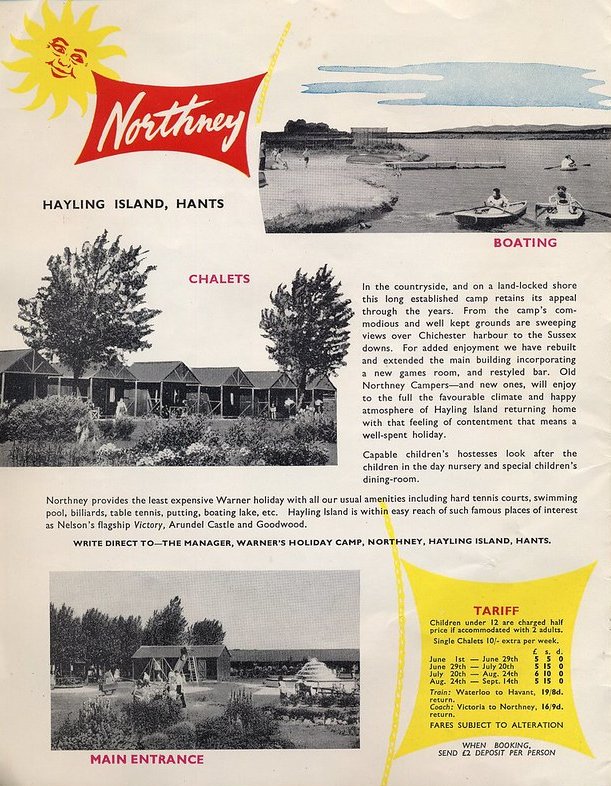
Warner’s presence on Hayling Island continued to expand. In 1959 the company acquired its third camp on the island when it purchased Sinah Warren. The following year they also added the Coronarion camp.
Despite the continuing popularity of the traditional holiday camp, attempts to increase Northney’s capacity were not always welcomed by the local authorities. In 1961, Warner’s submitted plans to construct 42 new chalets at the camp. Each was to measure just 6 feet by 9 feet, dimensions that did little to impress the council. The application was rejected, with the proposed accommodation memorably dismissed as “tiny garden sheds – most unsatisfactory accommodation for people on holidays.”
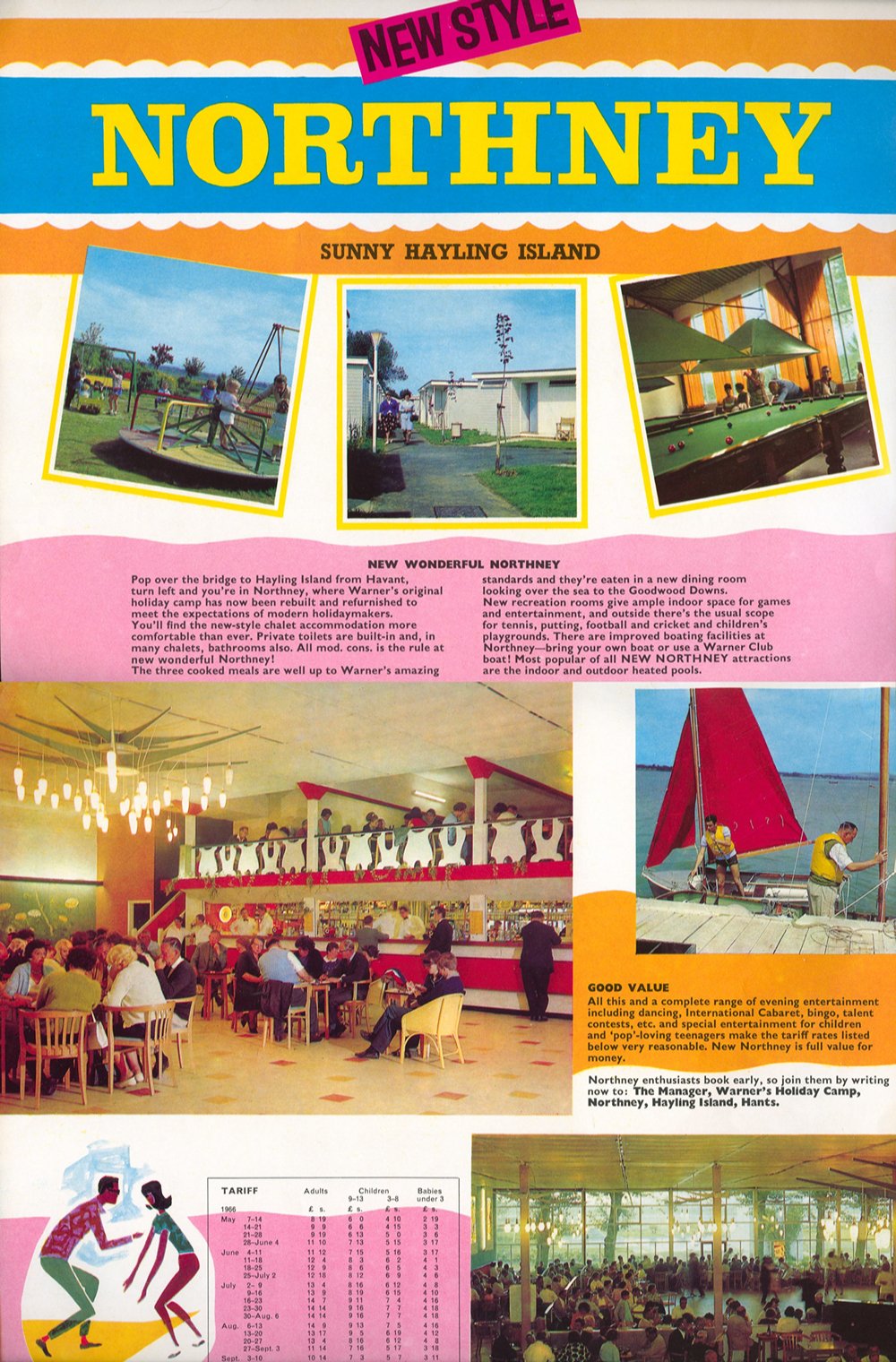
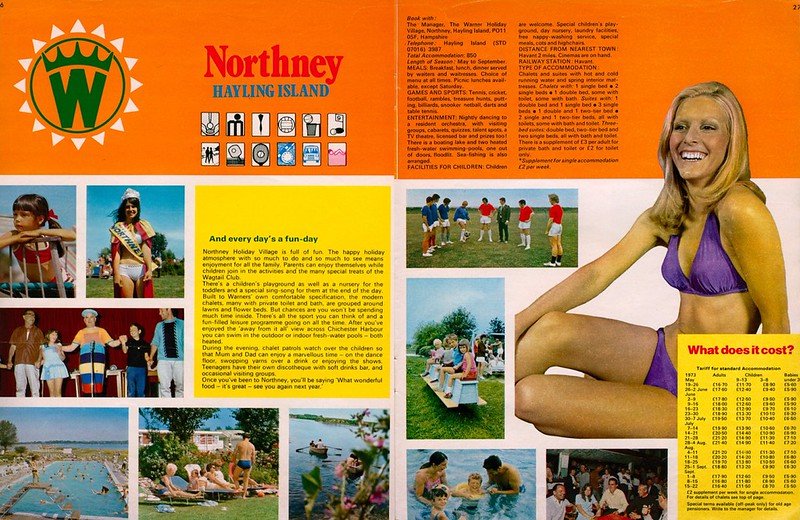
During the mid-1960s, Northney underwent one of the biggest modernisation programmes in its history. A new indoor swimming pool was built, together with a number of new chalets with private bathrooms. Many of the older wooden chalets were removed and sold off for use as garden sheds, with the result that quite a few local residents soon had a former Northney chalet sitting in their back garden.
Other chalets were retained and modernised. Private toilets were added to some, while others received full bathrooms. A number still lacked any facilities, so the old communal toilet blocks remained. Following the improvements, Northney could accommodate around 850 guests.
The central facilities were also upgraded. A new dining hall was built overlooking the sea, while improvements were made to the games room and boating lake. Together, the work gave Northney a much-needed facelift, although it remained firmly wedded to the traditional Warner full-board formula. The holiday price included all meals, which were served at set times in the huge communal dining hall.
One significant drawback remained: none of the chalets had heating. Northney was therefore very much a seasonal holiday camp, opening from May until September and closing completely during the colder months.
With hundreds of holidaymakers on site at the height of summer, there were inevitably occasional problems. One of the more serious incidents occurred in 1965, when a large fight involving around 40 youths broke out at the camp. The disturbance became serious enough for police reinforcements to be called in before order could finally be restored.
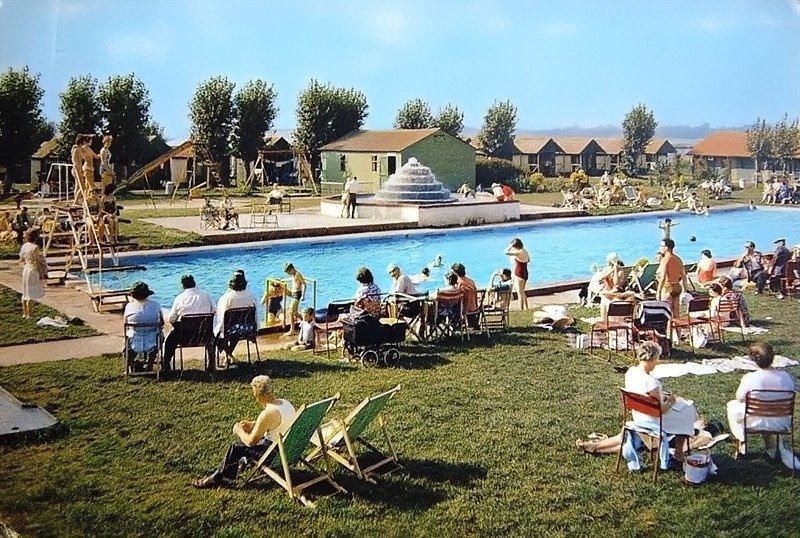
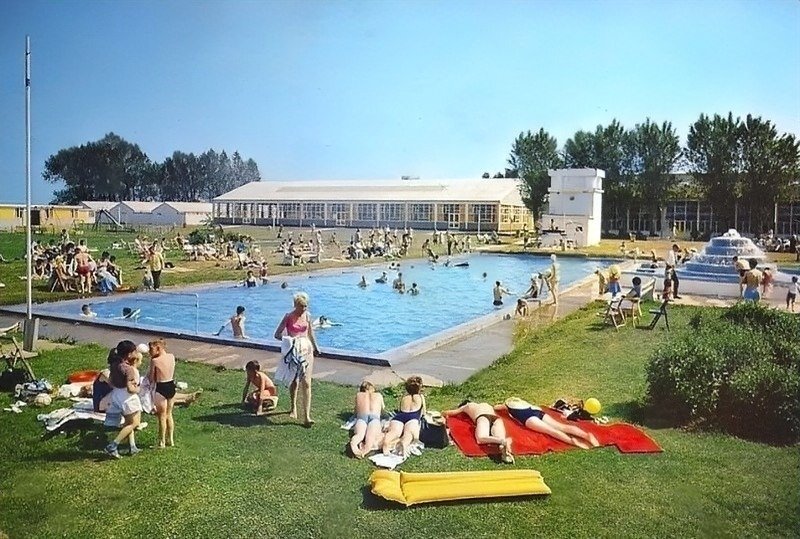
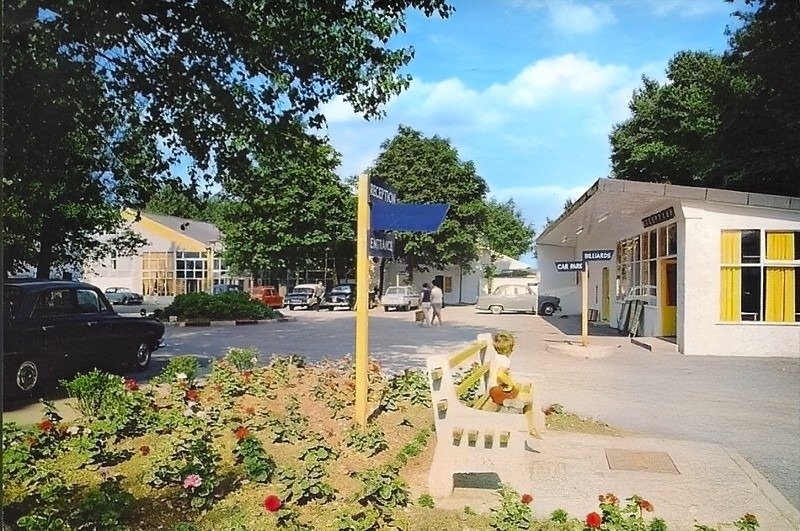
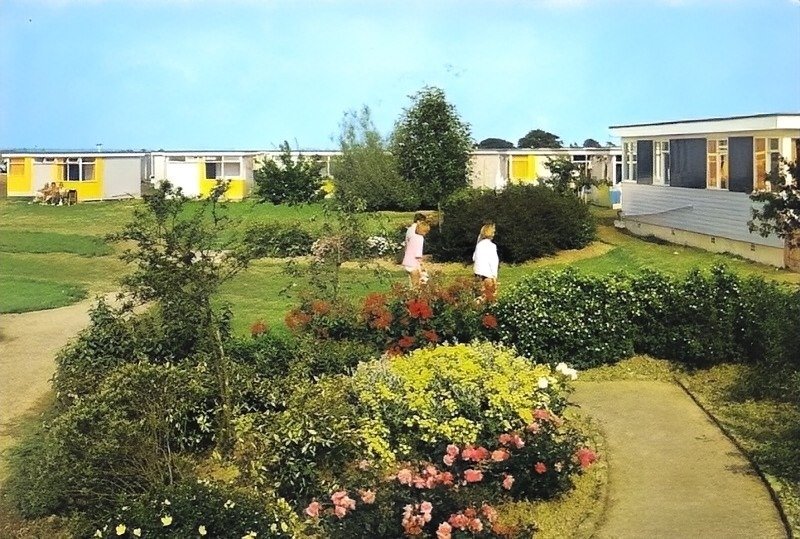
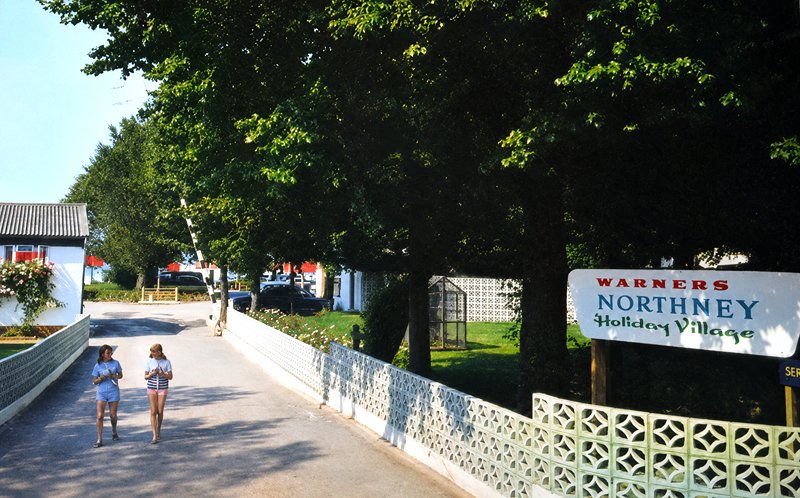
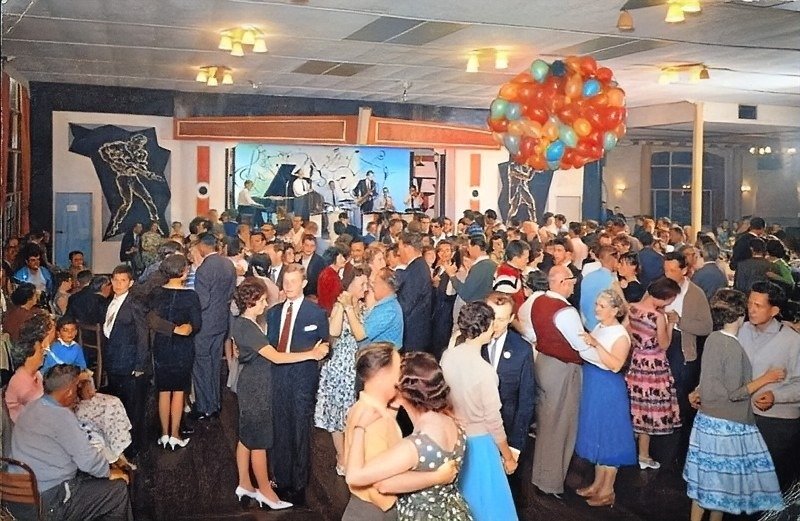
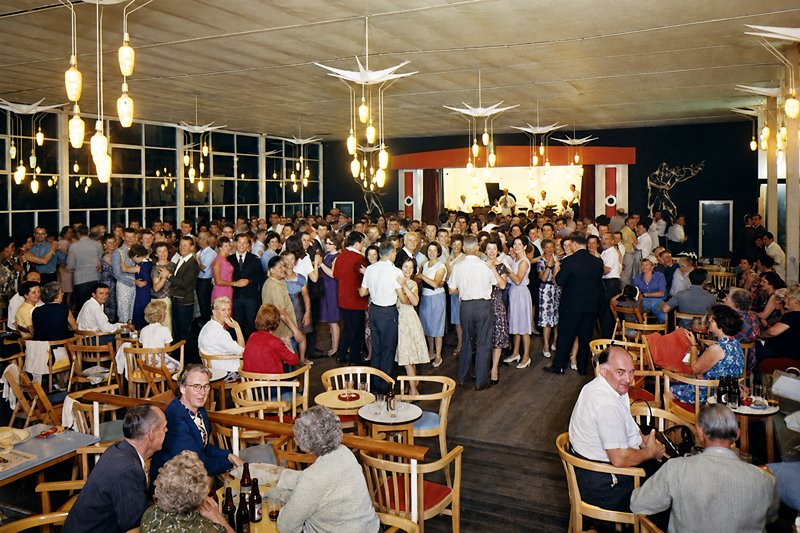
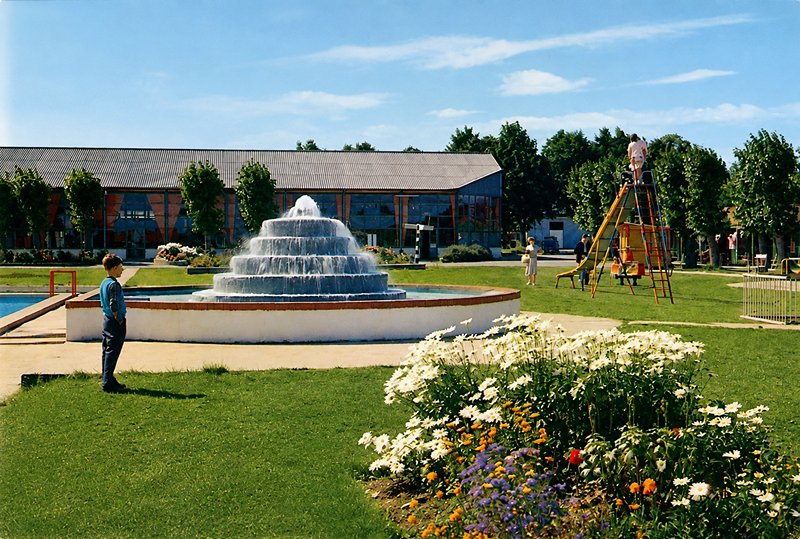
By the late 1970s, the changing nature of the British holiday market was beginning to make itself felt. Foreign holidays were becoming increasingly affordable, while those who continued to holiday at home were looking for something different. The traditional holiday-camp formula, with its fixed mealtimes, communal dining halls and organised routines, was losing its appeal to a new generation of holidaymakers who wanted greater freedom and independence.
At the same time, self-catering holidays were rapidly growing in popularity, particularly in static caravans. Families could eat when they wanted, come and go as they pleased, and organise their holiday around themselves rather than the camp timetable. In response, many established holiday camps began converting some, or even all, of their accommodation to self-catering. Chalets were modernised with kitchens and dining areas, while other operators increasingly replaced older accommodation with caravans.
Warners largely resisted this trend. Most of its camps continued to operate on the old full-board system, leaving the company increasingly exposed as holidaymakers’ tastes changed.
Warners was sold to Grand Metropolitan in 1981, and Northney closed at the end of that season. Unlike many former holiday camps, however, there was no immediate attempt to clear or redevelop the site. The chalets and other buildings were simply left standing, and the once-busy camp remained abandoned, slowly becoming more derelict over the following decade.
In 1985 the company expanded its interests on Hayling Island by acquiring the nearby Sunshine Holiday Camp. Yet this came during a period of considerable change within the Warner portfolio, and just a year later Southleigh was closed, leaving the company increasingly concentrated on a smaller number of its stronger sites.
Grand Metropolitan’s holiday interests subsequently became part of Mecca Leisure, which was itself acquired by Rank Leisure in 1990. Northney had never been sold in the meantime, meaning that ownership of the long-abandoned site eventually passed to Rank along with the rest of the portfolio. Rank also owned the adjoining Northney Marina.
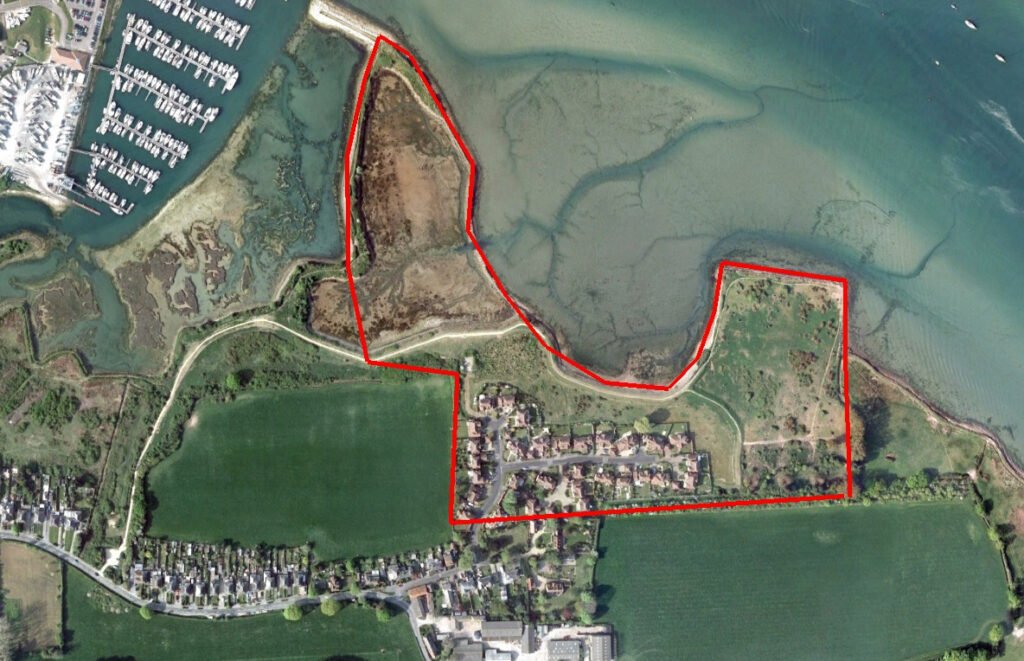
In 1992, a group of travellers moved onto the derelict site, although their stay was brief and they were kicked out the following day. A couple of years later the remains were finally cleared away and 35 upscale houses were built on part of the site, now known as Spinnaker Grange.
Little now remains to suggest that Northney was the place where Harry Warner began his holiday camp empire. There is, however, one particularly appropriate reminder of the camp’s pioneering days. Part of the old seawater boating lake can still be seen, surviving more than ninety years after Warner created it as one of the attractions at his original Northney camp.
Today, Warner has evolved into an adults-only holiday company, with an increasing emphasis on upmarket accommodation and grand country estates converted into hotels. However, the traditional holiday camp has not disappeared from its portfolio. Six of its former camps remain in operation, although they’ve been substantially modernised, with some now featuring hotel-style accommodation in place of the traditional chalets.
Warner also retains a connection with Hayling Island. Two of its long-established resorts still survive there: Sinah Warren and the former Coronation Holiday Camp, now known as Lakeside Coastal Village. Both have changed considerably over the years, but their continued operation provides a direct link back to Warner’s post-war holiday camp empire.